 Skip to content

10 Fire Safety Tips That Prevent Panic During Emergencies : Fire Safety Tips aren’t just about putting out flames—they’re about staying calm, prepared, and confident when seconds count.
Every year, fires in homes and workplaces claim lives not because people don’t know what to do, but because they panic and freeze under pressure. Preparation is the antidote to panic.
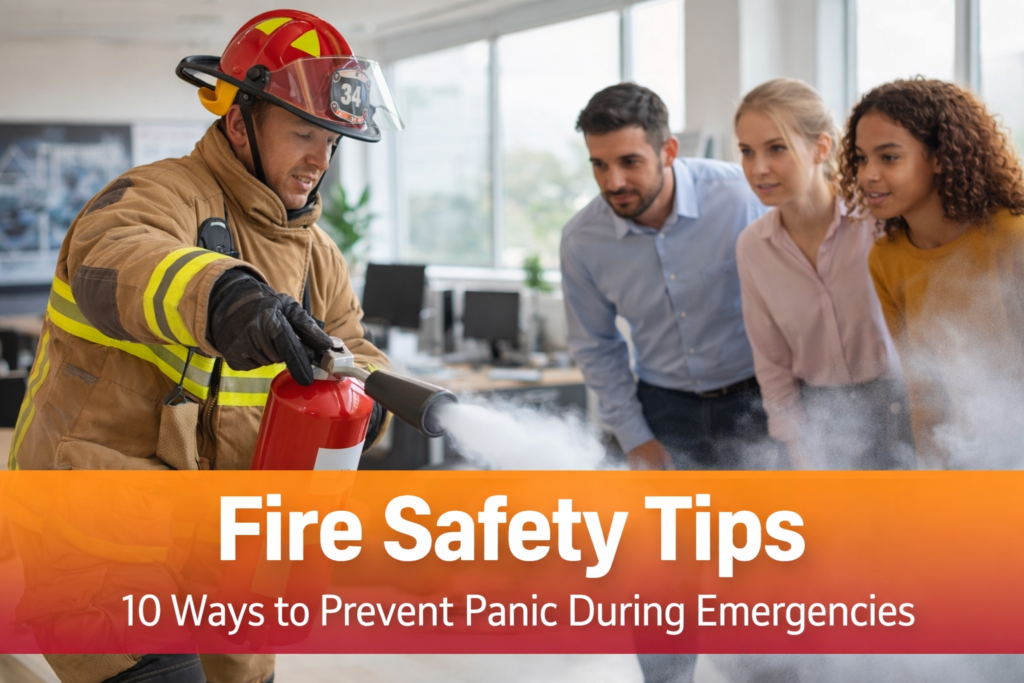
Understanding how to act before, during, and after a fire can make the difference between survival and tragedy.
These ten powerful Fire Safety Tips are designed to help families, employees, and safety managers build quick-thinking habits that prevent chaos and protect lives.
- 10 Fire Safety Tips That Prevent Panic During Emergencies
- 1. Install Smoke Alarms—and Maintain Them Properly
- 2. Create and Practice an Escape Plan
- 3. Know How to Use a Fire Extinguisher
- 4. Stay Low and Go if There’s Smoke
- 5. Never Ignore Fire Alarms
- 6. Keep Exits Clear and Accessible
- 7. Avoid Overloading Electrical Circuits
- 8. Know When to Evacuate—and When Not To
- 9. Stay Calm and Communicate Clearly
- 10. Reassess and Improve After Every Drill or Incident
- Bonus Tip: Prepare for Special Circumstances
- Fire Safety Tips Save Lives Through Preparation
10 Fire Safety Tips That Prevent Panic During Emergencies
1. Install Smoke Alarms—and Maintain Them Properly
The first line of defense in any fire emergency is a working smoke alarm. According to the National Fire Protection Association (NFPA), properly installed and maintained alarms cut the risk of dying in a home fire by half.
Install smoke alarms on every level of your home or workplace, including sleeping areas and hallways. Test them once a month and replace batteries at least once a year.
A simple tip—schedule it alongside other annual maintenance tasks like changing HVAC filters or inspecting first aid kits.
2. Create and Practice an Escape Plan
In the moment of crisis, your mind reverts to habit. That’s why fire drills are essential. Every household and workplace should have a written and practiced fire escape plan. Identify at least two exit routes from every room and establish a designated outdoor meeting point away from the building.

For workplaces, ensure employees know their nearest fire exit and assembly area.
The Canadian Centre for Occupational Health and Safety (CCOHS) provides excellent templates for fire evacuation procedures you can adapt to your own facility.
3. Know How to Use a Fire Extinguisher
Fire extinguishers save lives—but only if people know how to use them. Teach everyone the PASS technique:
Pull the pin, Aim at the base of the fire, Squeeze the handle, and Sweep side to side.
Make sure extinguishers are accessible, mounted at visible points, and inspected monthly. For home use, keep one near the kitchen and another in the garage.
The U.S. Fire Administration offers clear visual guides for correct extinguisher use and maintenance.
4. Stay Low and Go if There’s Smoke
Smoke inhalation causes more fire-related deaths than burns. If you encounter smoke, stay low to the ground where air is cleaner and crawl to the nearest exit. Cover your nose and mouth with fabric if possible.
For multi-story buildings, avoid using elevators. They can malfunction or open on smoke-filled floors. Instead, use stairwells and follow illuminated exit signs.
Practicing this behavior during drills trains your body to react automatically in a real emergency.
5. Never Ignore Fire Alarms
False alarms do happen, especially in schools or high-rise workplaces—but treating every alarm as a real emergency saves lives. Many fatalities occur when people assume “it’s just a drill.”
The moment you hear an alarm, evacuate immediately. Don’t stop to collect personal belongings. Alert others on your way out, but never re-enter until emergency personnel give the all-clear.
Firefighters emphasize that seconds matter—you may only have two minutes to escape safely once a fire starts.
6. Keep Exits Clear and Accessible
A blocked exit during a fire can turn a safe situation into a deadly trap. Make it a rule at home and work to keep hallways, stairwells, and doorways free of clutter.
Check that emergency exits open easily and are never locked or obstructed. Employers should ensure all staff are familiar with fire door locations and that fire-rated doors are kept closed but never blocked.
Regular housekeeping inspections by the safety team or building manager should include a fire-exit review—something the team at OHSE.ca recommends as part of every monthly safety audit.
7. Avoid Overloading Electrical Circuits
Electrical malfunctions are among the top causes of structural fires. Extension cords, overloaded outlets, and frayed wiring pose silent risks in both homes and workplaces.
Unplug devices not in use, especially heaters or appliances. Use power strips with surge protection and avoid daisy-chaining multiple cords. Periodically inspect plugs for signs of overheating or burn marks.
For businesses, include electrical inspections in your preventive maintenance schedule and train staff to report issues immediately.
8. Know When to Evacuate—and When Not To
Not every fire can or should be fought. A small trash can fire might be extinguished with a portable unit, but spreading flames, heavy smoke, or gas odors are clear signs to evacuate immediately.
As the Government of Canada’s Fire Safety Program explains, personal safety always outweighs property loss. If evacuation is necessary, close doors behind you to slow fire spread and do not return inside for valuables.
9. Stay Calm and Communicate Clearly
Panic spreads faster than flames. Training yourself and your team to stay calm under pressure is one of the most powerful Fire Safety Tips of all.
Speak slowly and give short, direct instructions like “Follow me,” or “Exit left stairwell.” Avoid shouting unless necessary. Panic can cause crowding or trampling in narrow exits, so maintaining a composed tone helps everyone react efficiently.
Supervisors should practice verbal leadership during fire drills—confidence is contagious, especially in emergencies.
10. Reassess and Improve After Every Drill or Incident
Fire safety isn’t a one-time checklist—it’s a living plan. After every drill or real event, gather feedback from participants. Were exits easy to reach? Were alarms heard clearly? Did anyone panic or freeze?
Review performance, update maps, and retrain as needed. For workplaces, include this assessment in your OH&S documentation to stay compliant with safety regulations. A short debrief ensures lessons learned today prevent confusion tomorrow.
Bonus Tip: Prepare for Special Circumstances
Every building has unique challenges—elderly residents, employees with disabilities, high-traffic areas, or chemical hazards. Tailor your plan to include assistive evacuation methods, such as buddy systems or specialized equipment.
For example, workplaces handling flammable materials should review the Canadian Fire Code requirements for fire-resistant storage and emergency response.
Fire Safety Tips Save Lives Through Preparation
The best way to prevent panic during emergencies is to build muscle memory through repetition, awareness, and calm communication. When you prepare your family, staff, or students to act automatically, you remove hesitation—and hesitation costs precious time.
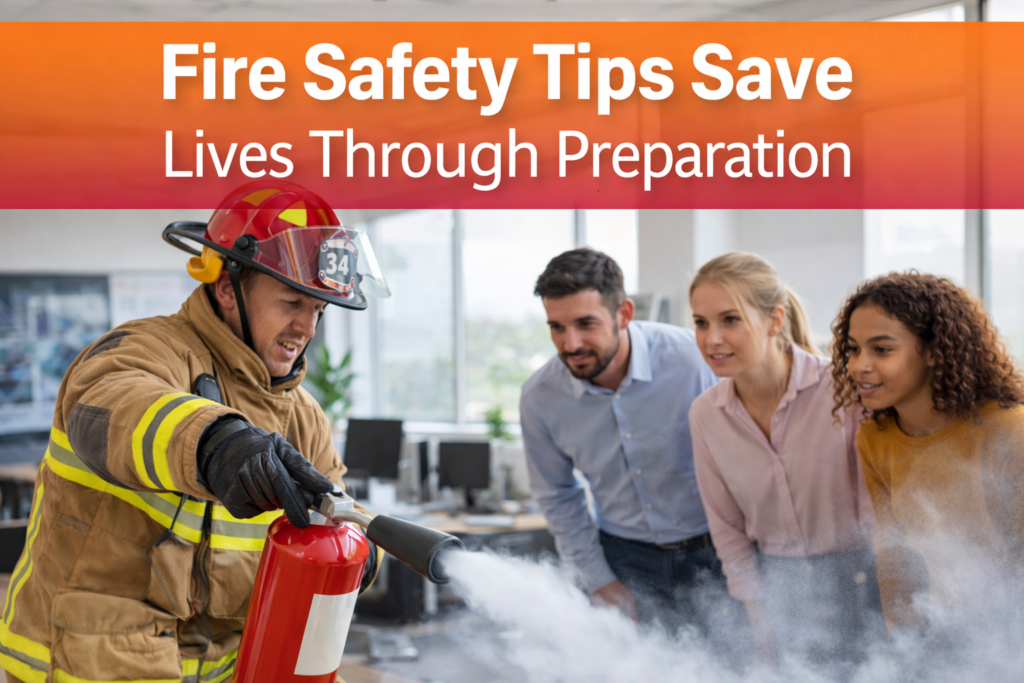
Make it a goal this month to inspect your alarms, refresh your escape plan, and run one short drill.
Keep these Fire Safety Tips visible in your workspace or shared in your family chat group. Calm responses come from confident preparation—and that’s how true safety is achieved.
No comments yet