
Emergency Drill Practices: Best Strategies for Schools, Offices, and Plants

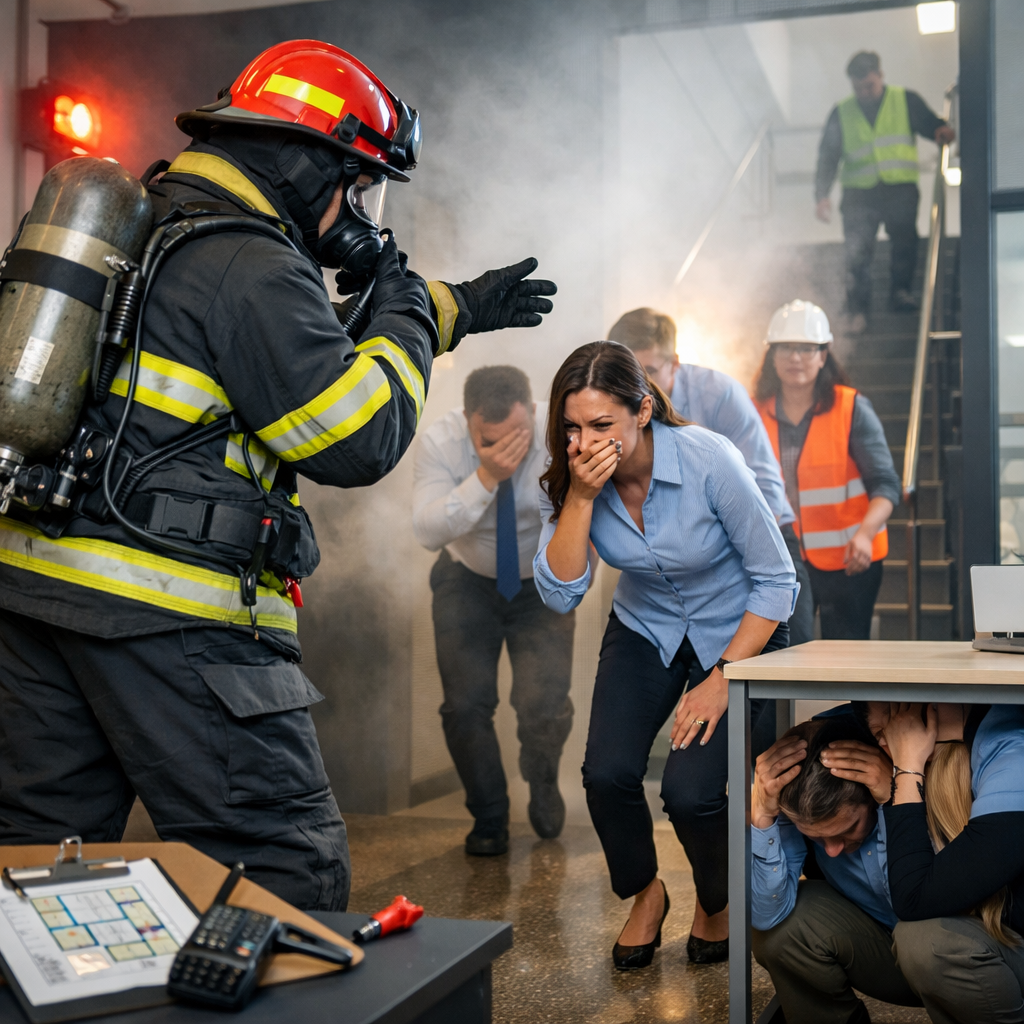
Emergency drill practices are a core part of workplace and school safety because they turn written plans into real actions people can follow under pressure.
Whether the setting is a school, a corporate office, or an industrial plant, drills help people recognize alarms, understand escape routes, and respond quickly without confusion.
Strong drills do more than satisfy compliance requirements. They reveal weak points in communication, evacuation timing, accountability, and emergency leadership before a real incident occurs.
Organizations that review guidance from OSHA or CCOHS often find that effective drills depend on planning, repetition, and follow-up, not just sounding an alarm once a year.
In this article, we will compare emergency drill practices for schools, offices, and plants, with practical advice on planning, risk controls, and continuous improvement.
Why emergency drill practices matter in different environments
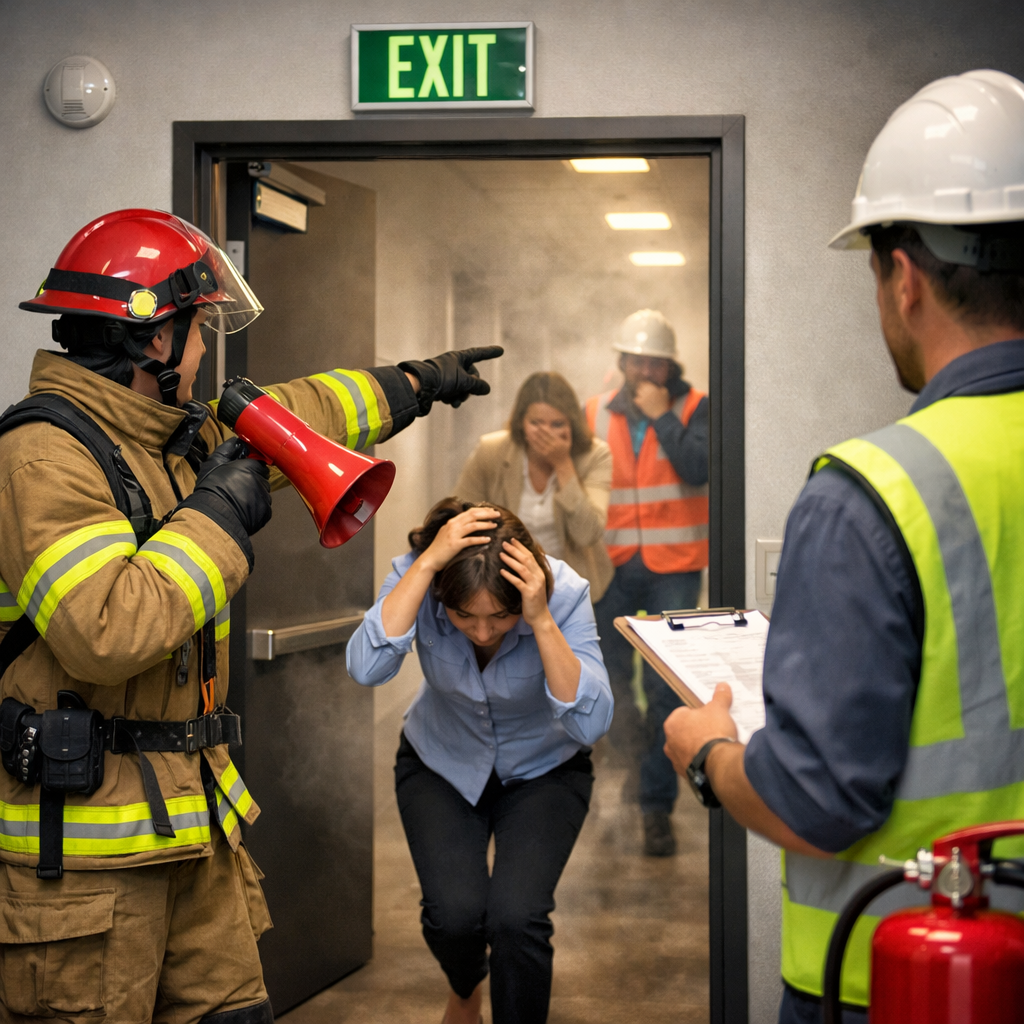
The purpose of a drill stays the same across settings: protect people, reduce panic, and improve emergency response.
However, the risks, building layouts, occupant needs, and operational demands vary greatly between schools, offices, and plants.
Schools: protecting large groups and vulnerable occupants
Schools must manage children, visitors, teachers, contractors, and sometimes after-hours programs.
Drills may include fire evacuation, lockdown, shelter-in-place, severe weather, or hazardous material response depending on local risk.
The biggest challenge is orderly movement and accountability. Staff need simple procedures for guiding students, checking attendance, assisting those with disabilities, and communicating with administration.
Offices: speed, clarity, and business continuity
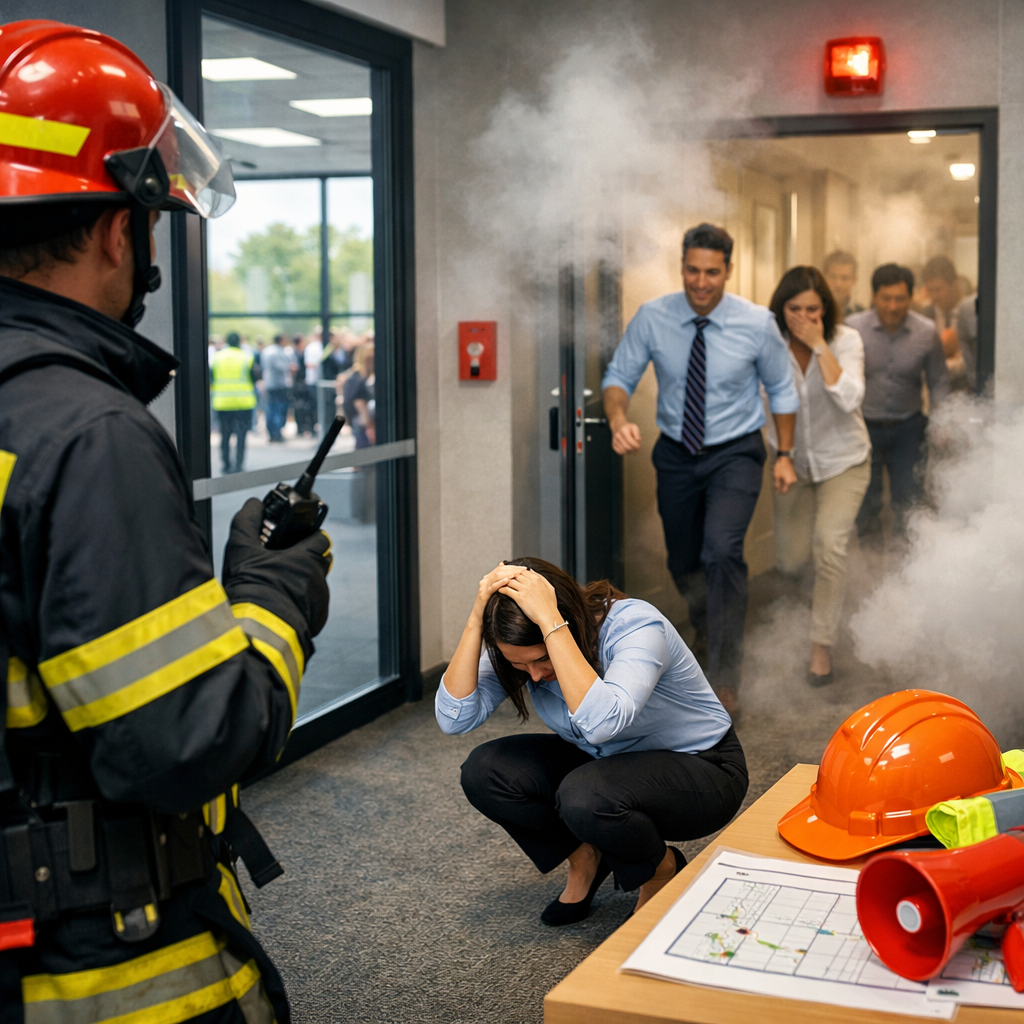
Office environments often contain multi-floor layouts, shared tenants, meeting rooms, and hybrid staff who may be unfamiliar with procedures.
Good emergency drill practices in offices focus on alarm recognition, stairwell use, assembly points, floor wardens, and clear occupant accountability.
They also support business continuity by identifying how quickly teams can evacuate and how communications should continue after the event. For more on readiness planning, many organizations connect drill programs with their business continuity planning process.
Plants: high hazard operations require more control
Industrial plants face the most complex drill conditions. There may be flammable materials, confined spaces, energized equipment, vehicle traffic, process hazards, and specialized emergency shutdown procedures.
In plants, drills must align with hazard assessments, permit systems, and incident command roles. The Hierarchy of Controls matters here: elimination and substitution reduce hazards at the source, engineering controls limit exposure, administrative controls guide actions, and personal protective equipment supports the last layer of defense.
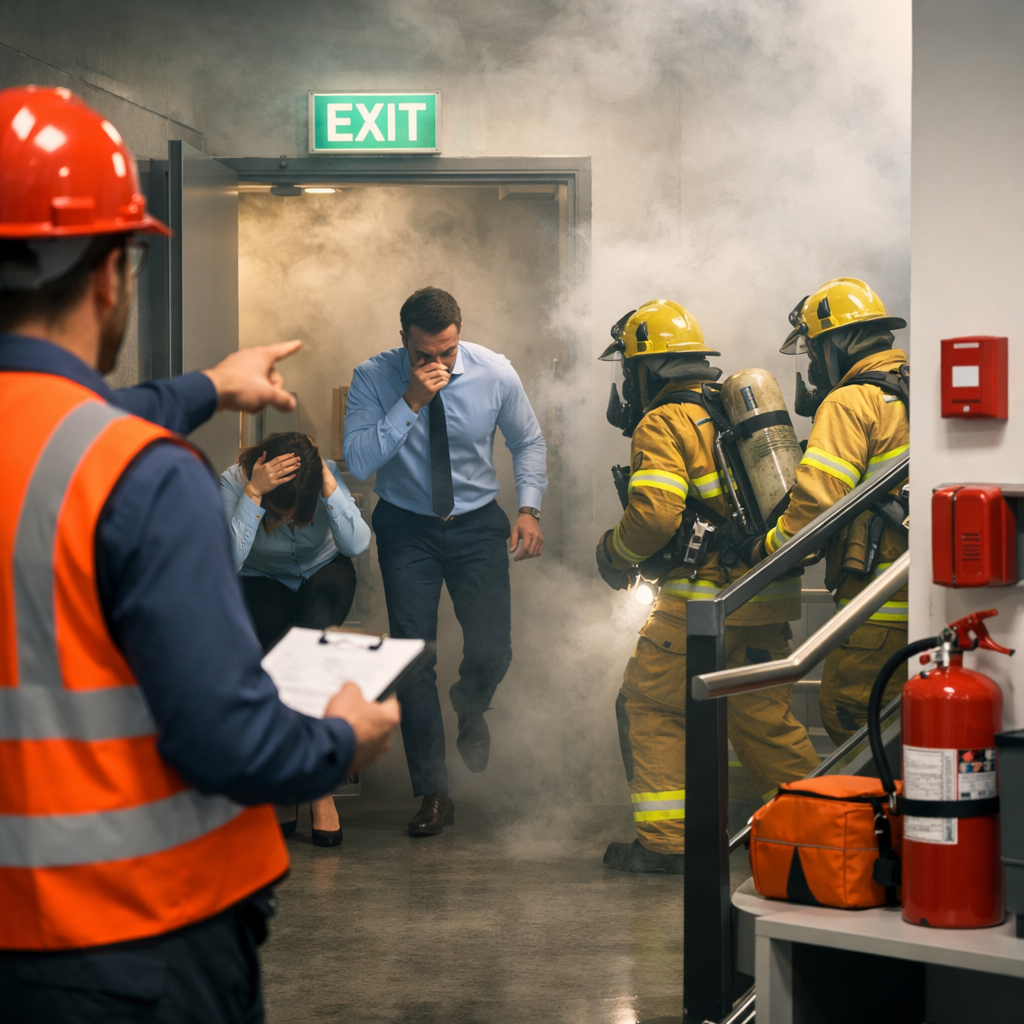
For example, if a plant stores chemicals, drill planning should consider isolation valves, evacuation zones, wind direction, muster locations, and coordination with local fire services.
How to plan emergency drill practices for schools, offices, and plants
The best drill programs begin with a documented plan based on realistic risks.
Rather than copying the same template for every site, organizations should tailor drills to occupancy, hazards, regulatory requirements, and emergency resources.
Start with a site-specific risk assessment
Before scheduling drills, identify the most credible emergencies for each location. A school may prioritize fire, severe weather, and lockdown. An office may focus on fire, medical emergencies, and power failure. A plant may need drills for fire, chemical release, explosion risk, or machinery incidents.
This risk-based approach makes emergency drill practices more useful and more credible to participants.
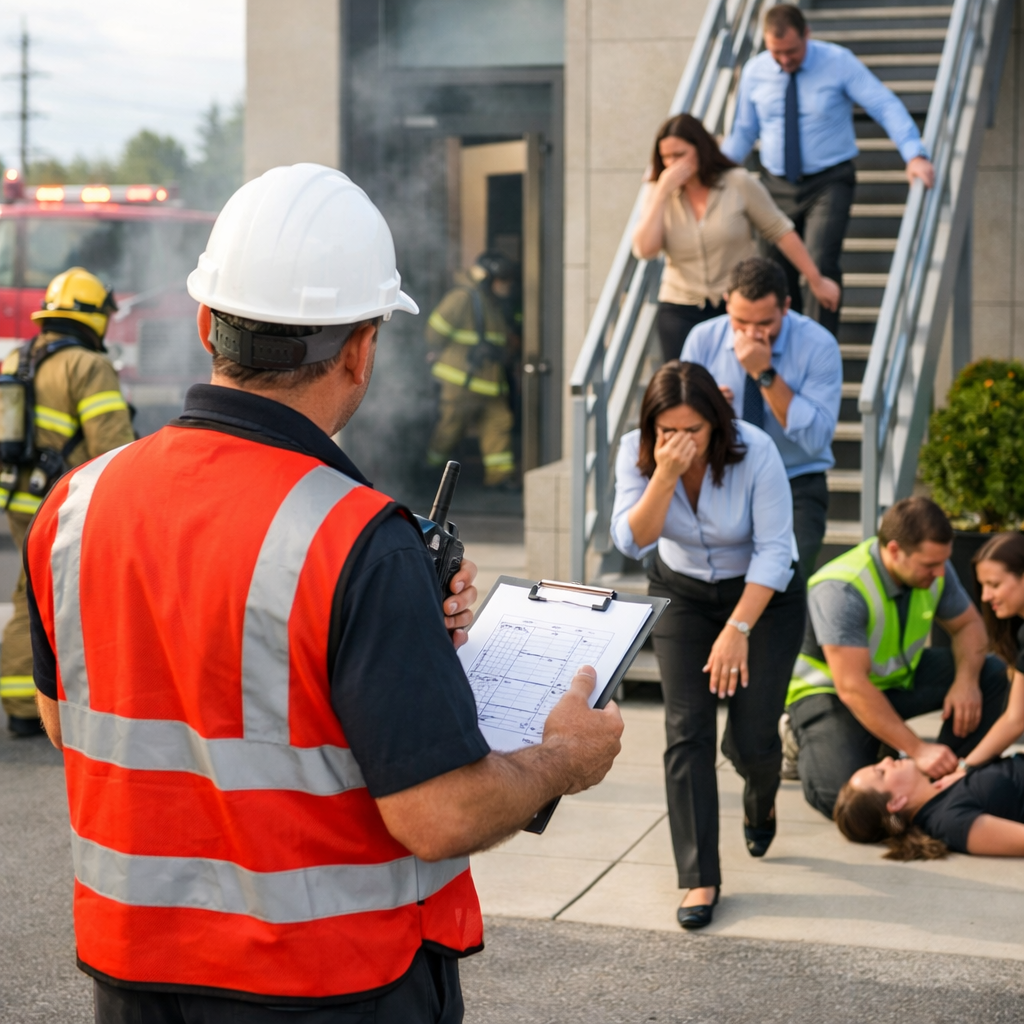
Define roles, routes, and communication channels
Every drill should assign responsibility clearly. Leaders may include teachers, floor wardens, supervisors, first aid responders, control room operators, and incident commanders.
Participants should know:
- What alarm or trigger starts the drill
- Which route to follow and which exits to avoid
- Where to assemble or shelter
- Who accounts for people
- How visitors and contractors are managed
- How to report injuries, missing persons, or blocked exits
Choose the right drill format
Not every exercise must be a full evacuation. Tabletop drills are useful for leadership teams, while functional drills test communication and decision-making without disrupting all operations.
Full-scale drills are valuable when organizations need to test movement, timing, muster points, alarms, shutdowns, or coordination with emergency services.
Many employers also link these exercises with their wider workplace emergency response plan so improvements carry over into policy and training.
Comparing emergency drill practices by setting
Although the planning framework is similar, execution should reflect the environment.
The table below highlights practical differences.
| Setting | Main Risks | Planning Priority | Key Drill Focus |
|---|---|---|---|
| Schools | Fire, lockdown, severe weather, visitor management | Student accountability and staff direction | Orderly evacuation, attendance checks, reunification |
| Offices | Fire, medical incidents, power loss, high occupancy floors | Clear communication and floor coordination | Alarm response, stairwell flow, assembly control |
| Plants | Fire, chemical release, explosion, equipment hazards | Hazard isolation and emergency shutdown | Evacuation zones, shutdown steps, command roles |
School drill planning approach
School drills should be simple, frequent, and age-appropriate. Teachers need scripts and clear instructions so students do not panic.
It is also important to consider students with mobility, sensory, or communication needs. Personal emergency evacuation plans can help staff support these students consistently.
After each drill, school leaders should review timing, line control, attendance verification, and any classroom-specific concerns.
Office drill planning approach
Office drills should account for visitors, temporary staff, and shared building systems.
Wardens should sweep assigned areas, meeting organizers should guide guests, and managers should confirm team accountability at assembly points.
In high-rise offices, one of the most effective emergency drill practices is staggered evacuation planning, especially where full-building movement could create congestion.
Plant drill planning approach
Plant drills must be more tightly controlled because operational hazards can escalate quickly.
Planners may need to coordinate production pauses, equipment shutdown, lockout considerations, and mutual aid communication. Some drills should test whether critical systems can be safely isolated before evacuation.
Where chemicals or airborne hazards are possible, shelter-in-place may sometimes be safer than immediate evacuation. This is why plant drills should always reflect the actual hazard scenario rather than a generic fire response.
Best emergency drill practices for safer and more effective results
The most successful drills are not judged only by speed. They are judged by whether people followed the right actions in the right order.
That requires realistic planning, good supervision, and strong post-drill review.
Use practical controls and realistic scenarios
Drills should test what people would really face. If a stairwell is often blocked by deliveries, the drill should reveal that issue. If a plant relies on a backup muster point for certain wind conditions, that condition should be practiced.
Applying the Hierarchy of Controls can improve drill quality. For instance, engineering controls such as better alarm audibility, marked exits, smoke doors, or gas detection systems support safer evacuation. Administrative controls such as training, signage, warden systems, and contractor induction strengthen response consistency.
Measure performance with clear criteria
Organizations should evaluate drills using measurable points instead of general impressions.
- Time to alarm recognition
- Time to complete evacuation or sheltering
- Accuracy of headcounts
- Communication effectiveness
- Supervisor and warden performance
- Issues affecting people with disabilities or visitors
- Problems with shutdown, isolation, or access routes
These observations help turn emergency drill practices into a continuous improvement process rather than a box-ticking exercise.
Debrief quickly and update the plan
Every drill should end with a structured review. Ask what worked, what failed, and what must change before the next exercise.
Common improvements include clearer signage, revised assembly points, better radio procedures, additional staff training, or changes to visitor registration.
Where appropriate, involving local responders can strengthen realism. Guidance from agencies such as Ready.gov also supports emergency planning, communication, and family preparedness.
Emergency drill practices are most effective when they reflect the realities of the site instead of relying on generic procedures.
Schools need calm, structured drills that protect students and support accountability. Offices need clear communication, coordinated evacuation, and strong warden systems. Plants need risk-based exercises that address hazardous processes, shutdowns, and emergency command.
When organizations plan carefully, apply practical controls, measure performance, and act on lessons learned, drills become a real safety tool instead of a routine event.
In the long run, strong emergency drill practices help protect lives, reduce confusion, support compliance, and build confidence across every kind of workplace.
No comments yet