
Emergency Evacuation Plan: Critical Elements Every Site Needs

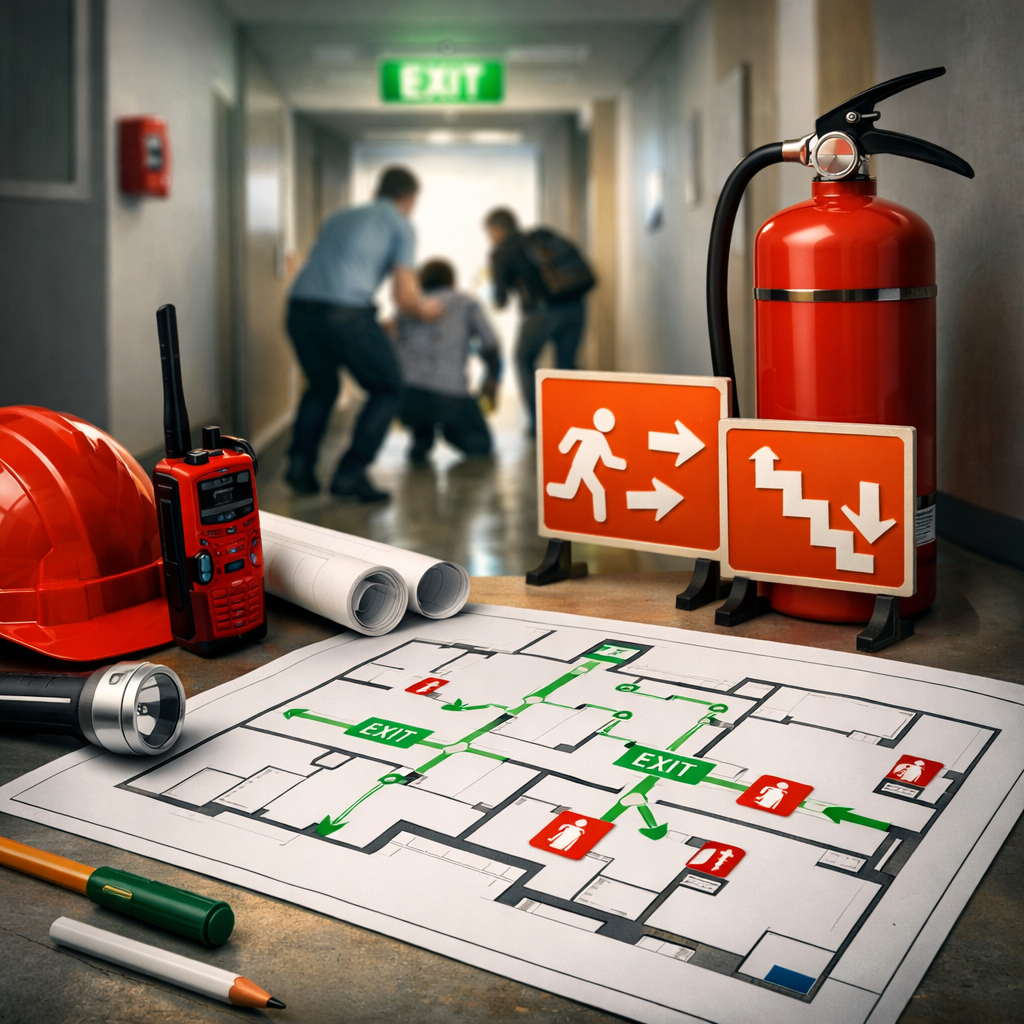
Emergency evacuation plan requirements should never be treated as a box-ticking exercise.
When a fire, chemical release, gas leak, structural issue, or security threat occurs, people need clear instructions they can follow under pressure.
A strong emergency evacuation plan helps protect workers, contractors, visitors, and anyone else on site.
It also supports compliance, reduces confusion, and gives supervisors a practical framework for making fast decisions during a crisis.
Whether you manage an office, warehouse, construction project, school, clinic, or industrial facility, the fundamentals are similar: assign roles, define routes, run drills, and confirm accountability.
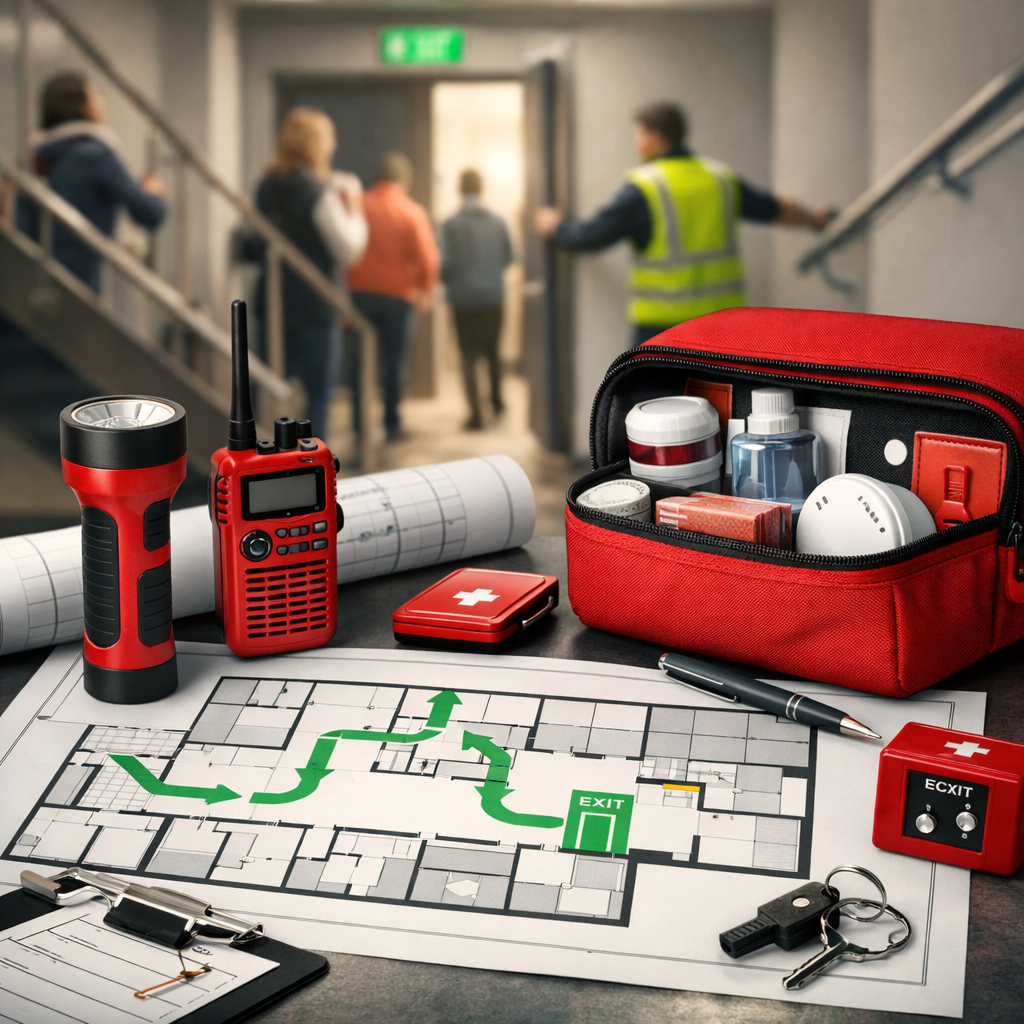
The key is to turn those fundamentals into a site-specific process that reflects real hazards, realistic escape conditions, and the needs of the people who use the workplace every day.
- Why every emergency evacuation plan must be site-specific
- Core roles in an emergency evacuation plan
- Safe routes and exits: how to design an emergency evacuation plan that works
- Drills and training: turning the emergency evacuation plan into action
- Accountability after evacuation: confirming everyone is safe
Why every emergency evacuation plan must be site-specific
No two workplaces have the same layout, hazards, staffing levels, or emergency risks.
That is why an emergency evacuation plan should be built around the actual conditions of the site rather than copied from a generic template.
Start with a practical risk assessment.
Identify likely scenarios such as fire, smoke spread, hazardous substance exposure, electrical incidents, severe weather, confined space rescue triggers, or violence-related emergencies.
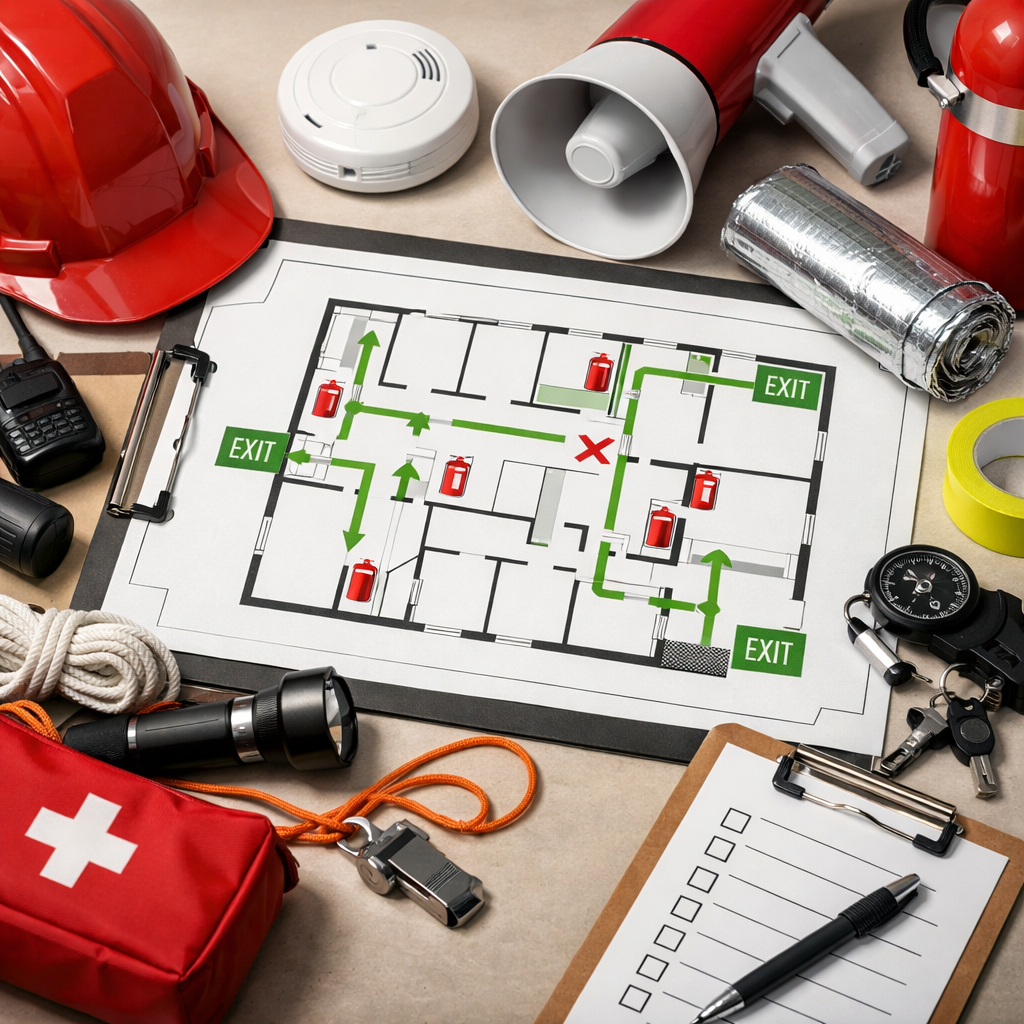
Then consider how people would move during those events.
Would smoke block a corridor? Could a delivery yard become unsafe? Would noise prevent alarms from being heard in a workshop? Are there workers with mobility limitations, temporary injuries, or language barriers?
This is where the Hierarchy of Controls matters.
Evacuation is an administrative control, but the strongest plans also account for higher-level controls where possible, such as eliminating ignition sources, isolating hazardous materials, improving fire protection systems, and engineering safer exits.
Guidance from OSHA and CCOHS reinforces the value of documented procedures, training, and regular review.
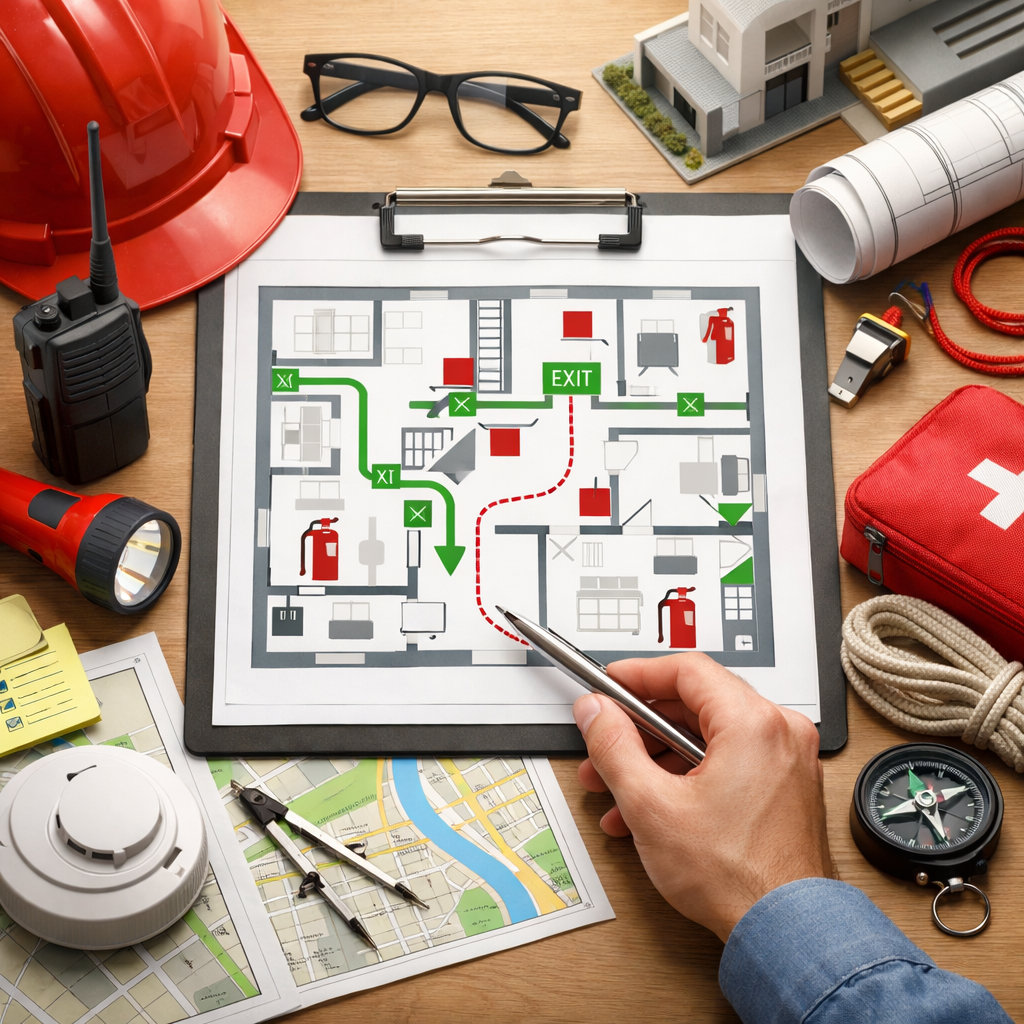
For many workplaces, it also helps to align evacuation planning with broader workplace safety procedures and incident response checklists so expectations remain consistent.
Core roles in an emergency evacuation plan
People respond better in emergencies when responsibilities are assigned in advance.
A good emergency evacuation plan clearly defines who does what, who reports to whom, and what actions must happen first.
Appoint key people and define authority
At minimum, most sites should identify an evacuation coordinator, area wardens, deputies, first aid personnel, and someone responsible for visitor control.
On larger or higher-risk sites, you may also need control room support, shutdown personnel, security, spill response teams, or liaison roles for emergency services.
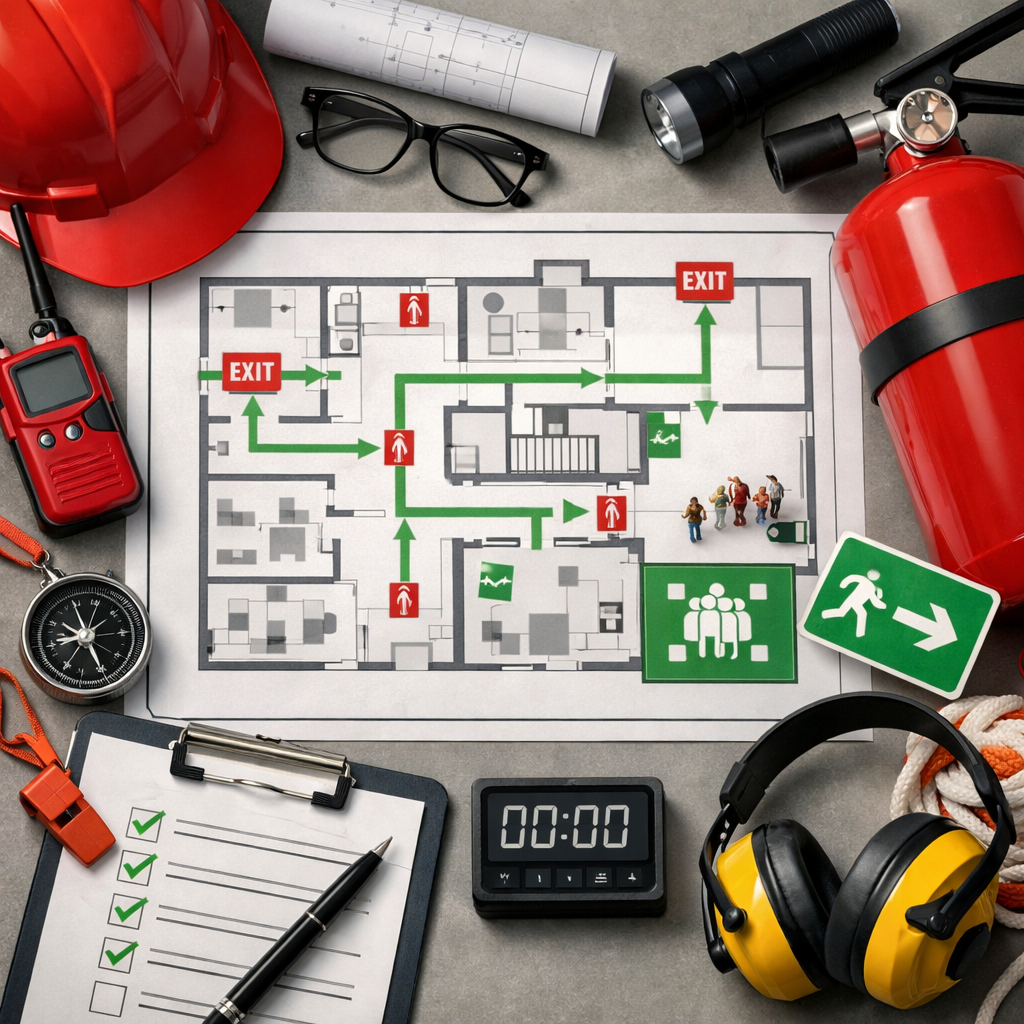
- Evacuation coordinator: activates the response, confirms escalation, and communicates with emergency services.
- Wardens or marshals: direct occupants to exits, check assigned zones, and report status at the assembly point.
- Supervisors: account for their teams, contractors, and temporary staff.
- First aiders: support injured persons only when it is safe to do so.
- Reception or front desk staff: manage visitor logs and provide sign-in information for accountability.
Each role should include a named backup.
Absences, shift changes, and contractor turnover are common reasons emergency plans fail in practice.
Support people with specific needs
One of the most important parts of any emergency evacuation plan is planning for workers and visitors who may need assistance.
This may include people with reduced mobility, hearing or vision impairment, pregnancy-related limitations, medical conditions, or unfamiliarity with the site.
Use personal emergency evacuation arrangements where needed.
These should explain the safest route, who assists, what equipment is available, and what to do if lifts cannot be used.
Clear communication also matters.
Simple wording, multilingual instructions, visual signage, and practical induction briefings can make a major difference during a high-stress event.
Safe routes and exits: how to design an emergency evacuation plan that works
Escape routes must be easy to understand, easy to access, and realistic under emergency conditions.
If a route only works when everything is calm and normal, it is not a dependable part of an emergency evacuation plan.
Map primary and secondary evacuation routes
Every occupied area should have a primary exit route and an alternate route.
Routes should account for blocked corridors, localized fire, chemical spread, weather exposure, and restricted access zones.
Make sure the plan addresses:
- clearly marked exits and directional signage
- unobstructed walkways, doors, stairs, and muster routes
- emergency lighting and illuminated exit signs
- assembly points located a safe distance from the hazard
- special controls for high-risk areas such as plant rooms, labs, or fuel storage zones
In real workplaces, common route failures are simple: stored materials in hallways, locked gates, damaged doors, poor lighting, or assembly points placed too close to the building.
Routine inspections should catch these issues before an emergency does.
Account for hazard-specific controls
Different incidents may require different movement patterns.
For example, a fire may require full building evacuation, while a hazardous gas release may call for moving crosswind or upwind and isolating access to a specific zone.
On construction and industrial sites, routes may need to change as work progresses.
That means the emergency evacuation plan should be reviewed whenever site layout, temporary works, access roads, or high-risk activities change.
| Plan Element | What to Define | Practical Check |
|---|---|---|
| Exit routes | Primary and secondary ways out of each area | Walk the route and confirm it is clear |
| Assembly points | Safe meeting locations away from hazards | Confirm enough space for all occupants |
| Alarm systems | How alerts are triggered and recognized | Test audibility and visibility across the site |
| Assisted evacuation | Who needs help and what support is required | Review personal arrangements regularly |
Drills and training: turning the emergency evacuation plan into action
A written plan is only the starting point.
Training and drills are what make an emergency evacuation plan usable when stress levels are high and time is limited.
All workers should know the alarm signal, the nearest exits, the assembly point, and who their warden or supervisor is.
Contractors and visitors should receive a shorter version during induction, especially on higher-risk sites.
Run realistic evacuation drills
Drills should reflect credible scenarios rather than a single predictable routine.
Try different times, areas, and assumptions so the workforce learns how to adapt.
Examples include:
- a blocked main exit requiring use of the secondary route
- an evacuation during shift change or peak occupancy
- a drill involving a contractor work area
- a simulated injured person requiring controlled assistance
After each exercise, hold a short debrief.
Ask what delayed movement, whether alarms were understood, whether anyone went to the wrong assembly point, and whether headcounts were accurate.
These lessons should lead to updates in signage, training, staffing, or layout.
That review cycle is what keeps the emergency evacuation plan current instead of static.
Accountability after evacuation: confirming everyone is safe
Once people have evacuated, the next priority is accountability.
An emergency evacuation plan must explain exactly how the site confirms who is out, who may still be inside, and how information is passed to emergency responders.
Use a reliable headcount process
The simplest method is usually best.
Supervisors account for their teams, reception checks visitors, contractor controllers verify external workers, and wardens report area status to the evacuation coordinator.
Sign-in systems, access control records, digital roll calls, and manual registers can all help, but each method has limits.
For example, electronic access data may not reflect visitors moving between zones, and paper logs may be incomplete if front desk procedures are weak.
That is why accountability should rely on layered checks rather than a single data source.
It should also include a firm rule against re-entry until the all-clear is formally given by the authorized person.
Review, improve, and maintain the plan
An effective emergency evacuation plan is reviewed after drills, incidents, renovations, staffing changes, and process changes.
It should also be checked on a scheduled basis to confirm maps, names, routes, alarms, contact numbers, and assembly arrangements are still accurate.
In practical terms, every site needs four things to work together: clearly assigned roles, safe and tested routes, realistic drills, and dependable accountability.
When those elements are documented, trained, and reviewed, the emergency evacuation plan becomes more than a compliance document—it becomes a life-safety system people can trust when it matters most.
No comments yet