
Fall Protection Planning: Must-Have Steps for Safe Work at Heights

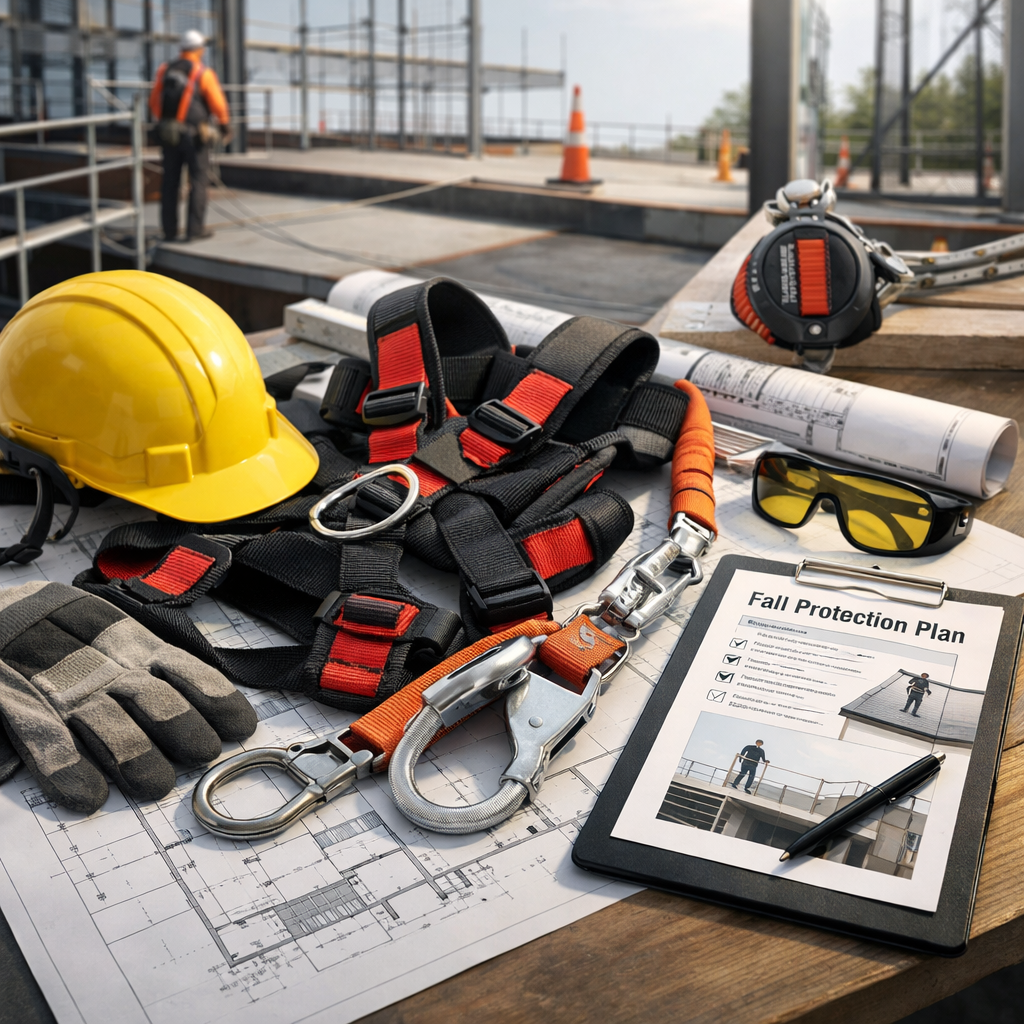
Fall protection planning is the foundation of safe work at heights, whether your team is on a roof, scaffold, ladder, mezzanine, tower, or elevated platform.
Without a clear plan, even routine tasks can turn into serious incidents involving falls, dropped objects, suspension trauma, or delayed rescue.
A strong approach goes beyond handing out harnesses.
It identifies hazards, applies the hierarchy of controls, selects the right equipment, defines rescue procedures, and ensures workers are trained to do the job safely every time.
Organizations such as OSHA and CCOHS both emphasize that preventing falls starts with planning before work begins, not after a hazard is discovered on site.
- Why fall protection planning matters before work starts
- Apply the hierarchy of controls in fall protection planning
- Core steps in fall protection planning for every job
- Equipment inspection and rescue planning are non-negotiable
- Training, supervision, and continuous review strengthen fall protection planning
Why fall protection planning matters before work starts
Work at heights remains one of the most common sources of serious workplace injuries and fatalities across construction, maintenance, warehousing, utilities, and industrial operations.
That is why fall protection planning should begin during job design, not just during the pre-job meeting.
A proper plan helps supervisors and workers answer practical questions early.
What is the fall hazard? Can the task be completed from the ground? What edges, openings, skylights, or unstable surfaces are present? What happens if a worker falls and is left suspended?
Planning also improves consistency.
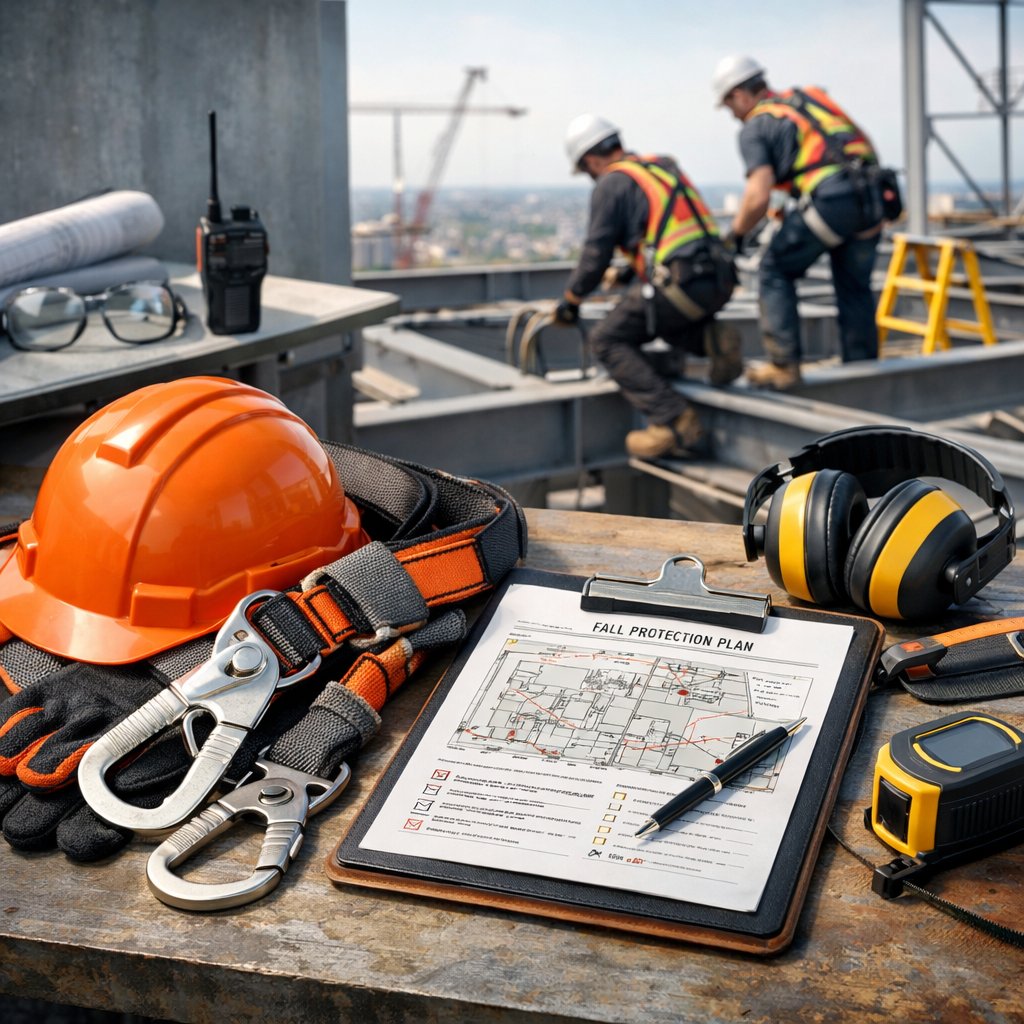
Instead of relying on individual judgment in the field, teams follow a documented process for hazard assessment, equipment selection, anchor point use, access methods, exclusion zones, and emergency response.
For example, a roofing contractor replacing HVAC curb flashing may face multiple hazards at once: unprotected edges, weather exposure, brittle skylights, and material handling near the roof perimeter.
With effective fall protection planning, those hazards can be controlled before the first worker climbs the access ladder.
Apply the hierarchy of controls in fall protection planning
One of the most important principles in fall protection planning is using the hierarchy of controls.
This means choosing the most effective control measures first rather than defaulting immediately to personal protective equipment.
Start with elimination and substitution
The best way to prevent a fall is to remove the need to work at height altogether.
Can inspections be done with drones, cameras, or tools with extended reach? Can equipment be lowered to ground level for maintenance? Can assembly be completed on the ground before lifting into place?
Even small design changes can significantly reduce exposure.
This is often the most overlooked part of fall protection planning.
Use engineering controls next
If working at height cannot be eliminated, engineering controls should be the next priority.
These include guardrails, covers over floor openings, travel restraint systems, permanent anchor systems, elevated work platforms, and properly designed scaffolds.
Engineering controls are generally more reliable because they do not depend as heavily on worker behavior.
For example, installing temporary guardrails around a roof edge provides collective protection for everyone in the area, while a harness system protects only the individual wearing it correctly.
Support with administrative controls and PPE
Administrative controls include safe work procedures, permits, restricted access areas, warning lines, supervision, weather monitoring, and training.
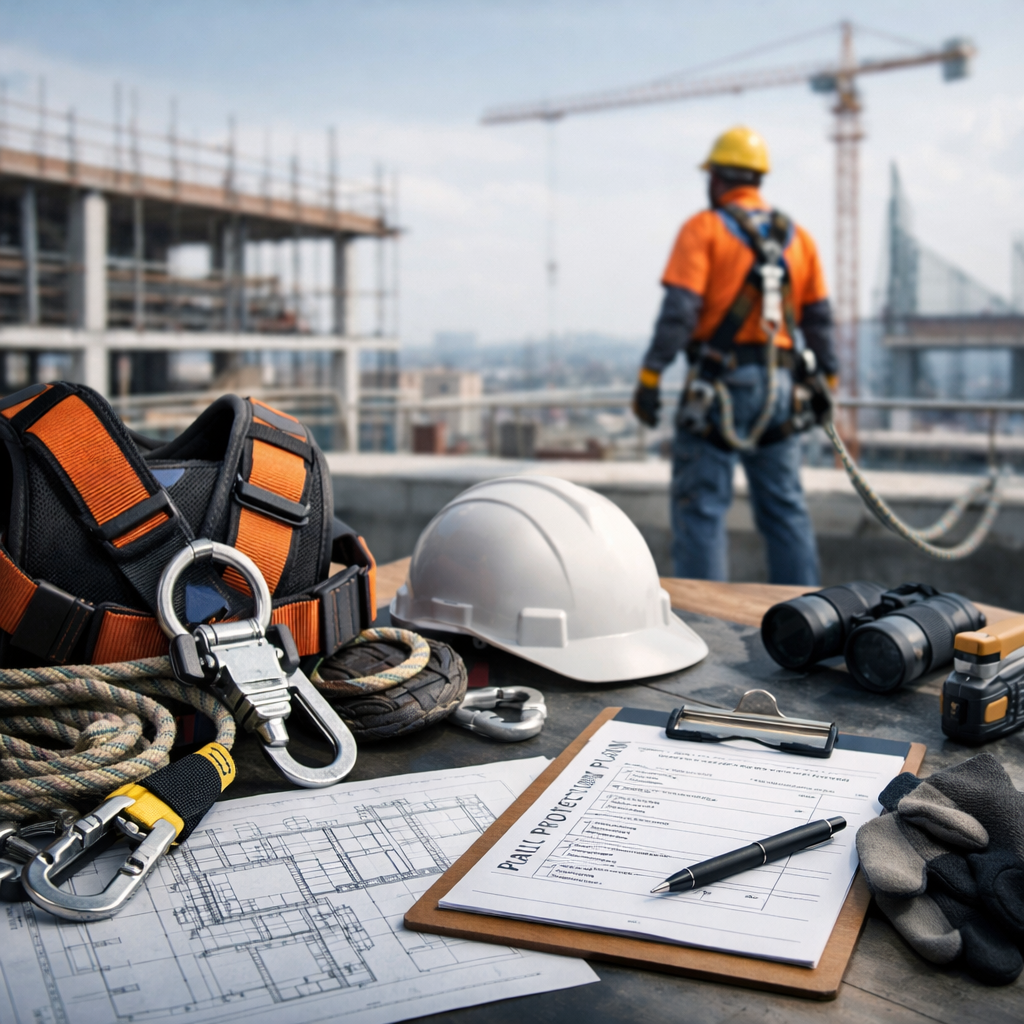
Personal protective equipment, such as full-body harnesses, lanyards, self-retracting lifelines, and connectors, should be used when other controls do not fully eliminate the risk.
The key point is simple: PPE is critical, but it should not be the first or only control.
Good fall protection planning puts these measures in the right order.
- Elimination: perform the task from ground level or redesign the work
- Substitution: use safer methods or equipment that reduce exposure
- Engineering controls: guardrails, covers, platforms, restraint systems
- Administrative controls: procedures, permits, training, supervision, work scheduling
- PPE: harnesses, lanyards, lifelines, connectors, helmets with chin straps
If your site uses permit systems or job hazard analyses, align them with your safety program development process and your working at heights training requirements.
Core steps in fall protection planning for every job
Every work-at-heights task should follow a structured process.
This keeps planning practical and repeatable across different crews, sites, and contractors.
1. Assess the task and the fall hazards
Identify where workers could fall from, through, or into.
Look at roof edges, floor openings, skylights, fragile surfaces, leading edges, ladders, scaffolds, mobile platforms, and excavation edges.
Also consider dropped object hazards, electrical exposure, weather, swing fall potential, and clearance below the worker.
A six-foot fall hazard in one setting may be very different from the same height in another if there are rebar, equipment, or lower levels beneath.
2. Select the right control method
Use the hierarchy of controls to decide whether the work should be done from the ground, behind guardrails, from a platform, in travel restraint, or in fall arrest.
This step is central to effective fall protection planning because it determines how the risk will actually be managed on site.
3. Confirm anchor points and system compatibility
If personal fall protection systems are required, verify that anchor points are rated, suitable for the application, and located to minimize free fall and swing fall.
Make sure the harness, lanyard, lifeline, and connectors are compatible and used according to the manufacturer’s instructions.
Improvised tie-off points or mixed components from different systems can create hidden failure risks.
4. Control the work area
Set up barriers, signage, exclusion zones, and material staging areas.
Prevent unnecessary foot traffic near edges and keep tools secured to reduce dropped object incidents.
Weather controls matter too.
High winds, rain, frost, and poor visibility can make a previously safe task unsafe very quickly.
| Planning Element | What to Check | Why It Matters |
|---|---|---|
| Hazard assessment | Edges, openings, surfaces, clearance, weather | Identifies where fall exposure exists |
| Control selection | Guardrails, platforms, restraint, arrest | Ensures the most effective protection is used |
| Anchor points | Rating, location, certification, compatibility | Prevents system failure and swing falls |
| Work area control | Barriers, signage, tool security, access limits | Reduces exposure for workers and bystanders |
| Rescue readiness | Procedures, equipment, trained responders | Supports fast recovery after a fall |
Equipment inspection and rescue planning are non-negotiable
No fall protection planning process is complete without equipment inspection and rescue planning.
These two areas are often treated as paperwork items, but they are critical to whether a system works in a real emergency.
Equipment inspection before every use
Workers should inspect harnesses, lanyards, self-retracting lifelines, rope grabs, connectors, and anchor devices before each use.
Look for cuts, burns, frayed stitching, corrosion, deformation, cracked housings, missing labels, and signs of previous shock loading.
Any equipment that is damaged, expired, or involved in a fall event should be removed from service immediately.
Formal periodic inspections by a competent person should also be documented according to company procedures and manufacturer guidance.
This is not just good practice.
It is part of compliance expectations under many regulatory frameworks and industry standards.
Rescue planning must be specific
If a worker falls while wearing a fall arrest system, stopping the fall is only part of the response.
The worker must be rescued quickly to reduce the risk of suspension trauma and other complications.
A rescue plan should identify who will respond, what equipment will be used, how the worker will be reached, and how emergency services will be contacted if needed.
Do not rely on the assumption that the fire department will arrive in time or that calling 911 is a complete rescue plan.
Site-specific rescue methods may include self-rescue, assisted rescue from an aerial lift, ladder-assisted retrieval, or pre-rigged rescue kits used by trained personnel.
Run drills where practical so the plan is more than words on paper.
OSHA guidance and many best-practice programs stress that rescue capability must match the actual conditions of the job site.
Training, supervision, and continuous review strengthen fall protection planning
Even the best written plan can fail if workers do not understand it or supervisors do not enforce it.
That is why fall protection planning should include clear training expectations, competent supervision, and regular review.
Workers need to know how to recognize fall hazards, use equipment properly, inspect components, maintain 100 percent tie-off where required, and respond to changing site conditions.
Supervisors should verify that the selected controls remain suitable as the job progresses.
A task that starts under controlled conditions can change when materials arrive, weather shifts, access routes move, or other trades enter the area.
Contractor coordination is also essential on multi-employer sites.
Everyone needs to understand who controls the area, who authorizes anchor use, and how rescue responsibilities are assigned.
After the work is complete, review what went well and what needs improvement.
Near misses, inspection findings, and worker feedback can all be used to strengthen future plans.
In the end, fall protection planning is not just a compliance task.
It is a practical system for preventing injuries, improving job execution, and making sure every person working at height has the protection, equipment, and rescue support they need to return home safely.
No comments yet