
Confined Space Entry Requirements for High-Risk Work: Permits, Testing, Rescue, and Supervision

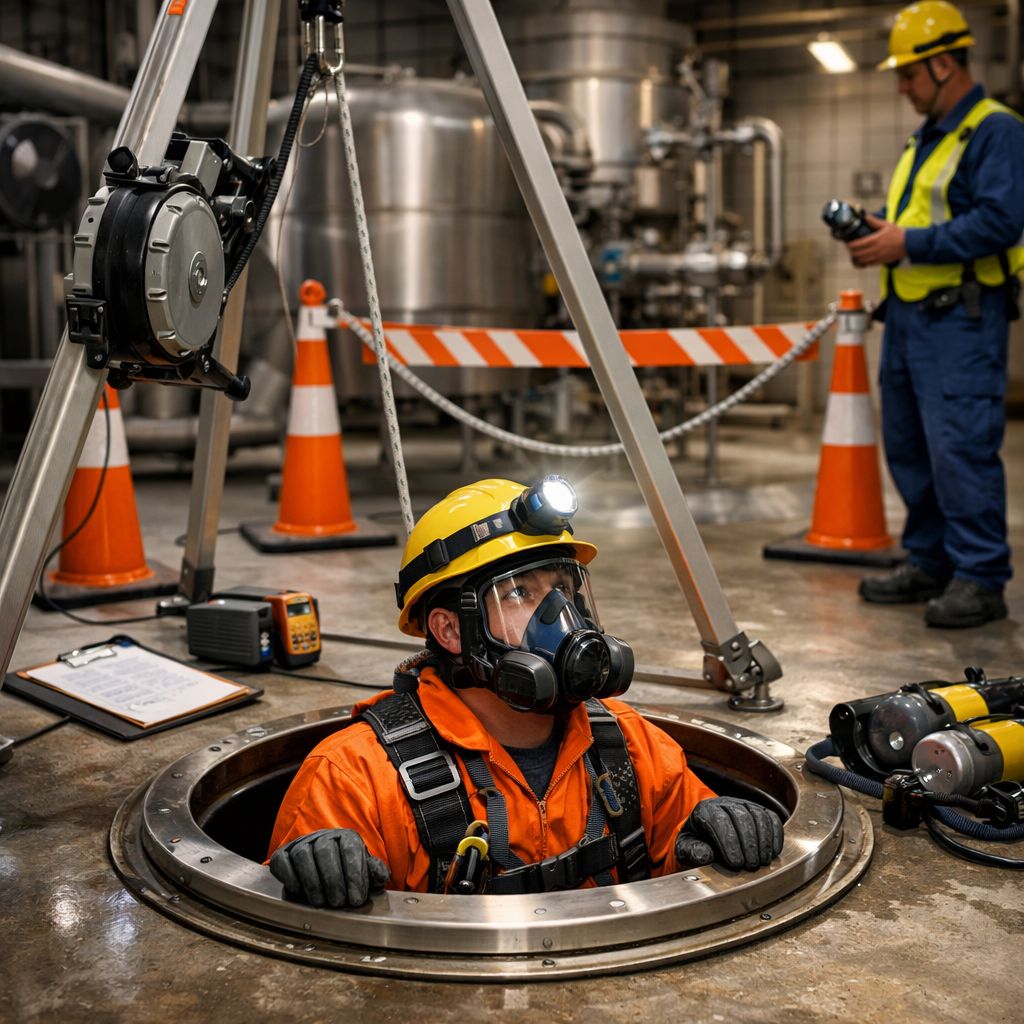
Confined space entry requirements are the foundation of safe work in tanks, pits, silos, vaults, sewers, tunnels, and other enclosed areas where hazards can develop quickly.
These spaces may look manageable from the outside, but limited openings, poor ventilation, toxic atmospheres, engulfment risks, and difficult rescue access can turn routine work into a fatal event within minutes.
For employers, supervisors, and workers, understanding the core rules is essential. In practice, that means using a permit system, completing atmospheric testing, assigning trained attendants, planning rescue before entry begins, and ensuring active supervision throughout the job.
Regulators and guidance bodies such as OSHA and CCOHS emphasize that confined space work is never just about entering a space. It is about identifying every hazard, applying the hierarchy of controls, and confirming that conditions remain safe from start to finish.
Why confined space entry requirements matter in high-risk work
Not every enclosed area is automatically a confined space, but many industrial workplaces contain spaces that meet the criteria: they are not designed for continuous occupancy, have limited entry or exit, and can present serious health and safety hazards.
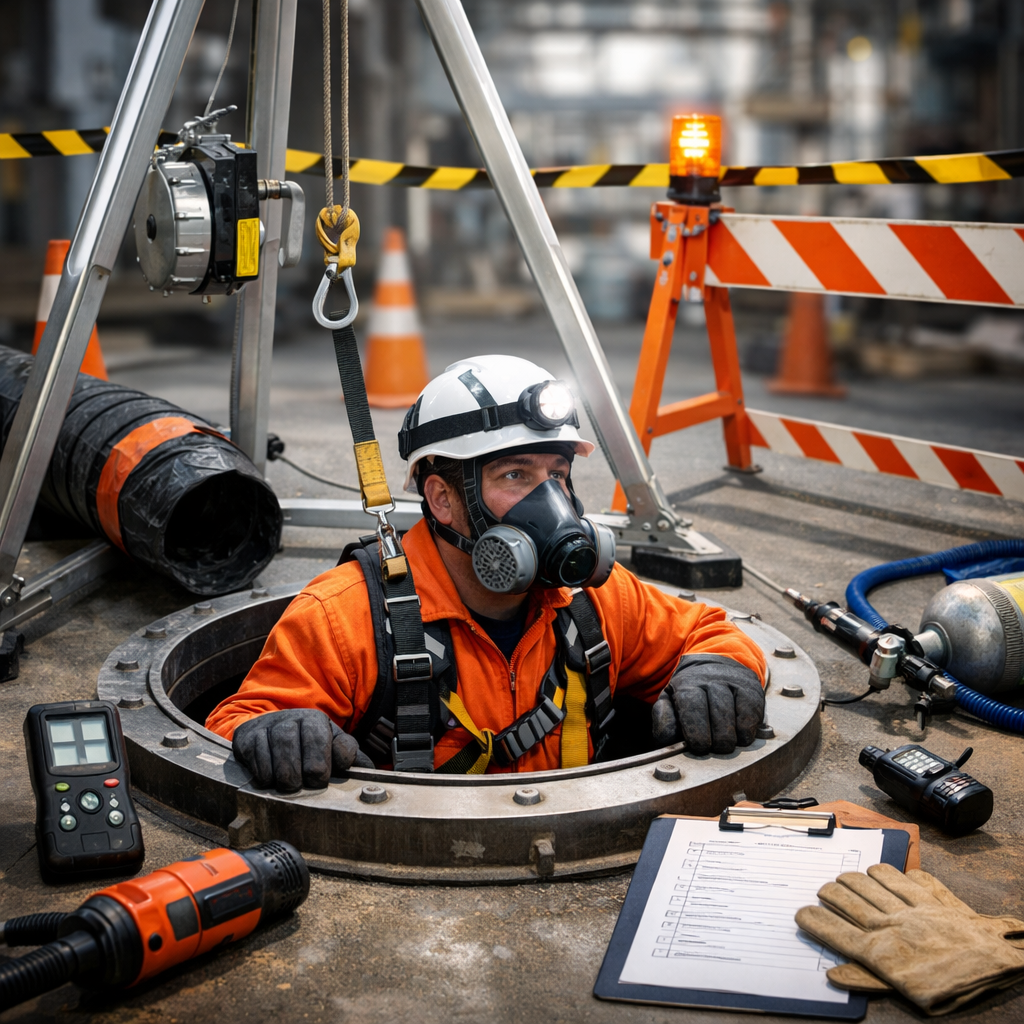
Common examples include storage tanks, reaction vessels, utility vaults, manholes, crawl spaces, and process pits. In these environments, workers may face oxygen deficiency, oxygen enrichment, flammable vapors, hydrogen sulfide, carbon monoxide, moving equipment, heat stress, or shifting materials.
The most effective way to control these hazards is to follow a structured process instead of relying on experience alone. That process starts with hazard identification and risk assessment, then moves through isolation, ventilation, testing, communication, entry controls, and rescue readiness.
The hierarchy of controls should guide every decision. Elimination may mean avoiding entry by using remote inspection tools. Substitution may involve using less hazardous cleaning chemicals. Engineering controls include forced ventilation and lockout systems. Administrative controls include permits, procedures, and training. Personal protective equipment is still important, but it should never be the only line of defense.
Before any worker enters, companies should also make sure their procedures align with site-specific rules and legal duties. For broader safety planning, many employers also connect confined space work with their job safety analysis process and lockout tagout procedures to control hazardous energy and task-specific risks.
Permit systems and hazard control under confined space entry requirements
What a confined space permit should include
A permit is one of the most important confined space entry requirements because it confirms that the space has been evaluated, hazards have been controlled, and entry is authorized only under defined conditions.
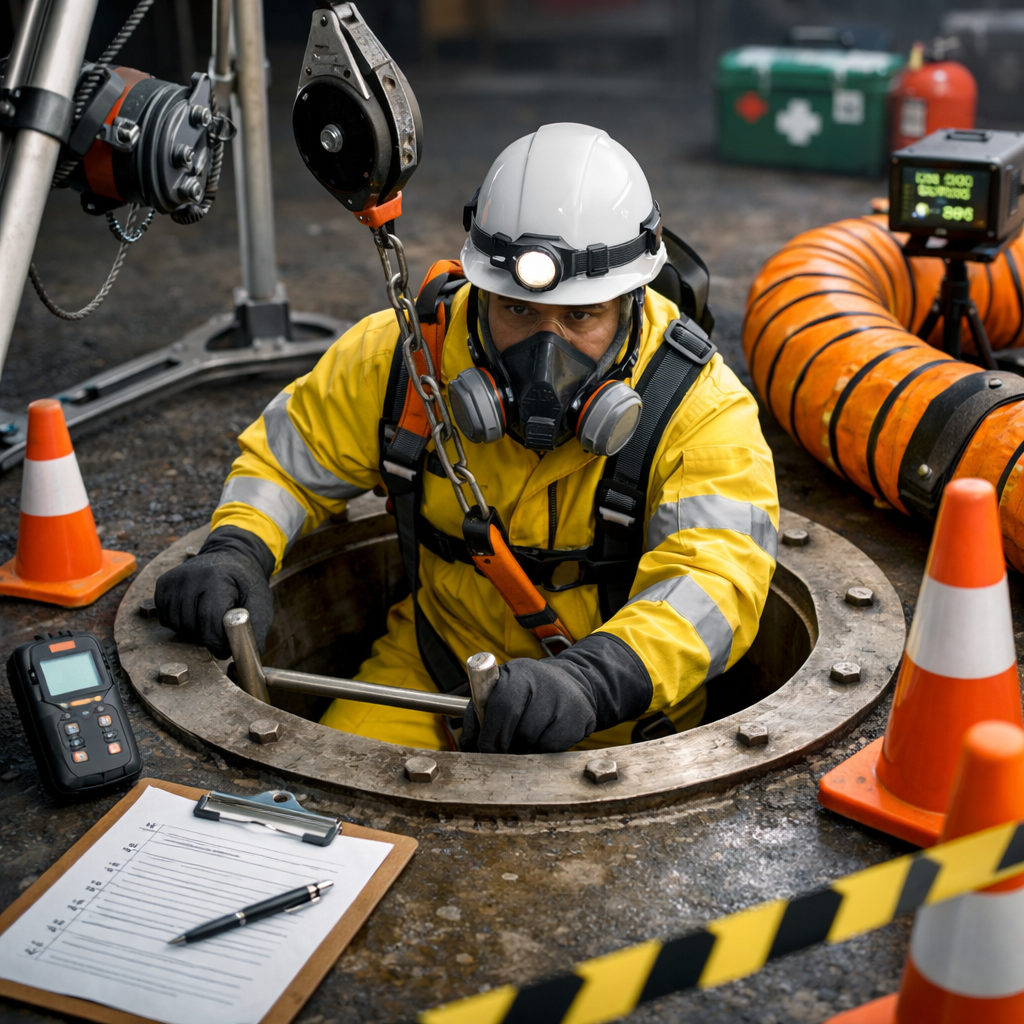
A proper permit should identify the space, the purpose of entry, the date and duration of the work, and the names of authorized entrants, attendants, and supervisors. It should also document the hazards present, required isolations, atmospheric test results, communication methods, PPE, rescue arrangements, and conditions that would require work to stop.
The permit is not paperwork for its own sake. It is a live control document that helps everyone verify the same safety conditions before entry begins.
- Space identification: exact location, description, and entry point
- Scope of work: task being performed and expected duration
- Hazard assessment: atmospheric, mechanical, electrical, biological, thermal, and engulfment hazards
- Isolation steps: lockout, blanking, blinding, line breaking, and equipment shutdown
- Controls required: ventilation, barriers, lighting, communication, and PPE
- People assigned: entrants, attendants, rescue personnel, and supervisor
- Testing results: oxygen, combustible gases, and toxic contaminants
- Emergency plan: retrieval systems, rescue contact details, and response steps
Isolation and preparation before entry
Many serious incidents happen because the space was not fully isolated. Pipes may still contain product, agitators may restart, or steam and electrical energy may remain live. That is why confined space entry requirements typically demand positive isolation before the permit is approved.
Practical controls can include locking out motors, disconnecting hydraulic or pneumatic lines, draining and purging vessels, blanking lines, blocking moving parts, and securing nearby traffic or mobile plant. If hot work is planned inside the space, the permit should also address ignition sources, fire watch duties, and extra atmospheric monitoring.
Gas testing and atmospheric monitoring as core confined space entry requirements
Atmospheric hazards are among the leading causes of confined space deaths, and they can affect not only entrants but also would-be rescuers. For that reason, gas testing is a non-negotiable part of confined space entry requirements.
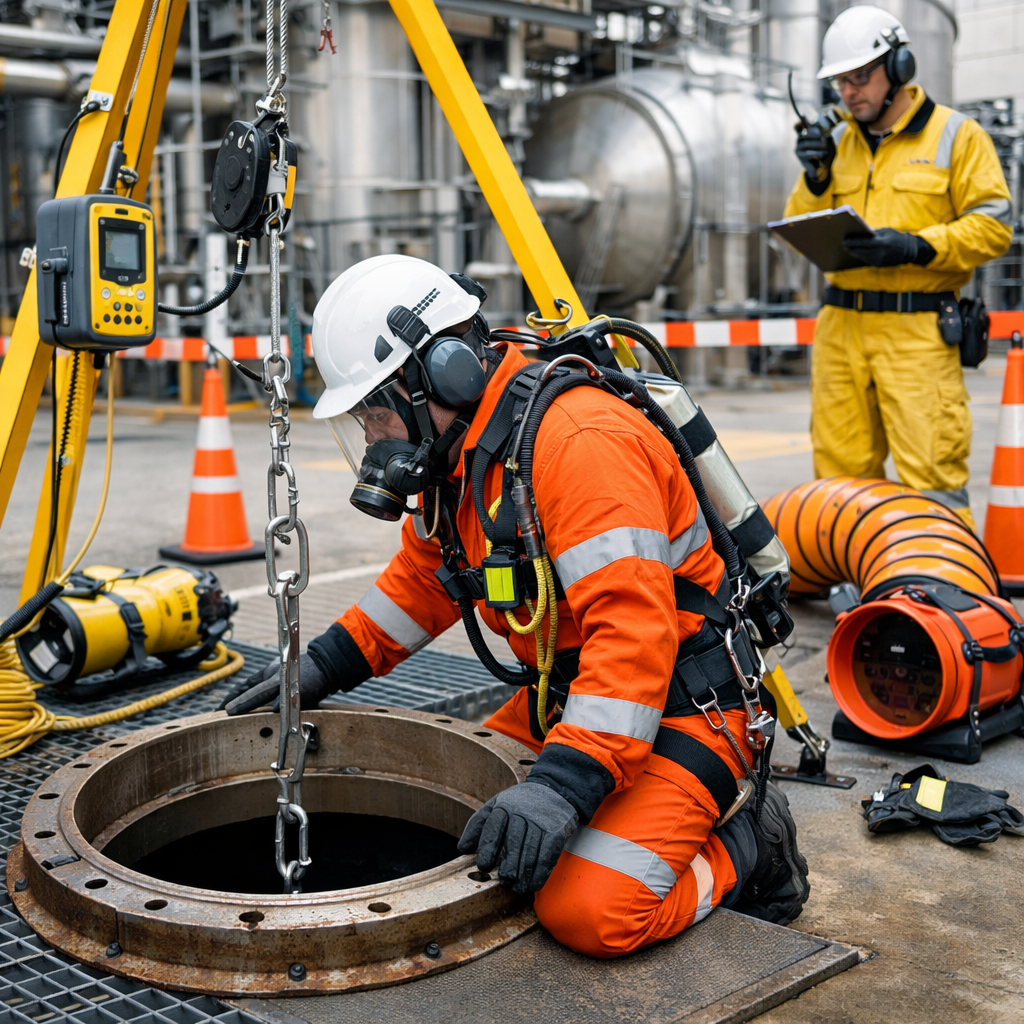
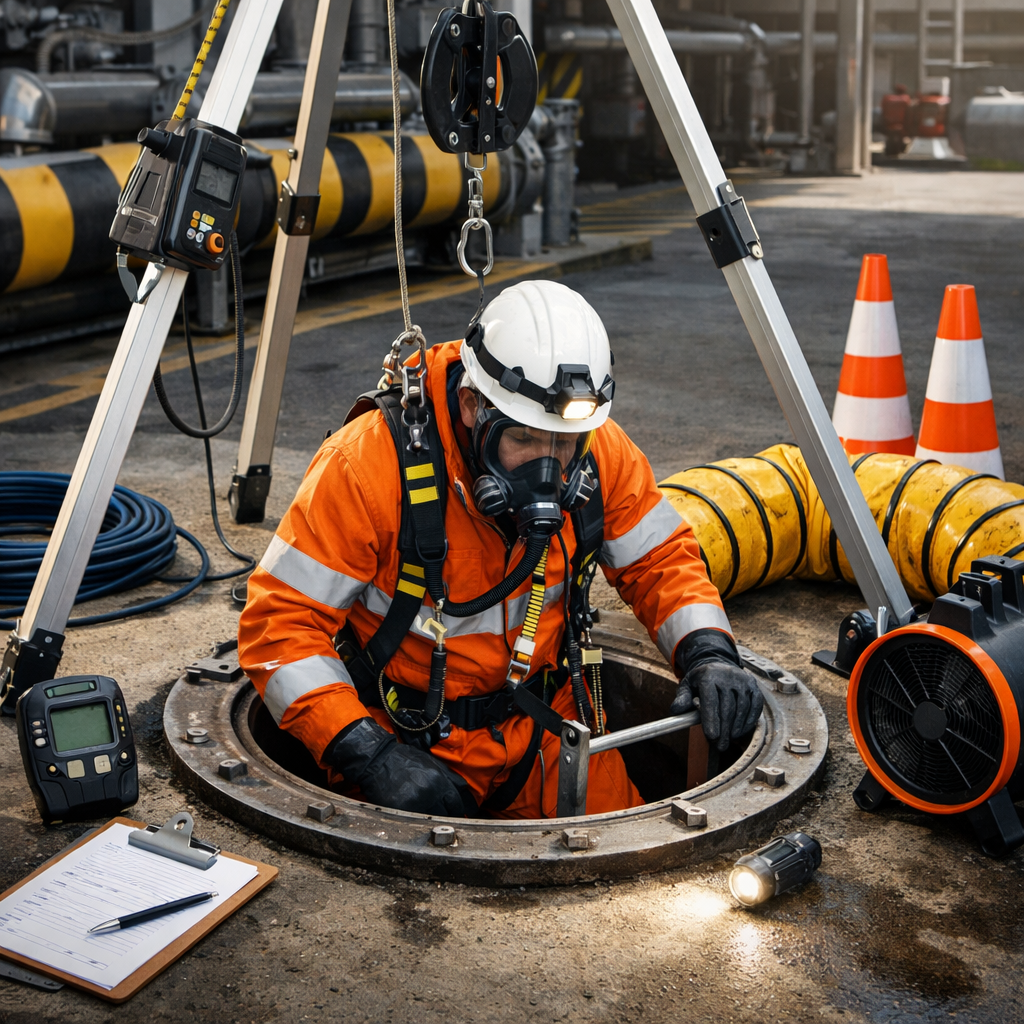
Testing should be completed by a competent person using calibrated equipment, and it should occur before entry and, where required, continuously during the job. Conditions can change fast when chemicals are used, sludge is disturbed, welding begins, or ventilation fails.
What should be tested and in what order
The standard testing sequence is important because it affects the reliability of the readings and the safety of the entry team. In most cases, the atmosphere should be checked for oxygen first, then combustible gases and vapors, and then toxic contaminants.
| Test Item | Why It Matters | Example Risk |
|---|---|---|
| Oxygen | Too little can cause unconsciousness; too much increases fire risk | Rusting tank or inert gas residue lowering oxygen levels |
| Flammable gases/vapors | Can ignite or explode if within the combustible range | Solvent vapors during cleaning or hot work |
| Toxic gases | Can poison workers even at low concentrations | Hydrogen sulfide in sewers or carbon monoxide from equipment |
Testing should sample the top, middle, and bottom of the space where possible because different gases stratify. For example, methane may rise while hydrogen sulfide can settle in lower areas. A single reading at the opening is rarely enough.
Ventilation is often used to improve conditions, but it is not a substitute for testing. Mechanical ventilation must be appropriate for the hazard and should be allowed to run long enough to purge the space effectively. If readings move outside safe limits, the permit should be suspended and workers must exit immediately.
For additional technical guidance, many safety teams refer to NFPA standards and manufacturer instructions for monitor bump tests, calibration, sensor limitations, and alarm settings.
Attendants, rescue planning, and supervision for safe confined space work
The role of the attendant
An attendant is not just a person standing nearby. Under strong confined space entry requirements, the attendant is a dedicated safety role responsible for monitoring entrants, maintaining communication, recognizing warning signs, and initiating emergency procedures without entering the space unless specifically trained and authorized to do so.
The attendant should know who is inside the space at all times, what hazards are present, and what conditions require evacuation. They must remain focused on the entry operation and should not be assigned other distracting duties such as operating unrelated equipment or managing deliveries.
Good communication matters here. Depending on the job, that may include verbal contact, radio communication, hand signals, tag lines, or electronic monitoring systems. If communication fails, work should stop until it is restored.
Why rescue planning must happen before entry
Rescue is one of the most overlooked confined space entry requirements, yet it is often the deciding factor in whether an emergency is survivable. Too many fatalities occur when coworkers rush in without protection to help a collapsed entrant.
A rescue plan should be specific to the space and the work being done. It should identify whether non-entry rescue is possible, what retrieval equipment is required, who will perform rescue, how quickly they can respond, and how emergency medical support will be contacted.
Tripods, winches, full-body harnesses, retrieval lines, breathing apparatus, and stretcher systems may all be needed depending on the space. Just having equipment on site is not enough. Rescue personnel must be trained, equipped, and practiced in realistic conditions.
Active supervision and ongoing review
Supervision is what keeps confined space entry requirements effective after the permit is signed. The entry supervisor should verify that all controls remain in place, workers remain fit for duty, atmospheric readings stay within limits, and any change in conditions is assessed before work continues.
For example, if a contractor brings in a new chemical, switches from manual cleaning to hot work, or opens an additional line connected to the vessel, the risk profile changes. The supervisor must pause the work, reassess hazards, and update the permit and controls as needed.
Training and competency are also part of supervision. Entrants need to understand the hazards, PPE, emergency alarms, and escape procedures. Attendants need to know how to monitor effectively. Supervisors need enough authority and knowledge to stop work immediately when controls are not being followed.
In high-risk workplaces, strong confined space entry requirements save lives because they force critical checks before, during, and after entry. A permit confirms the work is authorized, gas testing verifies the atmosphere is safe, attendants maintain watch, rescue plans prepare the team for the worst, and supervision ensures conditions do not drift into danger. When employers apply these confined space entry requirements consistently, supported by training, isolation, ventilation, and clear procedures, they create a far safer system for everyone involved in confined space work.
No comments yet