
Practical Robotics Safety Measures for Modern Industrial Workplaces

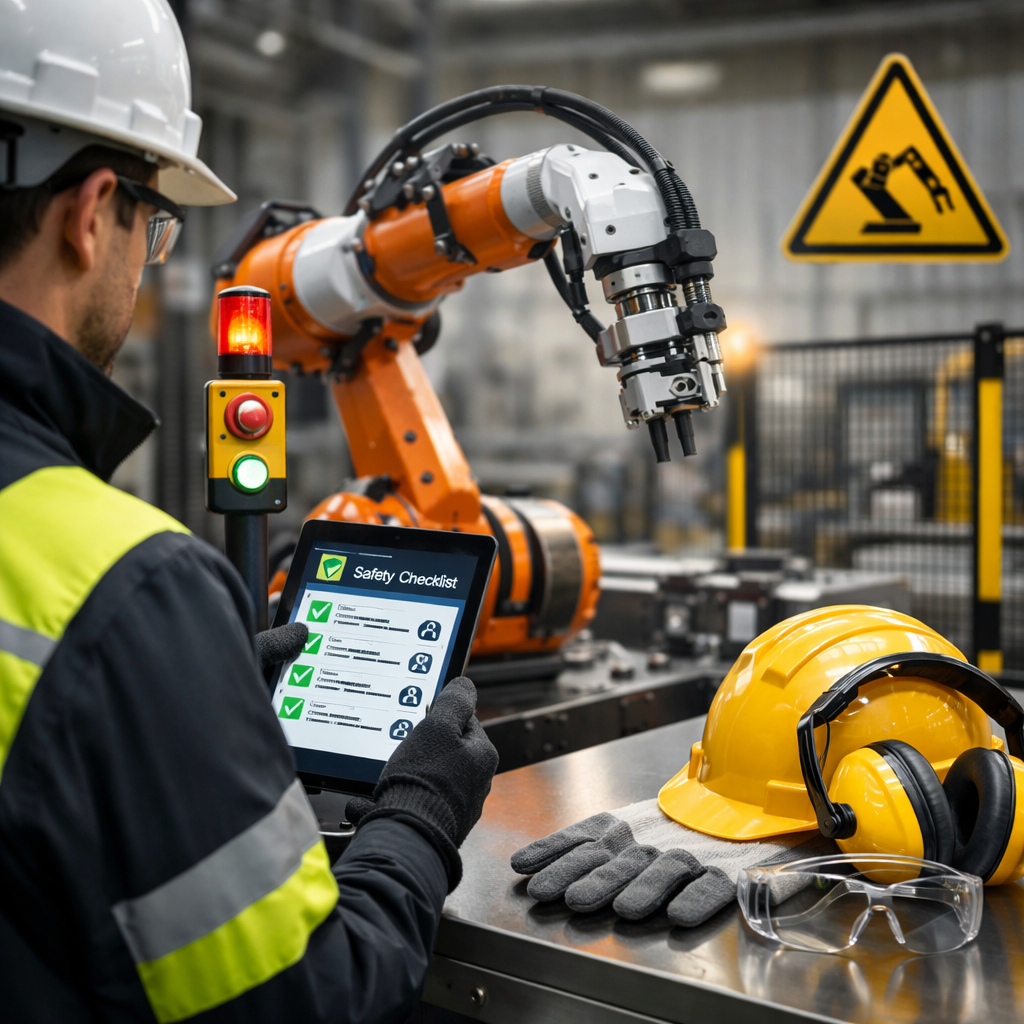
Robotics safety measures are now a core part of running efficient, compliant, and productive industrial workplaces.
As robots take on welding, packaging, palletizing, assembly, and material handling tasks, employers need safety systems that protect workers without slowing operations.
The best approach combines engineering controls, clear procedures, strong training, and routine maintenance so people and machines can work safely in the same environment.
Modern facilities often use a mix of traditional industrial robots, collaborative robots, automated guided systems, and vision-based equipment.
Each setup brings different hazards, including impact, crushing, trapping, unexpected startup, electrical exposure, and programming errors.
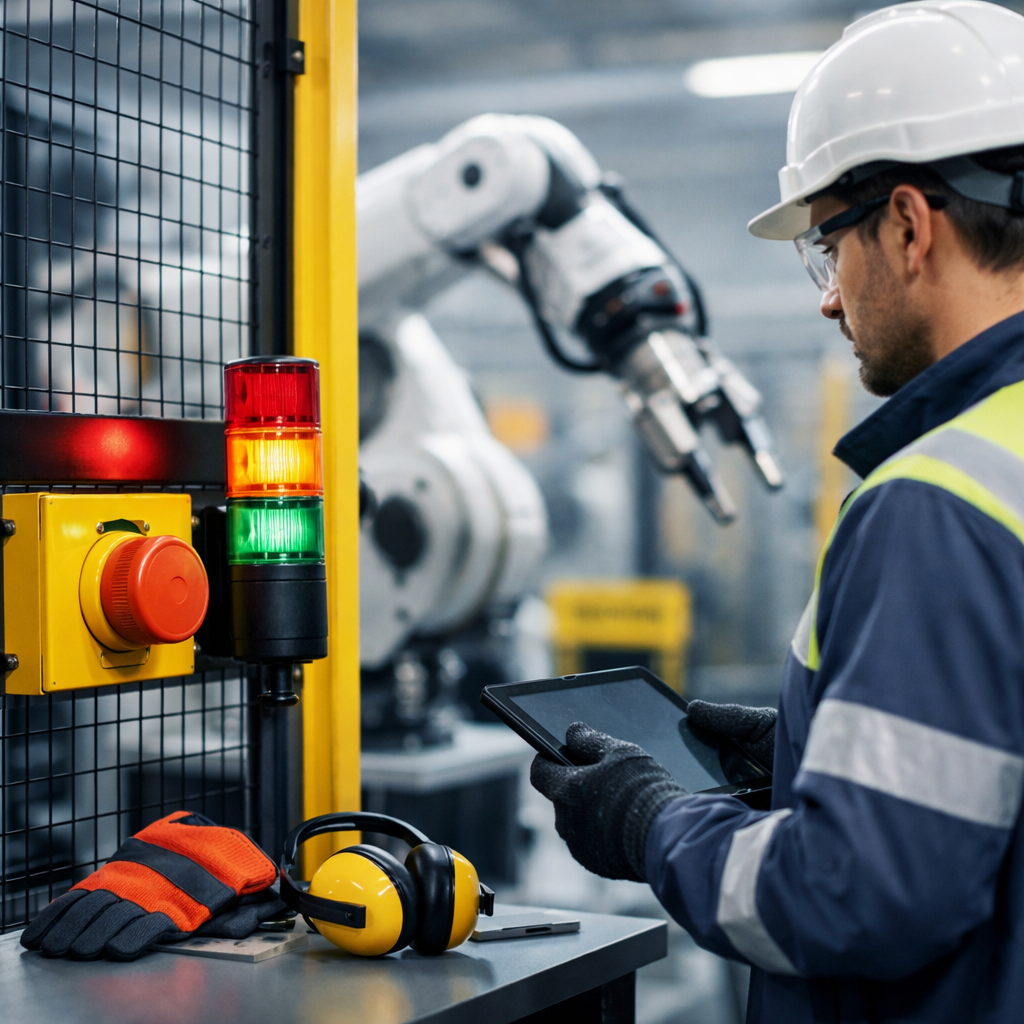
That is why practical robotics safety measures should be built into the design of the workplace from the start, then reviewed regularly as production changes.
- Why robotics safety measures matter in industrial settings
- Robotics safety measures for safeguarding zones and access control
- Robotics safety measures for programming, setup, and operational risks
- Maintenance precautions that keep robotics safety measures effective
- How to review and improve robotics safety measures over time
Why robotics safety measures matter in industrial settings
Robots can improve consistency, throughput, and ergonomics, but they also introduce high-energy movement into shared work areas.
A robotic arm does not get tired, distracted, or slow down when a person steps too close unless the system is specifically designed to detect and respond.
In many incidents, the problem is not the robot alone. It is the interaction between people, tooling, workpieces, conveyors, control systems, and maintenance tasks.
This is why risk assessment should cover the entire cell, not just the machine.
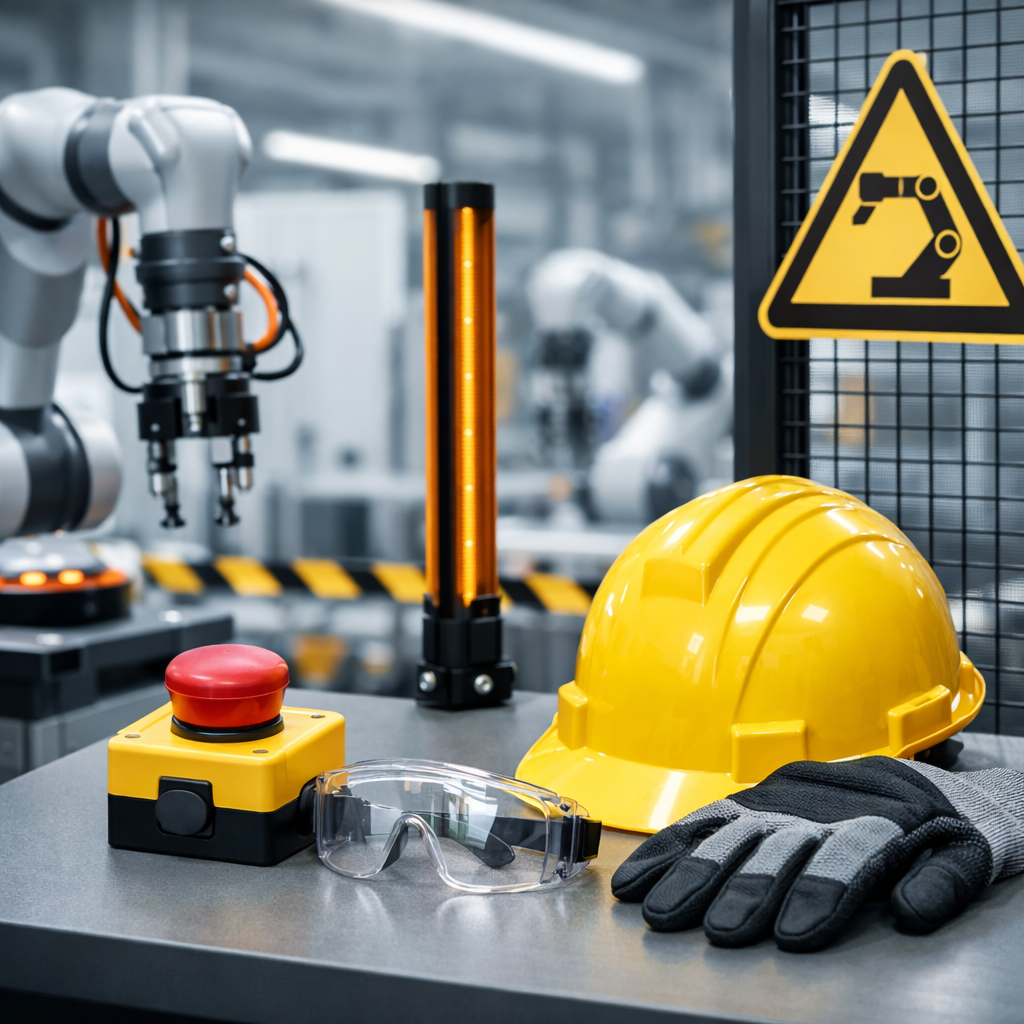
Practical robotics safety measures also align with the Hierarchy of Controls.
Where possible, employers should eliminate hazards through layout and process design, substitute safer methods, apply engineering controls such as guarding and interlocks, support them with administrative controls, and use personal protective equipment as the final layer.
Guidance from organizations such as OSHA and CCOHS can help safety teams build programs that reflect real workplace conditions.
Robotics safety measures for safeguarding zones and access control
Design clear safeguarding zones
Safeguarding zones are one of the most important elements of effective robot protection.
These zones define where people can and cannot enter during operation, setup, and service.
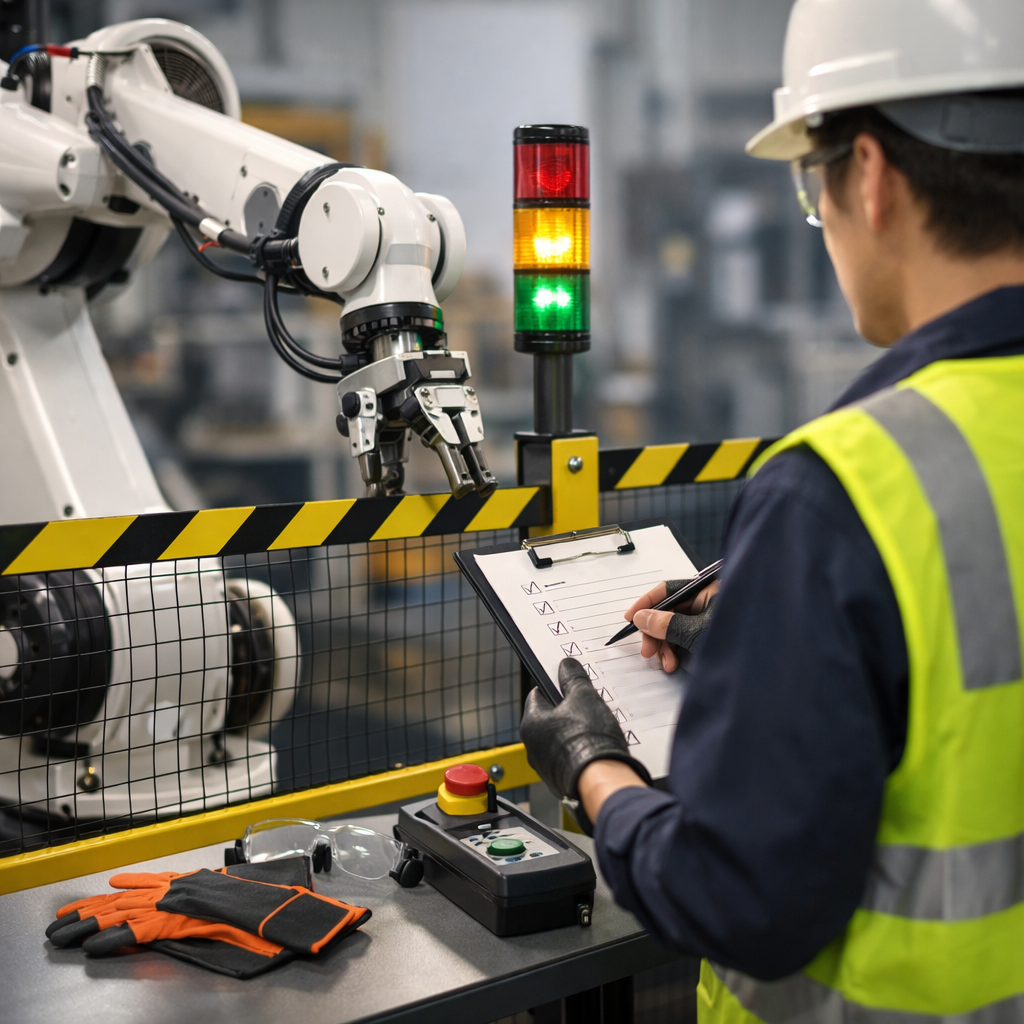
In a standard industrial robot cell, the hazard zone should include the full robot envelope, end-of-arm tooling, pinch points, and the path of any moving materials.
It should also account for unexpected movement caused by faults, dropped parts, or tool changes.
Physical barriers remain one of the strongest engineering controls.
Fixed fencing, perimeter guarding, distance guards, and enclosed cells can prevent routine entry into danger areas.
Where materials must move in and out, designers often use safeguarded openings, tunnels, or presence-sensing devices.
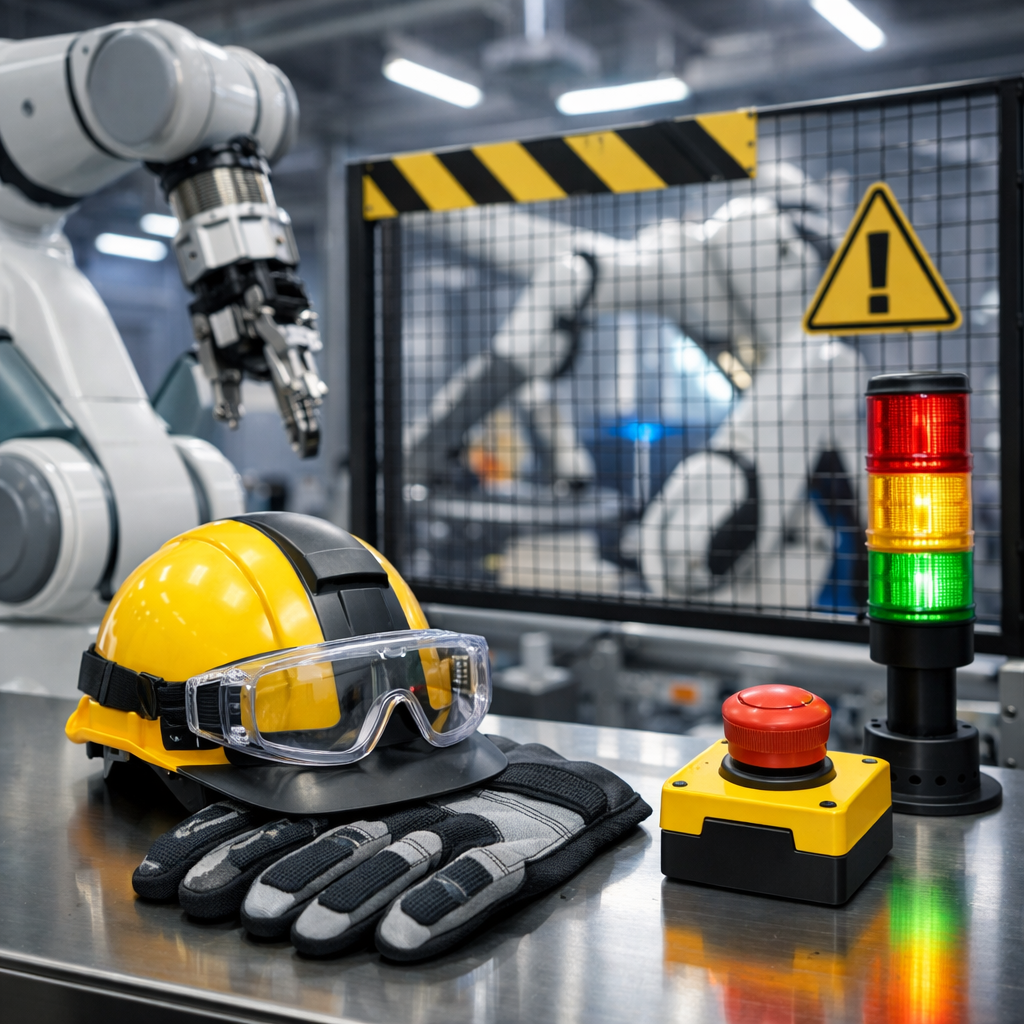
Facilities that use collaborative applications still need risk-based zoning.
Even when robots are designed to work closer to people, force limits, speed restrictions, and task-specific safeguards must be validated for the actual use case.
Use interlocks and sensing devices effectively
Interlocks are essential robotics safety measures because they control access to hazardous motion.
A gate interlock can stop the robot when a door opens, while a trapped-key system can support safer entry during higher-risk tasks.
Light curtains, area scanners, pressure-sensitive mats, and enabling devices can also be used where full fencing is not practical.
The key is choosing controls that match the hazard and cannot be easily bypassed.
Good safeguarding design usually includes:
- Fixed guards for permanent separation from hazardous motion
- Interlocked gates to stop operation when access doors are opened
- Presence-sensing devices such as light curtains or laser scanners for controlled access points
- Emergency stop devices positioned at operator stations and entry points
- Clearly marked floor zones that show restricted, supervised, and maintenance areas
- Lockout points that are accessible during service work
It also helps to review local layouts with operators and maintenance staff.
They often know where people take shortcuts, where parts jam, and where visibility is poor.
Those details can make the difference between a compliant design and a truly safe one.
Robotics safety measures for programming, setup, and operational risks
Manage programming and teach-mode hazards
Programming is often overlooked when discussing robotics safety measures, yet it is one of the highest-risk phases of robot use.
During teaching, testing, and troubleshooting, guards may be open, speeds may change, and workers may be inside the cell.
At this point, a small coding error or unexpected restart can create a serious hazard.
Safe programming practices should include reduced-speed modes, hold-to-run devices, controlled access, and clear line-of-sight wherever possible.
Only trained and authorized personnel should modify motion paths, safety logic, or sensor parameters.
Every change should follow a documented approval process and be tested before normal production resumes.
Common programming-related risks include incorrect coordinate frames, unsafe home positions, tool-center-point errors, disabled safety functions, and logic that does not account for jam recovery or manual intervention.
Version control and change management are simple but powerful safeguards.
If a facility cannot identify who changed a program, when it changed, and how it was validated, risk rises quickly.
For more detail, manufacturers should also review standards and guidance from groups such as A3/Automate.
Support safe operation with training and procedures
Even the best engineered system depends on consistent human behavior.
Operators need to understand startup checks, normal operating zones, fault response, emergency stops, and reporting expectations.
Supervisors should know how to enforce procedures without encouraging unsafe workarounds during production pressure.
Useful operating controls include standard work instructions, permit-to-access procedures, incident reporting, and refresher training after any layout or software change.
Many employers also strengthen safety by linking robot procedures with broader programs such as workplace risk assessments and lockout tagout best practices.
Maintenance precautions that keep robotics safety measures effective
Protect technicians during service and repair
Maintenance tasks create some of the most serious robot hazards because workers may be exposed to stored energy, suspended loads, electrical systems, pneumatic pressure, and unexpected motion.
Routine servicing should never rely on assumption or memory alone.
Strong robotics safety measures for maintenance begin with isolating all energy sources.
That may include electrical power, hydraulic pressure, compressed air, gravity, thermal energy, and any residual motion in the robot or connected machinery.
Lockout/tagout procedures should be specific to the cell design and should identify every isolation point clearly.
Maintenance precautions should also cover lubrication, tool changes, sensor cleaning, software updates, cable inspection, and verification of safety devices after service.
When guards or interlocks are removed for legitimate reasons, temporary controls must be put in place and tightly supervised.
A safe maintenance process often includes:
- Formal lockout/tagout before entry into hazardous zones
- Verification of zero energy state before work begins
- Blocking or supporting components that could fall or move
- Testing interlocks, scanners, and emergency stops after repairs
- Restricting restart authority to designated personnel
- Documenting faults, repairs, and validation checks
Inspection records are especially valuable.
They help employers spot repeated faults, worn guarding, sensor drift, and near misses before they turn into incidents.
How to review and improve robotics safety measures over time
Robotic systems rarely stay the same for long.
Production targets change, new tooling is added, materials vary, and software gets updated.
That is why employers should review robotics safety measures regularly rather than treating commissioning as the finish line.
A simple review framework can help teams stay organized.
| Safety area | What to review | How often |
|---|---|---|
| Safeguarding zones | Guard condition, access points, floor markings, reach envelope changes | Monthly and after layout changes |
| Interlocks and sensing | Function tests, bypass risks, fault logs, reset procedures | Weekly to monthly |
| Programming controls | Change records, speed limits, teach-mode settings, validation results | After every software or process change |
| Maintenance precautions | Lockout compliance, inspection records, replacement parts, restart checks | Every service interval |
Safety committees, engineers, operators, and maintenance technicians should all be involved in these reviews.
Near-miss reports, downtime records, and operator feedback can reveal weak points that are not obvious during audits.
In practice, the safest workplaces are usually the ones that make safety visible, measurable, and easy to report.
In conclusion, robotics safety measures are most effective when they combine safeguarding zones, dependable interlocks, careful programming controls, and disciplined maintenance precautions.
Industrial robots can deliver major productivity gains, but only when employers design systems around real human interaction, realistic failure modes, and continuous improvement.
By applying risk assessment, the Hierarchy of Controls, and recognized guidance from OSHA and CCOHS, modern workplaces can build robotics safety measures that protect people while supporting reliable production.
No comments yet