 Skip to content

Back Safety in the Workplace: Preventing Spinal Injuries is one of the most essential aspects of occupational health and safety.
The spine is the body’s core support system, and injuries to it can have life-altering consequences.
Every year, thousands of workers across industries—from construction to healthcare to office jobs—experience back injuries that could have been prevented through awareness, training, and proper workplace design.
Why Back Safety in the Workplace Matters
Back injuries are among the leading causes of workplace absenteeism and workers’ compensation claims worldwide.
According to the Occupational Safety and Health Administration (OSHA), poor lifting practices and repetitive movements contribute heavily to musculoskeletal disorders.
For workers, spinal injuries can lead to chronic pain, reduced mobility, or even permanent disability. For employers, the consequences include lost productivity, higher healthcare costs, and legal liabilities.

Addressing back safety is not only a compliance issue but also a long-term investment in workforce health and efficiency.
Common Causes of Spinal Injuries in the Workplace
- Improper Lifting Techniques
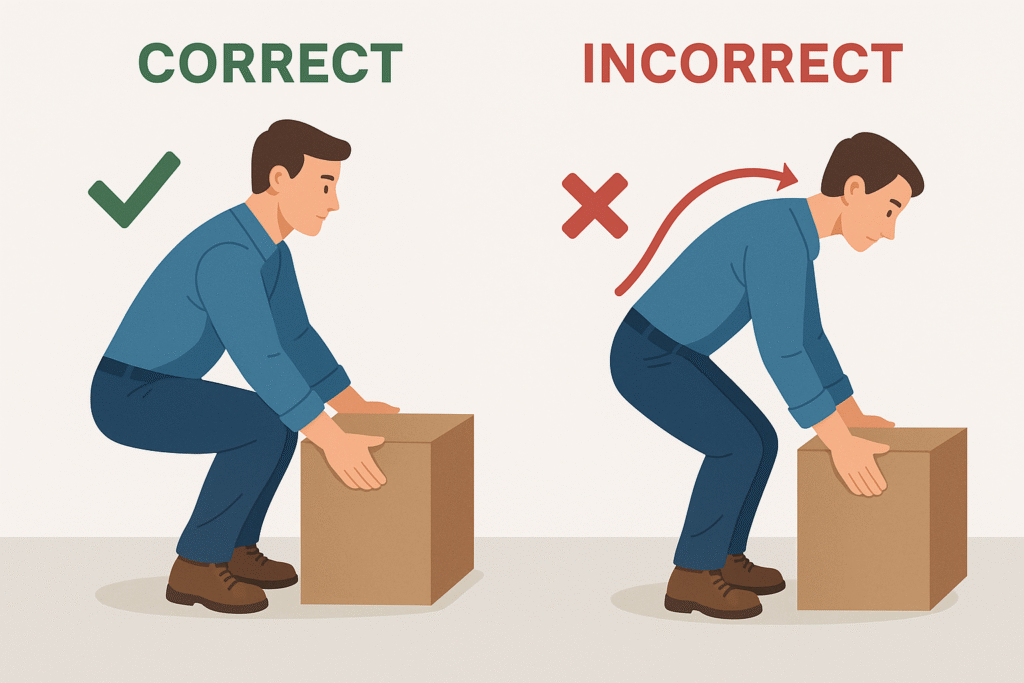
Many injuries occur when employees bend at the waist instead of the knees, placing intense pressure on the lower back. - Repetitive Strain
Continuous bending, twisting, or reaching—common in warehouse and assembly line work—can cause cumulative damage to the spine. - Heavy Loads
Carrying loads beyond safe weight limits puts enormous strain on muscles and spinal discs. - Poor Posture
Even desk jobs can cause spinal issues. Slouching, sitting too long, and using non-ergonomic chairs weaken spinal alignment. - Slips, Trips, and Falls
A sudden fall can compress or twist the spine, leading to acute injuries.

Best Practices for Back Safety in the Workplace
Ergonomic Training
Employees must be trained on safe lifting techniques, including bending the knees, keeping the load close to the body, and avoiding twisting. Employers should regularly update training to reinforce good practices.
Use of Mechanical Aids
Forklifts, pallet jacks, trolleys, and adjustable work platforms should be provided to minimize manual handling of heavy loads.
Workplace Ergonomics
Offices should be equipped with ergonomic chairs, adjustable desks, and monitor stands to reduce spinal strain. Industrial settings should ensure adjustable shelving and tool positioning.
Weight Management
Workers should avoid attempting to lift items that exceed recommended limits. Clear signage indicating maximum load capacities helps reduce risk.
Strengthening and Stretching Programs
Employers can implement wellness initiatives that encourage stretching routines and core-strengthening exercises, which support spinal health.
Safe Housekeeping Practices
Keeping walkways clear, floors dry, and storage areas organized reduces fall hazards that could injure the spine.
The Employer’s Role in Back Safety
Employers are responsible for fostering a safe environment that protects spinal health by:
- Conducting ergonomic risk assessments in both industrial and office settings.
- Providing PPE such as back support belts where appropriate.
- Encouraging early reporting of back discomfort for timely intervention.
- Rotating job tasks to minimize repetitive strain.
- Ensuring employees have access to physiotherapy and occupational health services.
By prioritizing spinal safety, organizations demonstrate a genuine commitment to worker well-being.

Long-Term Consequences of Ignoring Back Safety
Ignoring back safety can lead to lifelong pain, limited career options for workers, and significant financial losses for businesses. Chronic spinal injuries are difficult to treat and often recur, making prevention the most effective approach.
Companies that integrate back safety programs benefit from healthier employees, lower absenteeism, and reduced compensation costs. Ultimately, safeguarding the spine is an investment in human capital.
Resources for Back Safety
- Canadian Centre for Occupational Health and Safety (CCOHS) – Guides on ergonomics and musculoskeletal disorders.
- National Institute for Occupational Safety and Health (NIOSH) – Research-based ergonomic recommendations.
- Internal links: See related resources on OHSE.ca for ergonomics, lifting safety, and workplace design best practices.
Back Safety in the Workplace: Preventing Spinal Injuries is more than a safety slogan—it is a vital principle of occupational health.
From warehouses to offices, every industry must recognize the importance of spinal health. With ergonomic training, mechanical aids, safe lifting practices, and supportive wellness programs, organizations can drastically reduce the risk of injuries.
Back Safety in the Workplace: Preventing Spinal Injuries should be a top priority for every employer and employee alike.

No comments yet