


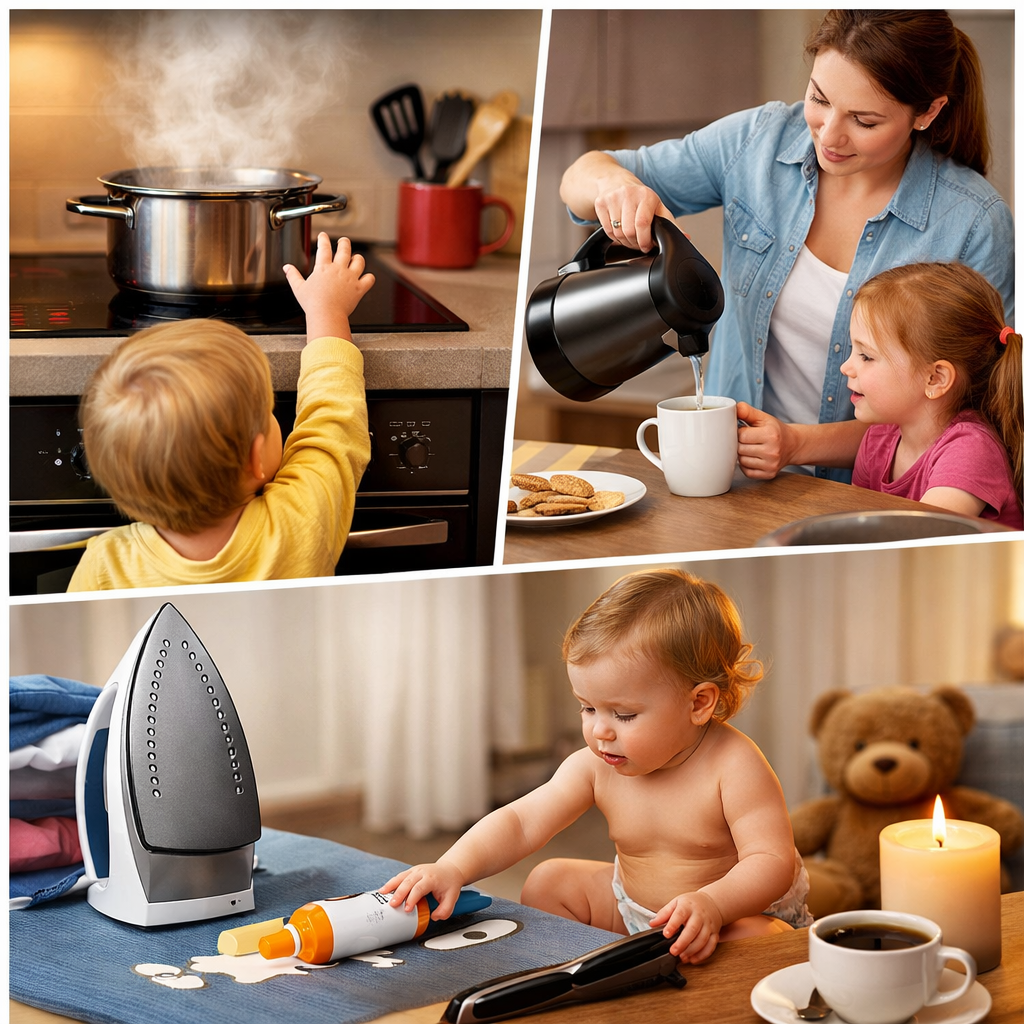

Burn prevention for children starts with everyday habits at home, where most hot surfaces, liquids, and appliances are part of normal family routines. Young children are naturally curious, move quickly, and may not recognize danger, which is why parents, caregivers, schools, and older siblings all play a role in creating safer spaces and safer habits.
In Canadian homes, common burn risks include hot drinks, stovetops, oven doors, bath water, space heaters, curling irons, candles, and electrical cords. Practical prevention means looking at the home the way a child does, reducing access to hazards, and building routines that stay consistent even during busy mornings, family gatherings, or school days.
Why burn prevention for children matters at home
Children can be injured by scalds, contact burns, electrical burns, and fire-related burns. Scalds from hot liquids are especially common because a cup of tea, a bowl of soup, or hot tap water can seem harmless to an adult but can seriously injure a child in seconds.
A useful way to think about burn prevention for children is through a simple safety approach similar to the hierarchy of controls used in health and safety. First, remove the hazard where possible. Next, separate children from the hazard using barriers or safe zones. Then support safer behaviour through supervision, family rules, and age-appropriate teaching.
Families can also reinforce these habits in places beyond the home. Child care centres, schools, community kitchens, and youth workplaces may all have heat sources, appliances, or hot-water risks. General Canadian safety guidance from organizations such as CCOHS, Parachute, and the Government of Ontario at Ontario.ca can help families build a broader prevention mindset.
Kitchen and dining room burn prevention for children
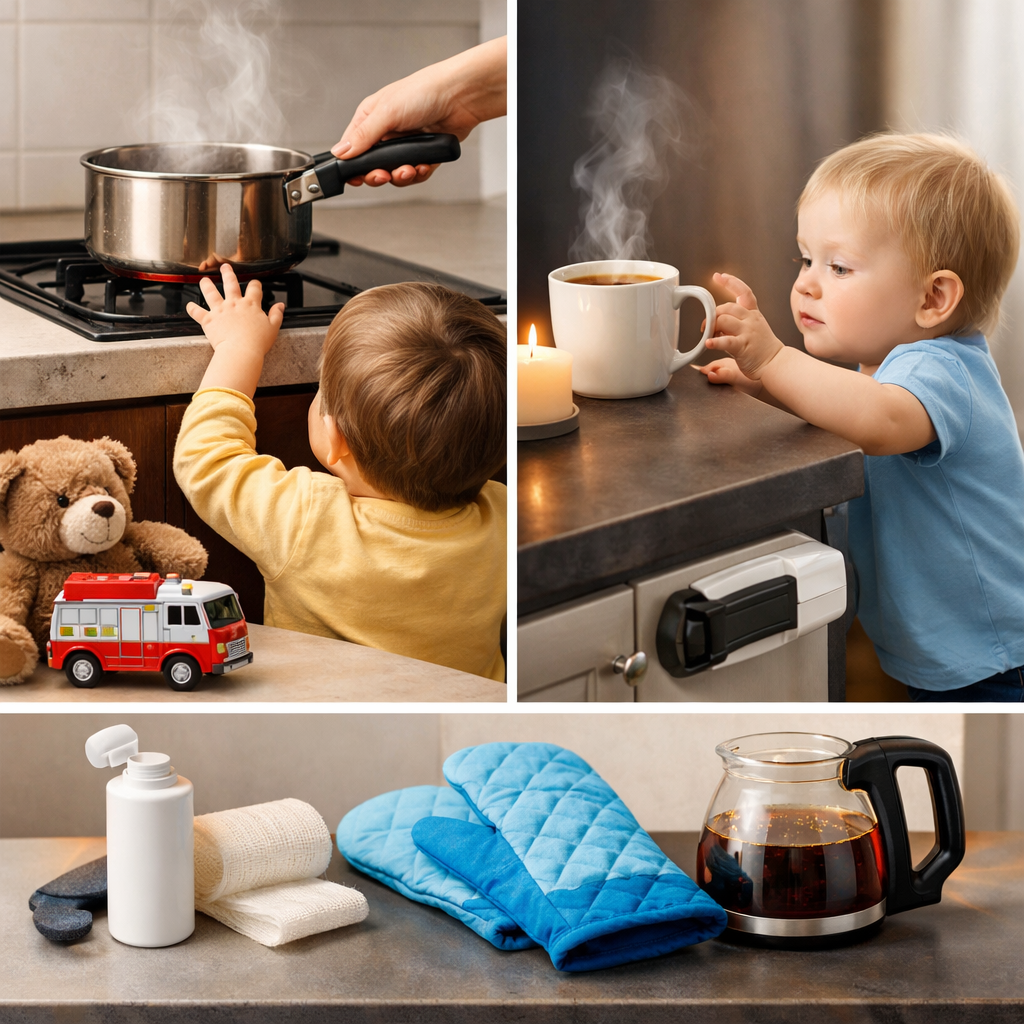
The kitchen is one of the highest-risk areas for childhood burns because it combines hot liquids, hot surfaces, steam, sharp objects, and rushed activity. Prevention works best when adults prepare meals with a clear child-free zone around the stove, oven, air fryer, toaster, kettle, and microwave.
Safer kitchen habits
- Turn pot and pan handles inward so they cannot be grabbed or bumped.
- Keep hot drinks, soup, and bowls away from table edges and counters.
- Avoid holding a child while cooking, pouring, or carrying hot food.
- Use back burners when possible.
- Keep appliance cords short, tidy, and out of reach.
- Place microwaved food where adults can test temperature before serving.
- Keep children away from steam when opening lids, dishwashers, or microwaves.
Hot beverages deserve special attention. A mug of coffee or tea on a low table, armrest, or desk can be pulled down quickly by a toddler. Tablecloths and dangling placemats can create the same risk by allowing a child to drag a hot item down onto themselves.
For families with school-age children, this is also a good time to teach practical kitchen skills. Children can help with cold food prep, setting the table, or cleaning up, while adults handle hot appliances and cooking tasks until the child is mature enough and properly supervised. If a teen is learning food service or kitchen work, training resources such as OHSE training and practical home supervision can help reinforce safer habits that carry into school or work settings.
Bathroom, bedroom, and living space burn prevention for children
Many serious burns happen outside the kitchen. Bathrooms can present scald risks from hot tap water, while bedrooms and living rooms may have space heaters, fireplaces, radiators, hair tools, irons, heating pads, and chargers.
Hot water and bathing safety
Bath time should always begin with an adult checking the water temperature before a child gets in. Run cold water first, then add warm water, and never leave a child unattended near running or filling water. If possible, set household water temperature controls according to manufacturer guidance and local recommendations, and ask a qualified professional if adjustments are needed.
Even after use, bathtubs, taps, and wet bathroom surfaces can create hazards when children reach for controls themselves. Store grooming appliances such as curling irons, straighteners, and hair dryers unplugged and out of reach after each use. These devices can stay hot for several minutes and should not be left on counters where cords hang down.
Heating equipment and household items
Space heaters and fireplaces need stable placement, clear space around them, and close supervision when children are nearby. Children should be taught that heaters, radiators, and fireplace glass are not for touching, leaning, or drying clothes. Candles are best kept out of reach and never left unattended, especially in homes with young children.
Electrical safety is also part of burn prevention for children. Damaged cords, overloaded outlets, and curious fingers near sockets can all create risks. Use outlet covers where appropriate, replace damaged equipment, and follow manufacturer instructions for chargers, heating devices, and appliances.
Practical burn prevention for children by age and setting
Children of different ages need different protections. Toddlers need strong environmental controls because they explore by climbing, pulling, and touching. Older children benefit from simple explanations, repeated reminders, and supervised participation in routines. Teens need practical instruction for home, school labs, shop classes, babysitting, and part-time work.
| Age or setting | Common burn risks | Helpful prevention habits |
|---|---|---|
| Infants and toddlers | Hot drinks, cords, bath water, oven doors | Create no-go zones, keep hot items high, supervise closely |
| School-age children | Microwave food, hot taps, small appliances | Teach stop-and-ask rules, test food first, model safe routines |
| Teens | Cooking, hair tools, candles, school or job tasks | Provide training, set clear rules, require safe equipment use |
| Schools and child care | Hot lunch equipment, science activities, cleaning tools | Follow site procedures, supervise activities, separate children from hazards |
In Ontario and across Canada, families should also follow local school, workplace, landlord, fire safety, and manufacturer guidance where applicable. If a child is involved in a school activity, co-op placement, or youth job, adults should make sure the site has clear supervision, safe procedures, and age-appropriate expectations. Additional workplace and home safety information is available at OHSE.ca and from Health Canada.
Short actionable checklist for burn prevention for children
A short checklist can help busy families turn good intentions into routine action. Review these points regularly, especially after moving, renovating, buying new appliances, or changing child care arrangements.
- Keep hot food and drinks away from edges, laps, and low tables.
- Turn pot handles inward and use back burners when possible.
- Create a child-free zone around cooking areas and heaters.
- Check bath water before a child enters the tub.
- Store irons, curling tools, and kettles safely after use.
- Manage cords and keep outlets and chargers in safe condition.
- Teach children simple rules: stop, do not touch, ask an adult.
- Review safety expectations with grandparents, babysitters, and older siblings.
Burn prevention for children is most effective when it becomes part of the family routine rather than a one-time reminder. Small actions such as moving a hot mug, turning a pan handle, checking bath water, or unplugging a hair tool can prevent painful injuries and help children grow up with safer habits. For parents, schools, and caregivers in Canada, the goal is calm, consistent prevention: reduce hazards, supervise actively, and follow local school, workplace, manufacturer, or emergency guidance when needed. With steady attention and practical routines, burn prevention for children can become a strong part of everyday home safety.