

Changing light, changing risks—this phrase captures one of autumn’s biggest workplace challenges. As daylight hours shrink, visibility declines, and both indoor and outdoor work environments face new hazards.

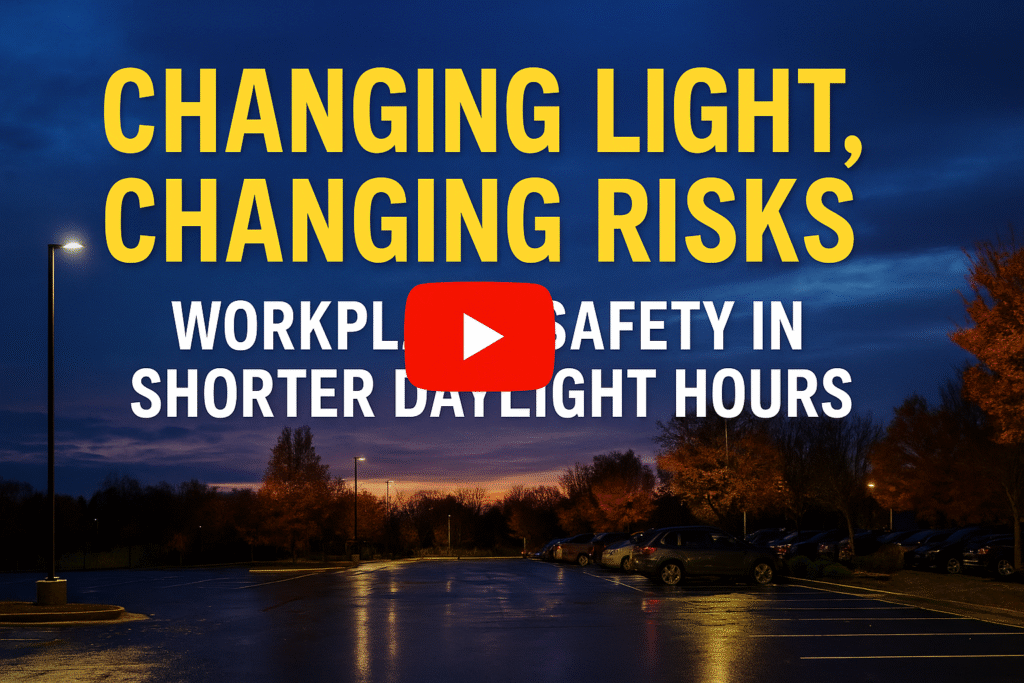
Understanding these risks and applying effective controls is essential for maintaining safety during the fall season and beyond.
- Why Shorter Daylight Hours Increase Risk
- Common Hazards in Low-Light Work Environments
- Engineering Controls to Improve Visibility
- Administrative Controls and Policies
- Personal Protective Equipment (PPE)
- Case Example: Night Shift Security Guard Safety
- The Mental Health Connection: Seasonal Affective Disorder (SAD)
- Preparing for Winter Hazards
- Quick Reference Table: Controls for Low-Light Hazards
- Workplace Quiz: Are You Prepared for Shorter Daylight?
- Key Takeaways
Why Shorter Daylight Hours Increase Risk
Changing light, changing risks means workers are more vulnerable to accidents due to poor visibility, glare from artificial lights, and sudden transitions between light and dark environments.
According to the National Safety Council, low-light conditions can reduce depth perception, impair hazard recognition, and contribute to increased slips, trips, falls, and vehicle-related accidents.

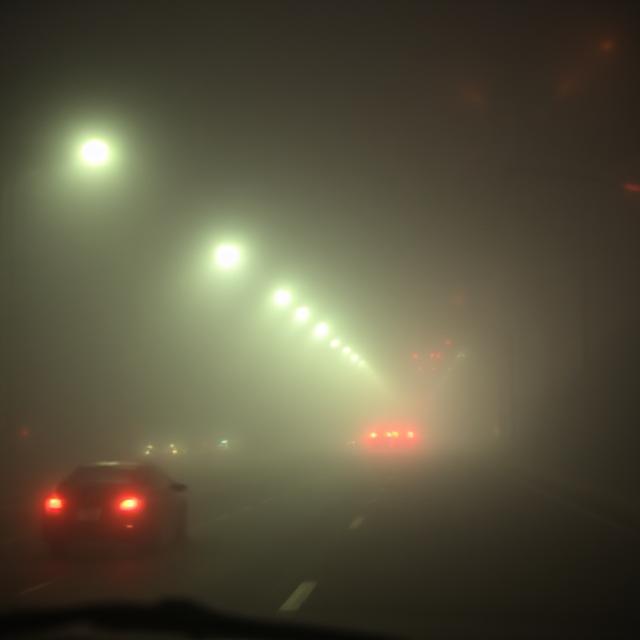
For workplaces operating evening shifts or early mornings, this issue is magnified during fall and winter months.
Common Hazards in Low-Light Work Environments
Here’s how changing light creates specific workplace risks:
| Hazard | Example Scenario | Risk Level |
|---|---|---|
| Poor outdoor lighting | Employees walking to parking lots at dusk | High |
| Inadequate indoor lighting | Warehouses with dim aisles | Medium |
| Glare from artificial lights | Security guards patrolling near bright floodlights | Medium |
| Vehicle-pedestrian collisions | Forklifts operating in dim warehouses | High |
| Increased fatigue | Workers adjusting to shorter days (SAD risk) | Medium |
This table shows that preventing accidents requires proactive adjustments in workplace design, policies, and training.
Engineering Controls to Improve Visibility
Employers can reduce risks through engineering solutions that directly improve visibility:
- LED lighting upgrades: Provide brighter, energy-efficient light with better color rendering.
- Motion-sensor lights: Ensure areas such as stairwells, parking lots, and hallways are never dark.
- Reflective paint and tape: Highlight stair edges, curbs, and vehicle paths.
- Anti-glare shields: Reduce visual strain caused by overly bright fixtures.
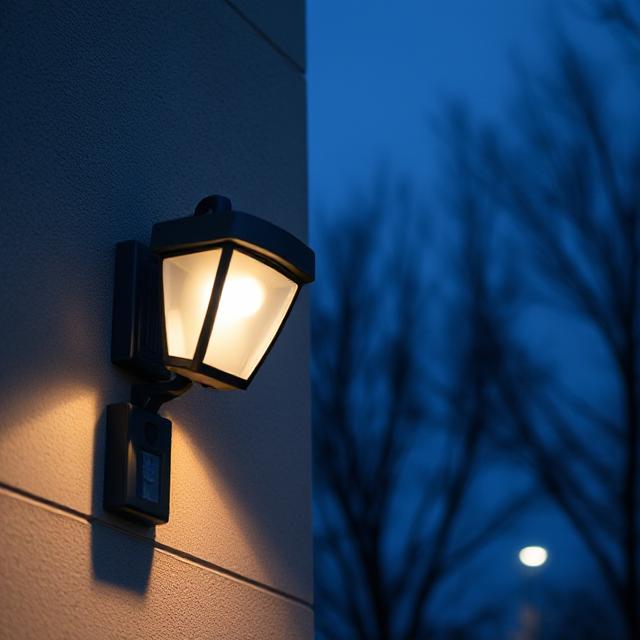
Investing in lighting improvements not only prevents accidents but also boosts worker confidence and morale.
Administrative Controls and Policies
Changing light, changing risks also requires administrative strategies to adapt work practices:
- Shift scheduling: Where possible, schedule hazardous outdoor work during daylight hours.
- Regular inspections: Assign supervisors to check lighting levels in key areas weekly.
- Housekeeping: Ensure walkways are free of clutter, since poor lighting magnifies tripping hazards.
- Communication protocols: Use radios or check-in systems for staff working alone at night.
Policies must be documented and reinforced in seasonal workplace safety training.
Personal Protective Equipment (PPE)
Workers should be equipped with PPE that enhances safety in low-light conditions:
- High-visibility clothing with reflective strips.
- Headlamps or personal lighting for outdoor and confined-space tasks.
- Protective eyewear to reduce glare and improve focus.
While PPE is not a substitute for engineering controls, it serves as a critical last line of defense.
Case Example: Night Shift Security Guard Safety
A security company in Ontario faced an uptick in incidents of guards tripping on uneven pavement during fall evenings. The employer implemented:
- LED path lighting in all outdoor patrol routes.
- Reflective tape at steps and curb edges.
- A policy requiring guards to wear high-visibility vests at all times.
Within two months, incident reports dropped by 60%. This demonstrates the power of combining engineering, administrative, and PPE strategies.

The Mental Health Connection: Seasonal Affective Disorder (SAD)
Shorter daylight hours also affect mental health. Workers may experience fatigue, depression, and reduced concentration, all of which increase the risk of errors and accidents.
Employers can support mental well-being by:
- Providing access to natural light where possible (e.g., skylights, window workspaces).
- Encouraging breaks outdoors during daylight hours.
- Offering mental health resources and Employee Assistance Programs (EAPs).
Workplace safety must include psychological safety, particularly during seasonal changes.
Preparing for Winter Hazards
Fall is the transition period to winter. Ensuring lighting systems are in place now prepares workplaces for snow, ice, and longer dark hours.
Preventive measures taken in autumn reduce accidents once winter weather compounds visibility challenges.
Quick Reference Table: Controls for Low-Light Hazards
| Control Category | Key Actions |
|---|---|
| Engineering Controls | LED upgrades, motion sensors, reflective paint, anti-glare shields |
| Administrative Controls | Shift scheduling, lighting inspections, housekeeping |
| PPE | High-visibility clothing, headlamps, anti-glare eyewear |
| Health & Wellness | SAD awareness, outdoor breaks, access to natural light |
Workplace Quiz: Are You Prepared for Shorter Daylight?
Test your knowledge on “Changing Light, Changing Risks”
- What is one of the leading causes of workplace accidents during low-light conditions?
- a) Noise exposure
- b) Poor visibility
- c) Chemical spills
- Which engineering control is most effective for illuminating outdoor walkways?
- a) Desk lamps
- b) LED lighting upgrades
- c) Safety posters
- True or False: PPE such as high-visibility vests can fully eliminate fall hazards in poor lighting.
- What mental health issue is commonly linked with shorter daylight hours?
- a) Seasonal Affective Disorder (SAD)
- b) Insomnia
- c) Migraine headaches
Answers: 1–b, 2–b, 3–False, 4–a
Key Takeaways
- Changing light, changing risks highlights the increased hazards caused by shorter daylight hours in autumn.
- Engineering solutions like LED upgrades and reflective tape greatly improve visibility.
- Administrative controls and seasonal safety policies must be enforced.
- PPE and mental health support help workers adapt safely.
- Preparing in fall sets the foundation for a safer winter season.