

Cold Environment Safety is most effective when work–rest decisions are driven by objective weather data, not “how cold it feels.” Wind, moisture, and contact with cold surfaces accelerate heat loss, and bulky PPE lowers dexterity and increases fatigue.

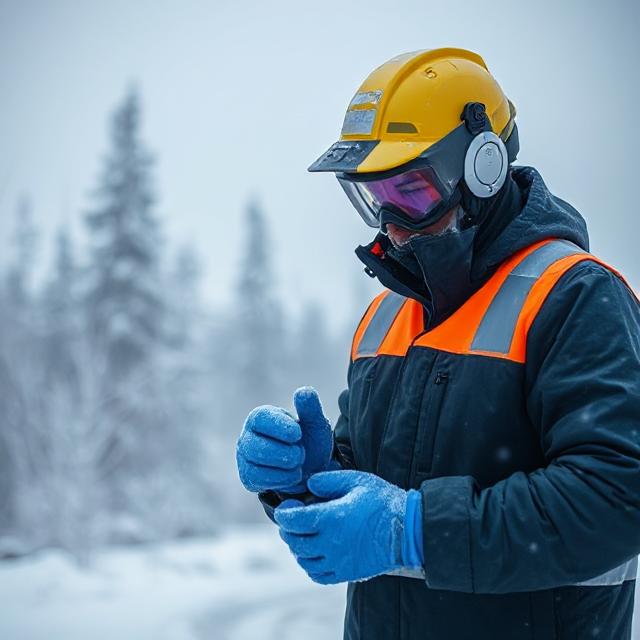
A weather-triggered schedule translates those variables into predictable breaks, warm-up times, and task rotations so crews stay safe, alert, and productive. It also gives supervisors a defensible system tied to thresholds, not opinions.
Within your broader health risk process, connect this cold plan to your everyday workplace health risk assessment and your winter PPE guide so exposure controls, training, and equipment checks align.
- Cold Environment Safety: Inputs you must track before setting any cycle
- Cold Environment Safety: Building your threshold ladder (the heart of the system)
- Cold Environment Safety: Translating bands into schedules that crews can follow
- Cold Environment Safety: PPE and shelter details that make or break the plan
- Cold Environment Safety: Training crews to recognize, report, and react
- Cold Environment Safety: Monitoring, feedback, and continuous improvement
- Cold Environment Safety: Example day plan you can copy
- Cold Environment Safety: Common pitfalls to avoid
- Cold Environment Safety: Quick implementation checklist
Cold Environment Safety: Inputs you must track before setting any cycle
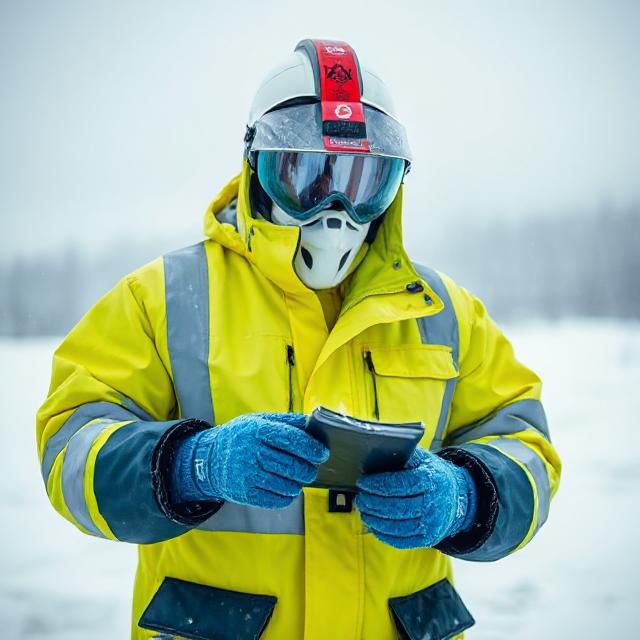
A reliable schedule starts with the right inputs.
Track:
- Wind Chill (WCT): Use a standardized chart and the forecast trend. Canada’s official WCT guidance is here (Government of Canada).
See: Wind Chill Index - Precipitation & Wetness: Rain, sleet, snow, and sweat amplify conductive and evaporative heat loss.
- Exposure Pattern: Continuous vs. intermittent exposure, plus travel distance to heated shelters.
- Workload & Metabolic Heat: High-exertion tasks create heat but also sweat; combine heavy efforts with timely warm-ups.
- Individual Risk: New or returning workers, medications, dehydration, and prior cold injuries.
For symptoms, controls, and medical red flags, keep these authoritative references at hand: NIOSH Cold Stress, OSHA Winter Weather, and CCOHS Cold Environments. For Canadian OHSE articles and tools, add OHSE.ca to your reading list.
Cold Environment Safety: Building your threshold ladder (the heart of the system)
Set clear escalation bands using wind chill as the anchor. The numbers below are a practical starting point you can tailor during trials and incident reviews:


- Band A — WCT ≥ −7 °C (20 °F or warmer): Normal operations with vigilance. Micro-breaks as needed; gloves/liners optional by task.
- Band B — WCT −8 to −19 °C (17 to −2 °F): 90–120 min work / 10–15 min warm-up in a heated shelter. Rotate high-dexterity tasks.
- Band C — WCT −20 to −27 °C (−4 to −17 °F): 60 min work / 20 min warm-up. Mandatory buddy checks; hot drinks available at point of break.
- Band D — WCT −28 to −39 °C (−18 to −38 °F): 30–45 min work / 30 min warm-up. Supervisor authorization for sustained outdoor tasks; limit fine-motor work.
- Band E — WCT ≤ −40 °C (≤ −40 °F): Critical controls only (emergency or shutdown work) with continuous warming access, line-of-sight supervision, and shortened cycles.
These bands integrate seamlessly with your field-level risk assessment template and align with published guidance (see the official resources linked above).
Adjust the break duration upward when workers are wet, stationary, or handling chilled metal, and downward only after measured trials show safe results.
Cold Environment Safety: Translating bands into schedules that crews can follow
Turn the bands into a one-page schedule posted at the job box and loaded into the supervisor’s phone.
A practical format:
- Check & Announce: Supervisor identifies the day’s starting band at the toolbox talk, posts it on the whiteboard, and sets a phone alert to re-check hourly.
- Assign Roles: One lead per crew tracks cycle times, confirms heated-shelter readiness, and logs symptoms.
- Cycle Discipline: Use timers. If Band C is active, a 60-on/20-off cadence repeats until the band changes.
- Task Pairing: Pair heavy exertion blocks with warm-ups; move fine-motor or inspection tasks to warmer windows.
- Documentation: Maintain a simple cold exposure log (start/end, WCT, breaks taken, symptoms). Feed trends into your incident & hazard reporting routine.
This makes Cold Environment Safety tangible: everyone can see the band, the schedule, and who is responsible.

Cold Environment Safety: PPE and shelter details that make or break the plan
Work–rest schedules fail if gear and warming aren’t right.
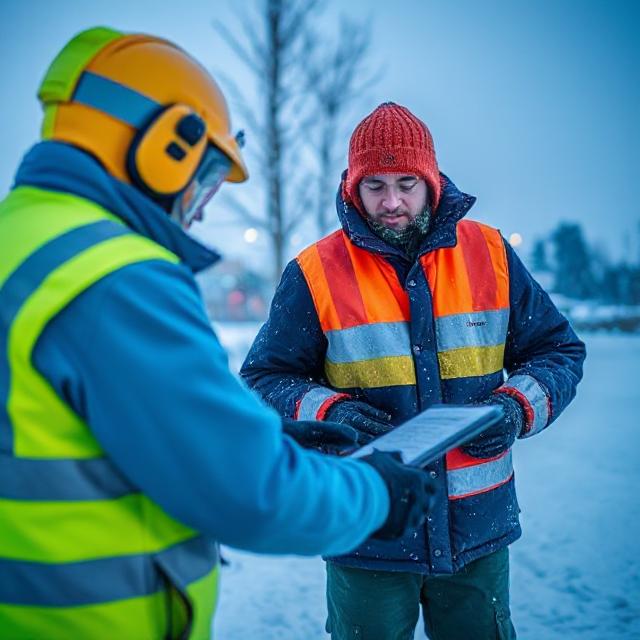
Anchor your cycles with:
- Layering that stays dry: Wicking base, insulating mid-layer, wind/water-resistant shell. Avoid cotton. Swap damp liners at each warm-up.
- Hands & feet: Provide insulated, task-appropriate gloves and mitts with removable liners; ensure boots allow toe wiggle (compressed insulation is cold insulation). Stock dry backups.
- Face & eyes: Balaclava compatibility with eye protection; anti-fog strategies; ensure respirator seals are maintained in the cold.
- Heated shelters: Place close to the workface to preserve break time. Provide seating, mats to isolate from the ground, hot beverages, and a drying rack.
Reinforce Cold Environment Safety by auditing shelters weekly and confirming power, space, and cleanliness.
Cold Environment Safety: Training crews to recognize, report, and react
A schedule protects workers only if they understand why it exists. Train on:
- Early symptoms: Uncontrolled shivering, fumbling, slurred speech, unusual risk-taking, and numb, “waxy” skin.
- Stop-work triggers: If a worker shows symptoms, stop and warm immediately; remove wet clothing, insulate the core, and call for medical evaluation.
- Buddy checks: Every cycle, buddies check each other’s fingers, toes, and face.
- Hydration & fuel: Warm, palatable drinks near the shelter and carbohydrate-rich snacks. Dehydration blunts shivering and judgment.
Keep a laminated quick-reference card in the shelter. Tie refreshers to your seasonal toolbox talks so Cold Environment Safety stays front-of-mind.
Cold Environment Safety: Monitoring, feedback, and continuous improvement
Supervisors should verify cycles, not just announce them.
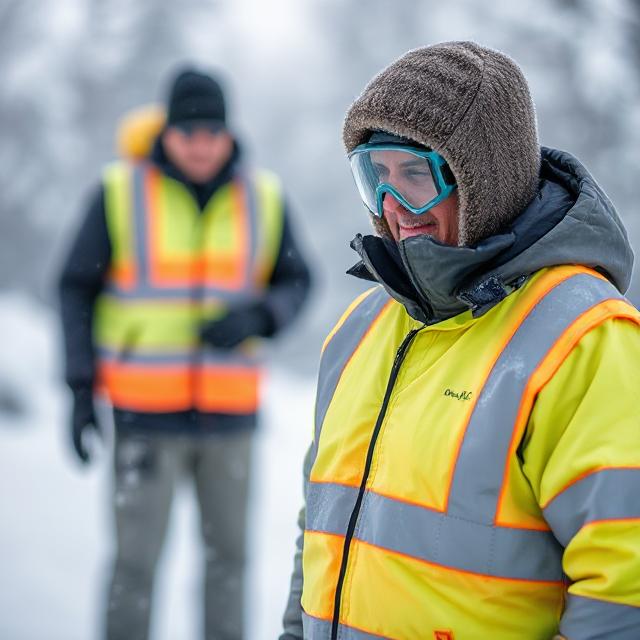
Use:
- Hourly WCT checks and band updates via radio or chat.
- Short “hot wash” debriefs after cold snaps: what worked, what slipped, what to fix tomorrow.
- Leading indicators (e.g., % of breaks taken on time, number of glove liner changes, reported near misses) to refine the plan.
- Maintenance integration for cold-weather faults—batteries, hydraulics, brittle plastics—that can compromise safe cycles; track fixes in your CMMS.
This is how Cold Environment Safety evolves from a poster into a living system.
Cold Environment Safety: Example day plan you can copy
Scenario: Forecast WCT −22 °C at 07:00 improving to −15 °C by 13:00; light snow; high-dexterity electrical terminations scheduled.
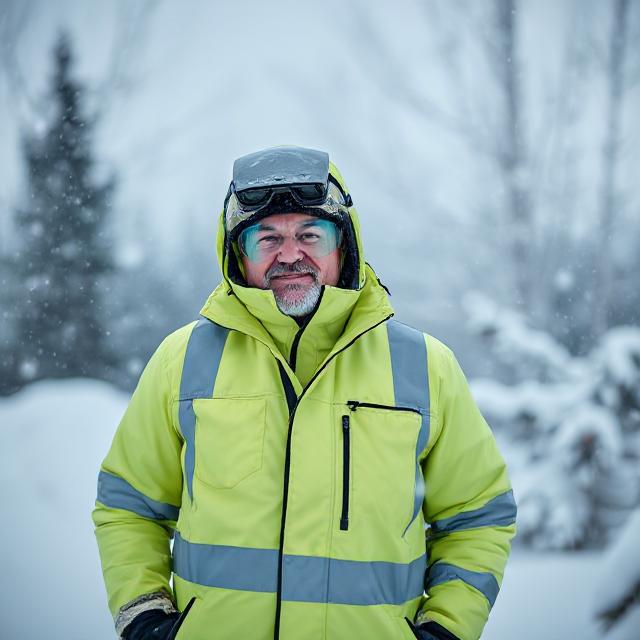
- 06:45 toolbox talk: Announce Band C start. Assign timer lead; confirm shelters powered and stocked.
- 07:00–11:00: 60-on/20-off cadence; push heavy lifting and rough-in during work blocks; move terminations to the 11:00–14:00 window as WCT improves to Band B.
- Every break: Swap damp glove liners; hot drinks; quick buddy checks.
- 13:00: Shift to Band B (announce on radio). 90-on/15-off cadence; complete terminations when dexterity improves.
- 15:30 debrief: Review log, update next-day plan, document any symptoms or slip hazards.
Cold Environment Safety: Common pitfalls to avoid
Even well-designed schedules can stumble. Watch for:
- Long walks to shelters that steal recovery time—move shelters closer or add micro-shelters.
- Timers not used—cycles drift and breaks get skipped; issue simple clip-on or phone timers.
- Wet gear returning to the field—stock backups so liners and socks are truly dry.
- “Hero” culture that treats breaks as weakness—reset expectations; recognize teams that follow the plan.
- Generic thresholds copied from elsewhere—localize to your exposure, tasks, and crew feedback, referencing NIOSH, OSHA, CCOHS, and the Wind Chill Index.
Cold Environment Safety: Quick implementation checklist
- Post bands A–E at every job box and inside heated shelters.
- Add hourly WCT alerts to supervisor phones.
- Stock spare glove liners, socks, and mid-layers; add a drying rack.
- Place shelters close to work; verify power and hot drinks daily.
- Log cycles taken and symptoms; review weekly at your safety meeting.
Bottom line: If you anchor decisions to wind chill, enforce disciplined cycles, and support recovery with the right shelters, PPE, and training, your Cold Environment Safety program will cut injuries and keep productivity steady—because nothing works better in winter than objective, weather-triggered Cold Environment Safety.