


- Cold Storage Safety Procedures: Essential Steps for a Safer Workplace
- Why Cold Storage Safety Procedures Matter in High-Risk Environments
- Cold Storage Safety Procedures for Risk Assessment and Prevention
- PPE and Safe Work Practices in Cold Storage Safety Procedures
- Training, Emergency Response, and Compliance for Cold Storage Safety Procedures
Cold Storage Safety Procedures: Essential Steps for a Safer Workplace



cold storage safety procedures are essential for protecting workers, preserving product quality, and maintaining compliance in refrigerated and frozen workplaces. From food warehouses and pharmaceutical facilities to distribution centers and processing plants, cold environments create hazards that require careful planning, training, and supervision.
Low temperatures can affect the body quickly, but cold storage risks are not limited to exposure alone. Slip hazards, poor visibility, manual handling strains, equipment collisions, and emergency response delays all become more serious when employees work in chillers or freezers. Strong procedures help employers reduce injuries, improve daily operations, and create a safer, more reliable workplace.
Effective cold storage safety procedures should cover hazard identification, preventive controls, personal protective equipment, and legal responsibilities. They should also reflect real job tasks such as loading pallets, rotating stock, operating forklifts, conducting inspections, and responding to equipment breakdowns. A practical OHSE approach makes these procedures easier to follow and more effective in day-to-day work.
Why Cold Storage Safety Procedures Matter in High-Risk Environments
Cold storage areas expose workers to a combination of environmental and operational hazards. In refrigerated rooms, employees may face prolonged cold stress. In freezer rooms, the risk becomes more severe, especially during long shifts, repetitive tasks, or emergency situations.
Common health risks include hypothermia, frostbite, reduced dexterity, numbness, fatigue, and loss of concentration. Even a small decline in hand sensitivity can increase the chance of dropping stock, mishandling tools, or making poor decisions around moving equipment.

There are also major physical hazards in these spaces. Wet floors, ice buildup, condensation, and uneven surfaces can lead to slips and falls. Racking systems, narrow aisles, and limited line of sight increase the risk of collisions involving forklifts, pallet jacks, or pedestrians. Doors that freeze, poor communication, and lone work conditions can make emergencies worse.
According to guidance from OSHA and CCOHS, employers should assess both cold stress and workplace layout hazards when developing controls. This is especially important where workers move repeatedly between ambient, chilled, and frozen zones, as rapid temperature changes can place additional strain on the body.
Practical examples show why this matters. A warehouse picker entering a freezer for short intervals may still suffer cold stress if clothing is inadequate and exposure is repeated all shift. A maintenance worker repairing evaporator fans may be at risk of entrapment if lockout procedures and door alarms are weak. A forklift operator working on icy flooring may lose traction even at low speed.
Cold Storage Safety Procedures for Risk Assessment and Prevention
Identify the main hazards before work begins
A formal risk assessment is the foundation of effective cold storage safety procedures. Employers should review temperature ranges, exposure duration, airflow, humidity, physical workload, traffic patterns, and emergency access. Tasks with greater risk, such as maintenance, stock retrieval at height, and lone work, should receive extra attention.
The Hierarchy of Controls is useful here because it focuses first on eliminating or reducing hazards before relying only on PPE. In a cold storage setting, this might include redesigning workflows, reducing time spent in freezers, improving anti-slip flooring, and installing better alarms or communication systems.

- Elimination: Remove unnecessary freezer entry by using remote inventory systems or automated retrieval where possible.
- Substitution: Replace hazardous cleaning methods that create ice buildup with safer alternatives.
- Engineering controls: Install insulated doors, heated handles, strip curtains, anti-slip flooring, alarm pull stations, and temperature monitoring systems.
- Administrative controls: Use exposure limits, warm-up breaks, job rotation, safe traffic plans, and clear emergency procedures.
- PPE: Provide thermal clothing, gloves, boots, and head protection suited to actual temperatures and tasks.
Build practical controls into daily routines
Prevention works best when it is part of normal operations. Supervisors should confirm that floors are inspected for ice, drains are functioning, and freezer doors open properly. High-traffic zones should be marked clearly, with separate pedestrian walkways where possible.
Exposure management is another key part of cold storage safety procedures. Workers should have scheduled breaks in warm areas, especially during freezer work or physically demanding tasks. New workers may also need gradual acclimatization if they are not used to cold environments.
For more structured workplace planning, many businesses also align cold area controls with their broader workplace risk assessment process and manual handling safety procedures. This helps ensure cold hazards are managed as part of the overall OHSE system rather than as a separate issue.
PPE and Safe Work Practices in Cold Storage Safety Procedures
Choose PPE that matches the temperature and task
PPE is a critical part of cold storage safety procedures, but it must be selected carefully. Clothing that works in a chilled loading dock may not be suitable for a deep freezer. Workers also need enough mobility to handle stock safely and operate equipment without restriction.
Basic PPE may include insulated jackets, thermal trousers, glove liners, freezer gloves, anti-slip insulated boots, head coverings, and high-visibility outerwear. In some areas, hearing protection or hard hats may also be required depending on noise and overhead hazards.

The table below shows a simple example of PPE selection by work area:
| Work Area | Typical Temperature | Recommended PPE | Key Safety Focus |
|---|---|---|---|
| Chilled storage | 0°C to 5°C | Insulated jacket, gloves, slip-resistant boots | Cold stress and slips |
| Freezer room | -18°C or below | Full thermal wear, freezer gloves, insulated boots, head protection | Frostbite, hypothermia, limited dexterity |
| Loading dock | Variable cold exposure | Layered clothing, hi-vis outerwear, gloves, safety boots | Vehicle movement and rapid temperature change |
Support PPE with strong safe work practices
PPE alone is never enough. Workers should be trained to recognize early signs of cold stress in themselves and others, such as shivering, confusion, slowed movement, numb fingers, or pale skin. Reporting these symptoms early can prevent serious injury.
Safe work practices should also address hydration, manual handling, and communication. Cold conditions can reduce grip strength and make lifting more difficult, so stock should be stored to minimize awkward reaching and overexertion. Employees should use mechanical aids where available and avoid rushing, especially on slick surfaces.
In many facilities, buddy systems are a practical addition to cold storage safety procedures. For example, if a worker enters a freezer to check damaged stock or troubleshoot an issue, another person should know their location, expected return time, and emergency contact method. This is especially important during maintenance tasks or low-traffic shifts.
Training, Emergency Response, and Compliance for Cold Storage Safety Procedures
Train workers for real situations, not just paperwork
Training should be job-specific and repeated regularly. Employees need to understand the hazards of cold exposure, PPE use, traffic management, housekeeping expectations, and emergency procedures. Refresher training is particularly important after incidents, process changes, or seasonal staffing increases.
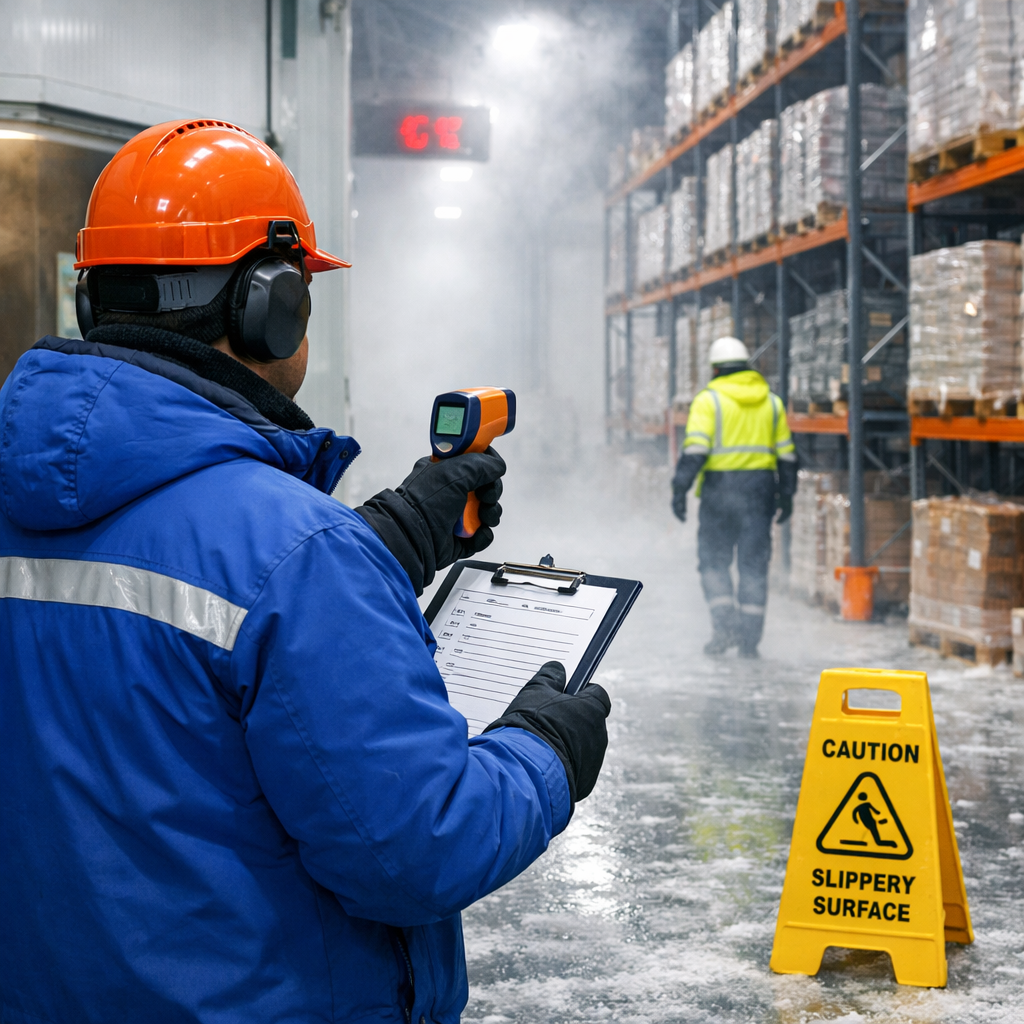
Practical examples improve learning. A supervisor might run a short drill on what to do if a freezer door jams, if a worker shows signs of hypothermia, or if a forklift skids near a pedestrian crossing. These realistic exercises turn written cold storage safety procedures into actions workers can remember under pressure.
Emergency planning should cover first aid response, communication failures, power outages, alarm activation, rescue arrangements, and medical escalation. Warm recovery areas should be accessible, and first aiders should understand how to respond to cold-related illness without causing further harm. Emergency contacts and procedures should be posted clearly in break rooms, near entrances, and in operational control points.
Maintain compliance and continuous improvement
Compliance is a major part of cold storage safety procedures. Employers are generally required to provide a safe workplace, assess hazards, train workers, maintain equipment, and supply suitable PPE. The exact legal obligations vary by location, but recognized guidance from OSHA cold stress resources and CCOHS can help shape a strong program.
Routine inspections, incident reporting, and supervisor observations are all useful for continuous improvement. If workers report numb hands while scanning products, for example, the issue may involve glove selection, workload, scanner design, or excessive freezer time. Looking beyond the immediate symptom helps address root causes.
Documentation also matters. Temperature logs, maintenance records, training attendance, PPE issuance, and corrective action tracking all support due diligence. These records can help demonstrate that cold storage safety procedures are active, practical, and regularly reviewed.
In conclusion, cold storage safety procedures are not just a compliance requirement; they are a core part of injury prevention and operational reliability. By identifying risks, applying the Hierarchy of Controls, selecting the right PPE, and preparing workers for real conditions, employers can make refrigerated workplaces safer and more efficient. Well-designed cold storage safety procedures protect people first while also supporting productivity, product integrity, and long-term OHSE performance.