
Cold weather safety checks are a critical part of occupational health and safety during winter operations. Before a shift even begins, workers and supervisors have a narrow window to identify hazards that freezing temperatures, snow, ice, and wind can introduce.
Skipping these checks may save a few minutes, but it often leads to injuries, equipment failures, cold stress incidents, and costly downtime.
Cold weather safety checks
Cold environments affect both people and systems. Human performance declines in low temperatures, while tools, vehicles, surfaces, and PPE behave differently than they do in normal conditions.
That’s why a structured set of cold weather safety checks before starting a shift is one of the most effective preventive controls available to employers.
Below are 25 essential cold weather safety checks that should be completed before work begins, especially for outdoor, construction, transportation, maintenance, and industrial environments.
1. Verify Weather and Wind Chill Conditions
Before workers step outside, current and forecasted weather conditions must be reviewed. Wind chill can dramatically increase cold stress risk even when temperatures appear manageable. Supervisors should confirm temperature, wind speed, precipitation, and any weather warnings that could affect exposure limits or task planning.
This check helps determine whether work can proceed safely, requires additional controls, or should be delayed altogether.
2. Assess Cold Stress Risk for the Shift
Not all cold days present the same risk. Duration of exposure, workload intensity, and worker health all influence cold stress potential. A pre-shift assessment ensures tasks are aligned with safe exposure times and that extra precautions are planned for high-risk conditions.
Ignoring this step can lead to hypothermia, frostbite, and fatigue-related incidents later in the shift.
3. Confirm Workers Are Wearing Appropriate Winter PPE
Winter PPE must be suited to the day’s conditions, not just the season. Workers should be checked for insulated clothing, weatherproof outer layers, gloves, and proper head protection. PPE should fit correctly and allow safe movement.
This cold weather safety check ensures protection is adequate before exposure begins.
4. Check Footwear for Traction and Insulation
Footwear plays a major role in winter safety. Boots should be insulated, waterproof, and equipped with slip-resistant soles. Ice cleats or traction aids may be required depending on surface conditions.
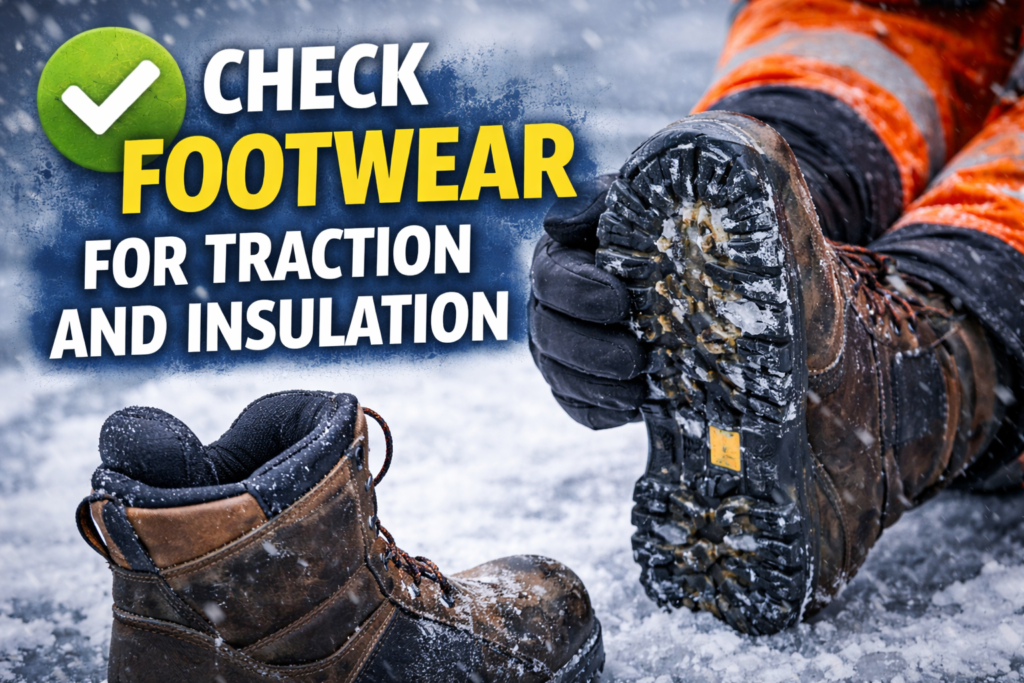
Cold or wet feet increase fall risk and accelerate heat loss, making this a non-negotiable pre-shift check.
5. Inspect High-Visibility Winter Gear
Winter conditions reduce visibility due to snow, fog, and shorter daylight hours. Workers must remain visible even when layered up. Jackets, coveralls, and rain gear should have reflective striping that is clean and unobstructed.
This check is especially critical around vehicles and mobile equipment.
6. Ensure Head, Face, and Neck Protection Is Available
Significant body heat is lost through the head and neck. Balaclavas, thermal liners, neck gaiters, or face protection should be readily available and compatible with other PPE.
Failure to protect these areas increases cold stress and reduces concentration.
7. Confirm PPE Is Dry and in Good Condition
Wet or damaged PPE loses its insulating properties. Before the shift starts, workers should confirm their clothing, gloves, and boots are dry and free from damage.
Using damp PPE at the start of a shift significantly increases the risk of hypothermia.
8. Inspect Walking and Working Surfaces
Snow, ice, and freezing rain turn routine surfaces into hazards. Pre-shift inspections should identify icy walkways, access points, ladders, platforms, and work areas.
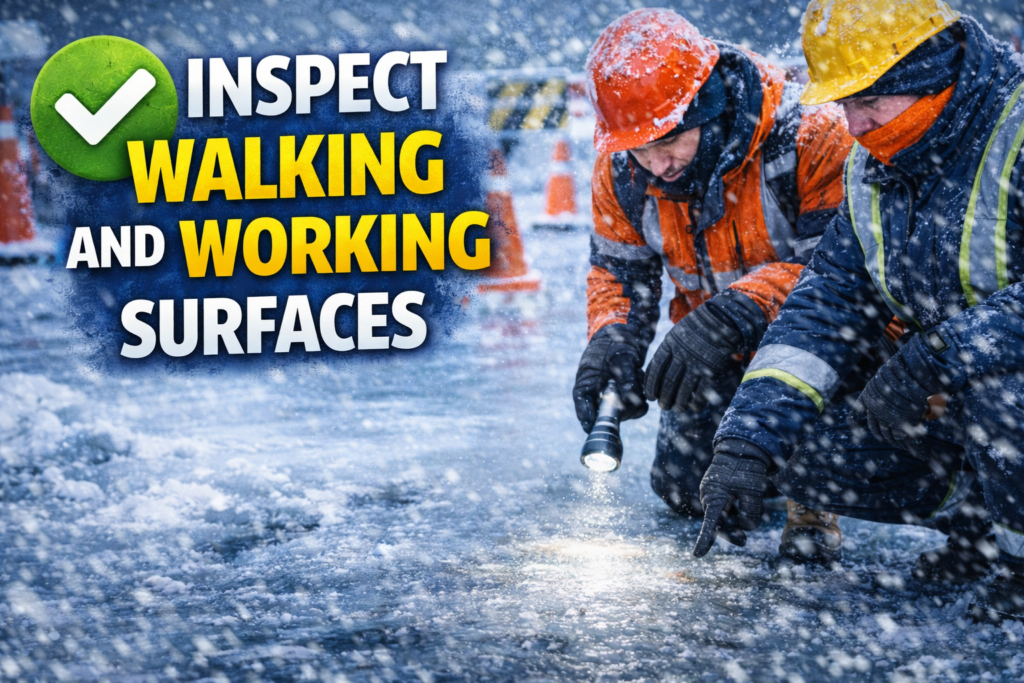
If hazards are found, controls such as salting, sanding, barricading, or rerouting must be implemented before work begins.
9. Check Access and Egress Routes
Emergency exits, stairs, and access paths must remain clear and usable in winter conditions. Accumulated snow or ice can delay evacuation during an emergency.
Ensuring safe access and egress is a fundamental cold weather safety check.
10. Inspect Vehicles and Mobile Equipment
Cold temperatures affect engines, brakes, hydraulics, and batteries. Vehicles should be inspected for proper operation, adequate fuel, windshield washer fluid, defrosters, and tire condition.
Mechanical failures in cold weather can quickly become life-threatening situations.
11. Verify Emergency Supplies Are Available
Work vehicles and remote sites should be stocked with cold-weather emergency supplies. These may include blankets, extra clothing, food, water, flashlights, and communication devices.
This check ensures preparedness if conditions worsen unexpectedly.
12. Confirm Heated Shelters or Warm-Up Areas Are Ready
Workers exposed to cold must have access to warm-up locations. Heated shelters, trailers, or indoor spaces should be operational before the shift begins.
Warm-up breaks are a key administrative control for managing cold stress.
13. Review Work-Rest Schedules
Cold weather increases physical strain. Pre-shift planning should include adjusted work-rest cycles based on temperature and workload.
This check helps prevent overexposure and fatigue-related errors.
14. Assess Manual Handling and Ergonomic Risks
Cold muscles are more prone to strain. Tasks involving lifting, pushing, or repetitive movements should be reviewed to ensure they remain safe in low temperatures.
Additional mechanical aids or task modifications may be required.
15. Check Tools and Equipment for Cold Performance
Some tools become brittle or malfunction in freezing conditions. Batteries may drain faster, and lubricants may thicken.
A pre-shift check ensures tools will perform safely and reliably throughout the day.
16. Confirm Communication Systems Are Working
Cold weather can interfere with radios, headsets, and touchscreens. Communication devices should be tested before exposure begins.
Clear communication is essential during winter operations, especially in low-visibility conditions.
17. Review Emergency Response Procedures
Workers should be reminded of cold-related emergency procedures, including recognizing hypothermia and frostbite symptoms.
This cold weather safety check reinforces readiness before exposure occurs.
18. Identify Workers with Increased Cold Sensitivity
Some workers may be more vulnerable to cold due to health conditions, medications, or previous cold injuries. Supervisors should discreetly consider these factors when assigning tasks.
This helps ensure work is distributed safely and fairly.
19. Confirm Adequate Lighting Is Available
Winter darkness increases hazard exposure. Temporary lighting, vehicle lights, and headlamps should be checked before the shift starts.
Good lighting reduces slips, trips, and equipment-related incidents.
20. Inspect Snow and Ice Removal Equipment
Shovels, plows, salt spreaders, and snow blowers should be ready and functional. Delays in snow removal increase risk throughout the shift.
This check supports proactive hazard control.
21. Verify Fire and Heating Equipment Safety
Portable heaters and heating systems must be inspected for proper placement, ventilation, and electrical safety.
Improper heating equipment introduces fire and carbon monoxide risks.
22. Confirm Hand Protection Matches Task Requirements
Gloves should balance warmth with dexterity. Workers may need multiple glove types depending on tasks.
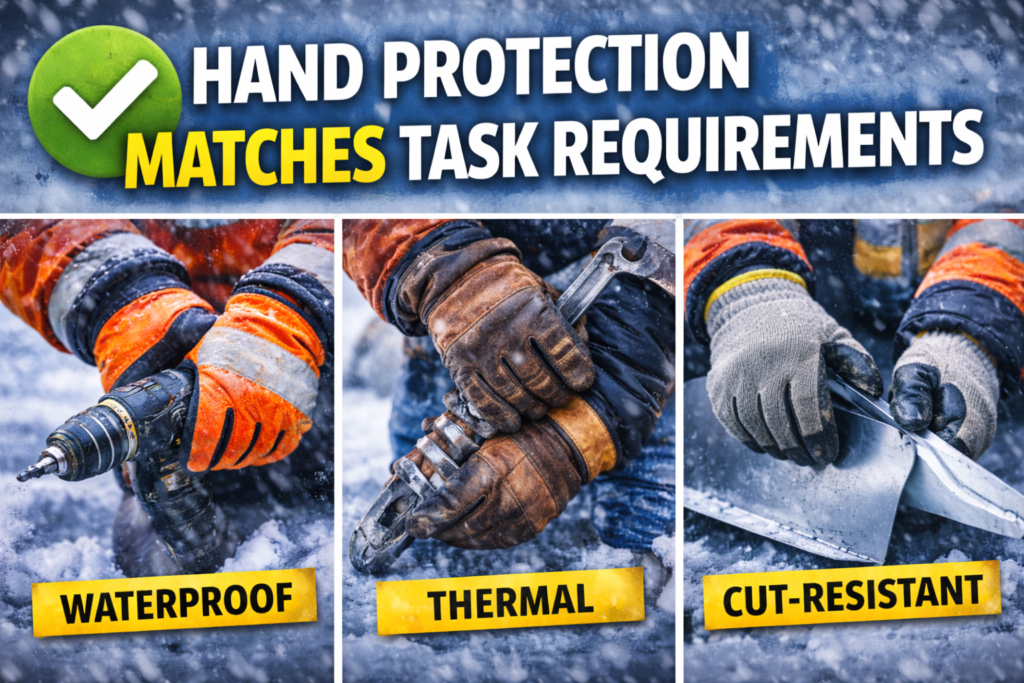
Ensuring the right gloves are available prevents unsafe glove removal.
23. Review Slip, Trip, and Fall Prevention Measures
Mats, handrails, signage, and footwear traction controls should be checked and adjusted as needed.
Falls remain one of the leading winter injury types, making this check essential.
24. Conduct a Winter-Focused Toolbox Talk
A brief pre-shift discussion reinforces awareness of cold weather hazards and controls for the day.
This check strengthens safety culture and keeps winter risks top of mind.
25. Reassess Conditions Throughout the Shift
Cold weather conditions change quickly. While this is a pre-shift activity, planning for reassessment ensures hazards don’t go unnoticed as conditions evolve.
Winter safety is a dynamic process, not a one-time check.
Conclusion
Cold weather safety checks before starting a shift are one of the most effective ways to prevent winter-related injuries and illnesses. By systematically reviewing PPE, equipment, environment, and worker readiness, employers can significantly reduce risks associated with cold exposure.
Winter conditions demand proactive planning and consistent execution.
When these 25 cold weather safety checks become part of the daily routine, they protect workers, maintain productivity, and demonstrate strong occupational health and safety leadership.
No comments yet