


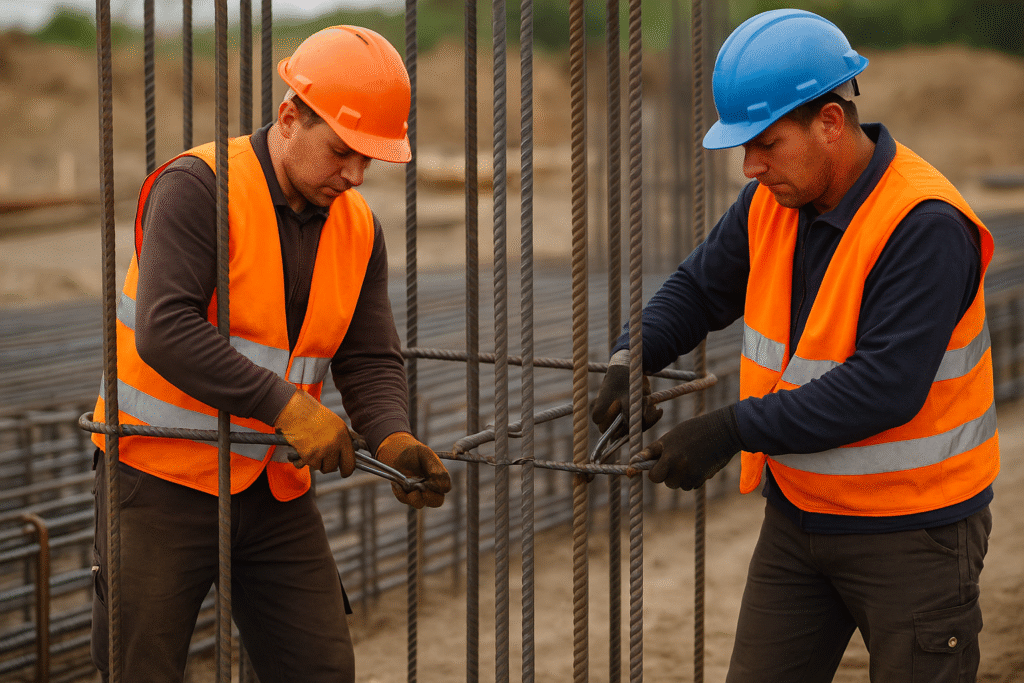
Concrete reinforcement is the backbone of modern construction, and the technicians who cut, bend, and tie steel play a critical role in ensuring structural strength. But these tasks carry significant risks.

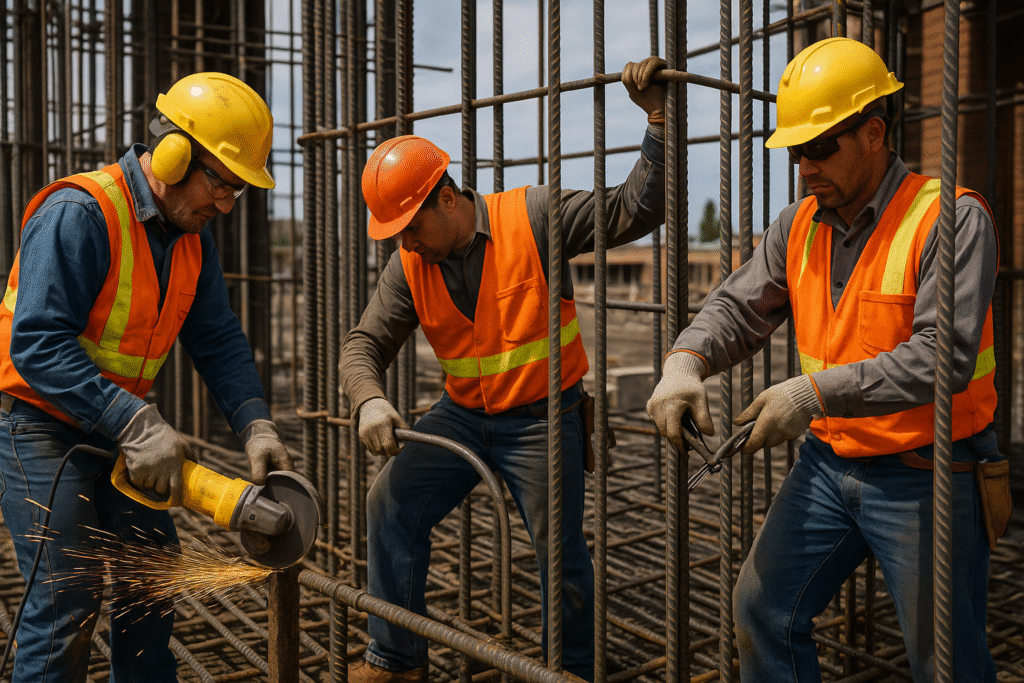
By following concrete reinforcement safety practices, employers and workers can prevent injuries while delivering durable, safe structures.
Why Concrete Reinforcement Safety Matters
Reinforcement technicians handle heavy steel bars, sharp edges, binding wires, and high-powered tools daily. Hazards include:
- Cuts and punctures from sharp rebar.
- Musculoskeletal strain from repetitive bending and tying.
- Eye injuries from flying wire or sparks.
- Hand-arm vibration and noise from powered cutters and benders.
- Impalement risks from uncapped vertical rebar.
According to OSHA, improper rebar handling and lack of PPE are major causes of workplace injuries in construction. Strong safety protocols protect workers while keeping projects on schedule.

Cutting Steel Safely
Hazards
- Sparks and flying fragments during grinding or sawing.
- Crush injuries from handling long or heavy bars.
- Noise and vibration exposure from power tools.
Best Practices
- Always wear safety glasses or face shields.
- Use cut-resistant gloves to prevent hand injuries.
- Ensure tools are sharp, well-maintained, and fitted with guards.
- Position steel securely before cutting to prevent sudden movement.
- Provide hearing protection when using grinders or saws.
Bending Steel with Safety in Mind
Hazards
- Strain from using manual benders.
- Sudden spring-back of steel causing impact injuries.
- Slips or falls when bending on uneven ground.
Best Practices
- Use mechanical or hydraulic benders for large or frequent bends.
- Train workers on proper stance and hand placement to avoid strain.
- Secure steel bars before bending.
- Keep bending stations clear of clutter and tripping hazards.
- Rotate tasks to reduce repetitive strain injuries (RSI).
Safe Practices for Tying Steel
Hazards
- Repetitive wrist and hand movements leading to carpal tunnel syndrome.
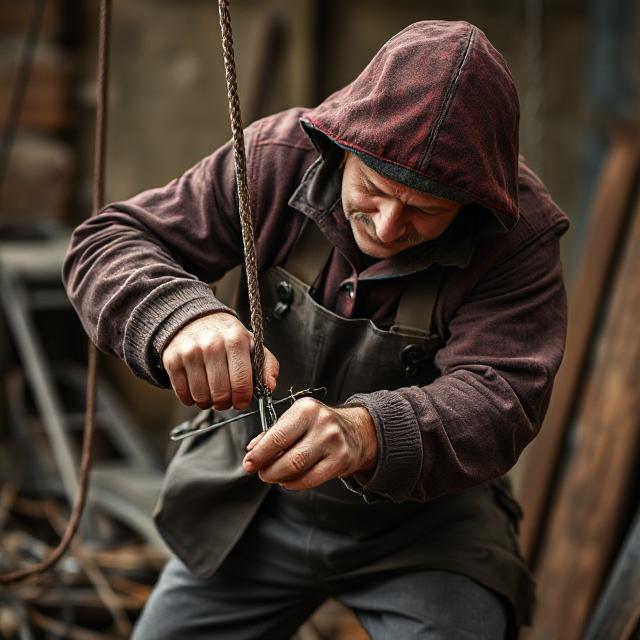
- Wire recoil causing eye or hand injuries.
- Cuts from sharp wire ends.

Best Practices
- Provide ergonomic pliers or battery-powered tying guns to reduce wrist strain.
- Require workers to wear cut-resistant gloves and safety glasses.
- Train crews to maintain proper posture and alternate tying methods.
- Schedule short breaks and stretching exercises to prevent repetitive strain.
- Encourage early reporting of wrist or hand pain.
Preventing Rebar-Specific Hazards
Impalement Risks
Unprotected vertical rebar is one of the deadliest hazards in reinforcement work. OSHA requires the use of mushroom or square rebar caps to prevent impalement.
Trip Hazards
Loose rebar scattered on the ground creates tripping dangers. Crews must keep walkways clear and use proper storage racks for bundles.
Weather Risks
Outdoor reinforcement work exposes technicians to heat stress and cold stress. Employers must provide shade, hydration, warming shelters, and weather-appropriate PPE.
Tools, PPE, and Ergonomics

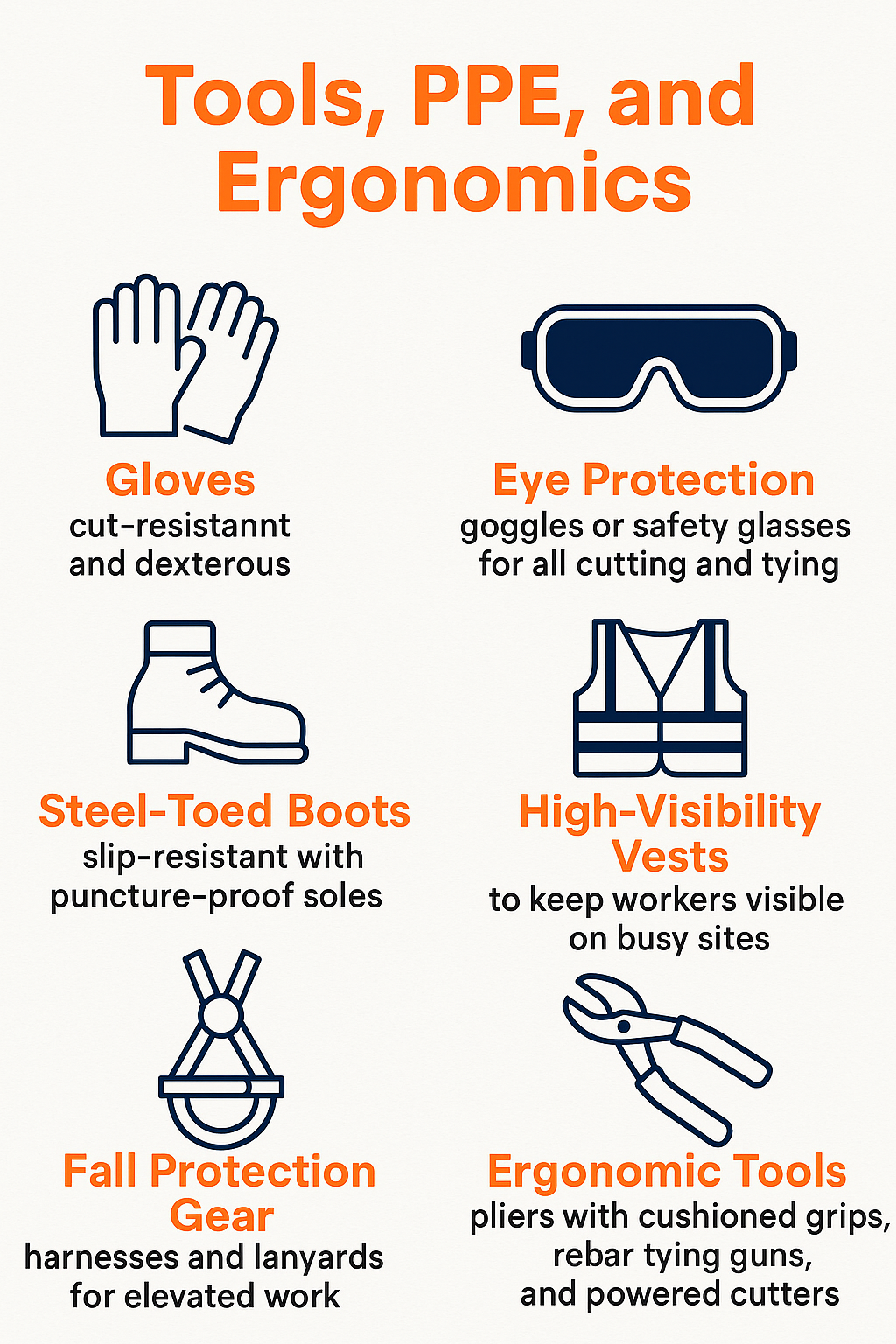
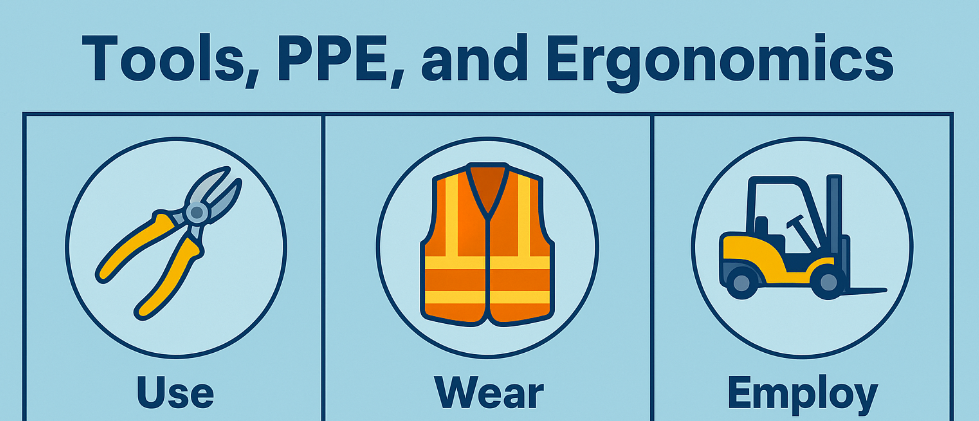
A strong concrete reinforcement safety program combines proper tools, PPE, and ergonomic support:
- Gloves: cut-resistant and dexterous.
- Eye protection: goggles or safety glasses for all cutting and tying.
- Steel-toed boots: slip-resistant with puncture-proof soles.
- High-visibility vests: to keep workers visible on busy sites.
- Fall protection gear: harnesses and lanyards for elevated work.
- Ergonomic tools: pliers with cushioned grips, rebar tying guns, and powered cutters to reduce strain.
Building a Culture of Reinforcement Safety
Safety isn’t just about PPE—it’s about culture. Supervisors and employers should:
- Lead daily toolbox talks on reinforcement hazards.
- Encourage near-miss reporting without blame.
- Rotate workers between tasks to prevent fatigue.
- Mentor new technicians on safe practices.
When reinforcement teams buy into safety, injuries decline, and productivity rises.
Conclusion
Cutting, bending, and tying steel are at the heart of reinforcement work—but they don’t need to come at the cost of worker health. By focusing on concrete reinforcement safety, companies can reduce hand injuries, prevent falls, and protect workers from long-term strain.
With the right PPE, ergonomic tools, and a strong culture of safety, reinforcement crews can keep shaping concrete structures without shaping lasting injuries. For more workplace safety insights, visit OHSE.ca.