


- Confined Space Risks in Mining: Hazards, Controls, PPE, and Compliance
- Understanding Confined Space Risks in Mining
- Practical Examples of Confined Space Risks in Mining
- Preventing Confined Space Risks in Mining with the Hierarchy of Controls
- PPE, Emergency Readiness, and Compliance for Confined Space Risks in Mining
Confined Space Risks in Mining: Hazards, Controls, PPE, and Compliance


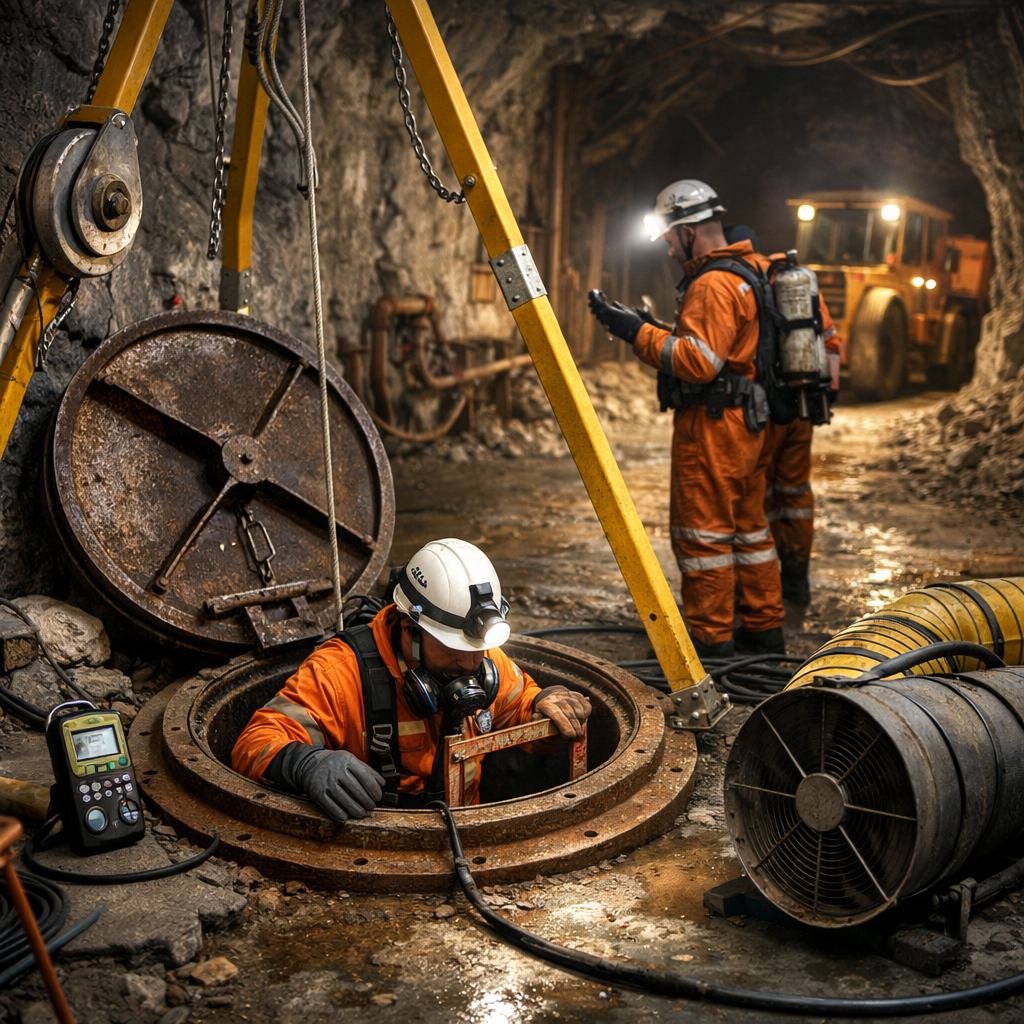
confined space risks in mining are among the most serious occupational health and safety challenges faced by mine operators, contractors, and maintenance teams.
From underground sumps and ore passes to tanks, shafts, ducts, crushers, and process vessels, confined spaces can expose workers to multiple hazards at once, often with little room for error.
Unlike open work areas, confined spaces are not designed for continuous occupancy. They may have restricted entry and exit, limited ventilation, unstable atmospheres, or hidden mechanical dangers.
In mining, these conditions are intensified by dust, gases, water ingress, aging infrastructure, mobile equipment, and production pressure. A task that appears routine, such as inspection, welding, cleaning, or repair, can quickly become life-threatening if hazards are not identified and controlled before entry.
Understanding confined space risks in mining is essential for preventing serious injury, occupational illness, and fatalities. Effective prevention depends on hazard assessment, strict permit systems, competent supervision, proper personal protective equipment, emergency planning, and compliance with recognized standards from organizations such as OSHA and CCOHS.
Understanding Confined Space Risks in Mining
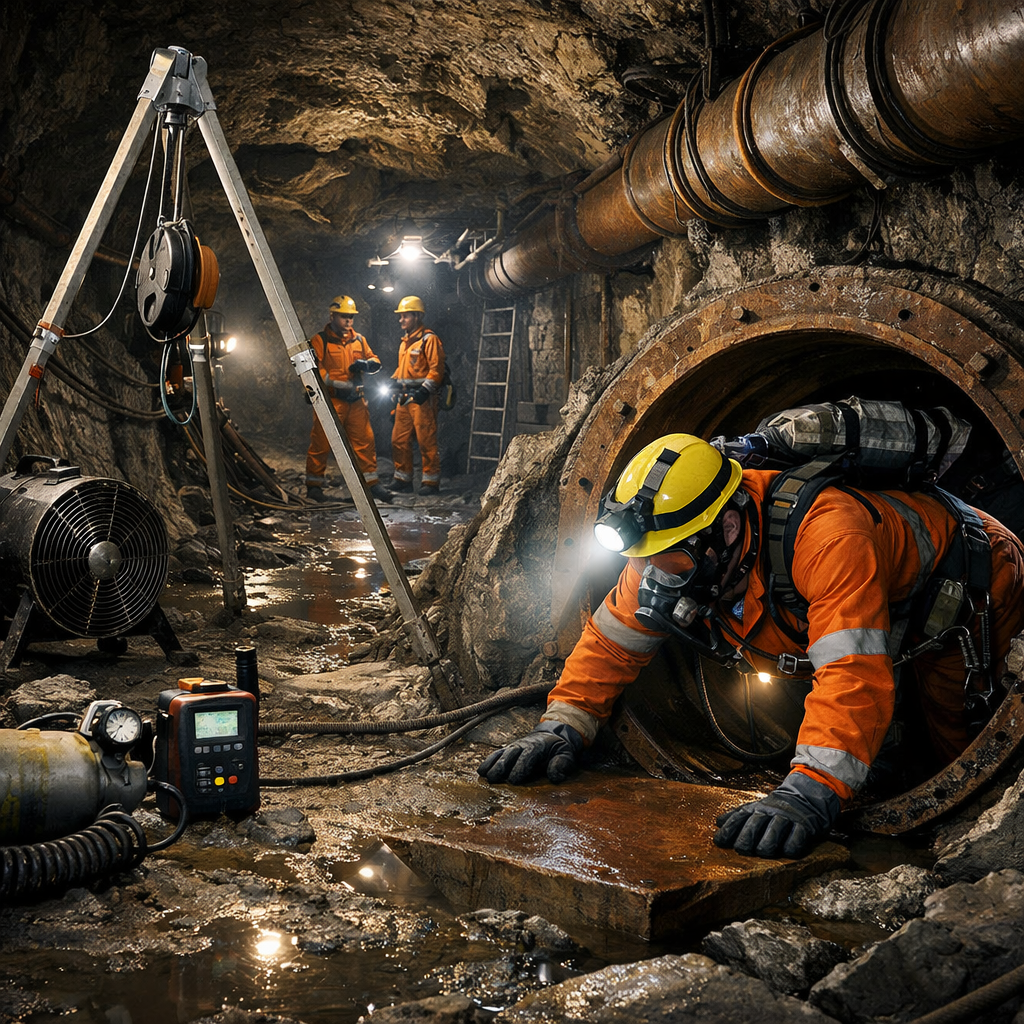
A confined space in mining is any area large enough for a worker to enter, with limited means of entry or exit, and not intended for continuous occupancy.
Examples include underground refuge chambers during maintenance, flotation tanks, thickeners, hoppers, pipelines, conveyors, storage bins, and dewatered shafts.
Common hazards found in mining confined spaces
The most dangerous aspect of confined space risks in mining is that hazards are often invisible or rapidly changing.
Atmospheric conditions can shift within minutes due to poor ventilation, chemical reactions, diesel emissions, blasting residues, or oxygen displacement.
- Oxygen deficiency or enrichment: Low oxygen can cause dizziness, unconsciousness, and death, while oxygen-enriched environments increase fire risk.
- Toxic gases and fumes: Carbon monoxide, hydrogen sulfide, methane, nitrogen dioxide, welding fumes, and process chemicals may accumulate unexpectedly.
- Fire and explosion: Flammable gases, vapors, and combustible dust can ignite from hot work, electrical faults, or static discharge.
- Engulfment and entrapment: Loose ore, slurry, water, or stored material can trap or bury workers.
- Mechanical and electrical hazards: Agitators, conveyors, rotating parts, pressurized lines, and unexpected energization can cause severe injury.
- Heat stress and fatigue: Deep or poorly ventilated spaces may expose workers to high temperatures and humidity.
- Falls and poor access: Vertical entry points, slippery surfaces, and restricted movement increase the chance of falls and delayed rescue.
Many incidents occur when workers underestimate the environment because the job is short in duration. Even a “quick check” inside a tank or sump can be fatal without gas testing, isolation, and standby support.
Practical Examples of Confined Space Risks in Mining
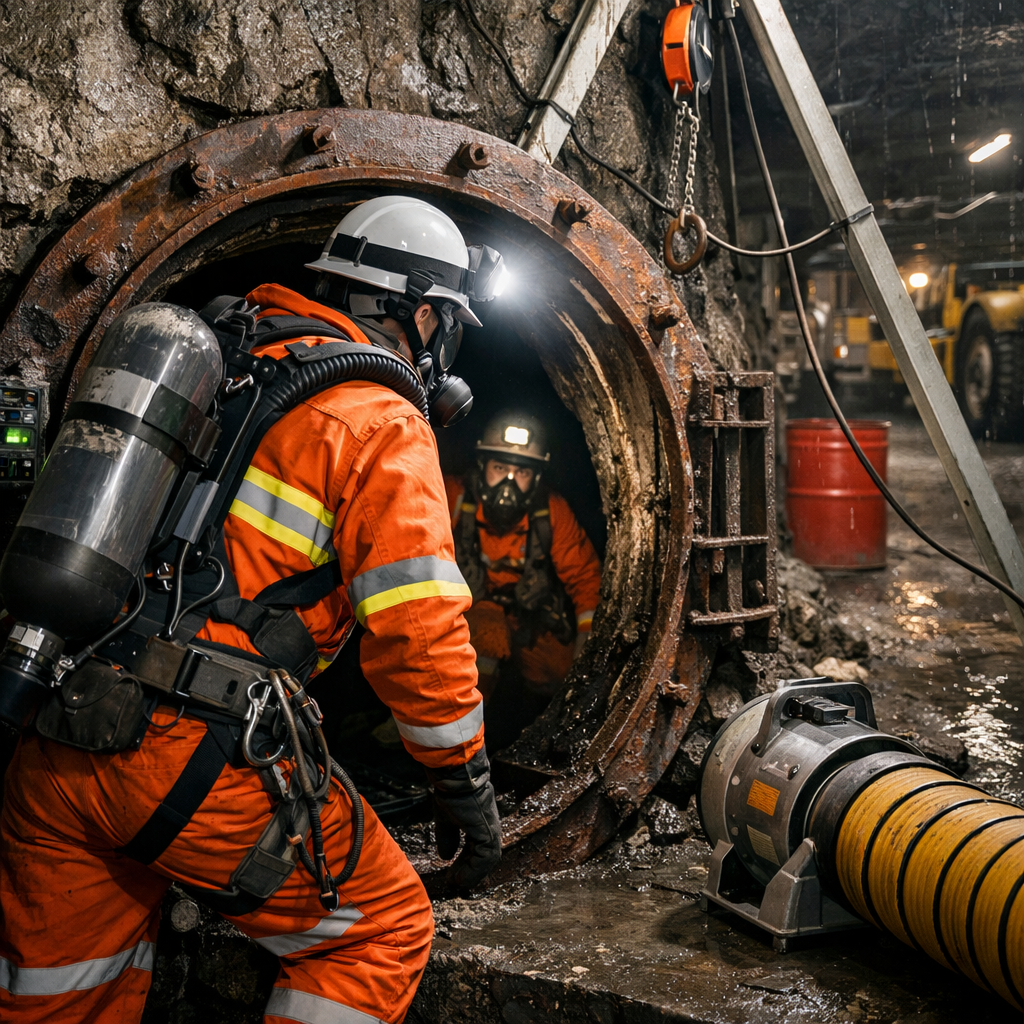
Real workplace situations show how confined space risks in mining develop during normal operations and maintenance.
These examples also highlight why planning and communication matter as much as equipment.
Example 1: Sump cleaning in an underground mine
A crew enters a sump to remove sludge and debris blocking pumps. The task appears simple, but decomposition in stagnant water may release hydrogen sulfide, while nearby diesel equipment contributes carbon monoxide.
If ventilation is poor and atmospheric monitoring is not continuous, workers can be overcome before they recognize symptoms.
Example 2: Welding inside an ore hopper
Maintenance personnel perform hot work inside an ore hopper after a shutdown. Residual dust, limited air flow, and sparks create a potential ignition source.
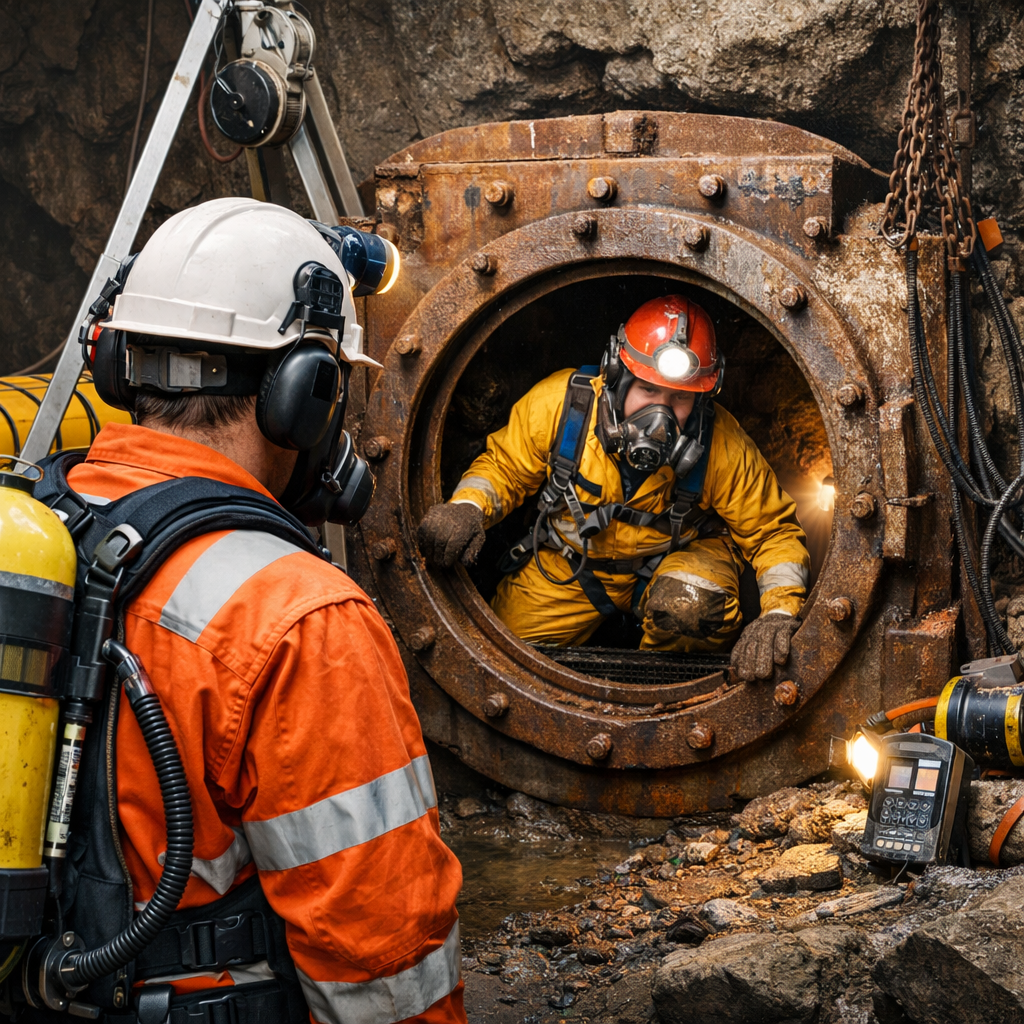
At the same time, welding fumes can build up rapidly. Without isolation, lockout, ventilation, and a hot work permit tied to the confined space permit, the work area can become explosive or toxic.
Example 3: Entry into a flotation tank
After draining a flotation tank, workers enter for inspection and repairs. Chemical residues on surfaces react with cleaning agents, while slippery floors and awkward access increase fall risk.
If agitators are not fully locked out and tagged out, accidental movement can occur during entry.
Mining sites can reduce these hazards by applying lessons learned, conducting pre-job risk assessments, and using internal procedures such as permit-to-work systems and lockout-tagout controls.
Preventing Confined Space Risks in Mining with the Hierarchy of Controls
The most effective way to manage confined space risks in mining is to use the Hierarchy of Controls rather than relying only on PPE.
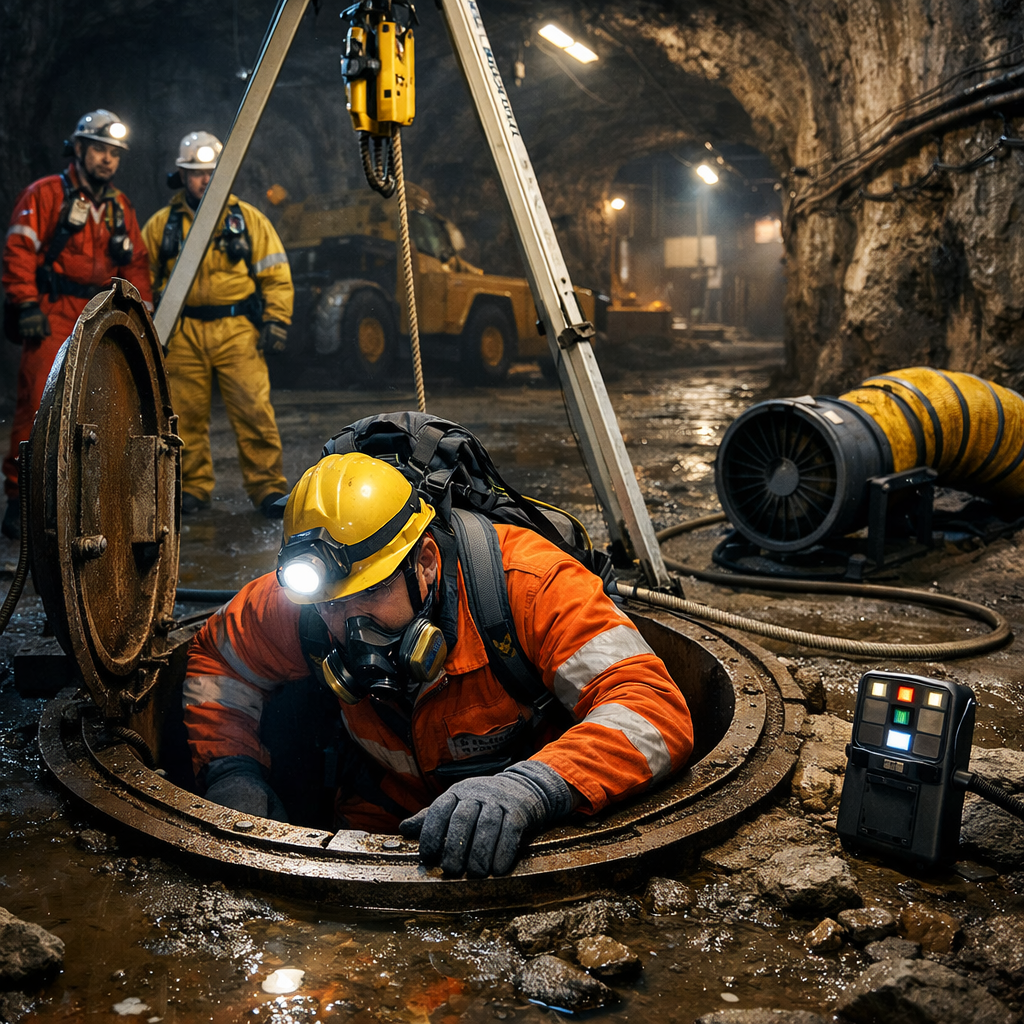
This approach helps mine operators eliminate hazards where possible and reduce exposure before anyone enters the space.
Applying the Hierarchy of Controls
| Control Level | Mining Application | Example |
|---|---|---|
| Elimination | Avoid entry entirely | Use remote cameras, vacuum systems, or external washdown points instead of sending workers inside |
| Substitution | Use safer materials or methods | Replace high-fume cleaning chemicals with lower-toxicity alternatives |
| Engineering Controls | Physically reduce hazard exposure | Mechanical ventilation, fixed gas detection, barriers, blanking, and isolation of lines |
| Administrative Controls | Manage work through systems and training | Permits, entry logs, competent attendants, rescue plans, and worker training |
| PPE | Protect workers when residual risk remains | Respirators, helmets, gloves, eye protection, harnesses, and gas monitors |
Before entry, the space should be isolated from mechanical, electrical, hydraulic, and pneumatic energy. Lines should be blinded or disconnected where needed, and any material capable of flowing into the space must be controlled.
Atmospheric testing must be completed before entry and continued during work if conditions may change. Ventilation should be sized for the specific task, especially where welding, cutting, or chemical cleaning is involved.
Administrative controls are especially important in mining because multiple crews often work in parallel. A permit should define the space, the work scope, hazards, test results, isolation points, communication methods, acceptable entry conditions, and rescue arrangements.
PPE, Emergency Readiness, and Compliance for Confined Space Risks in Mining
Personal protective equipment plays a supporting but critical role in controlling confined space risks in mining.
The right PPE depends on the hazard assessment, not on habit or convenience.
PPE commonly used in mining confined spaces
- Respiratory protection: Air-purifying or supplied-air respirators where contaminants cannot be controlled adequately by ventilation alone.
- Portable gas detectors: Monitors for oxygen, combustible gases, and toxic gases such as carbon monoxide or hydrogen sulfide.
- Head, eye, and face protection: Hard hats, goggles, and face shields for impact, splash, and grinding hazards.
- Hand and body protection: Gloves and protective clothing suited to chemicals, sharp edges, hot work, or abrasive materials.
- Fall protection and retrieval equipment: Harnesses, lifelines, and tripod or winch systems where vertical entry or rescue is required.
- Hearing protection and lighting: Ear protection in high-noise areas and intrinsically safe lighting where explosive atmospheres are possible.
PPE is only effective when workers are trained in selection, fit, limitations, maintenance, and inspection. Respiratory protection, in particular, should be backed by a formal program and medical evaluation where required.
Rescue planning and legal compliance
One of the most overlooked confined space risks in mining is failed rescue. Many fatalities occur when untrained coworkers attempt to rescue an entrant without proper equipment or atmospheric protection.
Every entry should have a site-specific rescue plan, a trained standby person, reliable communication, and immediate access to rescue gear. Response time matters, especially where oxygen deficiency or toxic gas exposure is possible.
Compliance requirements vary by jurisdiction, but mining companies are generally expected to identify confined spaces, assess hazards, implement permits, isolate energy sources, test atmospheres, provide training, and review incidents. Guidance from NIOSH Mining, OSHA, and CCOHS can support stronger site programs.
Regular audits, refresher training, and incident investigations help ensure procedures stay practical and effective. Supervisors should also verify that contractors meet the same standards as permanent employees, since contractor work often involves shutdowns, maintenance, and non-routine entry.
In conclusion, confined space risks in mining demand careful planning, disciplined execution, and continuous vigilance. By recognizing atmospheric, mechanical, chemical, and access hazards; applying the Hierarchy of Controls; selecting proper PPE; and maintaining strong compliance and rescue systems, mining operations can prevent avoidable tragedies. A robust OHSE approach to confined space risks in mining protects workers, strengthens operational reliability, and reinforces a culture where no task is so urgent that it cannot be done safely.