


- conveyor belt safety procedures: Essential Steps to Prevent Injuries and Improve Compliance
- Why conveyor belt safety procedures matter in real workplaces
- Core conveyor belt safety procedures for daily operations
- Preventing incidents through the Hierarchy of Controls
- PPE, training, and compliance requirements
- Building a safer conveyor culture
conveyor belt safety procedures: Essential Steps to Prevent Injuries and Improve Compliance


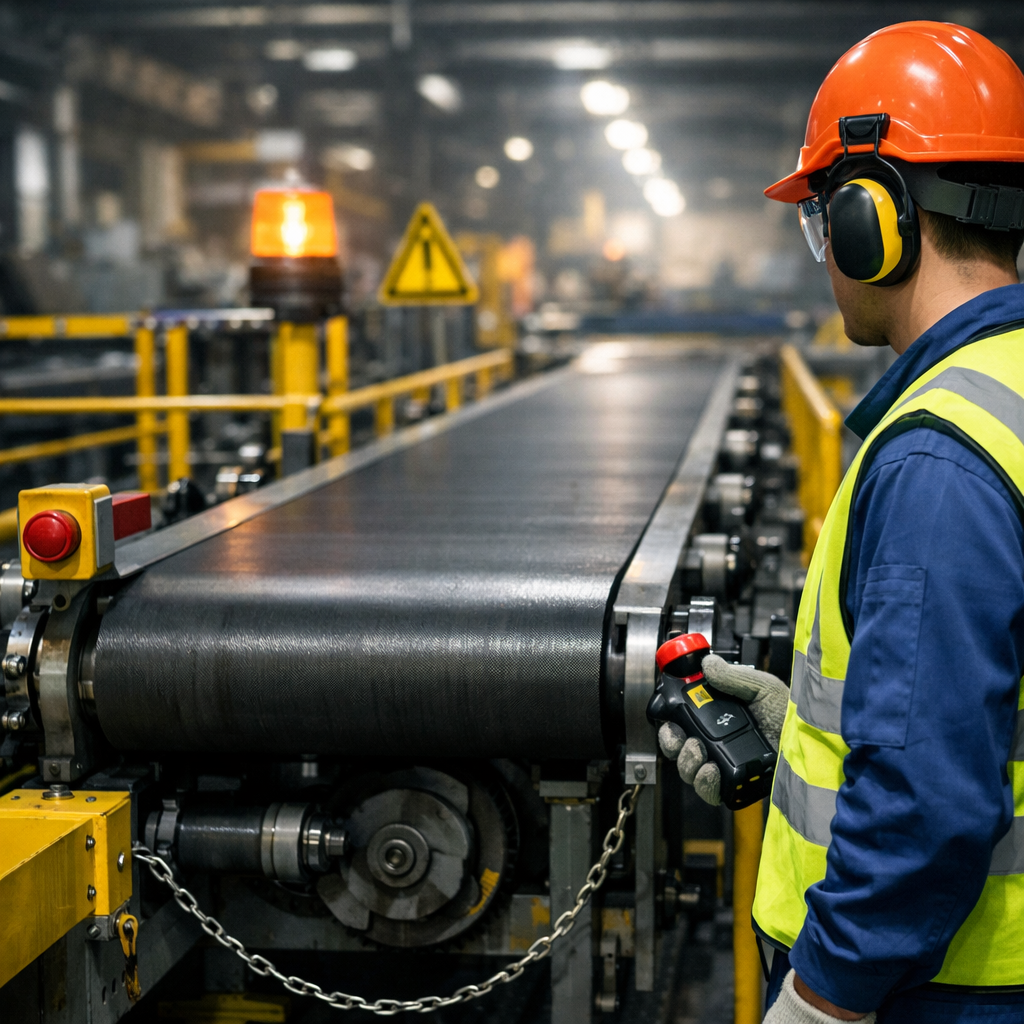
conveyor belt safety procedures are critical for preventing serious injuries in warehouses, manufacturing plants, mines, food processing facilities, and distribution centers.
Because conveyor systems involve moving parts, pinch points, electrical components, heavy loads, and routine maintenance, even a small lapse in attention can lead to a major incident.
An effective safety program does more than remind workers to be careful. It combines hazard identification, engineering controls, lockout/tagout, training, personal protective equipment, inspection routines, and legal compliance.
When these measures are applied consistently, businesses can reduce downtime, improve worker confidence, and create a safer operating environment for everyone near the belt.
Why conveyor belt safety procedures matter in real workplaces
Conveyors are designed to move materials efficiently, but their continuous motion can expose workers to hazards that are easy to underestimate.
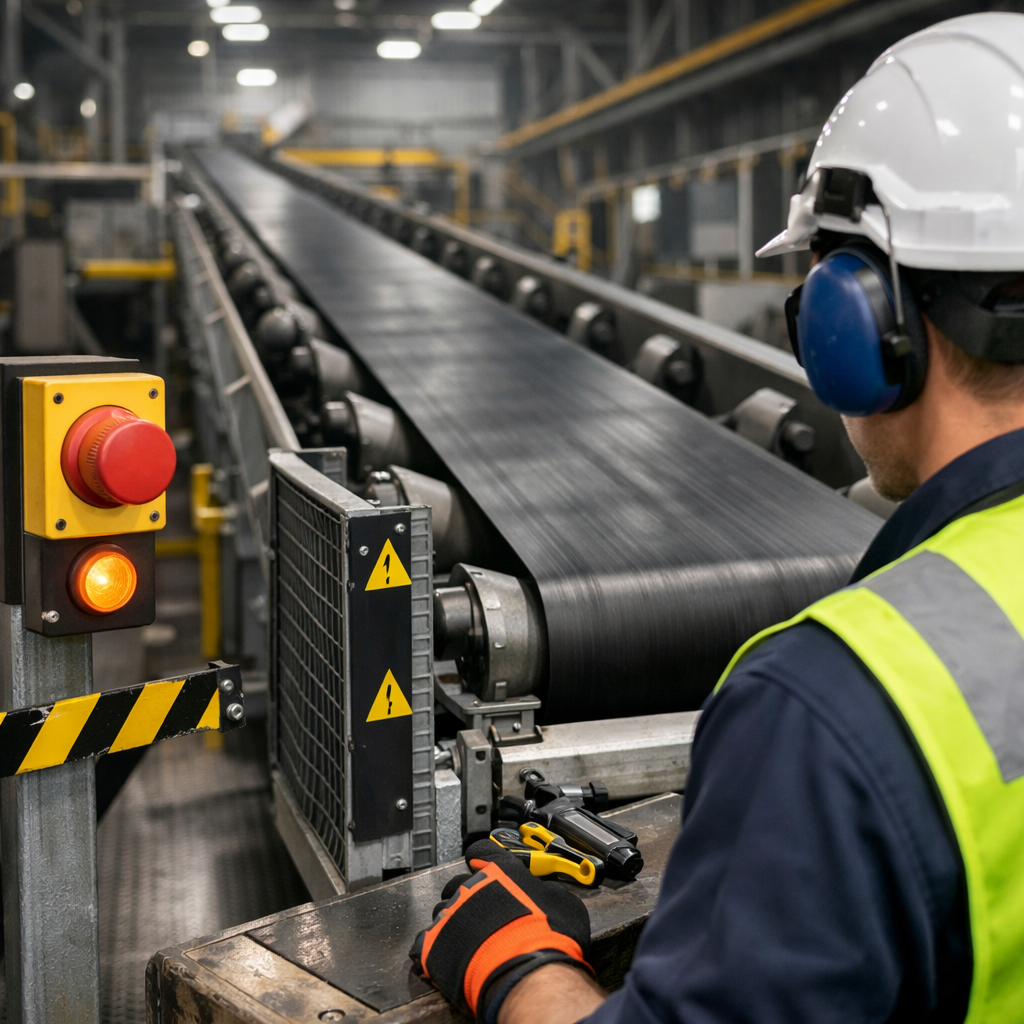
Hands, clothing, gloves, hair, and tools can become caught in nip points, rollers, pulleys, and transfer areas within seconds.
In many workplaces, injuries occur during cleaning, maintenance, unjamming, or reaching across an active belt. A worker may assume the line is stopped, only for the system to restart automatically or from a remote control station.
That is why conveyor belt safety procedures must cover both normal operation and non-routine tasks.
Common risks around conveyor systems
Most conveyor-related incidents fall into a few common categories. Recognizing them is the first step in prevention.
- Entanglement: Loose clothing, jewelry, gloves, or hair getting pulled into rotating components.
- Crushing and pinch point injuries: Hands or fingers trapped between the belt and rollers, pulleys, or guards.
- Struck-by hazards: Falling materials, shifting loads, or components released during maintenance.
- Electrical risks: Faulty wiring, damaged controls, or energized equipment during servicing.
- Slip, trip, and fall hazards: Spilled product, poor housekeeping, and obstructed walkways near conveyors.
- Ergonomic strain: Repetitive reaching, awkward loading positions, and poor workstation design.
- Unexpected startup: Restarting during cleaning, inspection, or jam clearing without proper isolation.
A practical example is a packaging line where a worker reaches under a guard to clear a carton jam instead of shutting down the equipment.
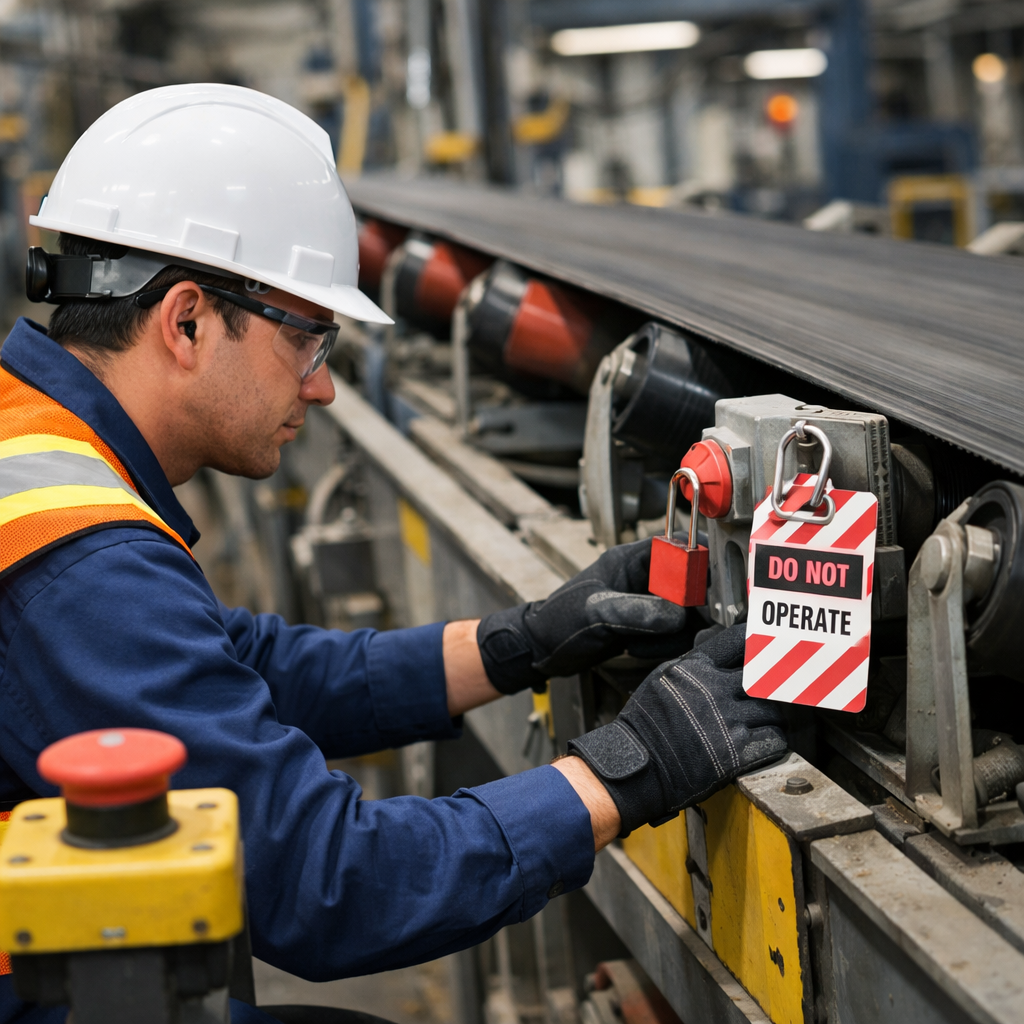
Another example is a maintenance technician testing belt tracking without verifying that all staff are clear of the line.
These are exactly the situations where strong procedures save lives.
Core conveyor belt safety procedures for daily operations
The best conveyor belt safety procedures are simple, specific, and easy to follow during real work conditions.
They should be built into induction training, pre-start checks, safe work instructions, and supervision.
Pre-start and operating rules
- Inspect guards, emergency stops, pull cords, warning signs, and access points before startup.
- Ensure walkways, loading zones, and discharge areas are free from obstructions and spills.
- Confirm that only authorized workers operate or adjust the conveyor.
- Use audible or visible startup warnings where workers may be nearby.
- Never ride, sit, stand, or climb on a conveyor belt.
- Never reach over, under, or through a moving belt.
- Keep hands clear of rollers, pulleys, and transfer points.
- Report damaged guards, unusual noises, belt misalignment, or overheating immediately.
Lockout/tagout and isolation
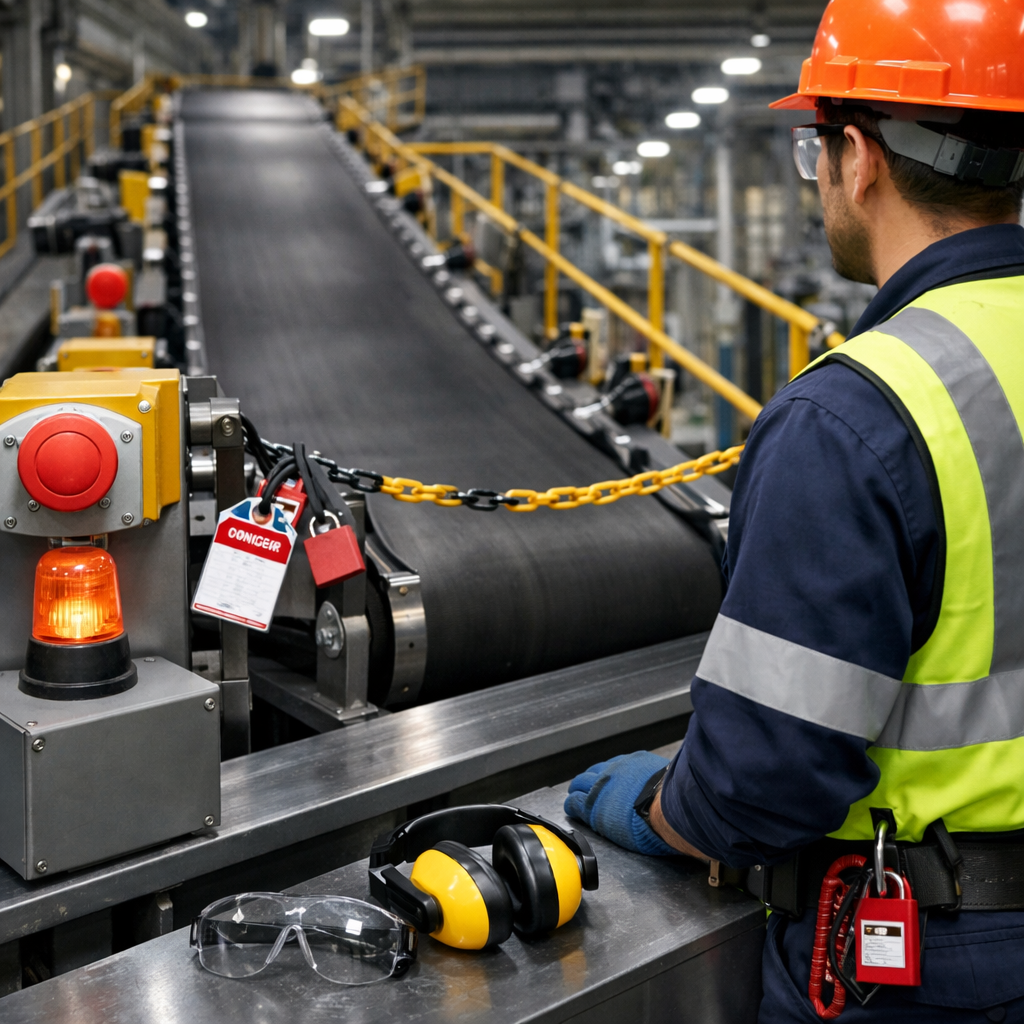
Lockout/tagout is one of the most important conveyor belt safety procedures because many severe injuries happen during maintenance and jam clearing.
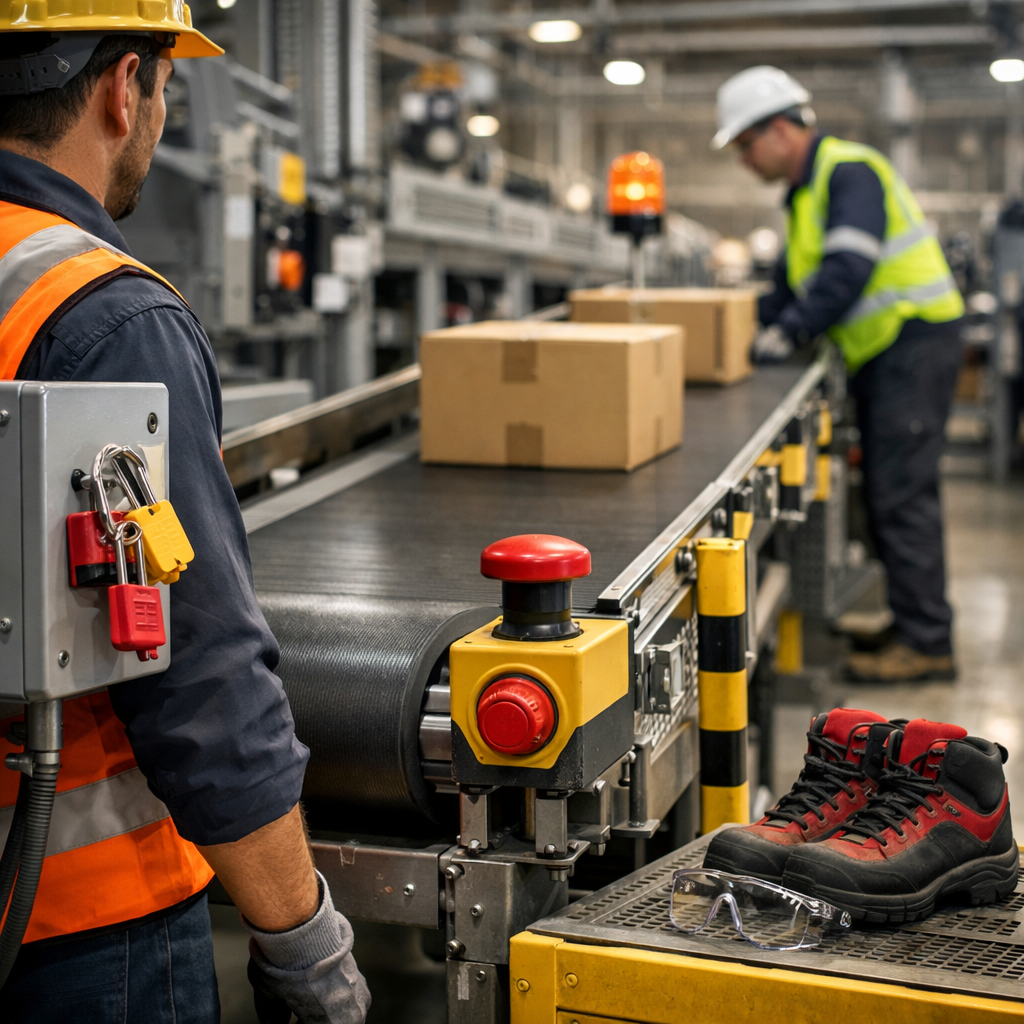
Before any worker cleans, repairs, adjusts, or removes guards, all hazardous energy sources should be isolated, locked, tagged, tested, and verified.
This may include electrical, pneumatic, hydraulic, gravity, and stored mechanical energy.
OSHA provides clear guidance on control of hazardous energy at osha.gov, and these principles are widely recognized across industry.
For Canadian workplaces, CCOHS also offers practical health and safety resources that support effective isolation practices.
A strong procedure should require workers to test for zero energy before beginning work. It should also clearly assign responsibility when more than one person is servicing the same conveyor.
Emergency preparedness
Every conveyor system should have accessible emergency stop devices, and workers must know exactly when and how to use them.
Emergency stops should never be blocked, tied off, or treated as a normal stopping method for routine production.
Employers should also practice incident response for entanglement, medical emergencies, and fire risks related to motors or overheated bearings.
Regular drills help workers respond faster under pressure.
Preventing incidents through the Hierarchy of Controls
To strengthen conveyor belt safety procedures, employers should apply the Hierarchy of Controls rather than relying on PPE alone.
This OHSE approach focuses first on removing hazards where possible and then reducing exposure through better system design and work practices.
Applying the Hierarchy of Controls to conveyors
| Control Level | How It Applies to Conveyor Safety |
|---|---|
| Elimination | Remove unnecessary manual interaction with moving belts by redesigning tasks or automating jam detection. |
| Substitution | Use safer equipment designs or low-risk cleaning methods that reduce worker exposure near moving parts. |
| Engineering Controls | Install fixed guards, interlocks, barrier fencing, emergency pull cords, and presence-sensing devices. |
| Administrative Controls | Use training, inspections, signage, permits, SOPs, and restricted access for authorized workers only. |
| PPE | Provide task-appropriate protective equipment while recognizing it is the last line of defense. |
Engineering controls are especially important because they do not rely entirely on worker behavior.
For example, a properly installed guard over a pinch point offers continuous protection, while a warning sign only works if someone notices and obeys it.
Likewise, interlocked access doors can stop the system automatically if a worker enters a hazardous area.
If you are reviewing broader machine risk reduction methods, our machine guarding best practices guide can support your assessment process.
PPE, training, and compliance requirements
Although PPE is the lowest level in the Hierarchy of Controls, it still plays an important role in conveyor belt safety procedures.
The key is selecting equipment that protects workers without creating new entanglement hazards.
Recommended PPE and clothing considerations
- Close-fitting high-visibility clothing suited to the task and environment.
- Safety footwear with slip-resistant soles.
- Eye protection where dust, debris, or product movement creates exposure.
- Hearing protection in high-noise conveyor environments.
- Gloves only when appropriate to the task and after assessing entanglement risk.
- Hair restraints and removal of loose jewelry or accessories.
PPE should always be supported by task-specific risk assessment.
For instance, gloves may help with handling rough materials during shutdown tasks, but they can increase danger near rotating components if used during live operations.
Training and supervision expectations
Training should not stop at general induction.
Workers need practical instruction on startup warnings, emergency stops, prohibited behaviors, manual handling risks, housekeeping, and lockout/tagout requirements.
Supervisors should verify that workers understand site-specific hazards, especially where multiple conveyors, blind corners, elevated platforms, or automated restart systems are involved.
Refresher training is important after incidents, modifications, new equipment installation, or changes in production processes.
Routine observations and inspections also help identify unsafe shortcuts before they become normalized.
For more support with routine workplace checks, see our workplace safety inspection checklist.
Compliance and documentation
Compliance is a major part of conveyor belt safety procedures.
Employers are generally required to provide safe equipment, maintain guarding, assess risks, train workers, and implement energy isolation procedures.
Depending on jurisdiction and industry, relevant expectations may come from OSHA, CCOHS guidance, national standards, or local occupational health and safety laws.
OSHA machine guarding resources are particularly useful for understanding guarding responsibilities around moving machinery.
Good documentation should include:
- Risk assessments and hazard registers
- Safe operating procedures
- Lockout/tagout records
- Training attendance and competency checks
- Maintenance and inspection logs
- Incident and near-miss reports
Clear records demonstrate due diligence and help organizations identify recurring issues such as repeated jams, missing guards, or poor housekeeping in transfer zones.
Building a safer conveyor culture
Strong conveyor belt safety procedures are most effective when they become part of everyday work rather than a document stored in a binder.
That means involving operators, maintenance teams, supervisors, and safety staff in hazard reviews, procedure updates, and incident investigations.
Workers should feel comfortable stopping the job if a guard is missing, a belt is mistracking, or a jam requires unsafe access.
Simple improvements such as better lighting, clearer signage, routine cleaning, safer access platforms, and faster maintenance response can prevent many injuries before they happen.
In practical terms, a safe conveyor workplace is one where startup warnings are respected, lockout/tagout is never skipped, PPE is selected carefully, and hazards are controlled at the source whenever possible.
By applying the Hierarchy of Controls, following recognized guidance from organizations such as OSHA and CCOHS, and reinforcing expectations through training and supervision, businesses can make conveyor belt safety procedures a reliable part of daily OHSE performance.