


Driving for Work Safety Tips: Practical Steps Every Mobile Employee Should Follow


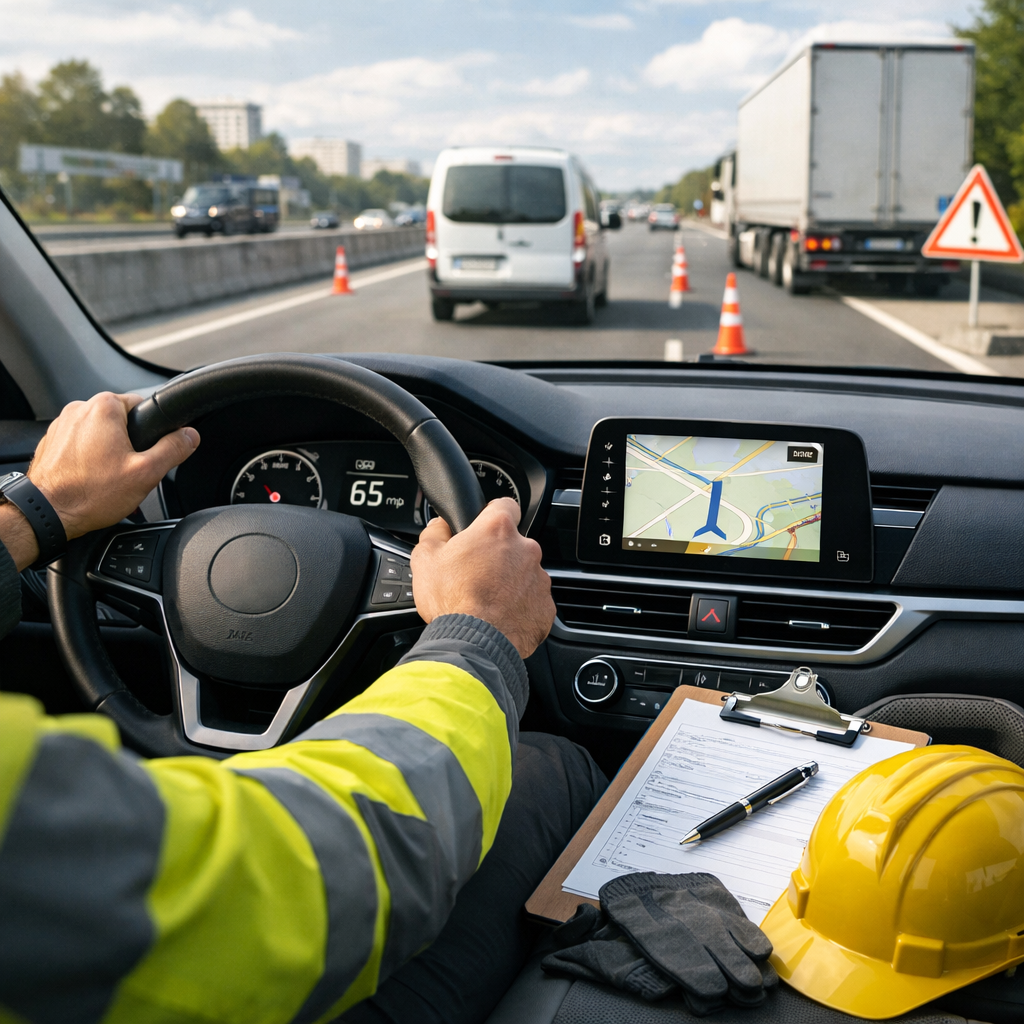
Driving for work safety tips should be part of every mobile employee’s routine, whether the job involves sales calls, site visits, deliveries, maintenance, community care, or travel between offices.
When workers spend time on the road, driving becomes a workplace activity with real health and safety risks, not just a transport task. Employers and employees both have a role in reducing incidents through planning, training, vehicle checks, and safe decisions behind the wheel.
A practical approach matters most. Safe driving for work means looking beyond driver skill alone and addressing fatigue, distraction, vehicle condition, route planning, and changing weather. It also helps to apply the Hierarchy of Controls: eliminate unnecessary trips where possible, substitute in-person travel with remote meetings, use engineering controls such as safer vehicles and driver-assist features, strengthen administrative controls with policies and scheduling, and rely on personal behaviors like seatbelt use as the final layer.
Guidance from organizations such as CCOHS and OSHA supports this broader view of work-related driving risk. For businesses building or reviewing a program, a clear fleet safety policy and a practical driver risk assessment can provide a strong foundation.
Driving for Work Safety Tips Start With Planning the Journey
Many road incidents happen before the vehicle even moves. Poor scheduling, unclear directions, and unrealistic deadlines can pressure employees into speeding, skipping breaks, or using phones while driving.
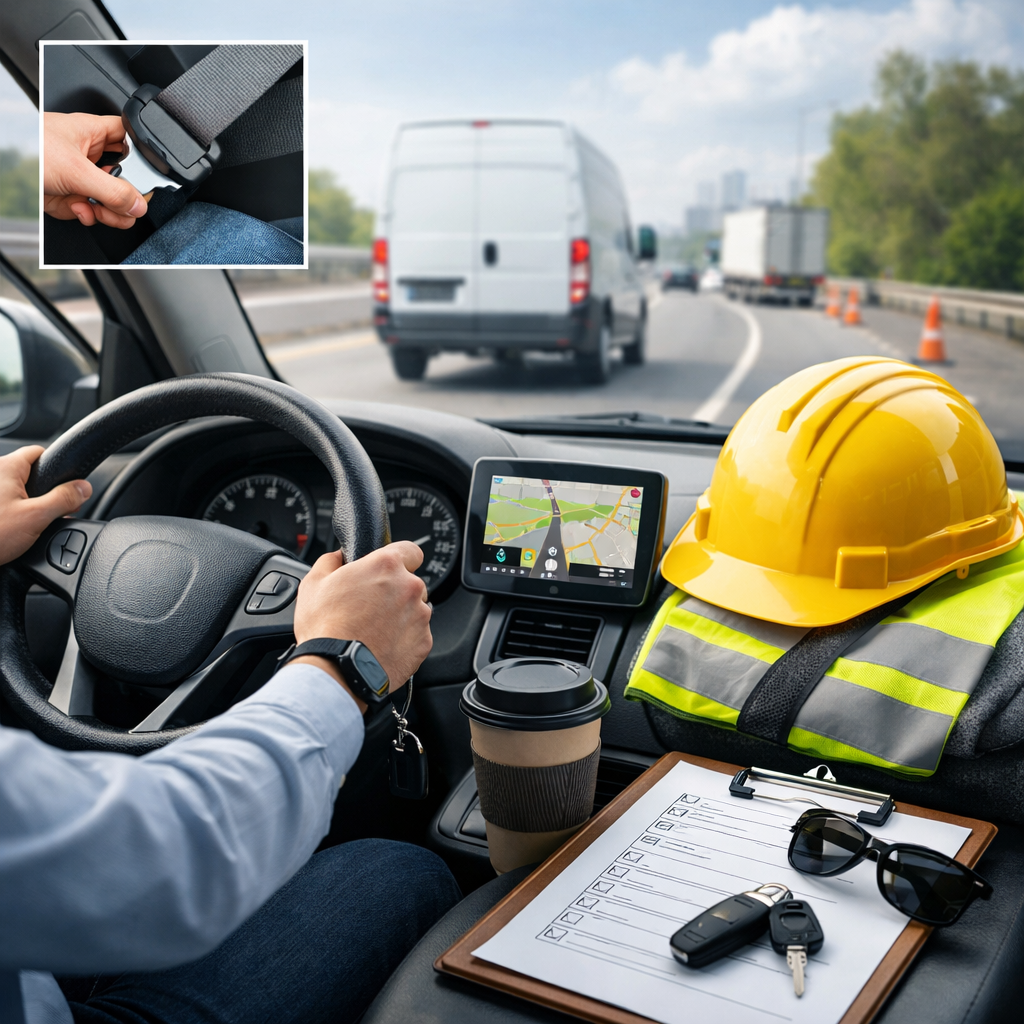
One of the most effective driving for work safety tips is to plan every trip with enough time for traffic, parking, weather delays, and rest stops. If a job schedule requires several appointments in one day, it should still allow safe travel speeds and regular breaks.
Route Planning That Reduces Risk
Route planning should not focus only on the shortest distance. The safest route may be slightly longer but include better road conditions, lower traffic density, easier turning points, and more service areas.
Mobile employees should review:
- Expected traffic at the time of travel
- High-risk roads, construction zones, and school areas
- Safe refueling and rest locations
- Reliable navigation entered before departure
- Alternative routes in case of closures or incidents
Where possible, employers can reduce exposure by combining tasks geographically, avoiding peak-hour travel, and using video calls instead of sending workers on low-value trips. This reflects the top levels of the Hierarchy of Controls by reducing or eliminating the need to drive at all.
Check the Driver, Not Just the Diary
Planning also means checking whether the employee is fit to drive. A worker who has just completed a long shift, is unwell, is taking medication that causes drowsiness, or is emotionally distressed may not be safe to travel.
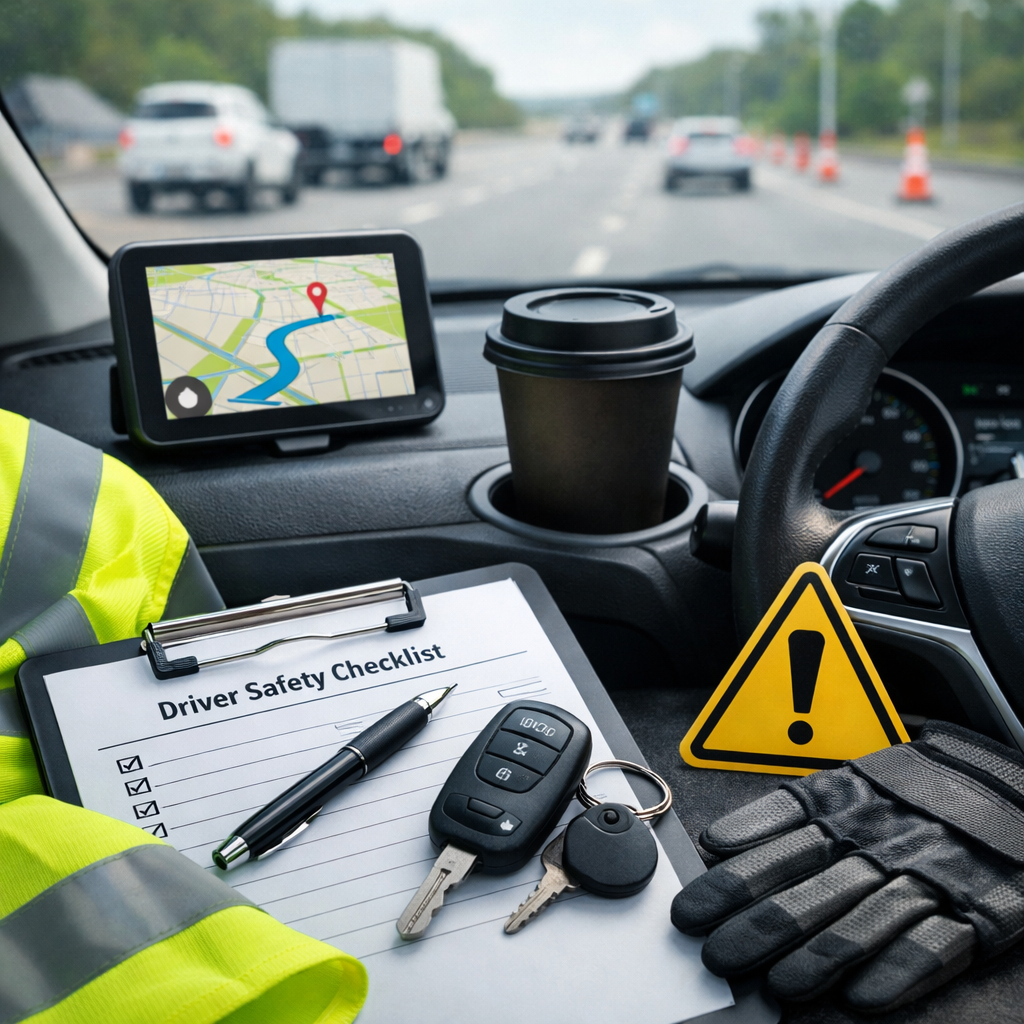
Managers should encourage workers to report concerns without fear of blame. A culture that rewards “pushing through” can quickly become a safety risk.
Managing Fatigue and Distraction on the Road
Fatigue and distraction are among the most serious risks for mobile employees. They reduce reaction time, impair judgment, and make routine driving conditions far more dangerous.
These driving for work safety tips are especially important for employees who drive long distances, visit multiple clients in one day, or work irregular hours.
Fatigue Warning Signs and Controls
Fatigue does not only affect night drivers. Early starts, physically demanding work, poor sleep, long hours, and mental overload can all contribute to drowsy driving.
Common warning signs include frequent yawning, difficulty focusing, drifting in the lane, missing exits, or not remembering the last few kilometers of travel. If these signs appear, the safest action is to stop in a safe place and rest.

Helpful fatigue controls include:
- Scheduling regular breaks every two hours or sooner if needed
- Avoiding excessive daily driving hours
- Not driving immediately after a long or physically demanding shift
- Using overnight stays for long-distance travel instead of same-day return trips
- Encouraging workers to report fatigue before starting a journey
Coffee, open windows, and loud music are not reliable controls. They may provide a short sense of alertness, but they do not replace real rest.
Distraction Is More Than Phone Use
Phone use is a major issue, but workplace driving distractions also include eating, adjusting navigation, reading job notes, searching for items, and making hands-free calls that take attention away from traffic conditions.
A strong policy should require drivers to set navigation, climate controls, and music before moving off. If a call or urgent message comes in, the driver should pull over somewhere safe before responding.
Even hands-free technology can create cognitive distraction. For this reason, employers should avoid expecting employees to take calls while driving and should make it clear that delayed responses are acceptable when staff are on the road.
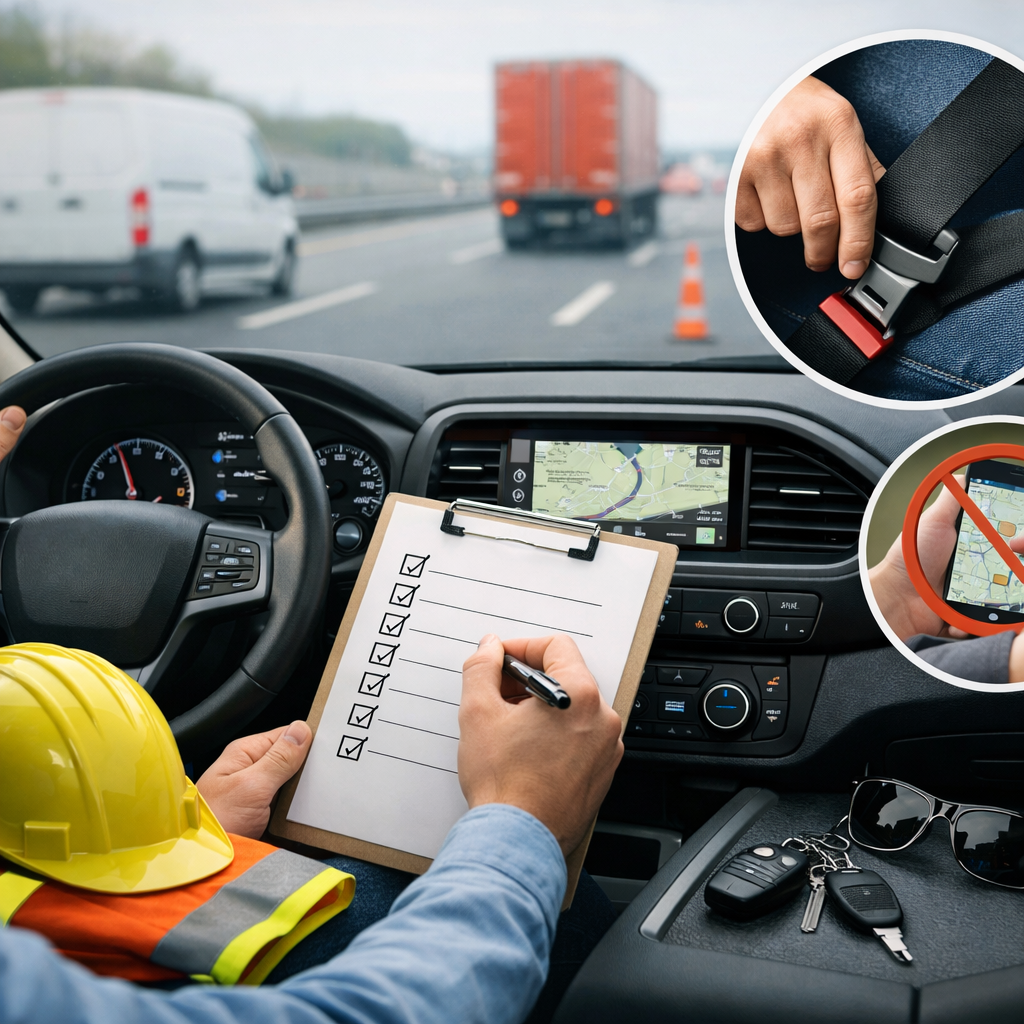
Vehicle Inspections and Roadworthiness for Mobile Employees
Vehicle condition plays a major role in preventing breakdowns, delays, and crashes. Whether employees use company vehicles, pool cars, vans, or approved personal vehicles for business travel, routine inspections are essential.
Practical driving for work safety tips always include a simple pre-start check. This does not need to be complicated, but it should be consistent.
What to Check Before Every Work Trip
A quick walk-around can identify obvious hazards before they become serious problems on the road. Drivers should check tires, lights, mirrors, windows, fuel level, and any loads or equipment being carried.
| Inspection Item | What to Look For | Why It Matters |
|---|---|---|
| Tires | Correct pressure, visible damage, adequate tread | Improves grip, braking, and fuel efficiency |
| Lights | Headlights, indicators, brake lights working | Helps visibility and communication with other road users |
| Windscreen and wipers | Clean glass, no major cracks, effective wiper blades | Maintains clear vision in dust and rain |
| Mirrors and cameras | Clean, adjusted, unobstructed | Supports awareness around the vehicle |
| Load security | Items restrained and evenly placed | Prevents shifting loads and cabin hazards |
Any defect that affects safety should be reported and fixed before the trip. Workers should never feel pressured to drive an unsafe vehicle just to keep an appointment.
Inspections Need a System
Employers should back up daily checks with scheduled maintenance, documented inspections, and a clear fault-reporting process. This is particularly important for vans carrying tools, samples, stock, or equipment.
If workers use their own vehicles for work, the business should still set minimum standards for insurance, maintenance, and roadworthiness. A “grey fleet” can create hidden risk if oversight is weak. The NHTSA also provides useful road safety information that can support workplace driver education.
Weather Conditions, On-Road Decisions, and Everyday Safe Habits
Weather can change a routine work trip into a high-risk journey very quickly. Rain, fog, strong wind, heat, ice, and flooding all affect vehicle control, visibility, stopping distance, and driver concentration.
Good driving for work safety tips include adjusting plans to the conditions, not simply carrying on as normal.
Adapting to Weather Conditions
Before leaving, drivers should check the forecast and local conditions along the full route, not just at the starting location. In poor weather, they may need to delay departure, choose a different route, increase following distance, reduce speed, or postpone the trip altogether.
Examples of practical controls include:
- Using headlights in rain, fog, or low visibility
- Allowing significantly more braking distance on wet or icy roads
- Avoiding sudden steering, braking, or acceleration
- Watching for floodwater, fallen branches, and debris after storms
- Carrying seasonal emergency supplies where appropriate
For mobile employees in regional or remote areas, weather planning may also involve confirming fuel availability, phone coverage, check-in procedures, and what to do if a road becomes impassable.
Everyday Habits That Keep Drivers Safer
Small habits make a big difference over time. Seatbelts should be worn on every trip, loads should be secured properly, and loose objects should be kept out of the cabin where they could become projectiles in a sudden stop.
Drivers should maintain safe following distances, reverse only when necessary, and avoid parking in positions that create difficult exits into live traffic. If a worker is visiting multiple sites, they should also think about personal security, lighting, and safe parking when arriving early in the morning or after dark.
Supervisors can support these habits by reviewing incidents, sharing lessons learned, and tracking trends such as repeated near misses, reversing damage, or fatigue reports. Refresher training and driver coaching may be needed if patterns emerge.
Driving for work safety tips are most effective when they are built into everyday work, not treated as an optional extra. For mobile employees, safe driving depends on realistic scheduling, good route planning, fatigue management, distraction control, regular inspections, and smart decisions in changing weather. When employers provide clear expectations and workers are empowered to stop, delay, or change a trip when conditions are unsafe, the result is a safer journey for everyone. In the end, practical driving for work safety tips protect not only the driver, but also coworkers, clients, pedestrians, and every other road user.