

Occupational Health, Safety, and Environment (OHSE) is essential in creating safe and inclusive spaces, particularly for individuals with mobility challenges such as those using wheelchairs, stretchers, or walking sticks.
Buildings need to be designed and maintained with features that accommodate their needs, ensuring not only safety but also ease of access. This article outlines the key OHSE considerations that must be taken into account to make buildings safe and accessible for individuals with mobility issues.


1. Accessibility Compliance
Buildings must follow accessibility standards and laws to ensure mobility-impaired individuals can navigate easily and safely. Important aspects include:
- Ramps: Must have gentle slopes, non-slip surfaces, and handrails on both sides. Ramps should also lead to all entrances and exits.
- Elevators: Elevators should be spacious enough to accommodate wheelchairs and stretchers, with sufficient turning space (at least 1500 mm x 1500 mm).
- Wide Doorways: Minimum width of doorways should be 850 mm to allow for the passage of wheelchairs or stretchers.
- Hallways: Clear of obstructions with a minimum width of 1200 mm to accommodate both mobility aids and people walking.
2. Elevators: Design and Features for Accessibility
Elevators play a critical role in enabling vertical movement within buildings, especially for individuals who cannot use stairs. To ensure safety and accessibility, elevators should be equipped with the following features:
- Adequate Size: Elevators must be large enough to comfortably fit wheelchairs or stretchers. The recommended minimum internal dimension is 1500 mm x 1500 mm to allow easy entry, turning, and maneuvering for wheelchairs.
- Button Placement: Elevator buttons should be placed at an accessible height, ideally between 890 mm and 1200 mm from the floor, to ensure that both wheelchair users and individuals on stretchers can easily reach them. The buttons should have large, easy-to-read numerals, and tactile or braille markings should be included for individuals with visual impairments.
- Auditory and Visual Indicators: Elevators should have both audible and visual cues to announce floor numbers and door openings. This helps individuals with visual or hearing impairments. Voice announcements for floors and instructions such as “doors opening” or “doors closing” enhance the usability for individuals with disabilities.
- Automatic Doors: Doors should open and close slowly to allow individuals using mobility aids enough time to enter or exit without rushing. The doors should also have sensors to prevent closing when an obstruction is detected, ensuring safety for slower-moving individuals.
- Handrails: Elevators should be equipped with handrails on at least one side, placed at a height that allows users of mobility aids to stabilize themselves during movement.
3. Emergency Evacuation Plans for Mobility-Impaired Individuals
During emergencies, special care must be taken to ensure that people with mobility challenges can evacuate safely. A well-prepared emergency plan should include:
- Evacuation Chairs: Stairs pose significant barriers for wheelchair users or individuals on stretchers. Evacuation chairs, specifically designed for safely moving people down stairs, should be available at designated points.
- Accessible Evacuation Routes: All emergency exits must be wheelchair accessible, with ramps and wide passageways. Elevators should be equipped with emergency power backup systems, allowing them to operate during an evacuation scenario.
- Trained Personnel: Staff or designated personnel should be trained to assist individuals with mobility challenges during emergency evacuations, including the use of evacuation chairs or alternate routes.
4. Floor and Surface Safety
The design of floors and surfaces is crucial for the safety of individuals using mobility aids such as walking sticks, wheelchairs, or stretchers. Key considerations include:
- Non-Slip Flooring: Floors should have non-slip surfaces to prevent accidents, especially in areas prone to water or moisture, such as bathrooms and kitchens.
- Thresholds and Ramps: Eliminate high thresholds between rooms or areas, as these can be tripping hazards or obstacles for wheelchair users. Small ramps should be installed where necessary to ensure smooth transitions between floor levels.
- Clear Pathways: Hallways and passageways should be free of obstacles, with sufficient space for wheelchairs and stretchers to move without obstructions. Furniture or decorative items should not block access routes.
5. Restrooms and Other Amenities

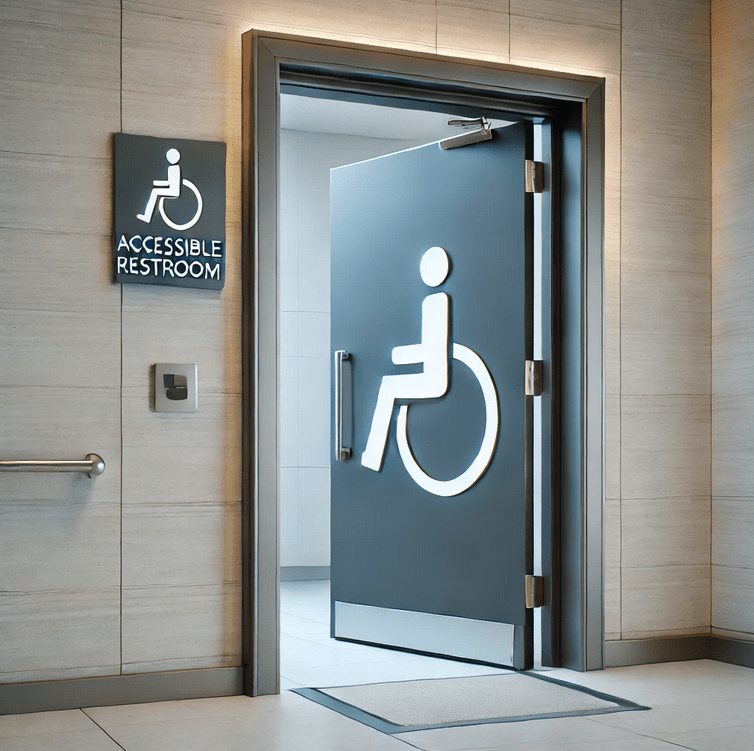
Restrooms and common areas must be designed with accessibility in mind to accommodate the needs of those with limited mobility.
- Accessible Restrooms: Public restrooms should include at least one stall designed for wheelchair users. This stall should be large enough (minimum 1500 mm x 1500 mm) to allow for turning, with grab bars installed on the walls for support. The door should open outward, and there should be sufficient space to transfer from the wheelchair to the toilet.
- Sink Height and Faucet Controls: Sinks in accessible restrooms should be positioned at a lower height (around 800 mm from the floor), with clearance underneath for wheelchairs. Faucets should be easy to use with lever or sensor-operated controls rather than knobs, which can be difficult for people with limited hand strength or dexterity.
- Signage and Visual Cues: Clear and visible signage should guide individuals to accessible amenities, with additional features such as braille signage for the visually impaired. Lighting in these areas should be bright, evenly distributed, and free from glare to help individuals with visual impairments.
6. Parking and Building Access
- Accessible Parking Spaces: Parking areas must include designated spaces for individuals with disabilities. These spaces should be close to building entrances and large enough (minimum 3600 mm wide) to accommodate vehicle ramps or wheelchair lifts.
- Curb Ramps: Entryways from parking areas to the building should include curb ramps to eliminate the need to step up or down. These ramps must be wide, have non-slip surfaces, and feature proper slope angles to avoid difficulty during access.
7. Ongoing Maintenance and Audits
Building managers should conduct regular safety audits and maintenance checks to ensure that all accessibility features are in good working order. Elevators, ramps, handrails, and other critical components must be regularly inspected for wear and tear or malfunctions.
This article emphasizes the importance of making buildings truly accessible to all by incorporating the right features, like elevator design and restroom accessibility, that ensure comfort and safety for individuals with mobility challenges.
By adhering to OHSE guidelines, building managers and employers can create spaces where everyone, regardless of their physical ability, can navigate safely and comfortably.