


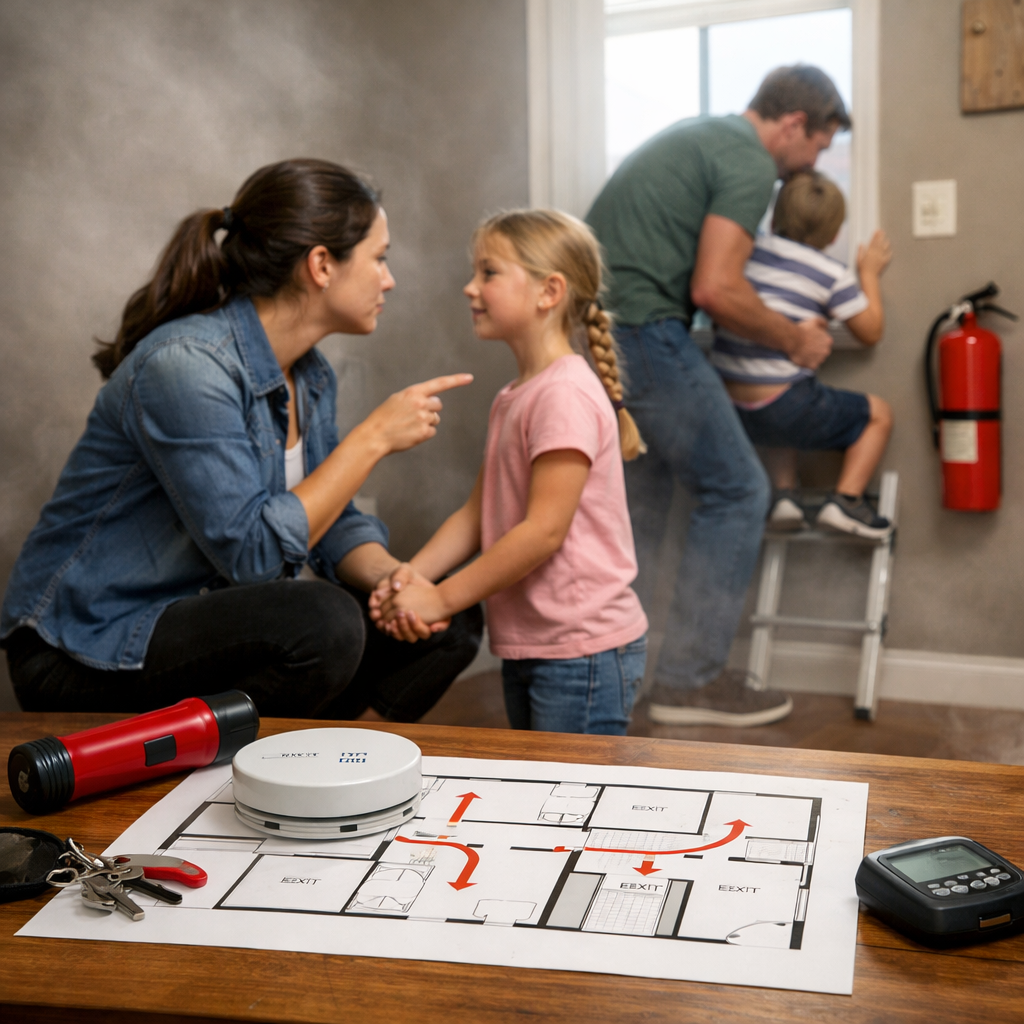

Family fire escape plan planning is one of the most practical steps parents and caregivers can take to protect children at home. In an emergency, smoke, heat, and confusion can make even a familiar home hard to navigate, so a clear plan helps every family member know what to do, where to go, and how to get out quickly.
For Canadian families, including those in Ontario, a good plan should be simple, practiced often, and matched to the ages and abilities of the people in the home. It should also work with basic fire prevention measures such as smoke alarms, safe cooking habits, and clear exits. This guide explains how to build a calm, practical family fire escape plan that children can understand and adults can confidently lead.
Why every home needs a family fire escape plan
Children may freeze, hide, or look for a parent first when they are scared. That is why a family fire escape plan should not rely on guesswork. It should give each person a role, show at least two ways out of every sleeping area where possible, and identify one outdoor meeting place everyone can remember.
Fire safety at home also connects to school and workplace safety habits. Children who practise evacuation routines at school often respond better when they understand that home has a routine too. Parents who work in safety-sensitive jobs may already know the value of drills, assigned responsibilities, and regular review. The same prevention-focused approach works well at home.
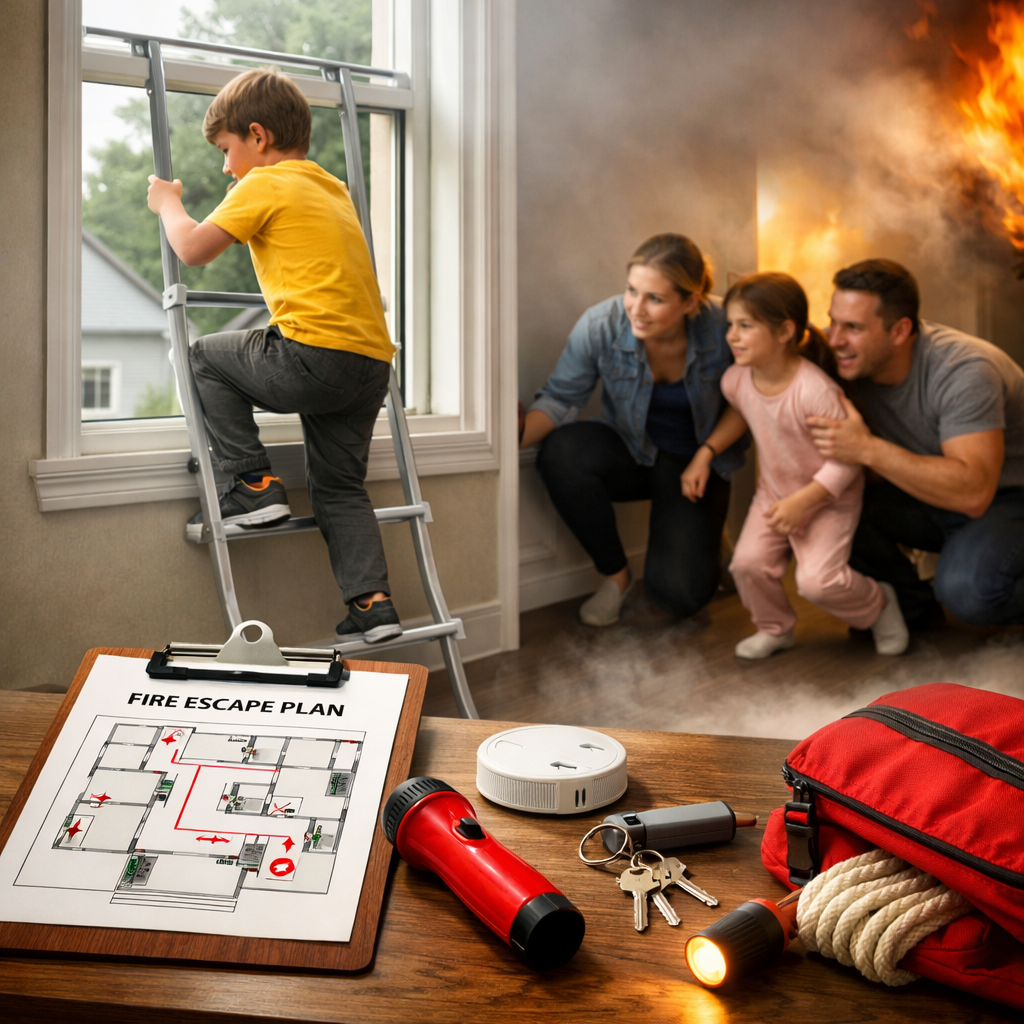
Trusted Canadian guidance on home fire safety can be found through CCOHS, Ontario.ca, and Health Canada. Families looking for broader safety education can also explore resources at OHSE.ca.
How to build a family fire escape plan step by step
Map the home and exits
Start by walking through your home with your children. Identify all doors and windows that could be used to leave each room. In many homes, the front door may be the primary route, but families should also identify a second way out in case smoke or fire blocks the main path.
Keep exits clear of toys, shoes, furniture, snow buildup, or storage items. If windows are part of the plan, adults should make sure they open easily and that older children know how to use them safely. For apartments or multi-storey homes, follow building rules and local emergency guidance, and teach children never to use elevators during a fire unless emergency officials direct otherwise.
Choose a meeting place
Your outdoor meeting place should be easy to reach, easy to remember, and far enough from the home to stay safe. A tree, mailbox, neighbour’s front area, or another fixed landmark can work if it is clearly identified in advance.
The key rule is simple: once outside, stay outside. No one should go back in for pets, phones, school bags, or other belongings. Children should hear this message often so it becomes automatic.
Assign roles for adults and older children
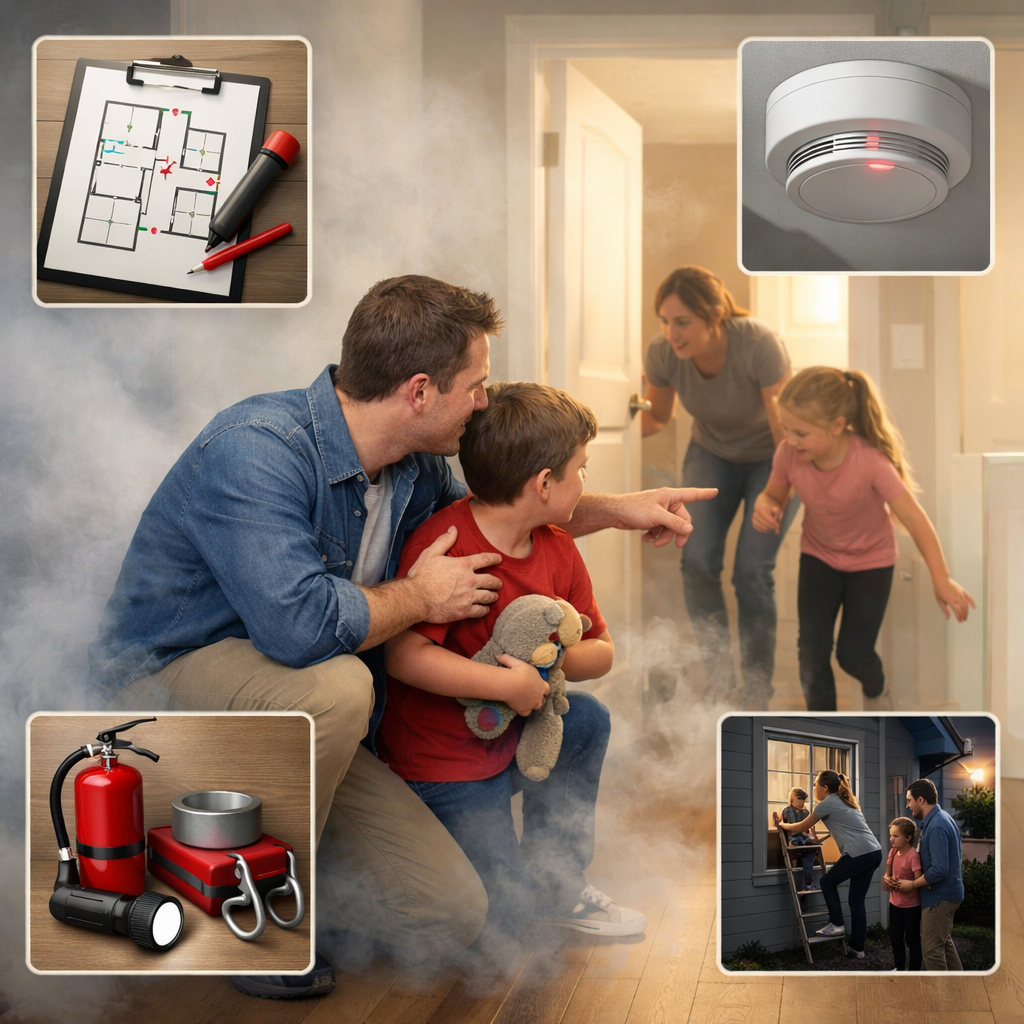
In homes with young children, adults may need assigned responsibilities, such as helping a toddler, assisting an older adult, or checking a specific bedroom door before leaving. Older children can be taught simple tasks, such as going directly to the meeting place, helping a younger sibling stay calm, or alerting others if they hear the smoke alarm.
This is also where prevention and control measures matter. A practical home safety approach includes working smoke alarms, safe heater use, and careful cooking practices. These are examples of reducing risk before an emergency begins, much like hazard controls used in school labs or workplaces.
Teaching children to follow the family fire escape plan
Keep instructions simple and age-appropriate
Young children learn best with short, repeated messages. Use phrases such as “hear the alarm, go outside, meet at the tree.” Avoid making the plan sound frightening. The goal is calm confidence, not fear.
For school-age children, explain what smoke does, why staying low may help if there is smoke, and why closed doors can slow the spread of fire and smoke. Teach them to check with an adult, school, workplace, building, manufacturer, or emergency guidance where specific procedures apply.
Practise day and night
A family fire escape plan should be practised more than once and in different conditions. Children need to know what the house feels like in the dark and how to move to the exit without stopping for toys or screens. Practice should include the sound of the smoke alarm so no one is surprised by it.
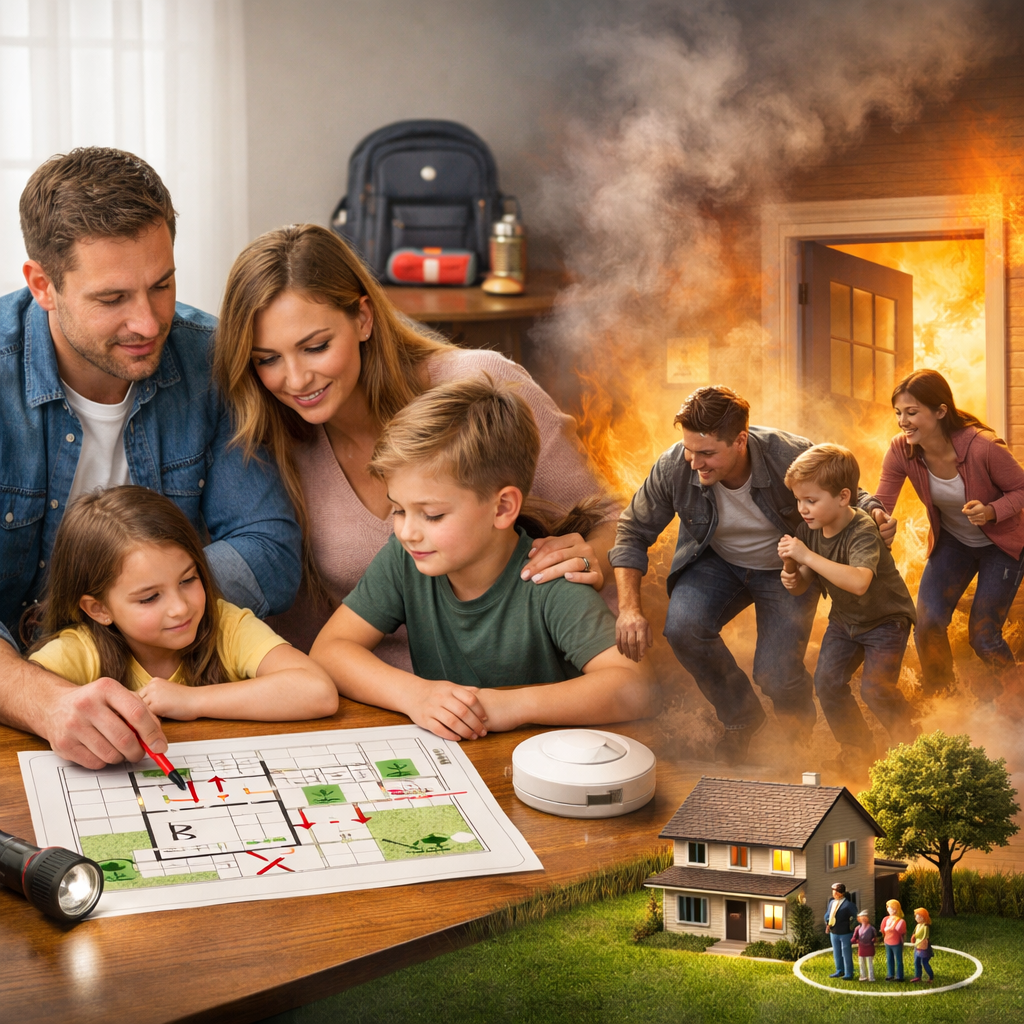
- Walk through both primary and secondary escape routes.
- Practise from each bedroom.
- Test whether children can recognize the meeting place.
- Review how to open doors and windows safely, where appropriate.
- Remind everyone to stay outside once they leave.
If a child has a disability, sensory sensitivity, or mobility limitation, adapt the family fire escape plan to fit real needs. Some families may need visual supports, extra night-time lighting, mobility aids near the bed, or a designated adult helper. The best plan is the one your household can actually use.
Fire prevention at home supports the escape plan
An escape plan works best when paired with prevention. The safest home is one where fire risks are reduced as much as possible. Families can apply a simple version of the hierarchy of controls by removing hazards where they can, choosing safer products and habits, and using alarms and procedures as added protection.
| Home Fire Risk | Practical Control Measure |
|---|---|
| Cooking left unattended | Stay in the kitchen while cooking and keep children away from hot surfaces |
| Blocked exits | Keep hallways, doors, and windows clear at all times |
| Smoke alarms not maintained | Test and maintain alarms according to manufacturer instructions |
| Matches and lighters within reach | Store ignition sources securely and out of children’s reach |
| Unsafe heater use | Keep space around heaters clear and follow product guidance |
Parents can also build safety awareness by connecting home habits with lessons children see elsewhere. Schools, childcare settings, and youth workplaces often use drills and clear reporting procedures because preparation saves time in an emergency. Families interested in broader prevention training may find useful learning options at learn.ohse.ca.
For injury prevention resources that support family safety habits, Parachute may also be helpful. As always, follow local building rules, school procedures, workplace policies, and emergency instructions where applicable.
Short checklist for your family fire escape plan
Use this quick checklist to review whether your home is ready:
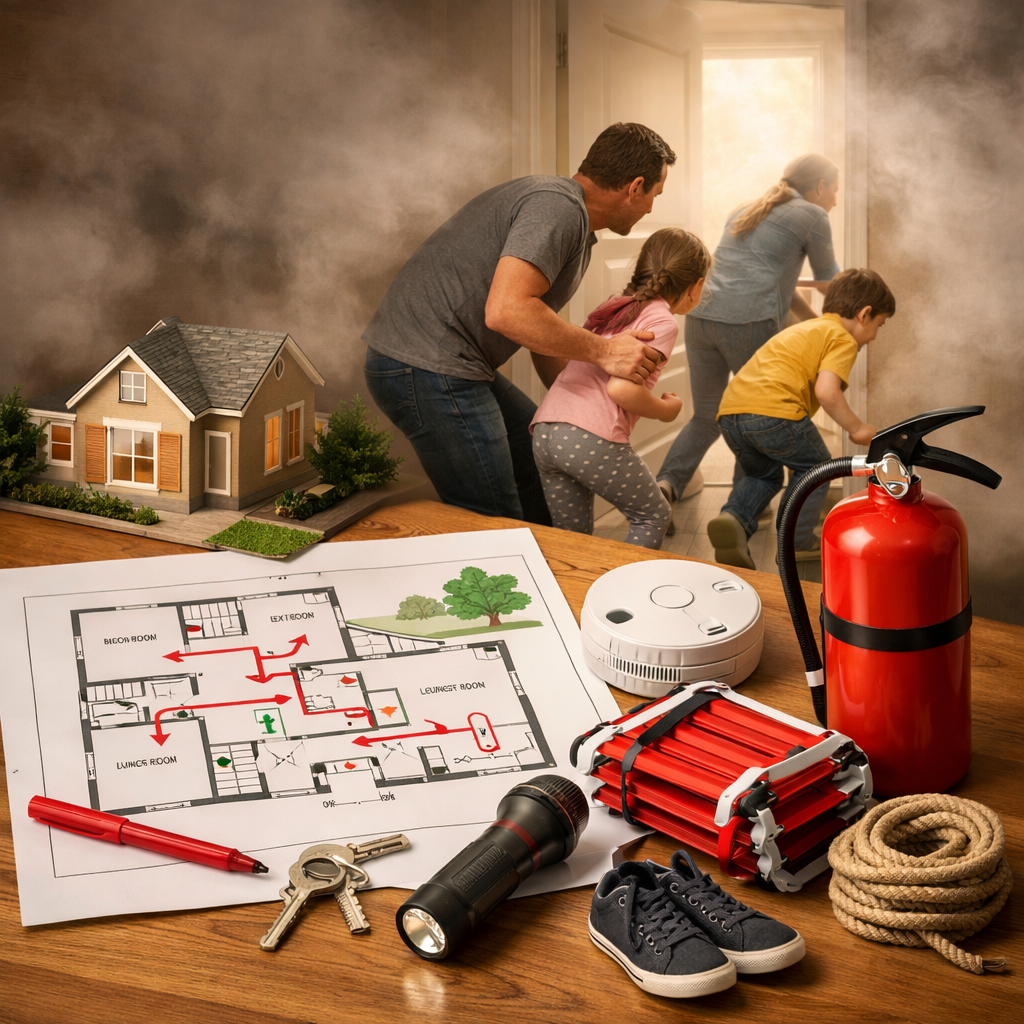
- Each bedroom has a planned way out.
- A second exit route is identified where possible.
- Smoke alarms are installed and maintained according to instructions.
- Children know the alarm sound and what it means.
- An outdoor meeting place is chosen and easy to remember.
- Adults know who helps younger children or others needing assistance.
- Exits are clear and easy to open.
- The whole household has practised the plan.
A strong family fire escape plan does not need to be complicated. It needs to be clear, realistic, and practised enough that everyone in the home knows what to do under stress. For families with children, that preparation can turn confusion into action and support safer decisions when every moment matters. Review your plan regularly, update it after any move or renovation, and keep fire prevention part of everyday home safety.