
Helpful Fatigue Risk Management Strategies for Shift Workers


Fatigue risk management strategies are essential for shift workers because long hours, night work, and disrupted sleep can quickly reduce alertness, judgment, and reaction time.
In industries such as healthcare, transport, warehousing, manufacturing, mining, and emergency response, fatigue is not just a personal wellness issue. It is a serious workplace safety risk that can contribute to errors, near misses, vehicle incidents, equipment damage, and long-term health problems.
A strong fatigue approach should combine smart scheduling, active supervision, open reporting, and practical day-to-day controls. Rather than relying on workers to simply “push through,” employers need systems that identify risk early and reduce exposure before fatigue leads to harm.
Guidance from organizations such as CCOHS and OSHA supports a structured, risk-based process. When businesses treat fatigue as a safety hazard, they can build safer rosters, improve performance, and protect worker wellbeing across every shift.
Fatigue Risk Management Strategies Start With Better Scheduling
Scheduling is one of the most effective ways to control fatigue because it addresses the hazard before workers become overtired. Under the Hierarchy of Controls, this sits within higher-level administrative planning, and in some cases work redesign can even eliminate the most severe fatigue exposures.
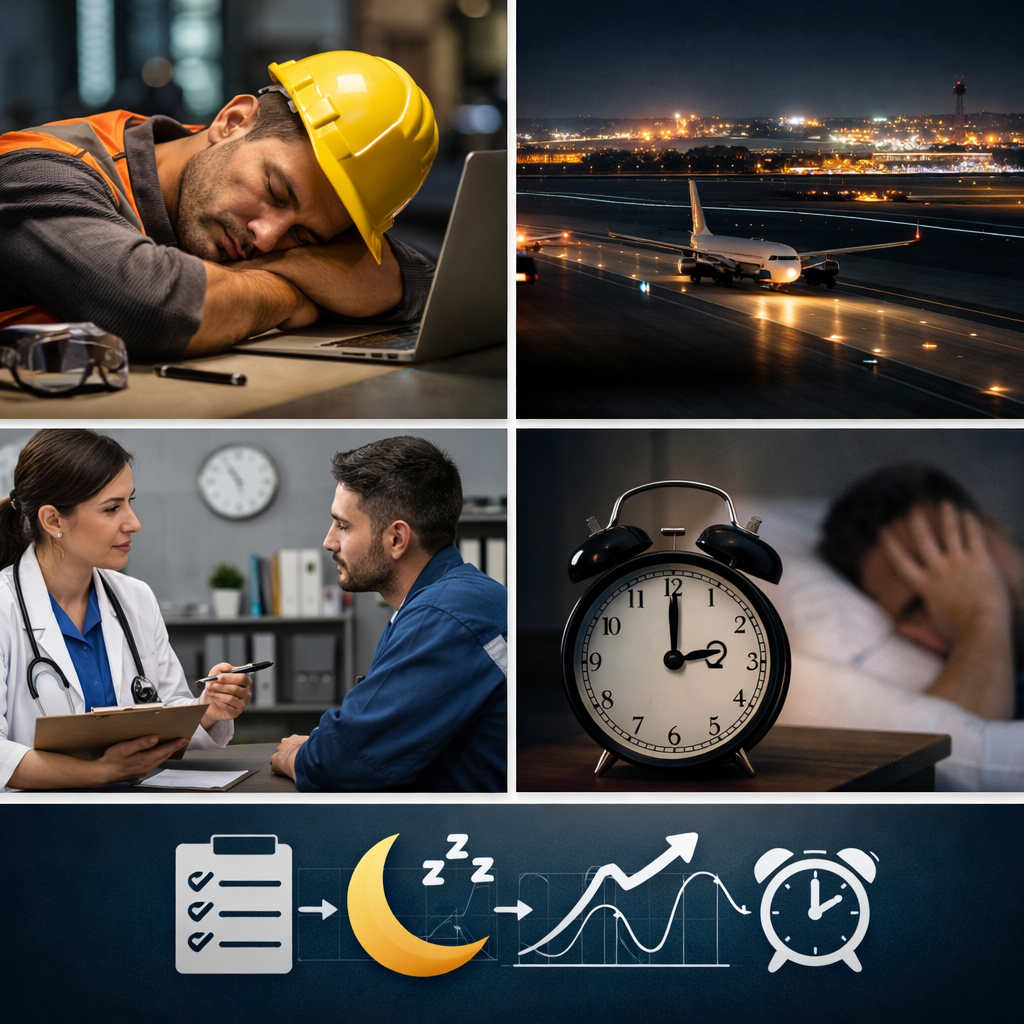
Poor rosters often create fatigue by stacking consecutive night shifts, allowing short turnaround times between shifts, or assigning extended overtime during already demanding periods. These patterns reduce sleep opportunity and make recovery difficult, especially for workers commuting long distances.
Build rosters around sleep opportunity
Effective fatigue risk management strategies should give workers enough time between shifts to travel home, eat, unwind, sleep, and return fit for duty. Forward-rotating schedules, such as day-to-evening-to-night, are often easier on the body than backward rotation.
Employers should also limit excessive shift length where possible. A 12-hour shift may be manageable in some low-demand settings, but fatigue risk increases sharply when long hours combine with night work, physically demanding tasks, or high mental workload.
Key scheduling practices that reduce fatigue risk
- Limit consecutive night shifts, especially in high-risk roles.
- Avoid quick shift turnarounds that leave less than 10 to 12 hours between shifts.
- Manage overtime closely and require approval for extended hours.
- Schedule the most safety-critical tasks when workers are likely to be most alert.
- Build in regular rest breaks and meal breaks during every shift.
- Provide additional recovery time after intense workloads or emergency callouts.
- Consider commuting time when assessing whether a roster is genuinely sustainable.
If your workplace is reviewing rosters, a simple internal process such as a safety committee checklist or an incident review process can help identify scheduling patterns linked to fatigue events.
Fatigue Risk Management Strategies Need Active Supervision
Even a well-designed roster can fail if day-to-day supervision is weak. Supervisors play a central role in recognizing fatigue signs, adjusting tasks, and making sure workers are fit to continue safely.

Fatigue can look different from one person to another. Common signs include slowed reactions, irritability, forgetfulness, yawning, poor concentration, and reduced coordination. In some cases, workers may not realize how impaired they are, which makes supervisor intervention especially important.
Supervisors should be trained to respond, not just observe
Training frontline leaders to identify and manage fatigue is one of the most practical fatigue risk management strategies available. Supervisors should know when to reassign work, pause a task, authorize a break, arrange transport, or escalate the issue to management.
This is especially important for safety-sensitive work such as driving forklifts, operating cranes, administering medication, or working around energized systems. A fatigued worker may still appear willing and capable, but their risk of making a serious mistake can be much higher.
| Fatigue sign | What a supervisor may notice | Practical response |
|---|---|---|
| Reduced alertness | Slow responses, staring, missed instructions | Give a break, check fitness for duty, reassign critical tasks |
| Poor coordination | Clumsiness, driving errors, tool mishandling | Stop high-risk work and provide closer supervision |
| Mood changes | Irritability, withdrawal, poor communication | Hold a private check-in and assess workload and rest needs |
| Memory lapses | Repeated questions, missed steps, forgotten checks | Use buddy checks, written prompts, and task reassignment |
Good supervision is not about blame. It is about catching warning signs early and using reasonable controls before a worker or team reaches a dangerous point.
Reporting Systems Make Fatigue Risk Management Strategies Stronger
Reporting is often overlooked, but it is one of the clearest ways to improve a fatigue program over time. If workers do not feel safe reporting tiredness, schedule concerns, or near misses, the organization loses valuable risk information.

A healthy reporting culture allows people to speak up before fatigue contributes to an incident. That means workers should be able to report when they are too fatigued to perform certain tasks safely, when shift patterns are becoming unsustainable, or when staffing shortages are creating repeated overtime pressure.
Create a no-blame reporting culture
One of the best fatigue risk management strategies is to make reporting simple, confidential where appropriate, and focused on prevention. Managers should investigate fatigue reports the same way they would investigate any other safety concern.
Useful reports may include:
- Near misses linked to inattention or delayed reaction time
- Repeated overtime on a specific crew or shift
- Concerns about roster design or insufficient staffing
- Fatigue-related driving incidents during commuting or site travel
- Tasks that regularly exceed normal physical or mental limits late in shift
Data from these reports can reveal patterns that are easy to miss in daily operations. For example, a warehouse may discover that errors spike during the final two hours of night shift, while a hospital unit may find that back-to-back doubles are increasing medication risk.
Employers can also support stronger reporting by linking fatigue into existing hazard reporting, fit-for-duty checks, incident investigations, and toolbox talks. Resources from the NIOSH work schedules and fatigue guidance can help organizations build more evidence-based controls.

Practical Fatigue Risk Management Strategies for Everyday Work
Practical controls matter because fatigue cannot always be removed completely from shift work. Some operations must run 24 hours a day, and emergency work can be unpredictable. In these settings, employers should use layered controls to reduce the impact of fatigue as much as possible.
Use layered controls on the job
Practical fatigue risk management strategies often include break planning, hydration, lighting, task rotation, buddy systems, and fit-for-duty checks. These steps may seem simple, but they can make a meaningful difference when applied consistently.
For example, brighter lighting during night shift can support alertness, while quieter break areas make rest periods more effective. Rotating workers away from repetitive or high-concentration tasks can also help reduce mental fatigue over a long shift.
Employers should also consider whether any higher-level control is possible. Can a physically demanding process be redesigned? Can delivery windows be changed to reduce overnight driving? Can automation reduce the need for workers to remain highly vigilant for long periods? These questions align with the Hierarchy of Controls and often produce stronger long-term outcomes.
Examples of practical fatigue controls
- Schedule regular rest pauses instead of waiting for workers to ask.
- Use pre-start checks that include sleep, alertness, and fitness for duty.
- Rotate demanding tasks to reduce prolonged mental or physical strain.
- Provide safe transport options after extended or emergency shifts when needed.
- Improve lighting, temperature control, and ventilation in work areas.
- Encourage healthy meal timing and easy access to water.
- Train workers on sleep hygiene, caffeine timing, and recognizing fatigue symptoms.
Workers also benefit from clear personal strategies, such as keeping a consistent sleep routine on workdays, using blackout curtains after night shift, limiting caffeine close to planned sleep, and avoiding heavy meals right before bed. These are helpful supports, but they should never replace employer responsibility for safe systems of work.
In the end, the most effective fatigue risk management strategies are practical, visible, and supported at every level of the organization. When businesses improve scheduling, train supervisors, encourage reporting, and apply realistic on-the-job controls, they reduce risk for shift workers and the people around them. A workplace that takes fatigue seriously is better positioned to prevent incidents, improve performance, and build a healthier safety culture over the long term.
No comments yet