
Fire Extinguisher Training: Actionable Tips Every Employee Can Use

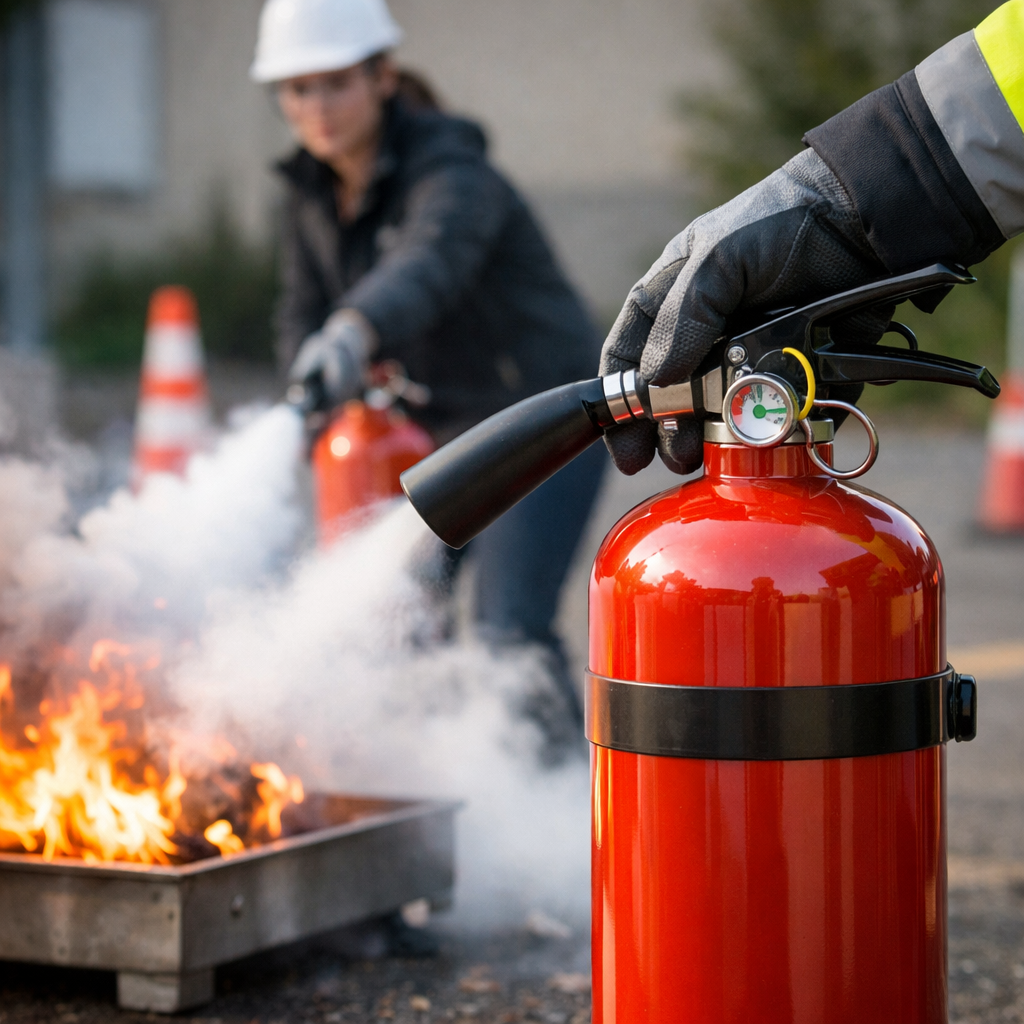
Fire extinguisher training helps employees respond faster, safer, and with more confidence when a small workplace fire starts.
But training should do more than show where extinguishers are mounted. It should teach people what type of extinguisher to use, how to assess risk, and when evacuation is the only safe decision.
In offices, warehouses, kitchens, workshops, and retail spaces, early response can reduce damage and protect people. Still, no one should be expected to fight a fire without the right knowledge, hands-on practice, and clear emergency procedures.
This guide covers extinguisher basics, common classes of fire, when not to fight a fire, and practical ways to improve fire extinguisher training for employees. It also aligns with real workplace safety expectations often supported by guidance from OSHA and CCOHS.
Fire Extinguisher Training Starts With the Basics
Effective fire extinguisher training begins with a simple idea: not every extinguisher works on every fire.
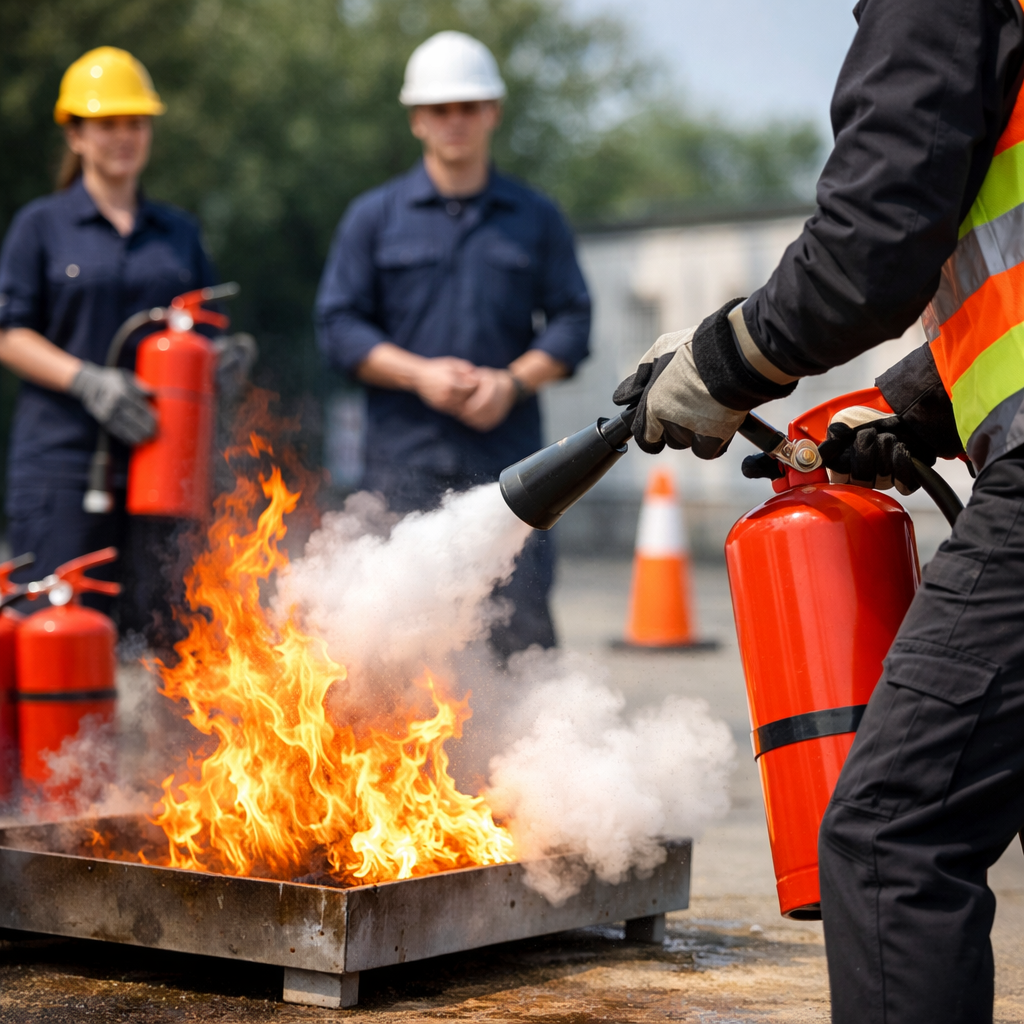
Employees need to know where extinguishers are located, how to access them quickly, and how to confirm they are suitable for the hazard in front of them. A short walkthrough during onboarding is useful, but it is not enough on its own.
What employees should know about extinguishers
At a minimum, workers should be trained to check the label, understand the intended fire class, and inspect the unit visually before use. They should also know how to report damage, missing pins, low pressure, or blocked access.
A practical training session should cover:
- How to locate the nearest extinguisher and alarm pull station
- How to identify extinguisher labels and ratings
- How to check if the pressure gauge is in the safe range
- How to hold and aim the extinguisher correctly
- How to keep an exit route behind them at all times
- How to activate the alarm before attempting to respond
Teach the PASS method clearly
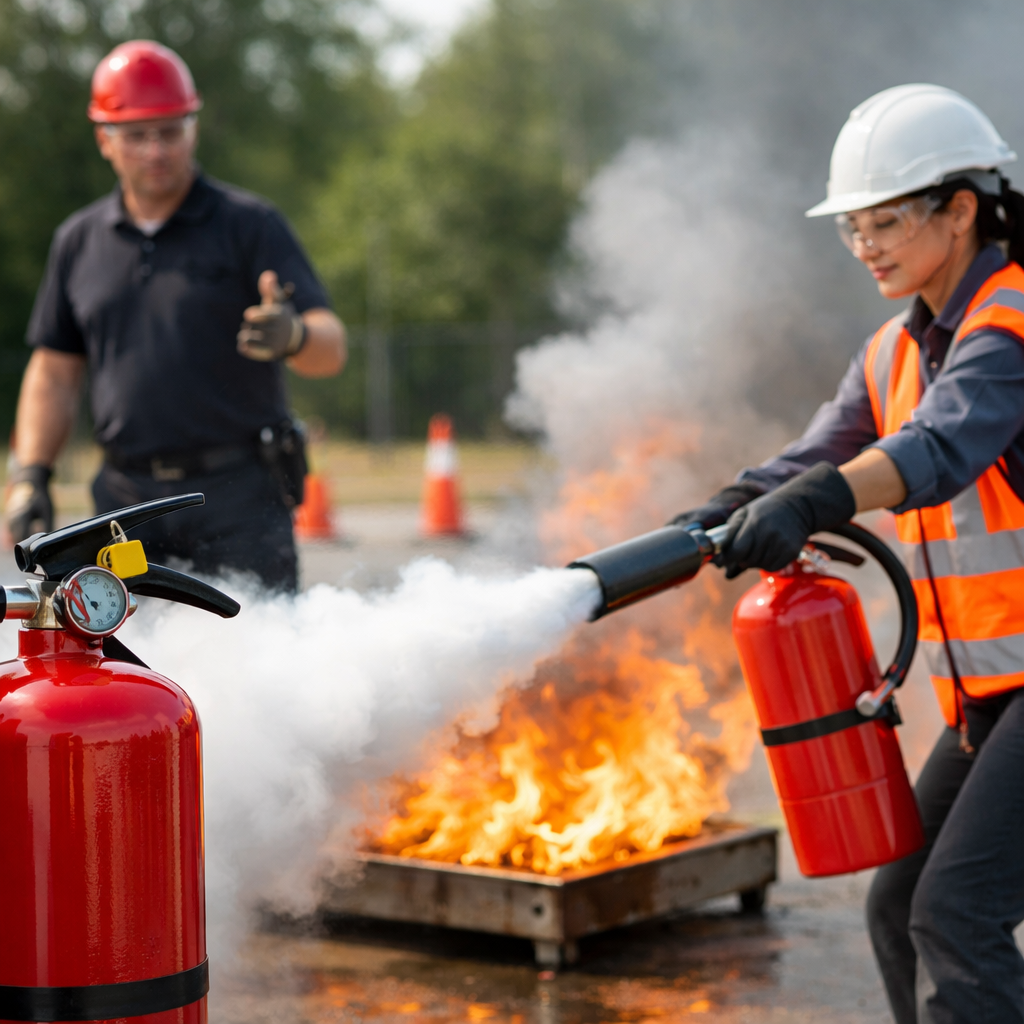
Most workplaces include the PASS method in fire extinguisher training because it is easy to remember and useful under stress.
- Pull the pin
- Aim at the base of the fire
- Squeeze the handle
- SSweep side to side
That said, employees should understand that PASS is only one part of the response. Before using an extinguisher, they must know the fire is small, contained, and safe enough to approach.
For many organizations, this is also a good place to connect training with broader emergency planning. Internal resources such as your emergency evacuation plan and workplace fire risk assessment should support extinguisher use, not stand apart from it.
Fire Extinguisher Training Should Cover Common Classes of Fire
One of the most important parts of fire extinguisher training is understanding fire classes. Employees do not need to become fire experts, but they do need enough knowledge to avoid making a dangerous mistake.
Using the wrong extinguisher can spread flames, increase smoke, or create electrocution risks. Training should include realistic examples from the actual workplace, such as a waste bin fire in an office, a grease fire in a kitchen, or a flammable liquid incident in a maintenance area.
| Fire Class | What Is Burning | Common Workplace Example | Typical Extinguisher Type |
|---|---|---|---|
| A | Ordinary combustibles | Paper, wood, cardboard, textiles | Water, foam, ABC dry chemical |
| B | Flammable liquids | Solvents, fuels, paints | Foam, CO2, BC or ABC dry chemical |
| C | Energized electrical equipment | Panels, wiring, office equipment | CO2, BC or ABC dry chemical |
| D | Combustible metals | Magnesium, titanium, sodium | Specialized Class D extinguisher |
| K | Cooking oils and fats | Commercial kitchen fryers | Wet chemical Class K extinguisher |
ABC dry chemical extinguishers are common because they handle several fire classes. Even so, training should not create a false sense of security. A Class K fire in a kitchen or a Class D metal fire requires specialized equipment and procedures.
This is where the Hierarchy of Controls matters. Extinguishers are an administrative and emergency response measure, not the first line of defense. Safer storage, ignition control, equipment maintenance, ventilation, and hot-work permits help prevent fires before extinguisher use is ever needed.
When Employees Should Not Fight a Fire
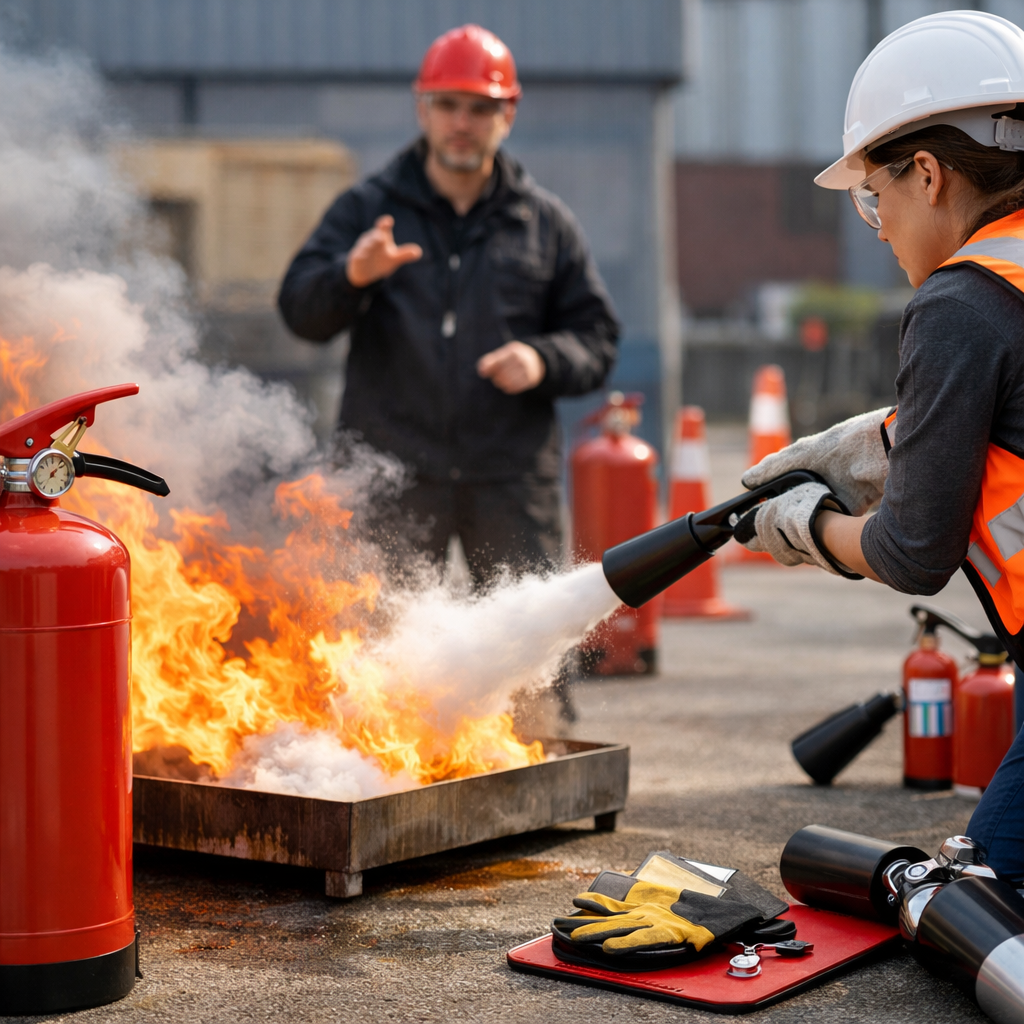
Strong fire extinguisher training does not encourage employees to be heroes. It teaches limits.
Workers should only attempt to extinguish a fire if they are trained, the fire is in its early stage, the correct extinguisher is available, and they have a clear escape route. If any of those conditions are missing, evacuation should happen immediately.
Clear situations where employees should not use an extinguisher
- The fire is spreading quickly or reaching the ceiling
- The room is filling with smoke
- The extinguisher is not rated for that type of fire
- The employee has not been trained or does not feel confident
- An exit route is blocked or could become blocked
- There are hazardous chemicals, gas cylinders, or unknown materials nearby
- The fire involves large amounts of flammable liquid
- The alarm has not been raised and others may still be at risk
A simple rule works well in training: if there is any doubt, get out.
Employers should reinforce that evacuation is a correct decision, not a failure. Many injuries happen because someone stays too long, uses the wrong extinguisher, or underestimates how fast a fire can grow.
Use realistic scenarios during training
Classroom instruction is helpful, but scenario-based learning makes fire extinguisher training much more effective.
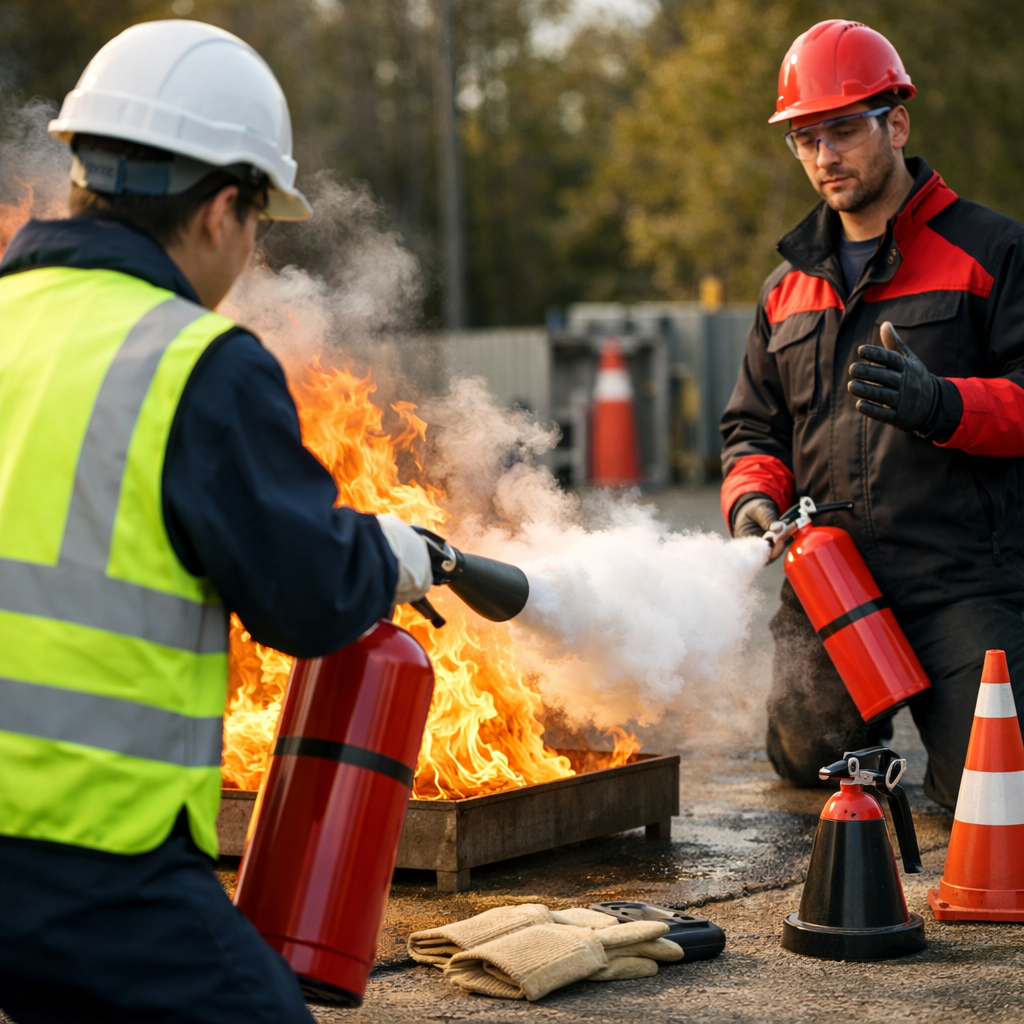
For example, ask employees what they would do if a microwave catches fire in a break room, if sparks ignite cardboard near a loading bay, or if a small motor overheats in a maintenance shop. Then walk through the decision points: sound the alarm, assess size, choose evacuation or extinguisher use, and call emergency services.
Guidance from the NFPA also supports practical fire prevention and emergency response planning in workplaces of all sizes.
Actionable Fire Extinguisher Training Tips for the Workplace
Good fire extinguisher training is specific, repeated, and tied to real hazards in the building. A once-a-year slide presentation is rarely enough to build confidence or competence.
Make training hands-on and site-specific
If possible, include live or simulated extinguisher practice. Employees remember more when they physically handle the unit, feel its weight, and rehearse the PASS steps.
Tailor examples by department. Office staff may face paper and electrical risks, while maintenance teams may encounter flammable liquids and energized equipment. Kitchen workers need special focus on grease fires and Class K extinguishers.
Turn these tips into your training routine
- Train new hires during onboarding and refresh all staff regularly
- Map extinguisher locations by work area and review them during walk-throughs
- Keep access clear at all times and inspect for obstructions
- Use short drills to practice alarm activation, reporting, and evacuation
- Post simple fire class charts near extinguisher stations
- Teach supervisors how to reinforce correct decisions during an incident
- Document attendance, practical exercises, and retraining needs
- Review incidents and near misses to improve future training
It also helps to assign responsibilities clearly. Supervisors should know who calls emergency services, who checks the area during evacuation if safe to do so, and who meets responders outside.
Training becomes stronger when paired with prevention. Good housekeeping, proper storage of flammables, electrical inspections, and maintenance of suppression systems reduce the chance that employees will ever need to use an extinguisher.
Finally, remind employees that extinguisher use is just one control measure. Elimination, substitution, engineering controls, and safe work procedures should always be prioritized before relying on emergency response tools.
In the end, fire extinguisher training should give employees practical knowledge, not just basic awareness. When workers understand extinguisher basics, fire classes, and when not to fight a fire, they are better prepared to protect themselves and others. The most effective programs combine hands-on learning, realistic scenarios, and clear evacuation rules. By making fire extinguisher training part of everyday workplace safety, employers can improve response, reduce confusion, and build a safer environment for everyone.
No comments yet