





First job safety for teenagers starts before the first shift. For many Canadian students, a first paycheque is exciting, but new work also brings real risks, unfamiliar equipment, busy schedules, and pressure to learn fast.
A practical safety check can help teenagers, parents, and schools focus on what matters most: understanding hazards, asking questions early, and knowing what safe work should look like from day one. Whether the job is in retail, food service, landscaping, recreation, or an office, the goal is the same: reduce risk before someone gets hurt.
This guide explains what young workers should review before starting work, with a practical Ontario and Canada-focused approach. It is prevention-focused, age-appropriate, and useful for families who want a simple way to talk about workplace safety together.
- Why first job safety for teenagers matters before the first shift
- First job safety for teenagers: what to confirm with the employer
- A practical first job safety for teenagers checklist
- Common first-job hazards and how teenagers can respond safely
- How parents, schools, and teens can support first job safety for teenagers
Why first job safety for teenagers matters before the first shift
Teenagers are often new to workplace routines, tools, customer interactions, and pace. They may not yet know how to recognize hazards, when to refuse unsafe work, or how to report a problem clearly. That does not mean they are unprepared; it means employers must train them properly and young workers should be encouraged to speak up.
Common first-job risks include slips on wet floors, burns from hot surfaces, cuts from sharp tools, strains from lifting, workplace violence or harassment, and distractions caused by phones, noise, or rushing. Some jobs also involve chemicals, ladders, delivery traffic, or working alone.
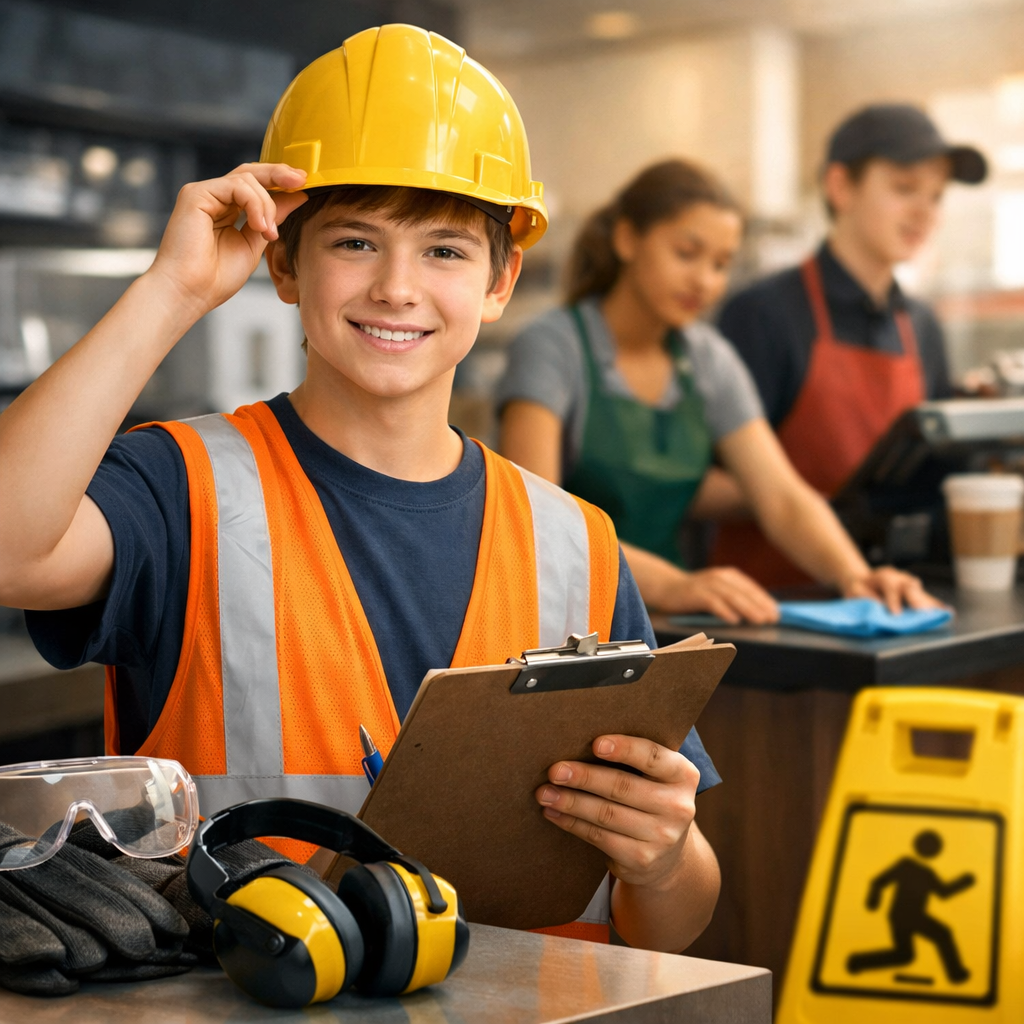
Before starting work, review the basics of workplace rights and responsibilities through trusted Canadian sources such as CCOHS and Ontario.ca. For general family safety awareness, Parachute can also be useful. If a workplace offers orientation or safety training, treat it as essential, not optional.
Use the hierarchy of controls in simple terms
A helpful way to think about safety is the hierarchy of controls. First, remove the hazard if possible. If it cannot be removed, reduce exposure with safer equipment, guards, clear procedures, supervision, and personal protective equipment.
For example, if a teen will work around a slippery entrance, the safest control is to keep the floor dry and use mats. Warning signs and non-slip footwear help too, but they are not the only control. The same thinking applies to knives, cleaning products, stock rooms, and parking lots.
First job safety for teenagers: what to confirm with the employer
Before the first shift, a teenager should know who supervises them, what tasks they will do, and what tasks they should not do without training. A calm conversation up front can prevent confusion later.
Ask these safety questions early
- What hazards are part of this job? Ask about heat, sharp tools, lifting, chemicals, vehicles, cash handling, and customer conflict.
- What training will I receive before I start? This may include orientation, safe lifting, slips and falls prevention, equipment use, WHMIS awareness, or emergency procedures.
- What protective equipment is required? Examples include non-slip shoes, gloves, eye protection, hearing protection, or high-visibility clothing.
- Who do I report safety concerns to? Every young worker should know the name of the direct supervisor and the backup contact.
- What should I do in an emergency? Learn where exits, alarms, first aid supplies, and meeting points are located.
- Will I ever work alone? If yes, ask what support procedures are in place and when help is available.
- Are there tasks I am not expected to do? This matters if equipment, ladders, powered tools, or hazardous products are involved.
If the answers are vague, rushed, or dismissive, that is a sign to slow down and ask for more detail. Safe employers expect questions and should be prepared to answer them clearly.
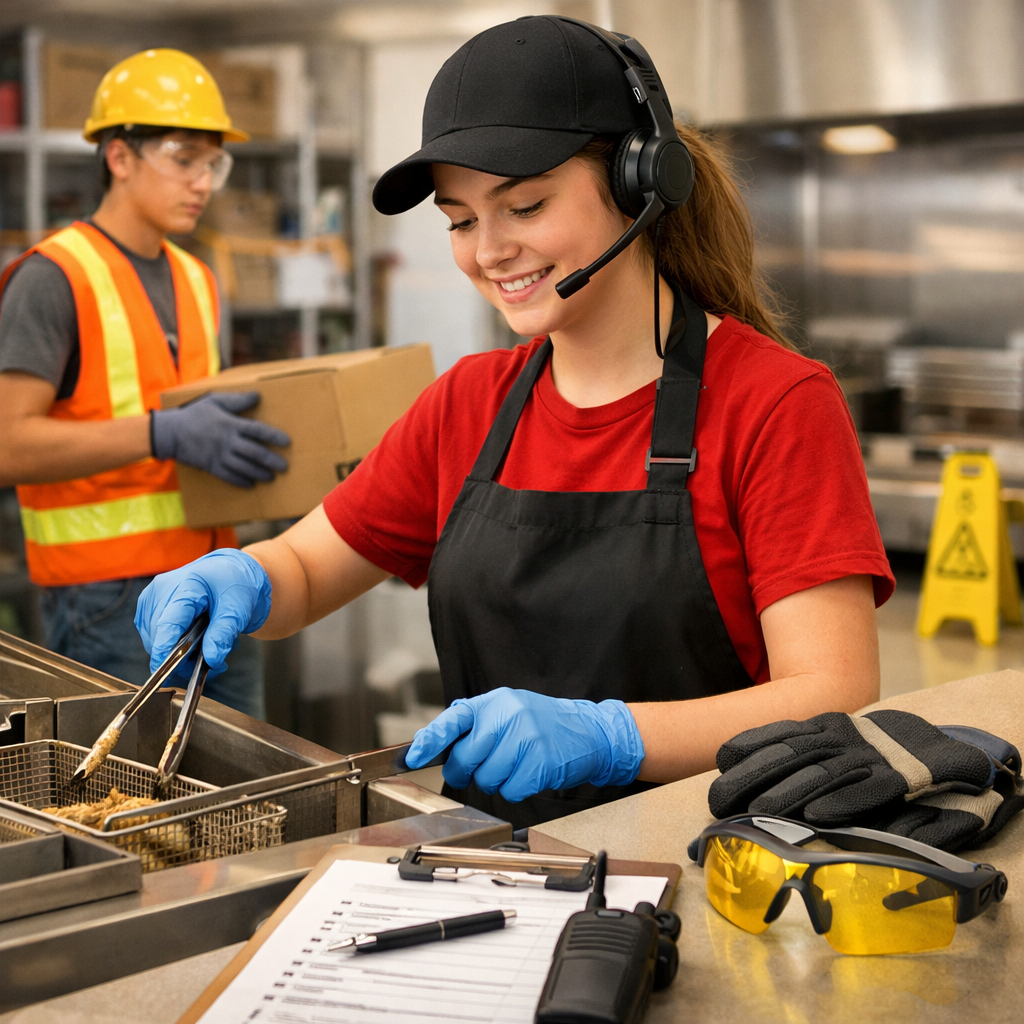
Families may also want to review general workplace safety articles and training resources from OHSE.ca and, where job-specific learning is relevant, OHSE training resources.
A practical first job safety for teenagers checklist
This short checklist can be reviewed the night before the first shift or during orientation. It is simple by design, because practical safety habits work best when they are easy to remember.
Before starting work
- I know my supervisor’s name and how to contact them.
- I understand my tasks and which tasks require training first.
- I know where the washroom, break area, exits, and first aid supplies are.
- I have the right clothing and footwear for the job.
- I know whether I need gloves, eye protection, or other PPE.
- I understand what to do if I feel unsafe, confused, or pressured.
- I know how to report a hazard, injury, near miss, or harassment concern.
- I have safe transportation arranged to and from work.
- I have reviewed any school, workplace, or parent expectations about hours and scheduling.
- I will put my phone away when tasks require full attention.
During the first weeks
- Ask for a demonstration before using tools, equipment, or chemicals.
- Keep walkways clear and clean spills right away if that is part of the procedure.
- Use proper lifting techniques and ask for help with awkward loads.
- Take breaks as scheduled and speak up if fatigue is affecting focus.
- Report anything broken, blocked, missing, or unsafe as soon as possible.
| Workplace situation | Main risk | Safer action |
|---|---|---|
| Wet floor near entrance | Slip and fall | Use mats, signs, prompt cleanup, and non-slip footwear |
| Busy kitchen or food prep area | Burns and cuts | Training first, use tools correctly, avoid rushing |
| Stock room lifting | Strains and crush injuries | Check load weight, clear path, ask for help or use aids |
| Customer-facing shift | Conflict or harassment | Follow reporting process and involve supervisor early |
| Cleaning with products | Chemical exposure | Read instructions, use required PPE, never mix products unless instructed |
Common first-job hazards and how teenagers can respond safely
Many first jobs involve routine tasks that seem simple until the environment gets busy. That is when mistakes happen. Teenagers should be reminded that speed never comes before safety.
Slips, trips, and falls
These can happen in restaurants, stores, warehouses, and community facilities. Good housekeeping, dry floors, proper footwear, and clear walkways are basic controls. If a floor is wet or cluttered, report it and follow workplace cleanup procedures.
Burns, cuts, and sharp tools
Food service, maintenance, arts, and retail back rooms may involve blades, hot liquids, ovens, or box cutters. Young workers should not use tools they have not been shown how to use. Gloves may help in some situations, but training, safe storage, and proper technique matter first.
Lifting and repetitive strain
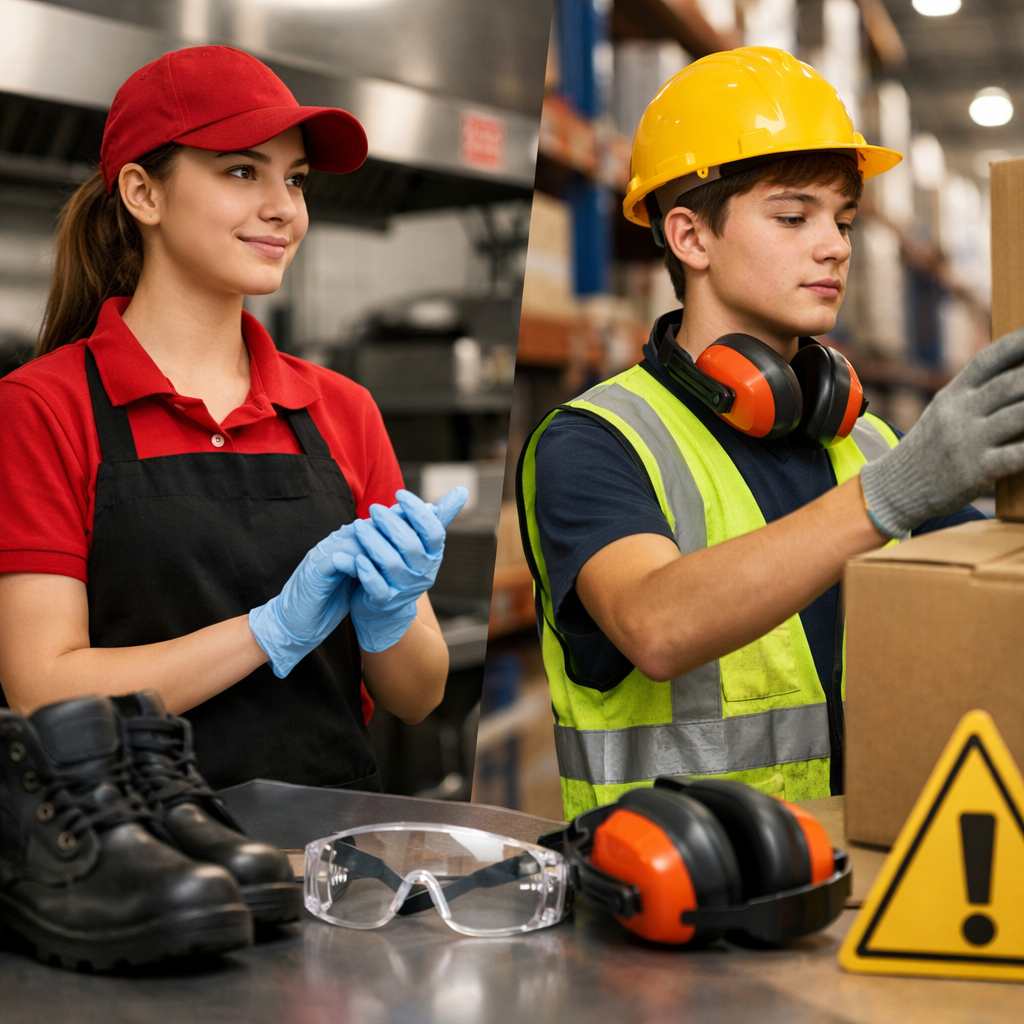
Stocking shelves, moving chairs, carrying supplies, and repetitive scanning or prep work can lead to strains. Plan the lift, keep the load close, avoid twisting, and ask for assistance when an item is bulky or heavy. If a task causes pain or feels unsafe, stop and get guidance.
Chemicals and cleaning products
Even common products can irritate skin, eyes, or lungs if used the wrong way. Teen workers should be trained before handling cleaning products and should follow label and workplace instructions. Never transfer chemicals into unmarked containers unless the workplace process specifically allows and controls it.
Working alone, late shifts, and public interaction
Some jobs involve opening, closing, taking out garbage, or dealing with upset customers. Young workers should know when they are expected to work alone, what check-in procedures exist, and when to call a supervisor. Parents and teens should also talk about travel safety, weather, and pickup plans where needed.
How parents, schools, and teens can support first job safety for teenagers
First job safety for teenagers works best when the young worker is supported by adults who ask practical questions without adding fear. Parents can help by reviewing the route to work, expected hours, footwear, hydration, and what to do if a teen feels pressured to perform a task they do not understand.
Schools, co-op programs, and guidance staff can reinforce the same message: ask questions, follow procedures, and report concerns early. A teen should never feel embarrassed for asking how to do a task safely or for saying they need more instruction.
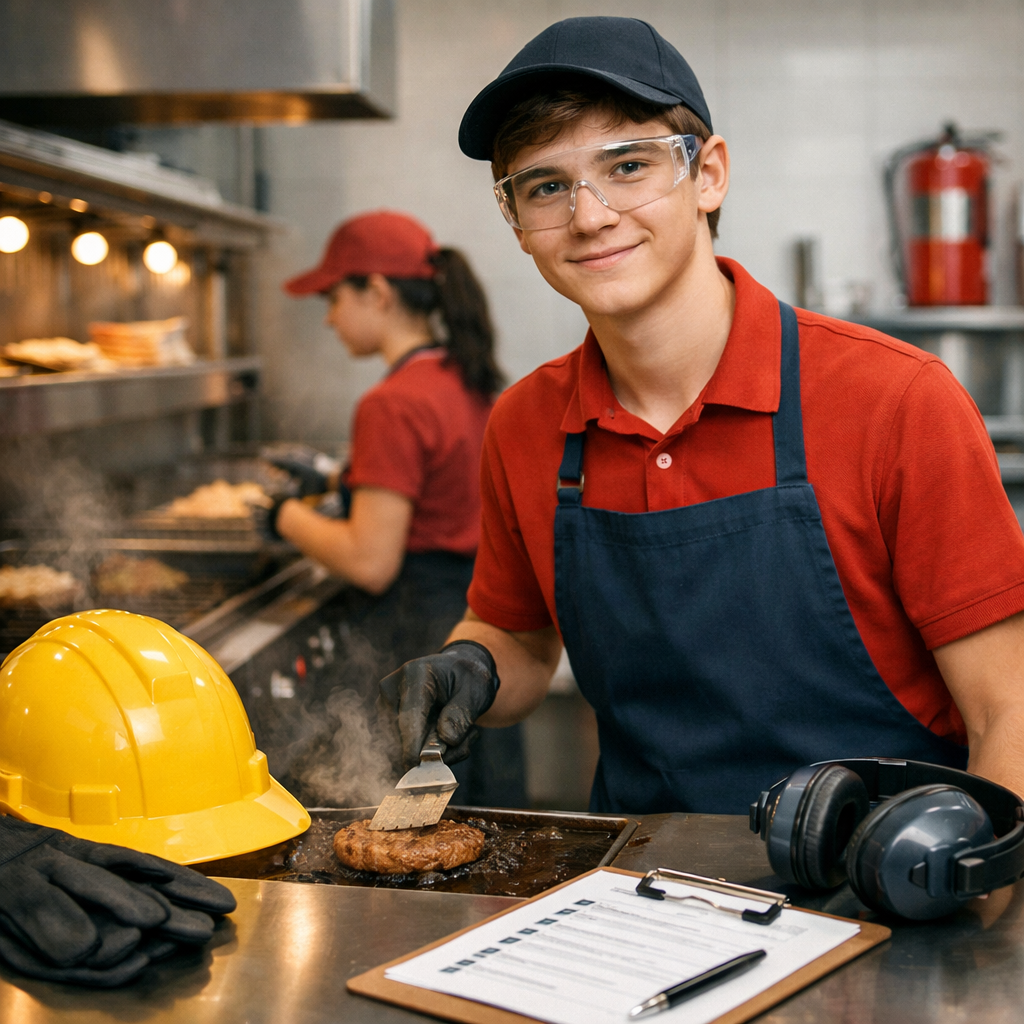
It also helps to agree on a simple home check-in routine for the first few weeks. Ask: What tasks did you do today? Did anyone show you the safest way first? Was there anything confusing or uncomfortable? These conversations can uncover issues before they become incidents.
In the end, first job safety for teenagers is not about making work seem dangerous. It is about building confidence through preparation, supervision, and safe habits. A first job can be a positive step toward independence when young workers understand the hazards, know their responsibilities, and feel comfortable speaking up. Before the first shift begins, use this checklist, review workplace expectations, and follow local school, workplace, manufacturer, or emergency guidance where applicable.