
Forklift Safety Rules Every Operator Must Know for a Safer Workplace

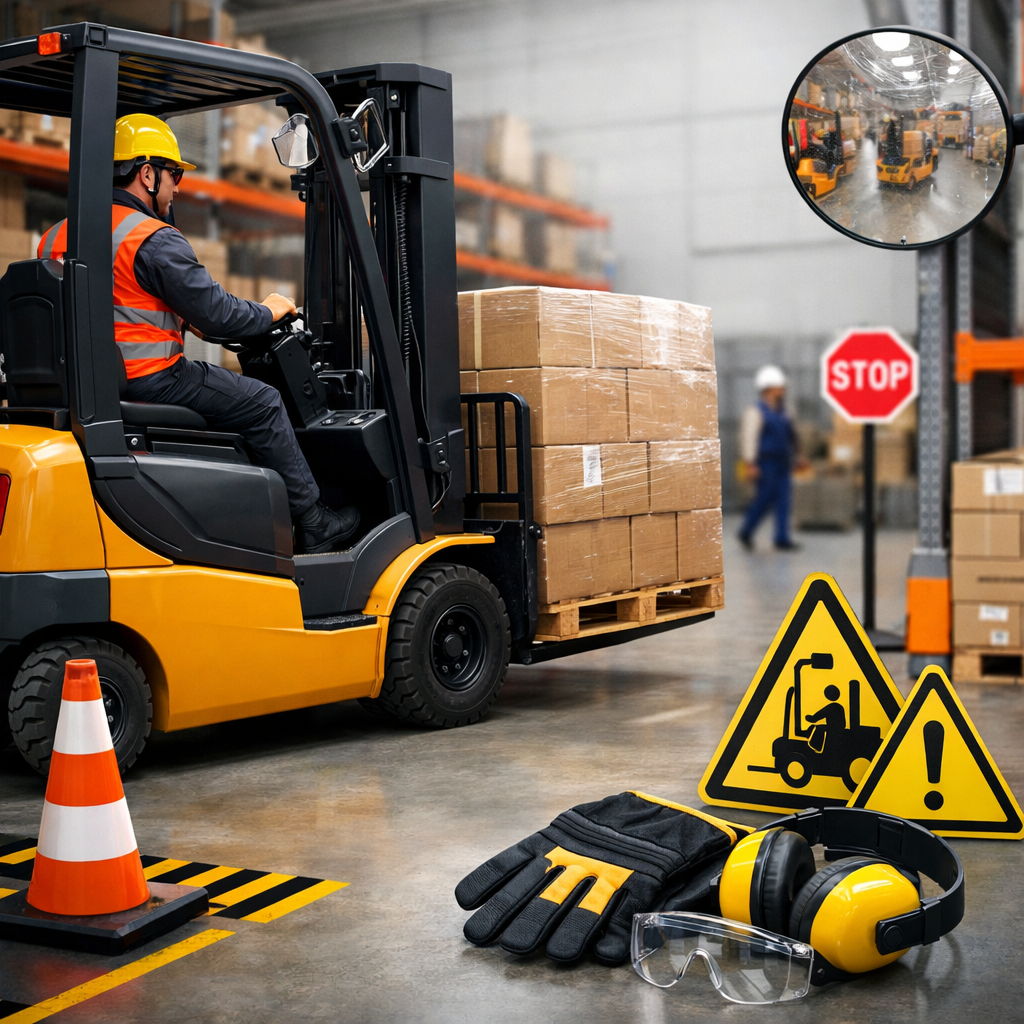
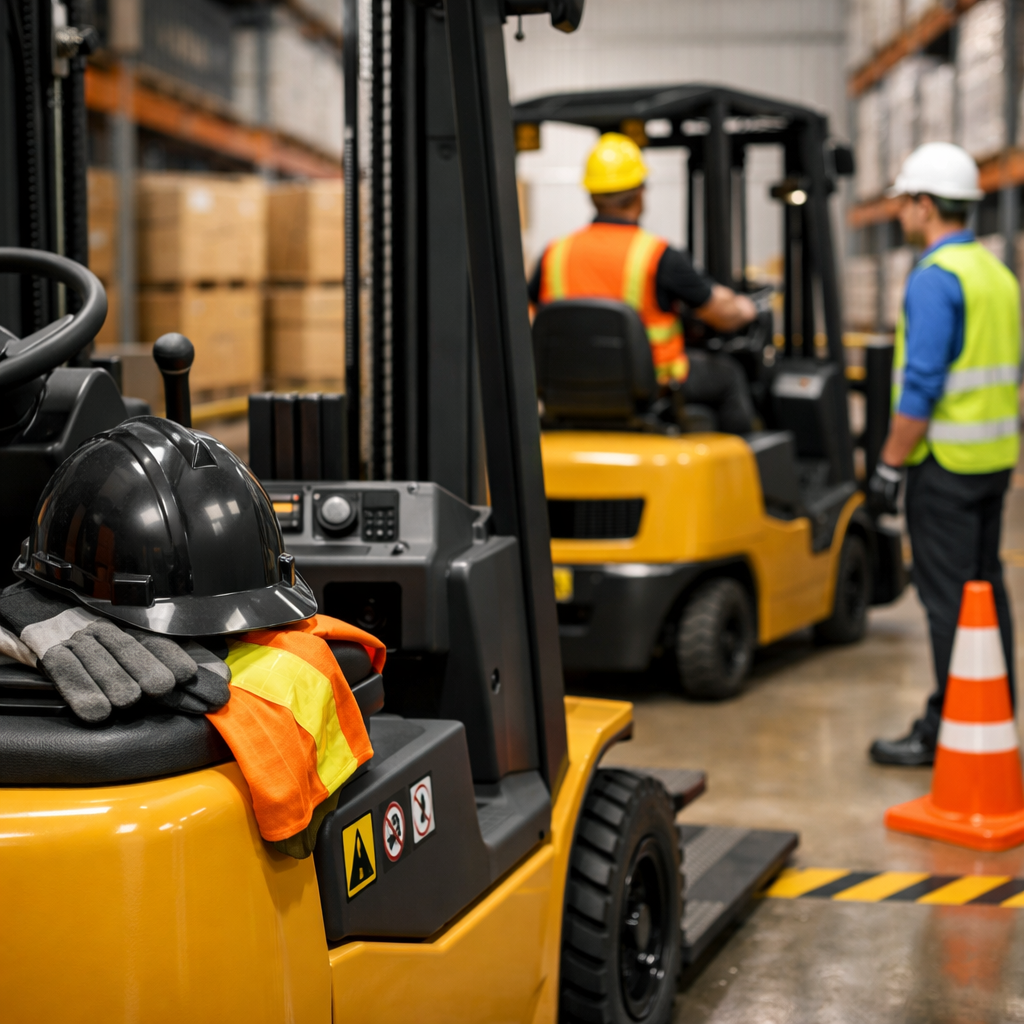
Forklift safety rules are the foundation of a safe warehouse, yard, loading dock, and manufacturing floor.
When operators, supervisors, and pedestrians understand the hazards and follow clear procedures, businesses reduce injuries, protect stock, and keep operations running smoothly.
Forklifts may look routine, but they can cause serious incidents in seconds.
Tip-overs, crushed loads, collisions with pedestrians, and falling materials are among the most common risks.
That is why employers should build safety around training, pre-use checks, speed control, and clear separation between vehicles and people.
Guidance from OSHA and CCOHS makes it clear that safe forklift use depends on both operator behavior and workplace design.
Forklift Safety Rules Start With Proper Training and Authorization
One of the most important forklift safety rules is simple: no one should operate a forklift without proper training and formal authorization.
Driving a forklift is not the same as driving a car.
Operators must understand load balance, lift capacity, turning radius, braking distance, visibility limits, battery or fuel hazards, and site-specific traffic rules.
What effective forklift training should cover
Strong training combines theory, practical instruction, and direct evaluation in the real workplace.
It should also be refreshed whenever operators are involved in an incident, observed using unsafe techniques, or assigned to different equipment or environments.
- Truck-specific operation: controls, steering, braking, lifting, tilting, and parking.
- Load handling: reading capacity plates, securing loads, and understanding load centers.
- Site hazards: ramps, dock edges, overhead obstructions, narrow aisles, and blind corners.
- Pedestrian awareness: horn use, travel routes, and exclusion zones.
- Emergency response: what to do in a tip-over, spill, collision, or mechanical failure.
Training should not be treated as a one-time event.
Refresher sessions, toolbox talks, and routine observations help turn rules into habits.
Many employers also support safer work by posting visual reminders near charging stations, docks, and high-traffic areas.
If your site has multiple vehicle types, it also helps to align forklift procedures with your broader workplace traffic management plan.
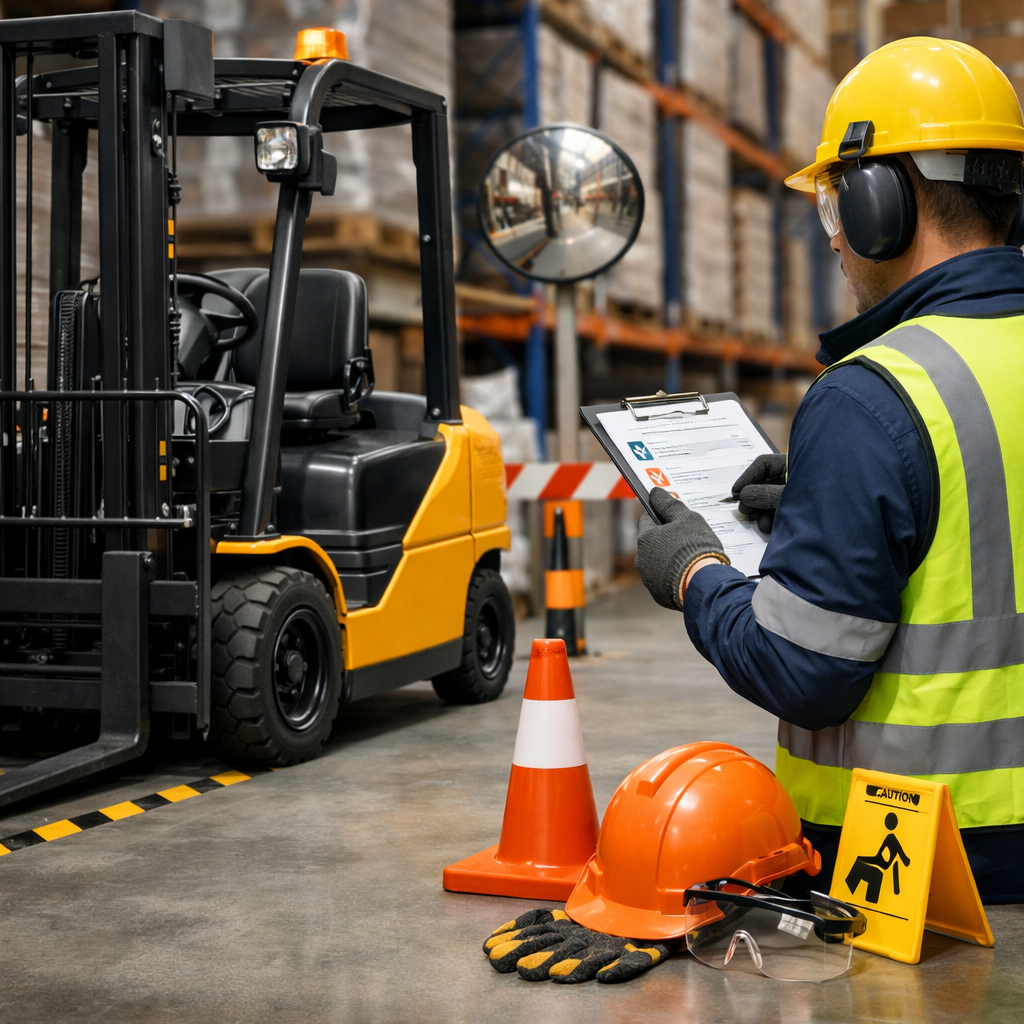
The Hierarchy of Controls is useful here.
Training is an administrative control, which means it matters, but it should be backed by stronger measures where possible.
For example, choosing the right truck for the job, reducing reversing, improving aisle width, and installing barriers can often remove or reduce hazards before operator behavior becomes the last line of defense.
Daily Inspections Are Essential Forklift Safety Rules
Another of the most critical forklift safety rules is to inspect the truck before every shift.
A forklift that looks fine from a distance may still have worn forks, faulty brakes, hydraulic leaks, tire damage, or a non-working horn.
If defects are missed, a routine task can quickly become a serious incident.
What to check before use
Inspections should be simple, consistent, and documented.
A checklist helps operators confirm that the forklift is safe to use and gives maintenance teams a clear record of recurring problems.
Any unsafe truck should be tagged out and reported immediately, not used “just for one quick job.”
| Inspection Area | What to Check | Why It Matters |
|---|---|---|
| Tires and wheels | Wear, damage, pressure, and stability | Reduces loss of control and tip-over risk |
| Forks and mast | Cracks, bends, alignment, chains, and lift function | Prevents dropped loads and mechanical failure |
| Brakes and steering | Response, pedal feel, turning control | Helps avoid collisions in tight spaces |
| Horn, lights, alarms | Audible and visual warning devices | Improves awareness for nearby workers |
| Fluid, battery, or fuel systems | Leaks, charge level, connections, cylinders | Prevents fire, breakdowns, and exposure hazards |
Inspections also apply to the environment, not just the forklift.
Operators should look for slippery surfaces, uneven ground, damaged racking, dock plate issues, and blocked emergency exits.
In many workplaces, incidents happen because a truck enters a poorly maintained area that should have been corrected earlier.
For practical guidance, employers can compare their checklists against manufacturer instructions and recognized standards from groups such as OSHA.
A well-run inspection process supports maintenance planning and shows workers that safety expectations are real, not optional.
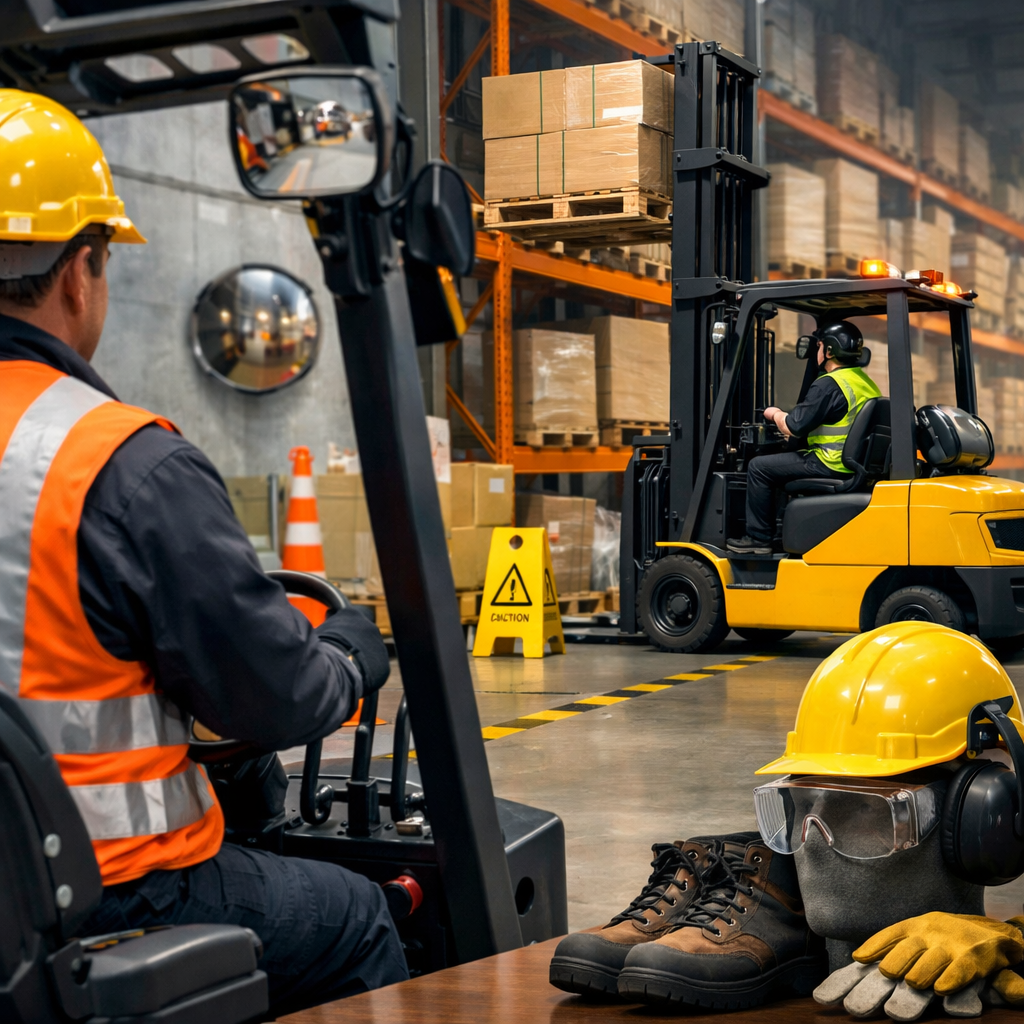
Forklift Safety Rules for Speed Control and Safe Load Handling
Speed is a major factor in forklift incidents.
Among all forklift safety rules, controlling travel speed is one of the easiest to state and one of the hardest to enforce consistently.
Forklifts are heavy, often carry unstable loads, and can become difficult to stop quickly, especially on smooth warehouse floors, ramps, or congested routes.
Why speed limits matter
Driving too fast increases stopping distance, reduces stability in turns, and gives pedestrians less time to react.
A forklift can tip if an operator corners sharply, travels with a raised load, or brakes suddenly while carrying weight.
Even at relatively low speed, the force of impact can be severe.
Good speed control means more than posting a sign.
It requires route planning, floor markings, supervision, and realistic production expectations.
If workers feel rushed, they are more likely to cut corners, carry loads too high, or ignore blind intersections.
That is why many sites include forklift speed management in their warehouse safety checklist.
Safe operating habits every operator should follow
- Drive at a speed that allows full control in the current conditions.
- Slow down at intersections, doorways, and corners.
- Sound the horn where visibility is limited.
- Keep loads low while traveling to maintain stability and sightlines.
- Never turn on a ramp or with a raised load.
- Observe load limits shown on the data plate.
- Travel in reverse if the load blocks forward view, when permitted by site rules.
Load handling deserves equal attention.
Operators should ensure loads are stable, centered, and suitable for the attachment being used.
Improvised pallets, damaged skids, and uneven loads create unnecessary risk.
When a load is too heavy, too tall, or poorly secured, the safest option is to stop and reassess the task rather than proceed.
Engineering controls can support better speed management.
Examples include convex mirrors, blue spot warning lights, anti-slip floor surfaces, and physical measures that force slower travel near high-risk areas.
These controls often work better than relying on reminders alone.
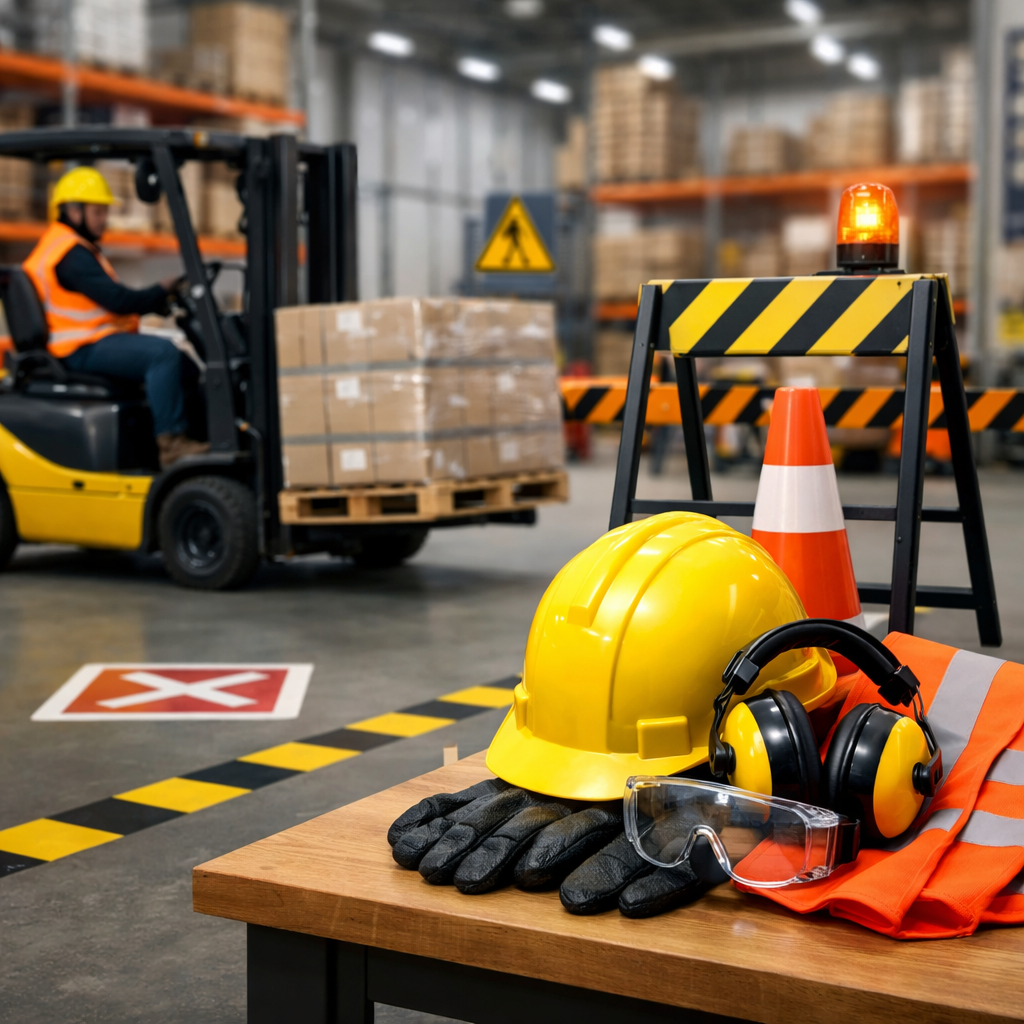
Pedestrian Separation Is One of the Most Important Forklift Safety Rules
When people and forklifts share the same space, the risk of serious injury rises sharply.
That is why pedestrian separation is one of the most important forklift safety rules in any workplace.
A person on foot is vulnerable, especially near blind corners, loading docks, trailer areas, and picking aisles where attention may be divided.
How to separate forklifts and pedestrians effectively
The best approach is to physically separate people and vehicles wherever possible.
This follows the Hierarchy of Controls by prioritizing elimination, substitution, and engineering controls over signs alone.
In practice, that means redesigning routes so pedestrians do not need to cross forklift paths unless absolutely necessary.
- Use barriers and guardrails: create protected walkways in active traffic zones.
- Mark crossings clearly: use paint, signs, and warning lights at designated points.
- Control access: restrict pedestrian entry to loading and staging areas.
- Improve visibility: install mirrors, lighting, and clear line-of-sight around corners.
- Set communication rules: require eye contact or hand signals before crossing near a forklift.
Pedestrians also need training.
They should understand that forklifts may swing wide when turning, have limited rear visibility, and cannot stop instantly.
Workers on foot should never walk under raised forks, stand near elevated loads, or assume an operator has seen them.
Simple rules like staying in marked walkways and avoiding phone use in vehicle areas can prevent life-changing injuries.
Supervisors play a big role in enforcing these expectations.
If temporary stock, pallets, or waste bins block walkways, people will naturally step into vehicle lanes.
Housekeeping, layout discipline, and routine audits all help keep separation measures effective over time.
CCOHS resources on mobile equipment safety reinforce the need for site-specific controls, especially in mixed-use industrial areas.
Forklift safety rules protect people, products, and productivity when they are applied every day, not just during orientation.
Proper training ensures operators understand the machine and the environment.
Daily inspections catch defects before they become incidents.
Speed control reduces collisions and tip-overs.
Pedestrian separation addresses one of the most severe workplace risks.
When employers combine these forklift safety rules with strong supervision, practical engineering controls, and a culture of reporting hazards early, the result is a safer and more efficient workplace for everyone.
No comments yet