

Helium gas is widely known for its role in party balloons, but its value extends far beyond that.
At the beginning of this article, we explore the essential uses of helium gas in modern industries and healthcare while emphasizing the safety protocols necessary to handle it effectively.
From welding to MRI machines, helium’s applications are both vast and vital.

What is Helium Gas?
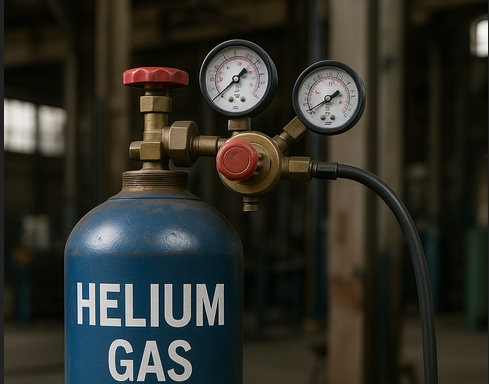
Helium gas is a colorless, odorless, non-toxic, and non-flammable noble gas with the chemical symbol He. It is the second lightest element and has the lowest boiling point among all elements at -268.9°C. Found in natural gas reserves, helium is extracted through a complex cryogenic process.
Because helium is inert, it does not react chemically under normal conditions, making it ideal for applications that require a stable, safe, and low-density environment.
Essential Uses of Helium Gas
1. Medical Imaging and Diagnostics
Helium is critical in MRI (Magnetic Resonance Imaging) machines, where it is used to cool superconducting magnets to extremely low temperatures. Without helium, the magnets would not function, and MRI technology would not be possible.
2. Welding Applications
Helium is commonly used as a shielding gas in TIG (Tungsten Inert Gas) welding. It helps create a stable arc and cleaner welds, particularly when working with stainless steel, aluminum, and other non-ferrous metals.
3. Cryogenics and Supercooling
Due to its extremely low boiling point, liquid helium is used in cryogenic research and cooling systems, especially in laboratories and particle accelerators like the Large Hadron Collider.
4. Aerospace and Engineering
Helium is utilized in pressurizing rocket fuel tanks, cooling satellite equipment, and leak detection in high-vacuum systems. Its inert nature prevents combustion, making it safe for high-risk environments.
5. Breathing Mixtures
In the medical and diving fields, helium is used in helium-oxygen breathing mixtures (heliox) to prevent nitrogen narcosis and ease breathing for patients with airway obstruction or for deep-sea divers.
6. Leak Detection and Quality Control
Because of its small atomic size, helium is ideal for leak detection in high-pressure systems, refrigeration units, and vacuum-sealed equipment. It easily escapes through small openings, making it an efficient test gas.
7. Lifting Gas
Helium is commonly used to fill balloons and airships due to its low density and safety compared to hydrogen. It is non-flammable and therefore preferred in public and commercial applications.

Hazards and Safety Concerns of Helium Gas
While helium gas is considered non-toxic and safe, improper use can still pose hazards.
| Risk | Description |
|---|---|
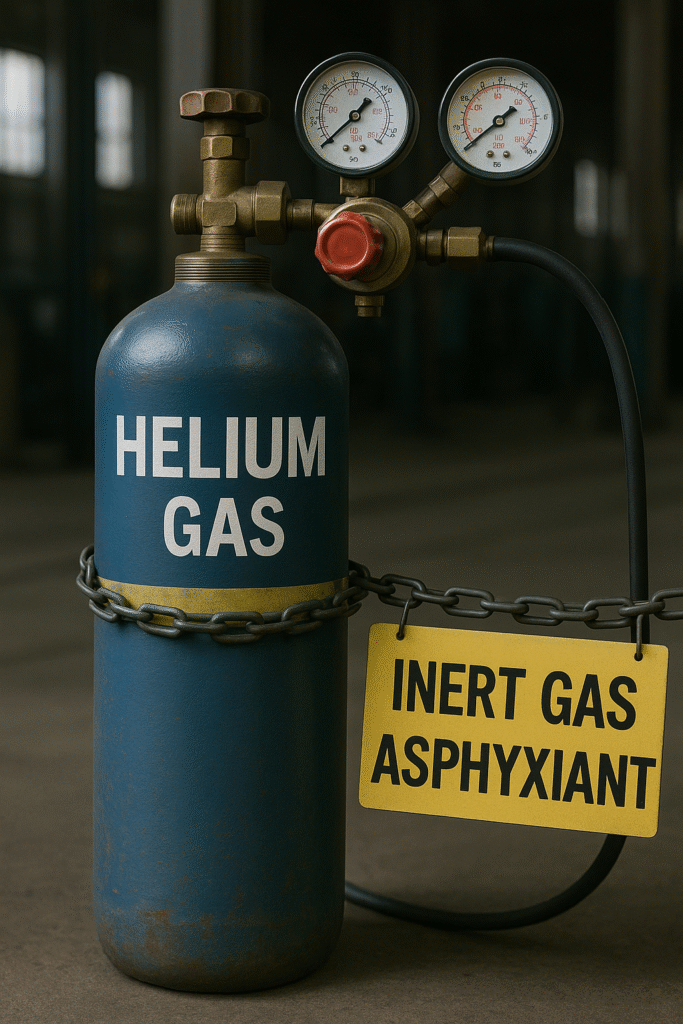
| Asphyxiation | In confined spaces, helium can displace oxygen, leading to suffocation. |
| Pressure Hazards | High-pressure cylinders can rupture or cause injury if not handled correctly. |
| Cryogenic Burns | Contact with liquid helium can cause severe frostbite or tissue damage. |
| Voice Inhalation Risk | Inhaling helium to alter voice is dangerous and can lead to hypoxia. |
Safe Handling and Storage of Helium Gas
1. Cylinder Storage
- Always store helium cylinders upright and secured with chains or straps.
- Keep away from heat, direct sunlight, and flammable materials.
- Use appropriate signage indicating “Inert Gas – Asphyxiant.”
2. Ventilation
Ensure adequate ventilation in all areas where helium is used, especially in enclosed or low-lying areas, to prevent oxygen displacement.
3. Regulators and Equipment
- Use pressure regulators approved for helium gas.
- Check for leaks using soapy water—not an open flame.
- Never tamper with cylinder valves or over-tighten fittings.
4. Personal Protective Equipment (PPE)
- Wear gloves and face shields when handling helium in liquid form.
- Use gas detectors in confined spaces to monitor oxygen levels.
Regulatory Standards and Compliance
In Canada, helium gas use is regulated under:
- WHMIS (Workplace Hazardous Materials Information System) – Labeling and SDS requirements.
- TDG (Transportation of Dangerous Goods Regulations) – Guidelines for transporting compressed gases.
- CSA Standards – Cover safe handling and pressure vessel requirements.
Organizations should refer to CCOHS and OHSE.ca for current guidelines and training.
Best Practices for Organizations Using Helium
Businesses and laboratories using helium gas should implement:
- Written gas handling procedures.
- Monthly inspections of all gas cylinders and lines.
- Staff training and certification in cryogenic safety and gas system maintenance.
- Integration of helium safety into their broader Occupational Health and Safety Program.
For internal policy tips, review our article on Gas Acetylene Safety in Welding.
SEO Optimization Summary
- Focus Keyword: Helium Gas
- Keyword Density: ~1%
- SEO Title: Helium Gas Safety: Industrial and Medical Applications You Should Know
- Meta Description: Discover the essential uses and safety protocols of helium gas in industries like healthcare, welding, and aerospace. Learn how to handle helium safely.
- Image Alt Text: Helium gas safety in industrial use
- Internal Link: Gas Acetylene Safety in Welding
- External Links: CCOHS, OHSE.ca
- DoFollow Attributes: Applied
Conclusion: Helium Gas
Helium gas is a critical component in modern life, from supporting advanced medical imaging to enabling aerospace missions. While its properties make it one of the safest gases to use, its potential risks should not be overlooked.
Organizations must adopt responsible practices, enforce safety training, and ensure proper storage and ventilation to protect both workers and equipment.
By understanding and respecting helium’s properties, we can continue to benefit from its unmatched versatility and safety.