
Hot work permit procedures: Effective Steps to Prevent Site Fires

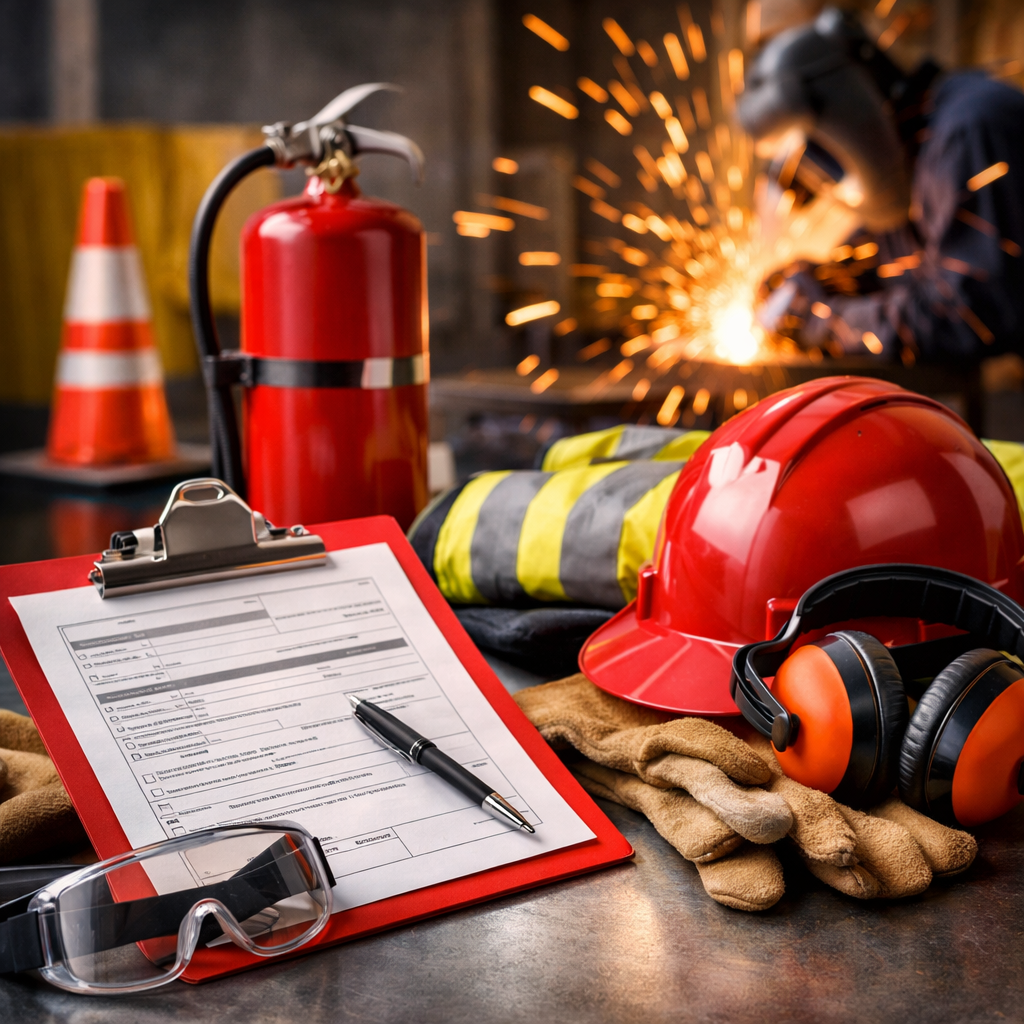
Hot work permit procedures are one of the most important administrative controls for preventing fires, explosions, injuries, and costly shutdowns during welding, cutting, grinding, brazing, soldering, or any other spark-producing task.
When these activities take place near combustible materials, flammable vapors, or poorly prepared work areas, a small ignition source can escalate into a serious incident within seconds. A practical permit system helps employers verify that hazards have been identified, controls are in place, supervision is active, and fire watch duties are clearly assigned before work begins.
For contractors, supervisors, safety professionals, and site managers, strong hot work permit procedures are not just a paperwork exercise. They are a frontline compliance tool that supports legal obligations, insurer expectations, and everyday safe work planning. Guidance from OSHA, CCOHS, and recognized fire protection practices all reinforce the same message: hot work must be controlled, authorized, and monitored with discipline.
Why hot work permit procedures matter on active sites
Hot work is common in construction, manufacturing, maintenance shutdowns, fabrication shops, warehouses, and plant turnarounds. It is also one of the most frequent sources of preventable workplace fires because the hazard often extends beyond the immediate task area.
Sparks can travel through floor openings, wall penetrations, conveyor housings, cable trays, and ventilation pathways. Heat can smolder inside insulation, behind cladding, or under debris for hours before flames appear. That is why effective hot work permit procedures focus not only on the work itself, but also on the surrounding environment, nearby operations, and post-work monitoring.
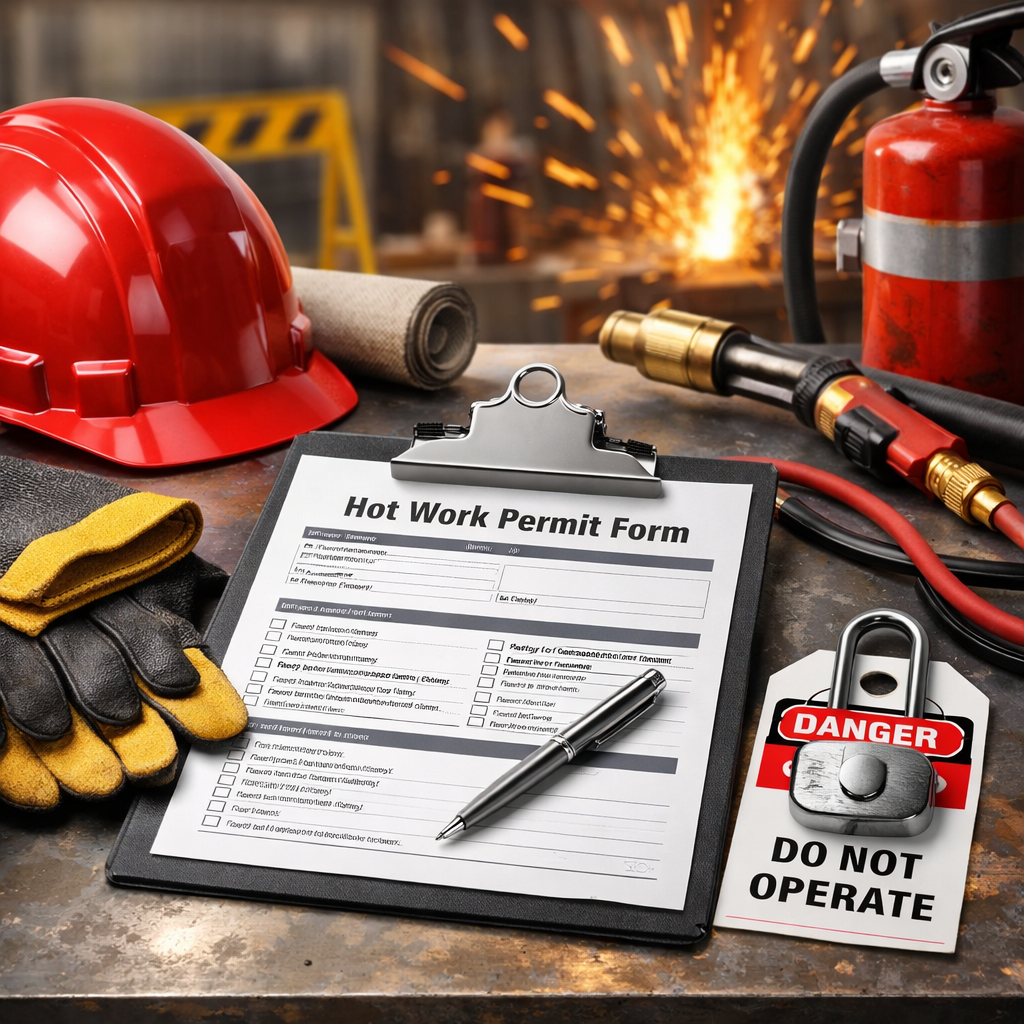
A proper permit process creates a pause point. It forces the work team and supervisor to confirm whether the task can be avoided, moved to a safer location, or completed using a lower-risk method. This reflects the Hierarchy of Controls: eliminate the need for hot work where possible, substitute safer methods, isolate combustibles, apply engineering and administrative controls, and ensure suitable personal protective equipment is used.
For example, a maintenance team may plan to weld a bracket inside a warehouse. Before approving the permit, the supervisor may decide the bracket can be removed and welded in a designated hot work area instead. That simple change eliminates the fire risk to stored goods, packaging, and nearby forklift charging stations.
Core elements of hot work permit procedures
Permit authorization and task review
The permit should identify the exact work location, type of hot work, date, time window, responsible workers, supervisor, fire watch, and any special precautions. It should also confirm whether the work area has been inspected before the permit is issued.
Clear authorization matters. Workers should not self-approve hot work in uncontrolled areas. A competent supervisor or permit issuer must verify that the site conditions are acceptable and that operations nearby will not introduce additional risks such as flammable liquids, gas releases, or dust-generating work.
Hazard assessment before ignition sources are introduced
Before any torch is lit or grinder is energized, the area should be checked for combustible materials, flammable atmospheres, pressurized systems, blind spots, hidden spaces, and process hazards. If the site involves tanks, vessels, ducting, pits, or confined spaces, additional controls may be needed, including atmospheric testing and isolation under a separate permit system.
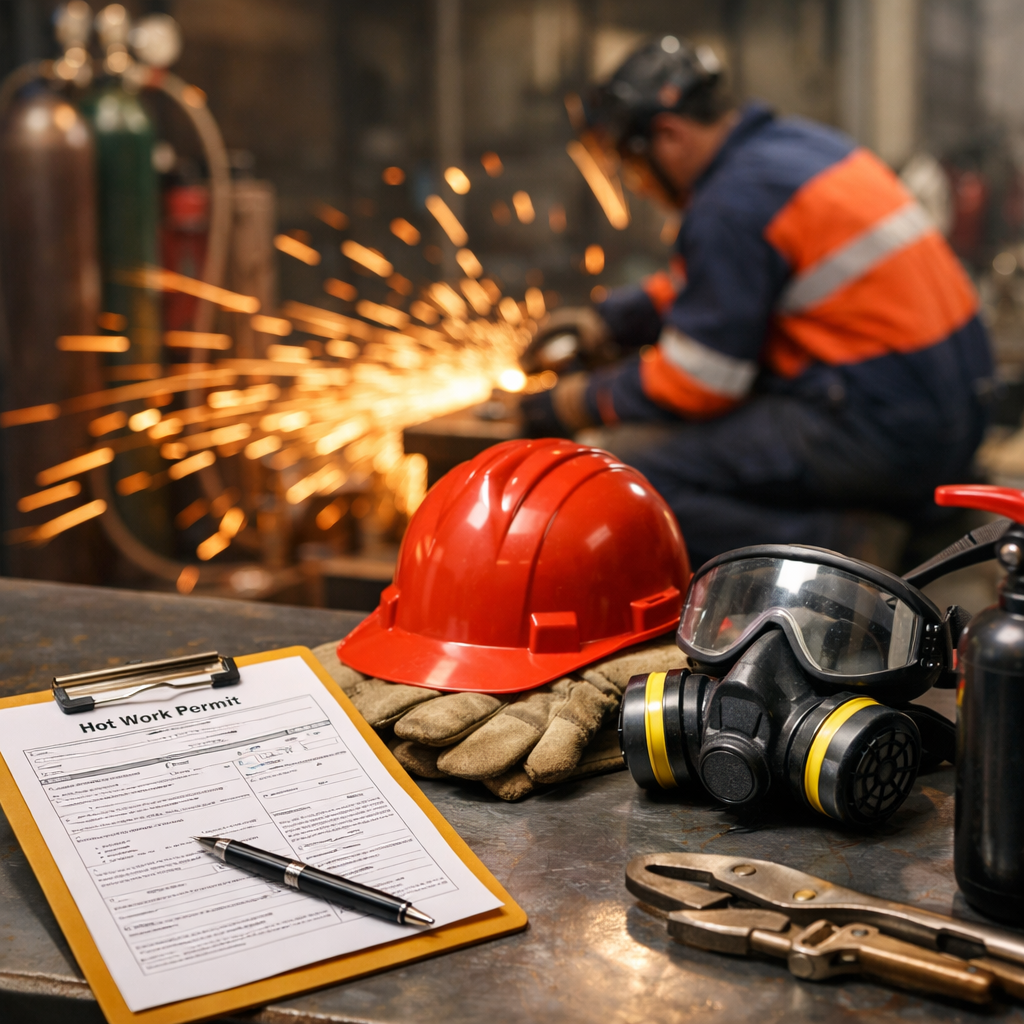
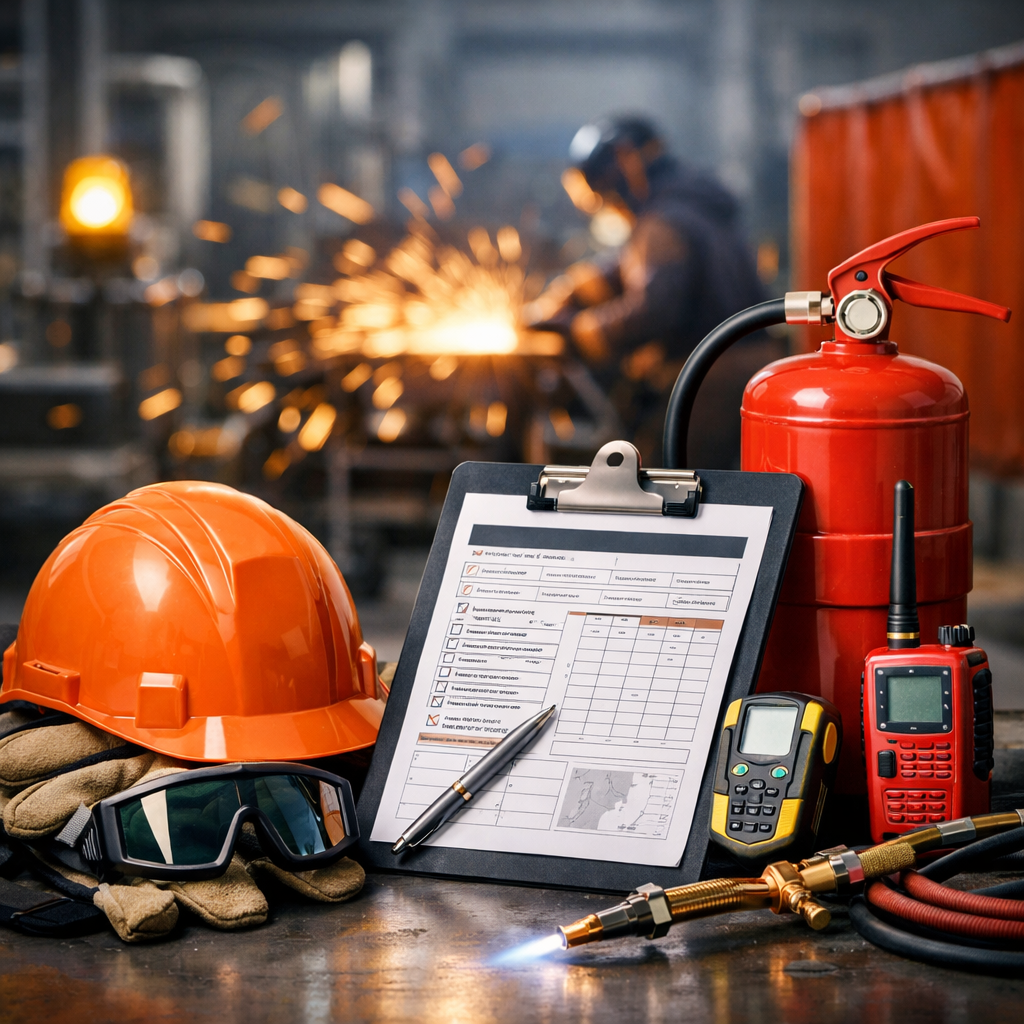
Typical checks within hot work permit procedures include:
- Removing combustible materials from the area where possible
- Protecting fixed combustibles with welding blankets, screens, or noncombustible covers
- Sealing floor and wall openings where sparks may travel
- Isolating fuel gas, flammable liquid, or combustible dust sources
- Confirming appropriate extinguishers are present and fully charged
- Checking that detection, alarm, or suppression impairments are managed properly
- Ensuring workers are trained and wearing suitable PPE
Time limits and permit closure
Permits should be valid only for a defined shift or task period. Conditions on site can change quickly, especially during outages, construction phases, or contractor-heavy work. If the job stops, moves, or changes in scope, the permit should be reviewed and reissued as needed.
Closure is just as important as authorization. The permit should not be signed off until the work is complete, the area has been inspected, and the required fire watch period has been fulfilled. Many organizations also include a final handover note to operations or facility management, which helps prevent confusion after contractors leave the area.
Supervision, communication, and fire watch duties
The supervisor’s role in enforcing hot work permit procedures
Supervision is often the difference between a compliant permit and a weak one. A supervisor should verify the work area condition, confirm workers understand the precautions, coordinate with adjacent operations, and stop the job if controls break down.
This is especially important on multi-employer sites where one contractor’s welding may affect another contractor’s storage area or process line. Supervisors should communicate permit boundaries, restricted access, and emergency arrangements before the work starts. On larger projects, this can be supported by shift briefings and daily coordination meetings. Many companies strengthen this process through related permit-to-work systems and routine fire risk assessments.
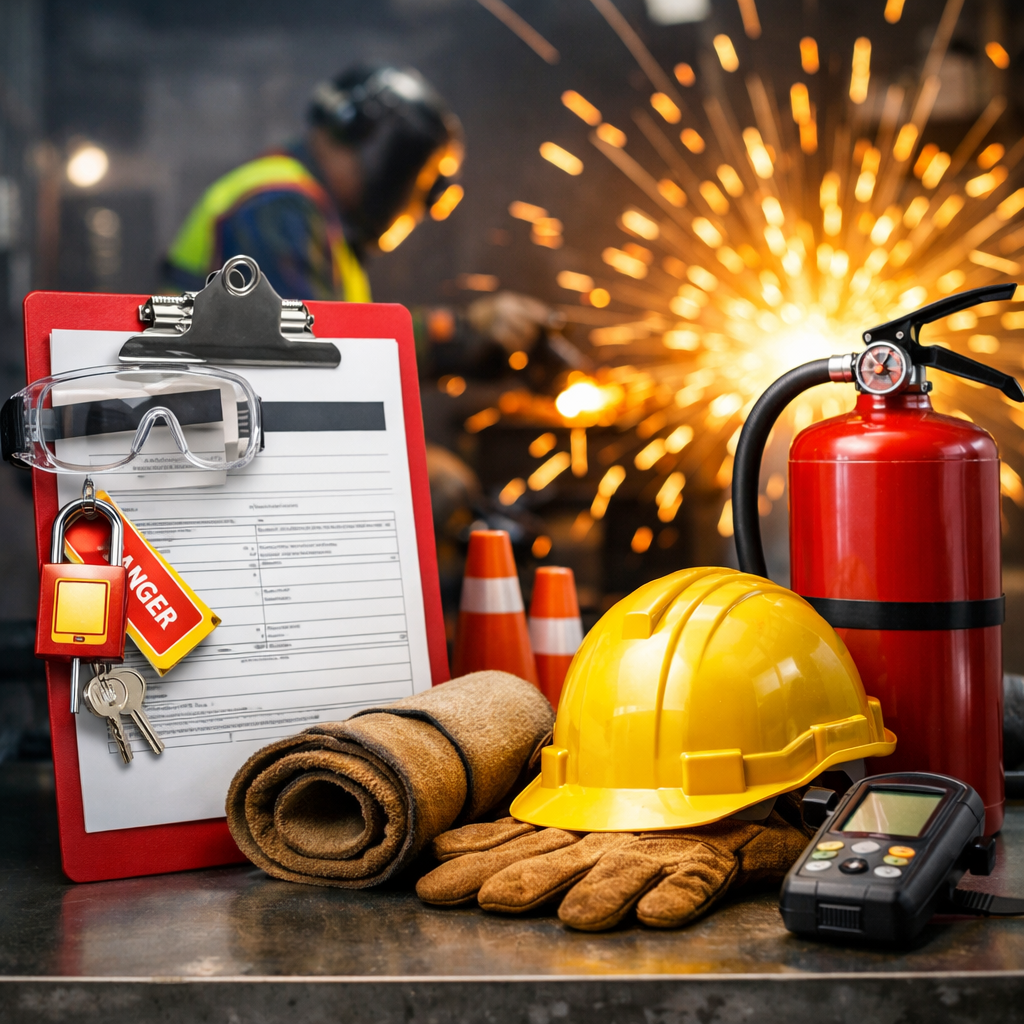
Fire watch responsibilities that must be defined
A fire watch is not a passive observer. The person assigned must be competent, attentive, and equipped to respond immediately if sparks ignite material or smoke appears. They should have no conflicting duties that distract them from monitoring the hot work area.
In practical terms, fire watch duties usually include:
- Maintaining constant observation of the hot work area and adjacent exposures
- Watching for spark travel, smoldering, smoke, or unusual heat buildup
- Keeping extinguishers immediately available and knowing how to use them
- Raising the alarm without delay if a fire starts
- Stopping work if unsafe conditions develop
- Continuing post-work monitoring for the required period after completion
The required duration of fire watch after hot work depends on site risk, insurer requirements, and local procedures. Many organizations require at least 30 to 60 minutes of active monitoring, followed by a final area re-check. High-risk environments may require longer surveillance or thermal checks.
Practical controls, documentation, and compliance checks
Applying control measures in the field
The strongest hot work permit procedures translate written requirements into visible controls at the job site. That means barriers are installed, combustibles are removed, extinguishers are present, gas cylinders are managed correctly, and nearby personnel know hot work is in progress.
A simple planning table can help teams verify the essentials before authorization:
| Control area | What to verify | Why it matters |
|---|---|---|
| Work area preparation | Combustibles removed or protected, openings covered | Reduces ignition and hidden fire spread |
| Permit approval | Supervisor inspection and signed authorization completed | Confirms accountability and risk review |
| Fire protection | Extinguishers available, alarms and suppression considered | Supports rapid response if ignition occurs |
| Fire watch | Competent person assigned for work and post-work period | Detects smoldering or delayed ignition |
| Permit closeout | Final inspection completed and area declared safe | Prevents fires after workers leave |
Examples of common failures
Many hot work fires occur because basic controls are skipped under schedule pressure. A grinder is used near cardboard packaging. A welder starts work above a mezzanine without checking what is stored below. A fire watch leaves early to help with another task. A permit is issued in the morning, but the area changes by afternoon when solvents are brought in for cleaning.
These are not unusual scenarios. They are exactly why permit systems must be active and site-specific. Regular audits, spot checks, and toolbox talks help reinforce expectations. Training should also cover emergency response, extinguisher use, and when hot work must be postponed.
For higher-risk operations, consider adding gas testing records, photographic area checks, supervisor revalidation, and end-of-shift inspections. Documentation should be easy to complete but strong enough to prove due diligence during internal reviews, incident investigations, or insurer visits. Fire protection resources from organizations such as the NFPA can also help benchmark site standards.
In conclusion, hot work permit procedures are a vital defense against site fires when they are practical, enforced, and supported by competent supervision. A strong system identifies hazards before work begins, applies the right controls, assigns clear fire watch duties, and requires formal closeout after the task is finished. By treating permits as an active safety process rather than a formality, employers can prevent ignition events, protect workers and assets, and maintain compliance with recognized standards for safe hot work. Proper hot work permit procedures save time, reduce losses, and strengthen overall site safety performance.
No comments yet