


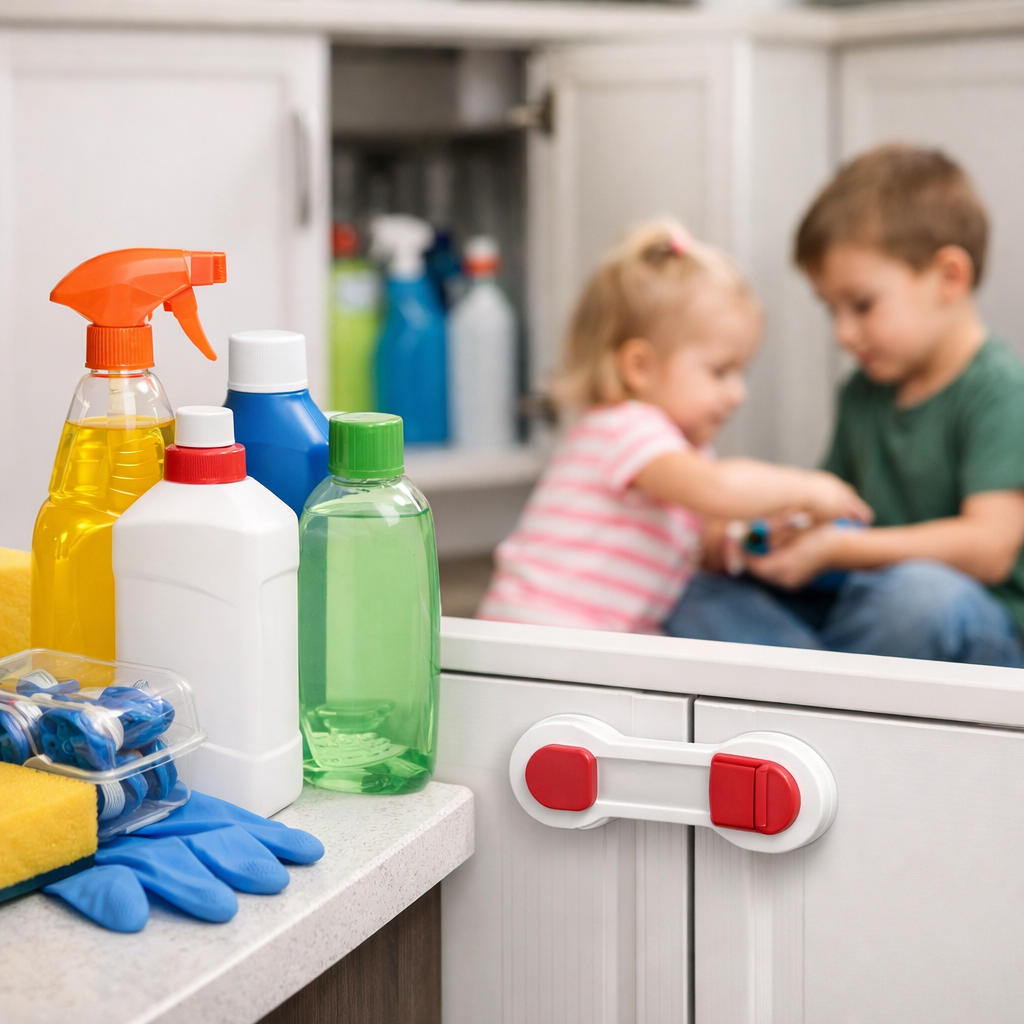

Household chemical safety for kids starts with simple daily habits that prevent a child from touching, swallowing, spilling, or breathing in dangerous products at home, school, or during after-school care.
Many common items such as cleaners, detergents, bleach, dish pods, paint products, automotive fluids, pesticides, and even some personal care products can create serious risks when they are easy to reach or poorly labeled.
For Canadian families, students, schools, and young workers helping at home, the goal is not fear. It is practical prevention. Safe storage, clear labels, careful use, and a calm emergency plan can reduce risk significantly while helping children learn safe habits early.
This guide explains how to improve household chemical safety for kids with realistic steps you can use right away, including safer storage, better labeling, and simple emergency prevention strategies that fit busy family life.
- Why household chemical safety for kids matters at home and in shared spaces
- Smart storage rules for household chemical safety for kids
- Labels, original containers, and safer use habits
- Emergency prevention: spills, mixing hazards, and supervision
- What to do if there is a concern and how to build a safer plan
Why household chemical safety for kids matters at home and in shared spaces
Children explore with their hands, eyes, and mouths. A bright bottle under the sink, a sweet-smelling detergent pod, or an unlabeled spray container can look harmless to a young child.
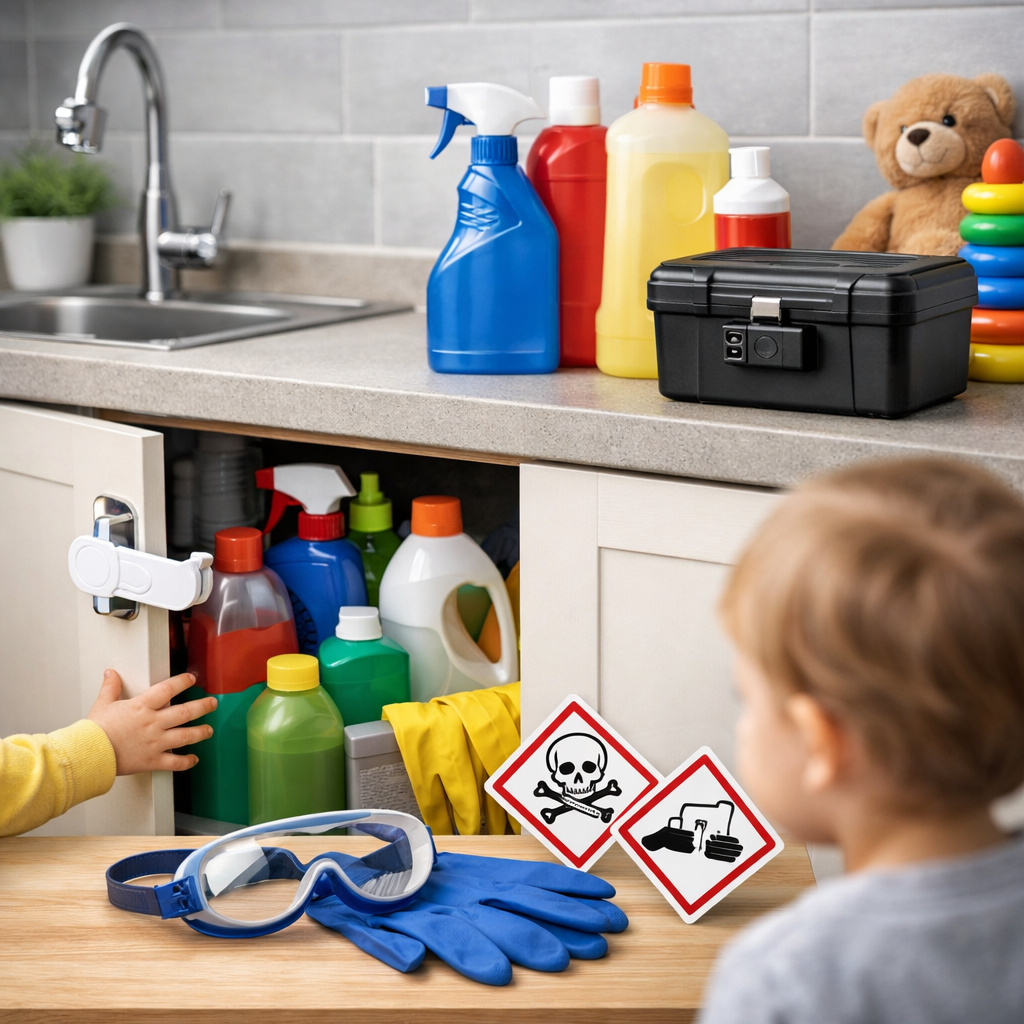
Older children and teens may face different risks. They may use cleaning chemicals during chores, at school, in sports facilities, or in part-time work settings without fully understanding mixing hazards, ventilation needs, or protective steps.
That is why household chemical safety for kids should cover both access prevention and safe-use education. Younger children need barriers and supervision. Older children need clear rules, age-appropriate training, and reminders never to guess what is in a container.
Canadian health and safety guidance from organizations such as CCOHS, Health Canada, and the Ontario government can help families and schools build safer practices. For broader home and workplace safety learning, families can also explore OHSE.ca.
Smart storage rules for household chemical safety for kids
Store products up high, locked, and separated
The safest storage rule is simple: keep household chemicals out of sight and out of reach. A locked cabinet is better than a low cupboard with a basic latch, especially for curious toddlers and preschoolers.
Store chemicals in their original containers and keep them away from food, drinks, pet supplies, and medication. Never place cleaners beside snacks, water bottles, or school lunch items where a mix-up could happen.
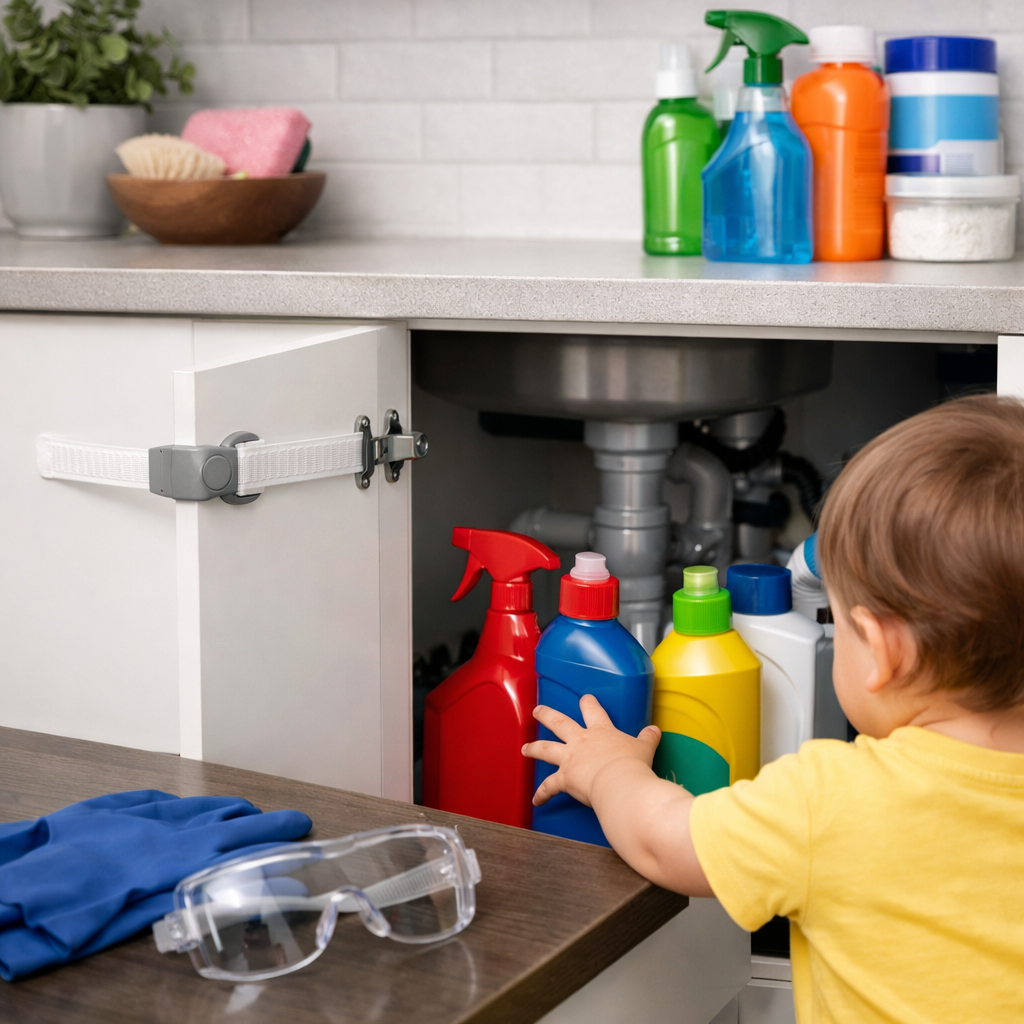
It is also wise to separate products by type. For example, keep cleaning supplies separate from automotive fluids, pool chemicals, workshop products, and pesticides. This reduces both child access and accidental mixing.
Use the hierarchy of controls at home
A practical OHSE approach is to apply the hierarchy of controls:
- Elimination: remove old, unnecessary, or expired products from the home according to local disposal guidance.
- Substitution: choose less hazardous products when suitable for the task.
- Engineering controls: use locked cabinets, child-resistant closures, and good ventilation.
- Administrative controls: create house rules for storage, use, and cleanup.
- Personal protective equipment: for older teens doing chores, use gloves or eye protection if the product label recommends it.
This approach helps families think beyond one quick fix. Household chemical safety for kids is strongest when several layers of protection work together.
Short actionable checklist
- Lock chemicals in a high cabinet.
- Keep products in original containers.
- Never transfer chemicals into food or drink containers.
- Store chemicals away from food, medicine, and pet items.
- Clean up spills right away.
- Put products away immediately after use.
- Check caps, lids, and child-resistant closures after every use.
- Review storage areas monthly.
Labels, original containers, and safer use habits
Why labels are a key part of household chemical safety for kids
Labels are not just packaging. They provide critical safety instructions, including how to use the product, what not to mix it with, where to store it, and what protective steps may be needed.
If a product is moved into an unmarked bottle or cup, adults, teens, and children may all misidentify it. That can lead to accidental drinking, unsafe mixing, skin or eye exposure, or using the wrong product in a poorly ventilated space.
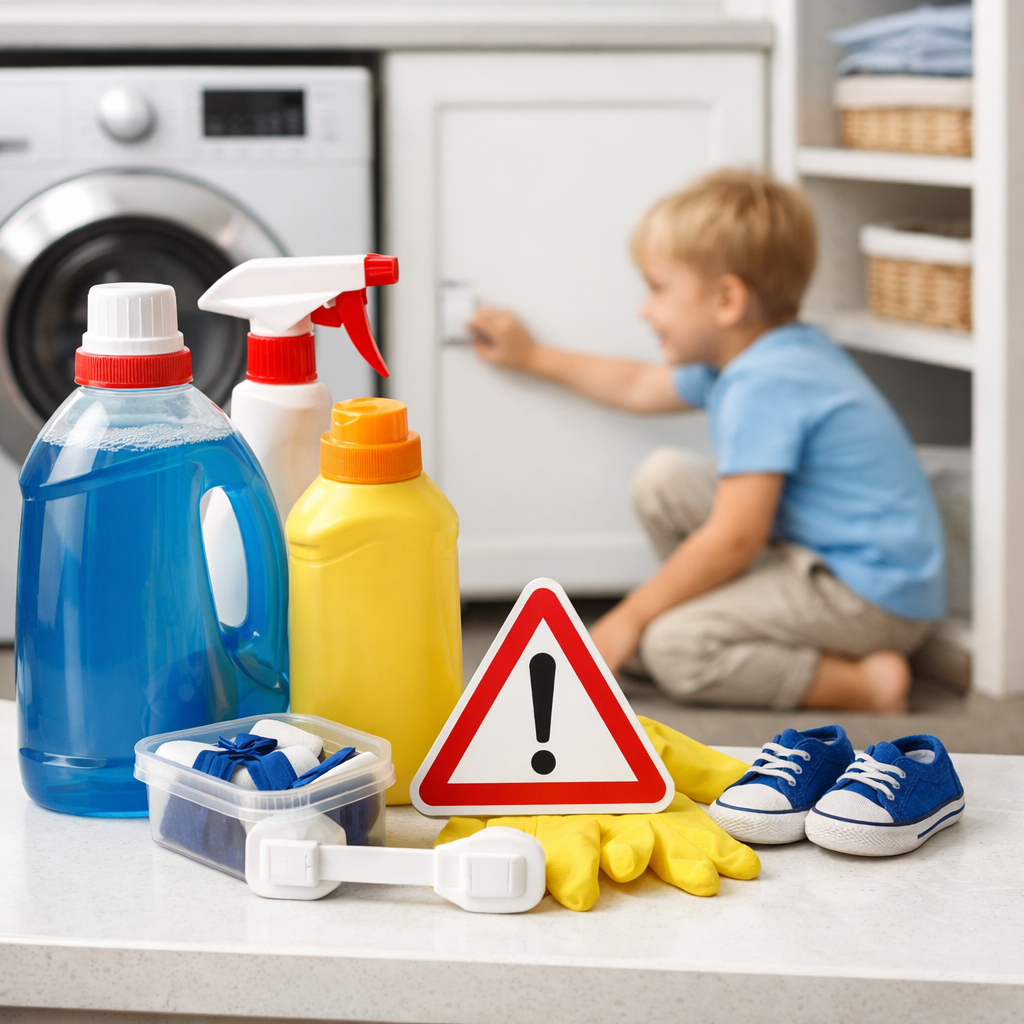
For household chemical safety for kids, one of the most important rules is never to use beverage containers, mugs, or food jars for chemical storage. Even a temporary transfer creates unnecessary risk.
Teach children and teens age-appropriate label awareness
Young children should be taught a simple rule: do not touch or smell household products unless a trusted adult says it is safe.
School-age children can start learning to recognize warning words and hazard symbols on consumer products. Teens doing chores or helping in school, sports, or community spaces should read the full label before use and follow local school, workplace, or manufacturer guidance.
If training is useful for older students, young workers, or families building safety habits, OHSE learning resources may support broader health and safety awareness.
| Situation | Safer choice | Risk reduced |
|---|---|---|
| Cleaner left under sink | Move to locked upper cabinet | Child access |
| Product poured into cup or bottle | Keep original labeled container | Accidental swallowing or misuse |
| Multiple products used together | Read label and avoid mixing | Fumes or harmful reactions |
| Open use in small room | Improve ventilation and supervise | Breathing exposure |
Emergency prevention: spills, mixing hazards, and supervision
Prevent common mistakes before they happen
Most household chemical incidents involving children begin with an ordinary moment: cleaning while distracted, leaving a bottle open during a phone call, setting supplies on the floor, or assuming a child cannot reach a counter.
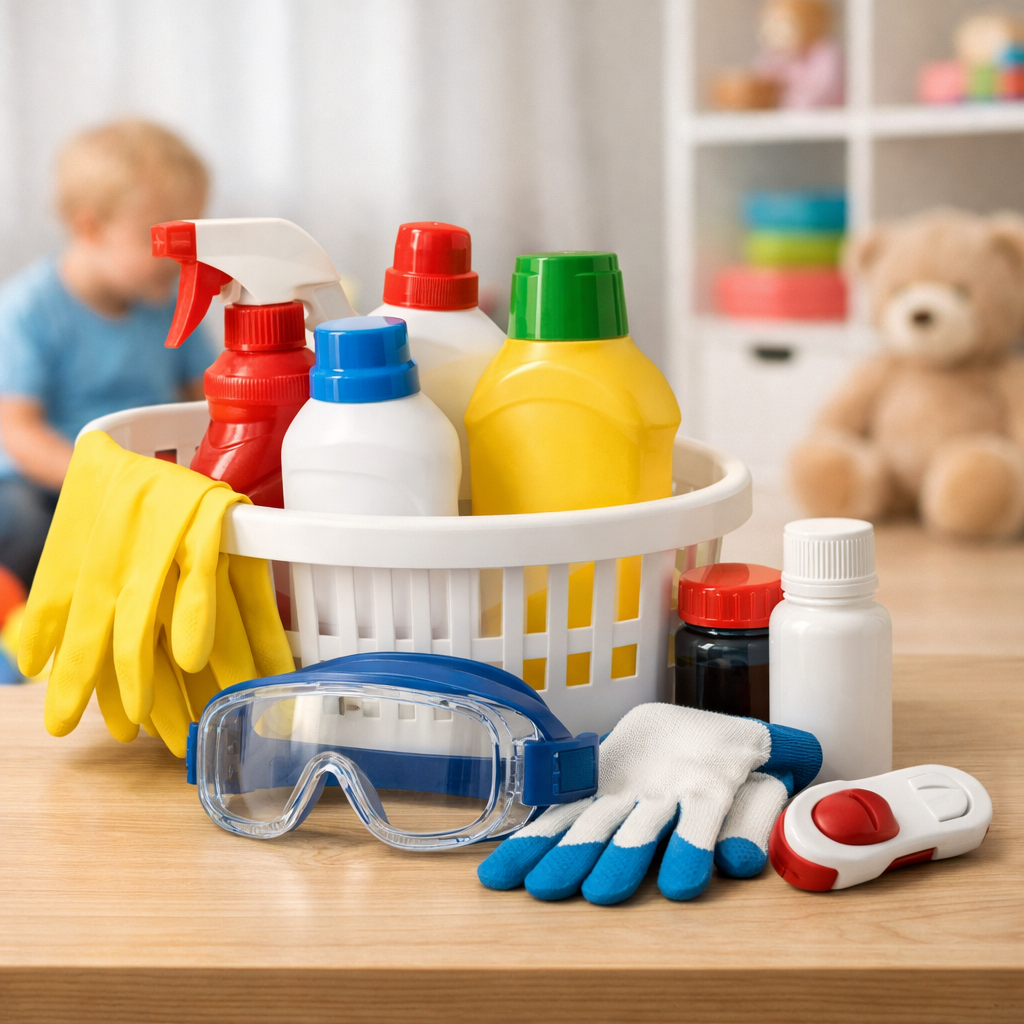
Prevention means planning for those moments. Bring out only the product you need, use it, close it, and put it away immediately. Do not leave chemicals unattended, even for a short time.
Another major risk is mixing products. Some household chemicals should never be combined. Families do not need to memorize every reaction, but they should follow a simple rule: never mix products unless the label clearly says it is safe.
Supervision and routines matter
Household chemical safety for kids improves when routines are consistent. Children should know which cupboards, shelves, garages, and laundry areas are off limits. Adults should also model the right habits every time, because children learn by watching.
In schools, childcare spaces, and homes where young workers help with cleaning, supervisors should check that products are stored correctly, labels are readable, and instructions are followed. Shared environments need clear responsibility so no one assumes someone else put the chemicals away.
General injury prevention advice from Parachute can also support safer family routines and home awareness.
What to do if there is a concern and how to build a safer plan
Stay calm and follow guidance
If a child may have been exposed to a household chemical, stay calm and follow the product label instructions, local emergency guidance, and advice from the appropriate school, workplace, health, or emergency resources in your area.
Do not guess, do not force food or drink unless qualified guidance says to do so, and do not delay asking for help when a product may have been swallowed, splashed in the eyes, spilled on skin, or inhaled.
It is helpful to keep the original container available so responders or professionals can identify the product quickly. This is another reason original packaging is so important for household chemical safety for kids.
Build a family and school prevention plan
A strong prevention plan does not need to be complicated. Walk through the home and identify all chemical storage areas, including kitchens, bathrooms, laundry rooms, garages, workshops, mudrooms, and outdoor sheds.
Then ask a few practical questions:
- Can a child reach the product?
- Is the container clearly labeled and in good condition?
- Could it be mistaken for food or drink?
- Is the area ventilated for safe use?
- Do older children or teens know the rules for use and cleanup?
- Are school or workplace instructions being followed where applicable?
Review the plan whenever routines change, such as moving homes, starting a new school year, beginning seasonal cleaning, or when a teen starts chores or a part-time job involving cleaning products.
In the end, household chemical safety for kids is about reducing access, improving understanding, and creating reliable routines. With secure storage, original labels, close supervision, and calm emergency prevention, families and schools can make everyday spaces much safer for children and youth across Ontario and Canada.