


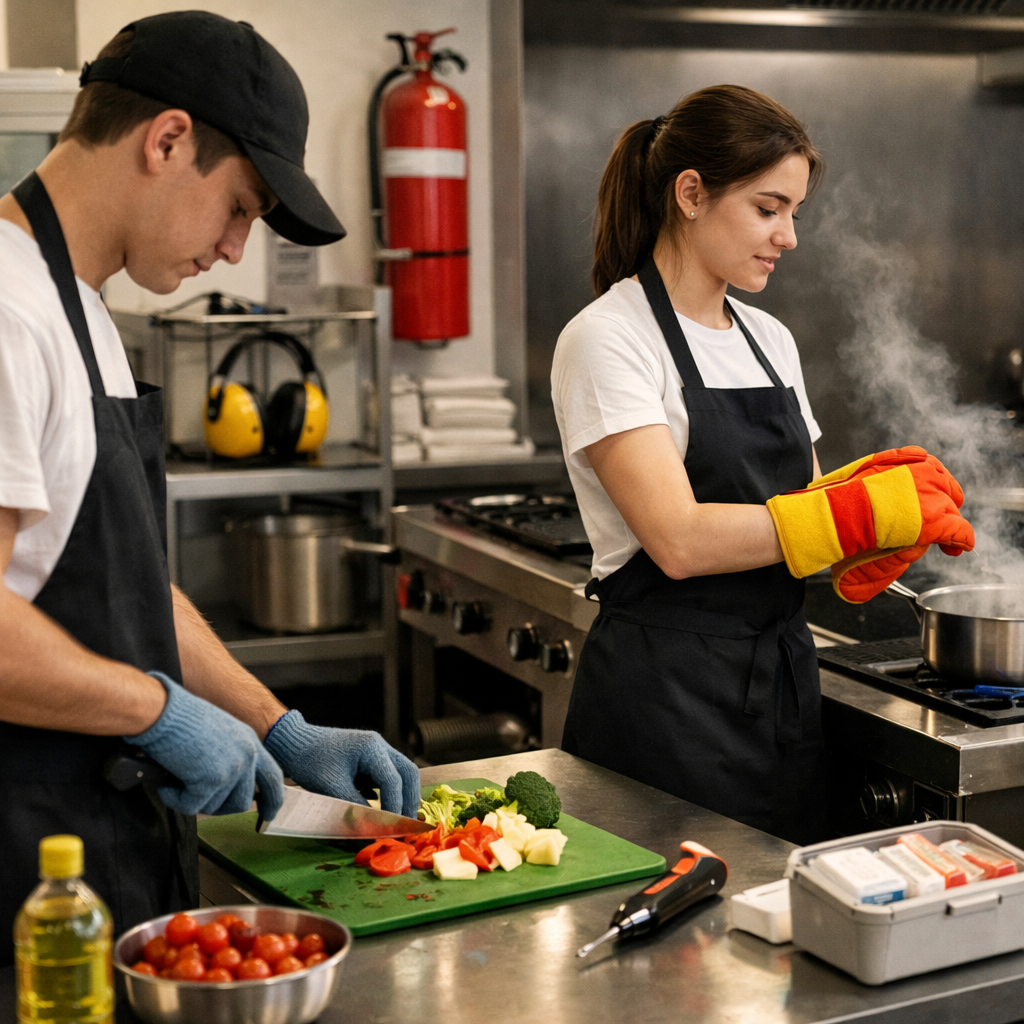

Kitchen safety for student workers matters from the first shift onward. School cafeterias, restaurants, cafés, food counters, and camp kitchens move quickly, and young workers are often learning while the work is already underway.
That combination of speed, heat, sharp tools, wet floors, and unfamiliar equipment can lead to preventable injuries if training and supervision are not strong. For Canadian students and families, the goal is simple: build safe habits early, follow workplace procedures, and speak up before a small hazard becomes a serious incident.
This practical guide explains the main risks student workers face in kitchens, including burns, cuts, slips, and contact with hot surfaces. It also covers prevention steps, the hierarchy of controls, and a short checklist that students can use before every shift.
Kitchen Safety for Student Workers Starts with Hazard Awareness
A kitchen can look routine, but it contains several high-risk hazards in a small space. Student workers may move between dishwashing, food prep, serving, cleaning, and restocking, sometimes within the same hour.
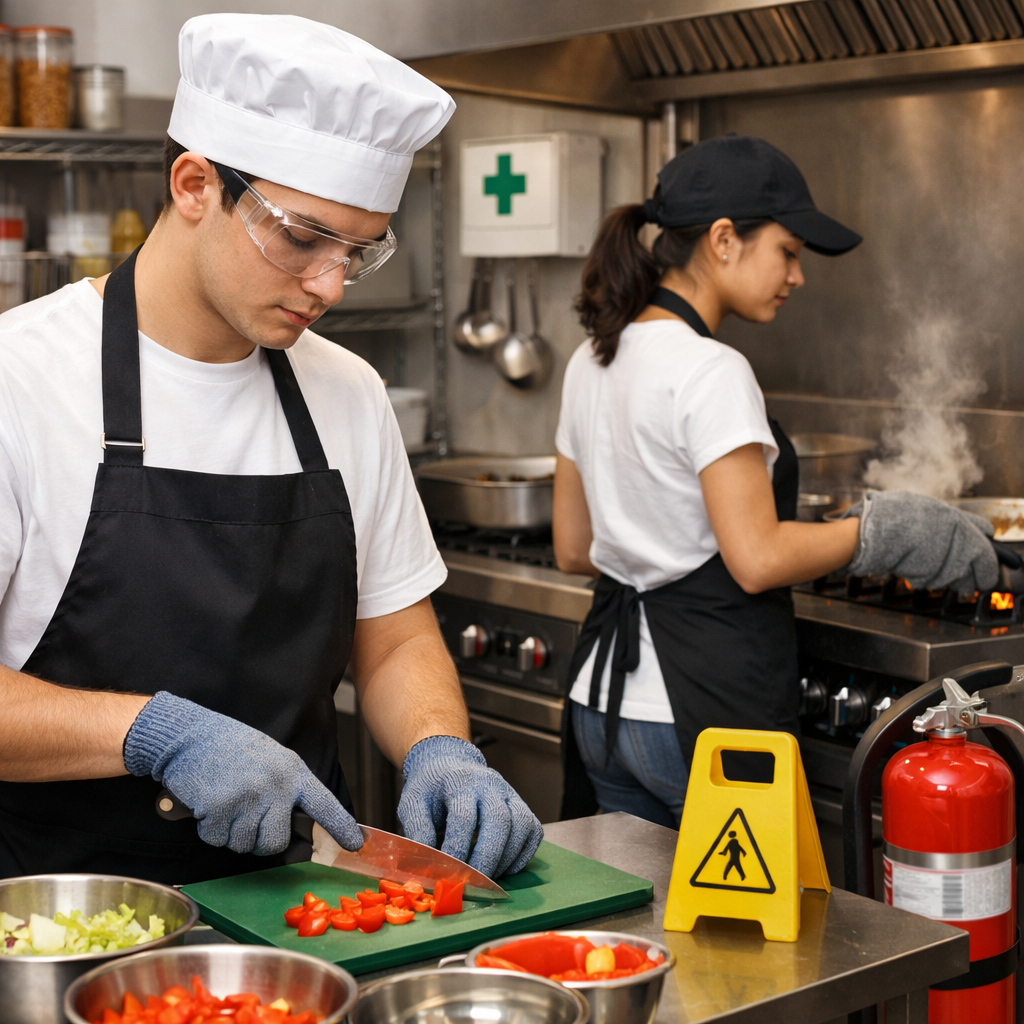
Each task brings different exposures. A worker carrying hot soup may cross a wet floor. Someone washing knives may be interrupted by a delivery. A student reaching over a grill may not realize that a nearby metal handle is still hot.
Common kitchen hazards include:
- Burns from hot oil, steam, boiling water, ovens, grills, and microwaved containers
- Cuts from knives, slicers, broken glass, can lids, and food processors
- Slips and falls caused by grease, water, clutter, cords, and rushed movement
- Hot surface contact from pans, trays, stovetops, warming units, and metal utensils
- Strains from lifting stock, moving boxes, or awkward reaching in tight spaces
Good prevention starts with orientation. Student workers should know where hazards are, which tasks they are allowed to do, what personal protective equipment is required, and who to ask for help. Employers in Ontario and across Canada should provide information, instruction, and supervision that matches the worker’s age, experience, and assigned tasks. General health and safety guidance is available from CCOHS, and Ontario workplace information can be found at Ontario.ca.
Use the Hierarchy of Controls in Real Kitchen Tasks
Kitchen safety for student workers improves when hazards are controlled at more than one level. The hierarchy of controls is useful even in fast-paced food service settings.
| Control Level | Kitchen Example | Why It Helps |
|---|---|---|
| Elimination | Clean spills immediately | Removes the slip hazard before someone steps in it |
| Substitution | Use safer cutting tools where appropriate | Can reduce injury severity |
| Engineering | Install slip-resistant flooring or splash guards | Adds physical protection |
| Administrative | Train students on knife handling and hot equipment rules | Builds safe routines and clear limits |
| PPE | Wear non-slip shoes, oven mitts, or cut-resistant gloves where required | Provides a final layer of protection |
PPE matters, but it should not be the only control. A student worker is safer when the kitchen is organized well, equipment is maintained, tasks are assigned properly, and supervisors actively monitor the work.
Preventing Burns and Hot Surface Injuries in Student Kitchen Work
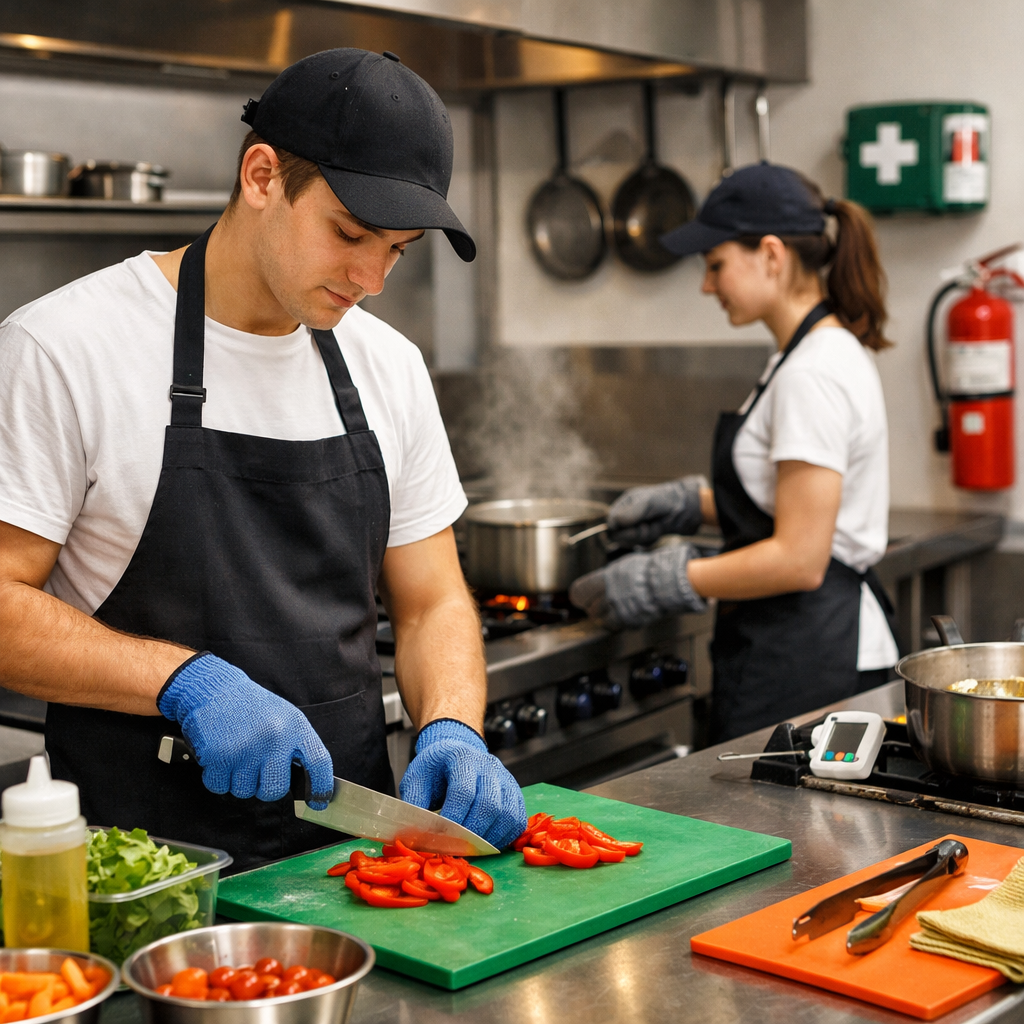
Burns are among the most common kitchen injuries because heat appears in many forms. Steam can burn as quickly as a hot pan. A tray from the oven may look harmless if it has been left on a counter. Microwaved liquids and containers can also release sudden heat when opened.
Safe Habits Around Heat
- Assume pans, trays, handles, and metal tools are hot unless you know they are cool
- Use dry oven mitts or heat-resistant gloves when required by the task
- Open lids away from your face to avoid steam exposure
- Turn pot handles inward when safe to do so so they are less likely to be bumped
- Announce “hot behind” or similar workplace cues when carrying hot items
- Do not overfill containers with hot liquids
- Keep flammable items away from burners, ovens, and toasters
Supervisors should clearly identify which equipment student workers may use. Some tools may require extra training or may not be suitable for younger or inexperienced workers. If a student has not been trained on a fryer, slicer, grill, or industrial dishwasher, they should not guess their way through the task.
Hot surface injuries often happen during cleanup, not only during cooking. A grill that looks off may still be dangerously hot. Trays fresh from a dishwasher can also cause burns. A simple rule helps: pause, check, and test safely before touching.
For broader injury prevention information for young people and families, Parachute offers practical safety resources. Workplaces can also support safer learning through orientation materials and refresher training such as those found at OHSE training.
Knife Safety, Sharp Tools, and Cut Prevention
Kitchen safety for student workers also depends on learning safe cutting techniques early. Knife injuries often happen when workers rush, use the wrong tool, cut on unstable surfaces, or try to catch a falling knife.
Practical Rules for Knives and Sharp Equipment
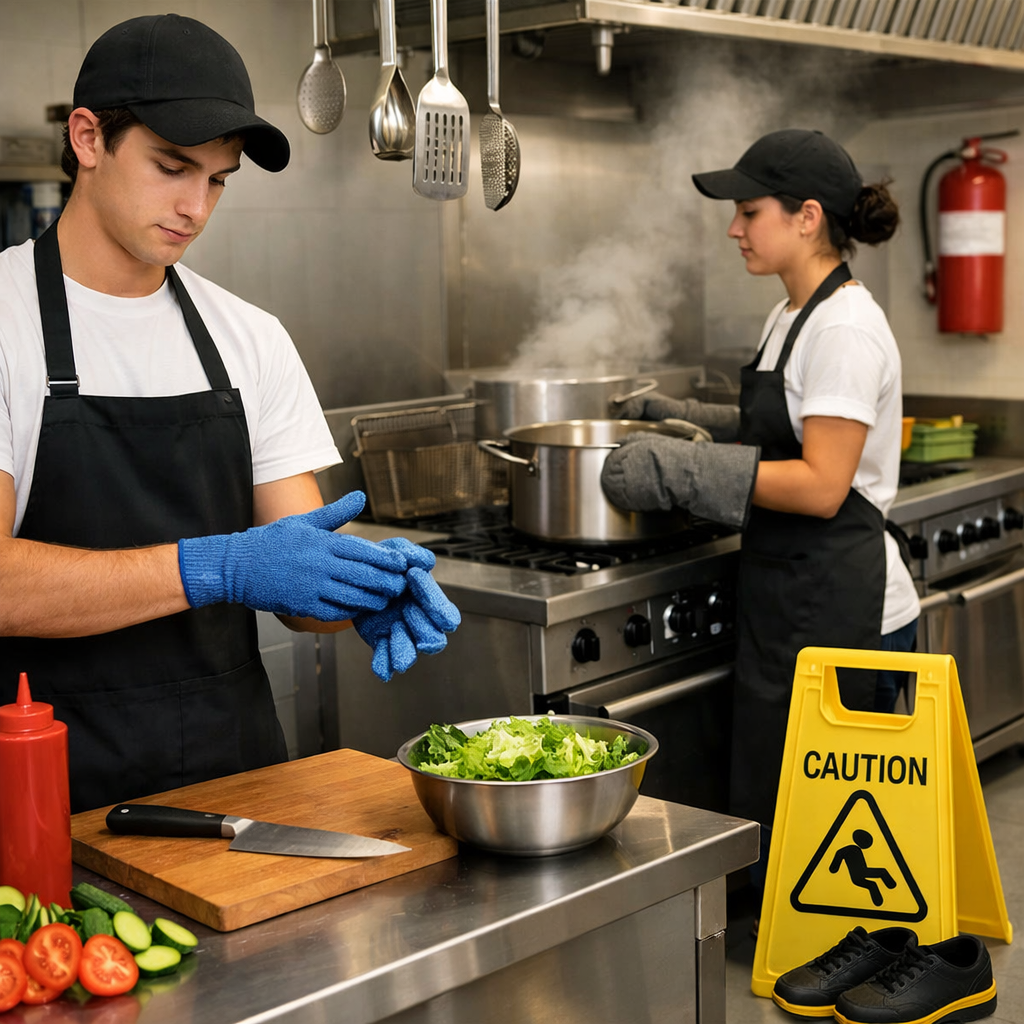
Use the right knife for the job and keep it in good condition. A dull blade can be more dangerous than a sharp one because it may slip under pressure.
- Cut on a stable board, not in your hand
- Keep fingers tucked away from the cutting line
- Carry knives with the blade pointed down and close to your side, if carrying is permitted by workplace procedure
- Never leave knives hidden in sinks, soapy water, or under towels
- Pass knives according to workplace procedure, not hand-to-hand in a rushed movement
- Use designated guards or push tools for slicers and processors
- Do not attempt to clear jams unless the machine is off and isolated according to instructions
Broken glass and sharp can lids are another common source of cuts. Student workers should use the correct disposal container for broken items and never reach blindly into bins or dishwater. If cleanup is needed, use tools such as a brush and dustpan where the workplace procedure allows, rather than bare hands.
Where tasks involve repeated cutting or mechanical slicing, employers should assess whether additional controls are needed, such as safer equipment, task rotation, supervision, or gloves suited to the task. Follow manufacturer instructions and local workplace rules at all times.
Slip Prevention, Safe Footwear, and a Simple Student Checklist
Slips and falls can happen in seconds, especially during busy meal periods. Grease, ice, food scraps, and mop residue can all reduce traction. Student workers may also be more likely to rush between stations or carry loads that block their view.
How to Reduce Slip Risks Every Shift
- Wear closed-toe, slip-resistant footwear approved by the workplace
- Clean spills right away or report them immediately
- Use wet floor signs when required
- Keep walkways clear of boxes, bags, cords, and equipment
- Take smaller loads so you can see where you are going
- Avoid running, even during peak service
- Report damaged flooring, loose mats, or poor drainage
Good housekeeping is one of the strongest controls in any kitchen. A clean, orderly workspace supports kitchen safety for student workers by reducing both slips and distractions. It also makes emergency access easier if something does go wrong.
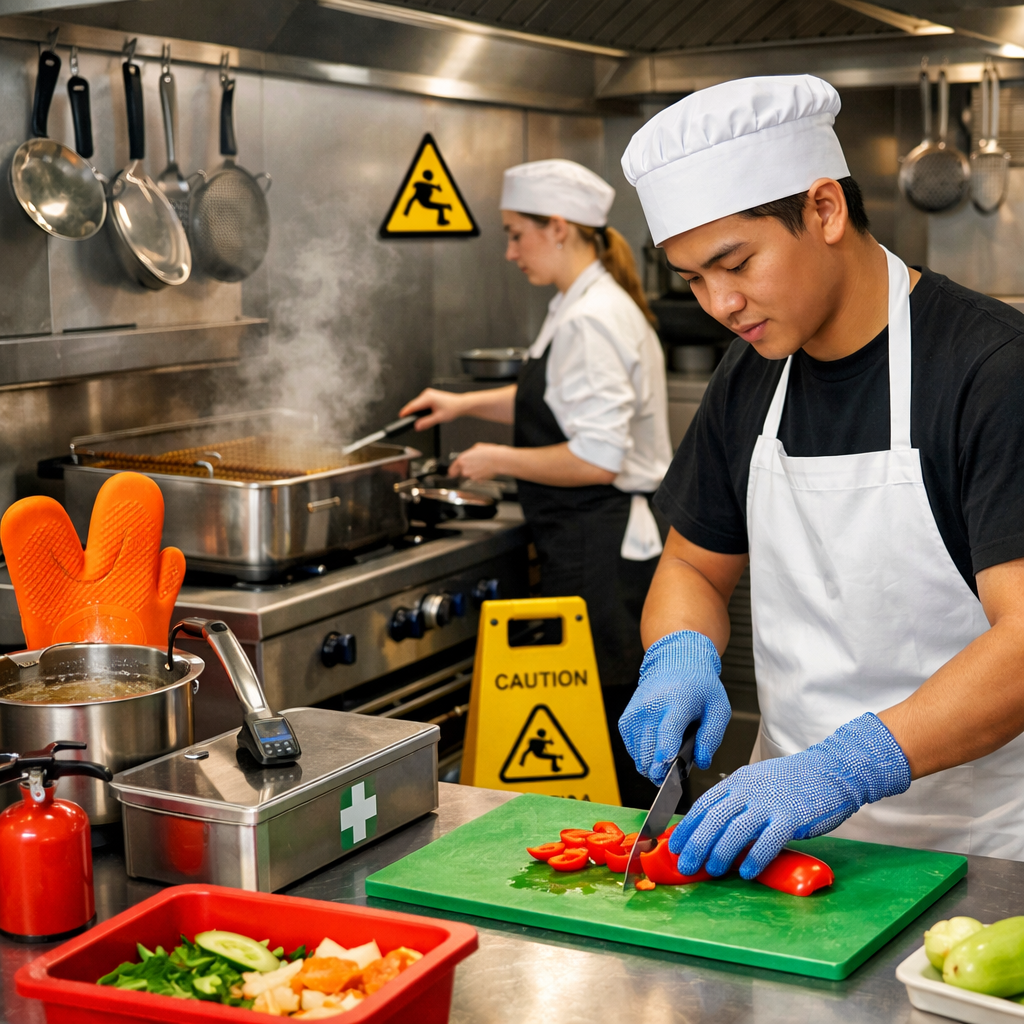
Short Actionable Checklist Before a Shift
- Do I know today’s tasks and which equipment I am allowed to use?
- Am I wearing proper footwear and any required protective gear?
- Are floors, aisles, and exits clear?
- Do I know where hot zones, sharp tools, and cleaning supplies are?
- Have I checked that boards, trays, and tools are stable and in good condition?
- Do I know who to ask if I am unsure or if a hazard appears?
If the answer to any of these questions is no, stop and ask for direction before starting. That is not a delay; it is part of safe work.
For more workplace safety guidance and practical resources, students, parents, and employers can visit OHSE.ca, along with official Canadian resources from Health Canada. Always follow local school, workplace, manufacturer, or emergency guidance where applicable.
Kitchen safety for student workers is built through training, supervision, clear procedures, and steady habits. When students learn how to prevent burns, cuts, slips, and hot surface injuries, they gain more than a safer shift; they build confidence that can carry into every future job. A careful pace, proper equipment use, and speaking up early are some of the most effective safety tools in any kitchen.