


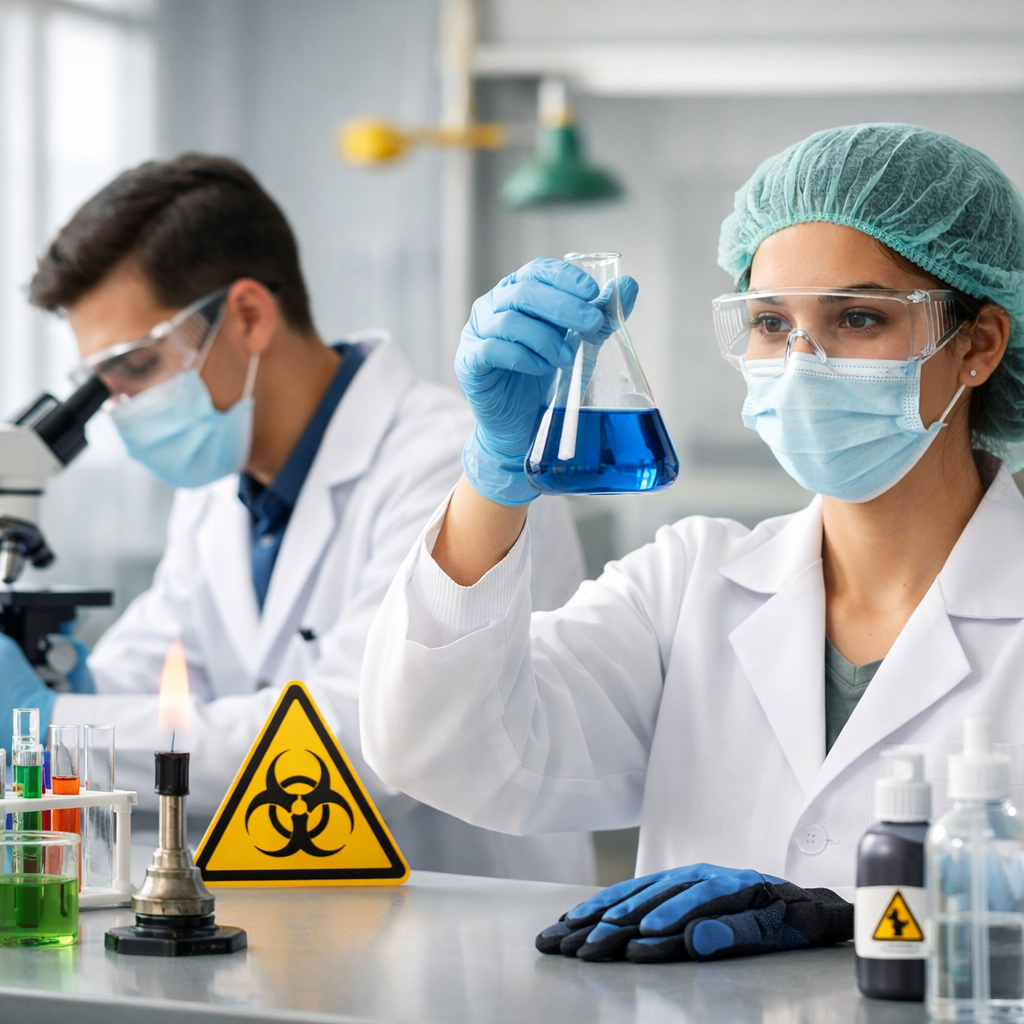

Laboratory safety for students starts before any chemical is opened, any glassware is handled, or any burner is lit.
In Canadian schools, labs can be exciting places to learn, but they also contain real hazards such as heat, sharp tools, chemical exposure, spills, and broken equipment. Good habits early on help students protect themselves, their classmates, and their teachers while building the kind of safety mindset that also matters in future workplaces.
Whether the setting is an Ontario high school science room, a college teaching lab, or a training environment for young workers, the safest experiment is the one planned carefully from the start. Students should always follow school instructions, teacher supervision, manufacturer directions, and local emergency procedures. For additional general safety guidance, schools and families can review resources from CCOHS, the Government of Ontario, and OHSE.ca.
Why laboratory safety for students matters before the experiment begins
Most lab incidents do not begin with a major mistake. They often start with rushing, not reading the procedure, wearing the wrong clothing, or using equipment without understanding it.
That is why preparation is one of the most important parts of laboratory safety for students. Before class begins, students should know what they are doing, what materials they are using, and what could go wrong. A simple review can prevent burns, cuts, eye injuries, inhalation exposure, contamination, and slips.
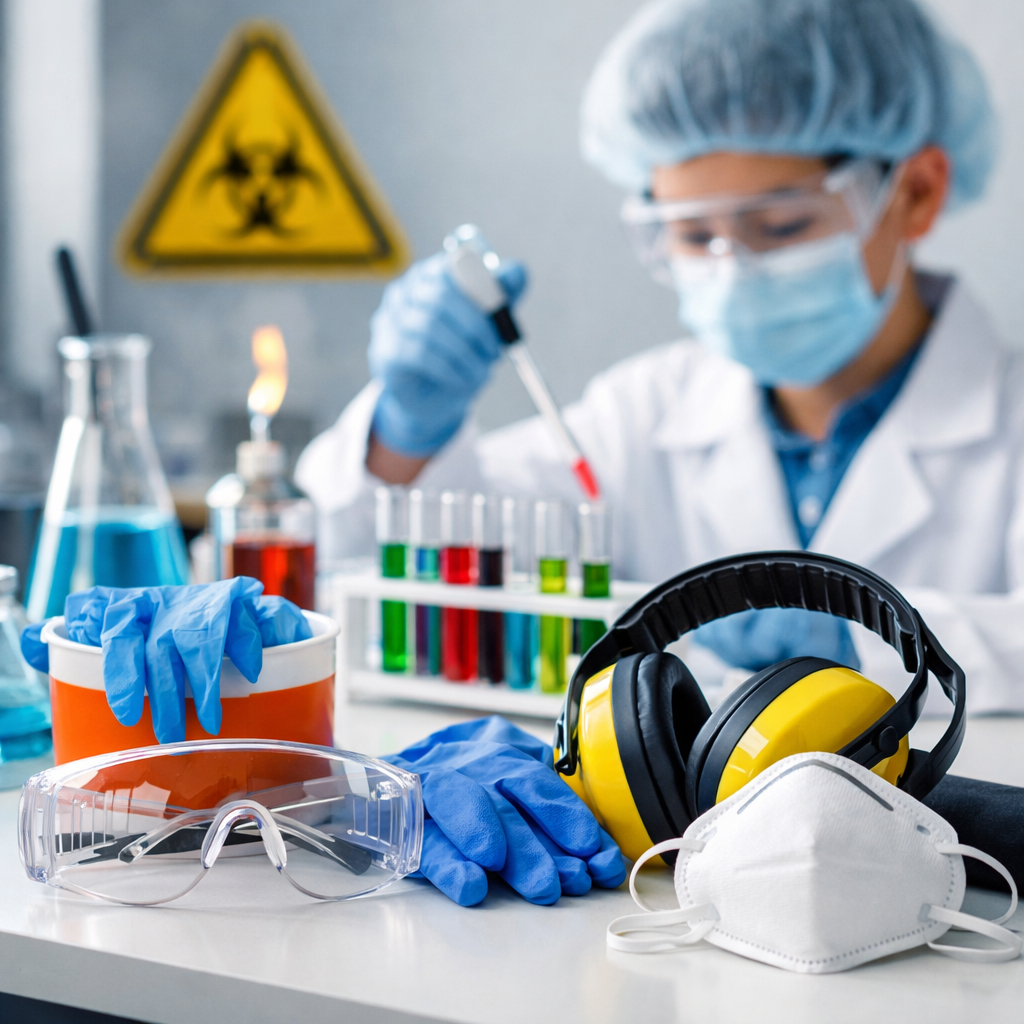
Teachers and schools also have a duty to create safer environments through supervision, clear instructions, proper storage, maintained equipment, and emergency planning. In practical terms, this reflects the basic safety principle often used in workplaces: control hazards as early as possible. That may mean removing an unnecessary hazard, replacing a more dangerous substance, using guards or ventilation, setting clear rules, and then making sure students wear the right personal protective equipment.
Common pre-experiment hazards students should recognize
- Chemicals that can irritate skin, eyes, or lungs
- Open flames, hot plates, and heated containers
- Glassware that can break or crack under stress
- Sharp tools such as scalpels, probes, or dissecting instruments
- Electrical equipment near liquids
- Spills, clutter, backpacks, and loose cords that create trip hazards
- Food, drinks, or horseplay that increase contamination risk
Laboratory safety for students: critical rules to follow every time
The most effective safety rules are simple, consistent, and followed every time, not only during higher-risk experiments.
Students should enter the lab ready to work safely and should never assume a familiar activity is risk-free.
Dress for the lab
Wear the protective equipment required by the teacher or school. In many labs, that means splash-resistant eye protection, closed-toe shoes, and clothing that covers exposed skin.
Long hair should be tied back, loose sleeves secured, and dangling jewelry removed. Hood strings, scarves, and bulky outerwear can catch on equipment or move too close to heat sources.
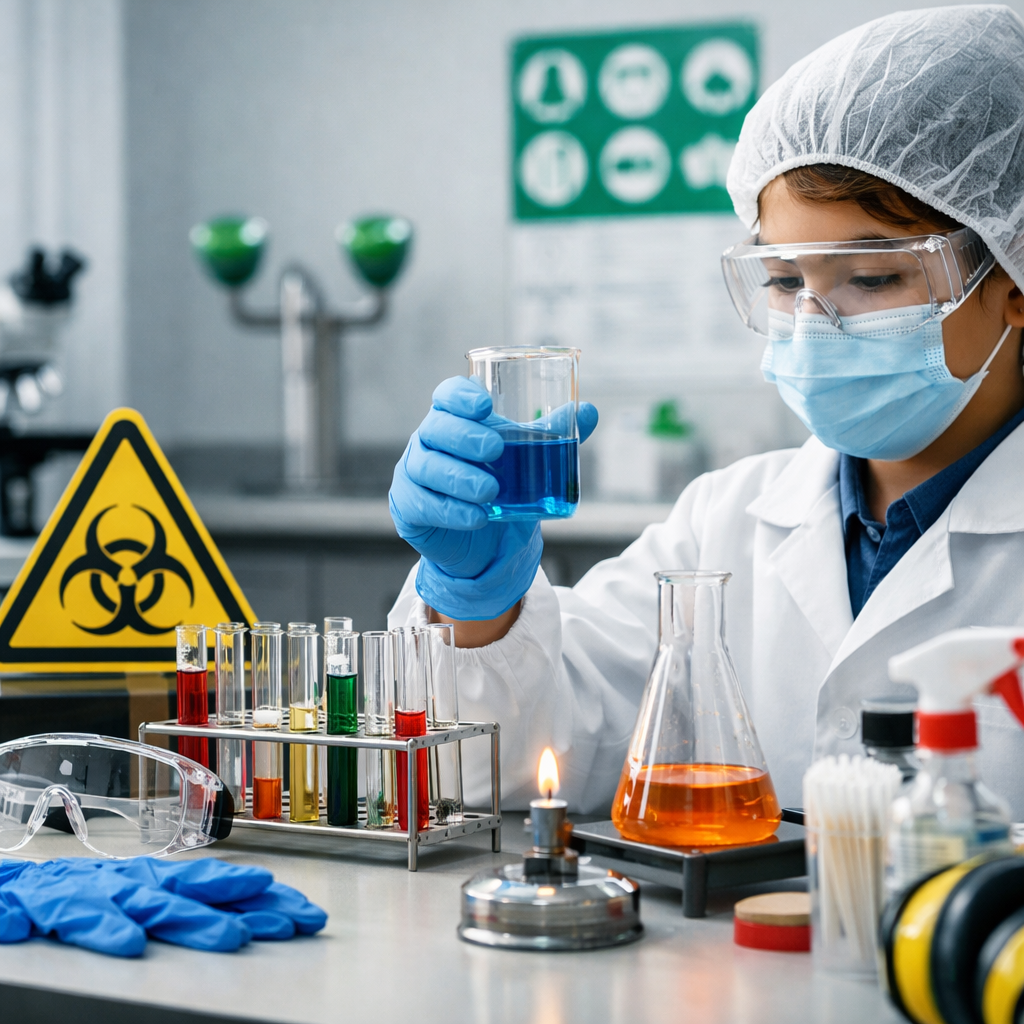
Read instructions before touching materials
Students should read the full procedure first, then listen carefully to the teacher’s briefing. If a step is unclear, ask before starting.
Never improvise, mix unapproved substances, or change quantities on your own. In school labs, even a small unsupervised change can create heat, gas, pressure, or a harmful reaction.
Know the location of emergency equipment
A key part of laboratory safety for students is knowing where to find eyewash stations, fire extinguishers, fire blankets, spill supplies, exits, alarms, and first aid resources if provided by the school.
Students should also know who to report to immediately if something goes wrong. They should not try to manage a serious incident alone.
Keep the work area controlled
Only bring necessary materials to the bench. Bags, phones, food, and drinks should stay out of the work area unless the teacher specifically allows them for learning purposes.
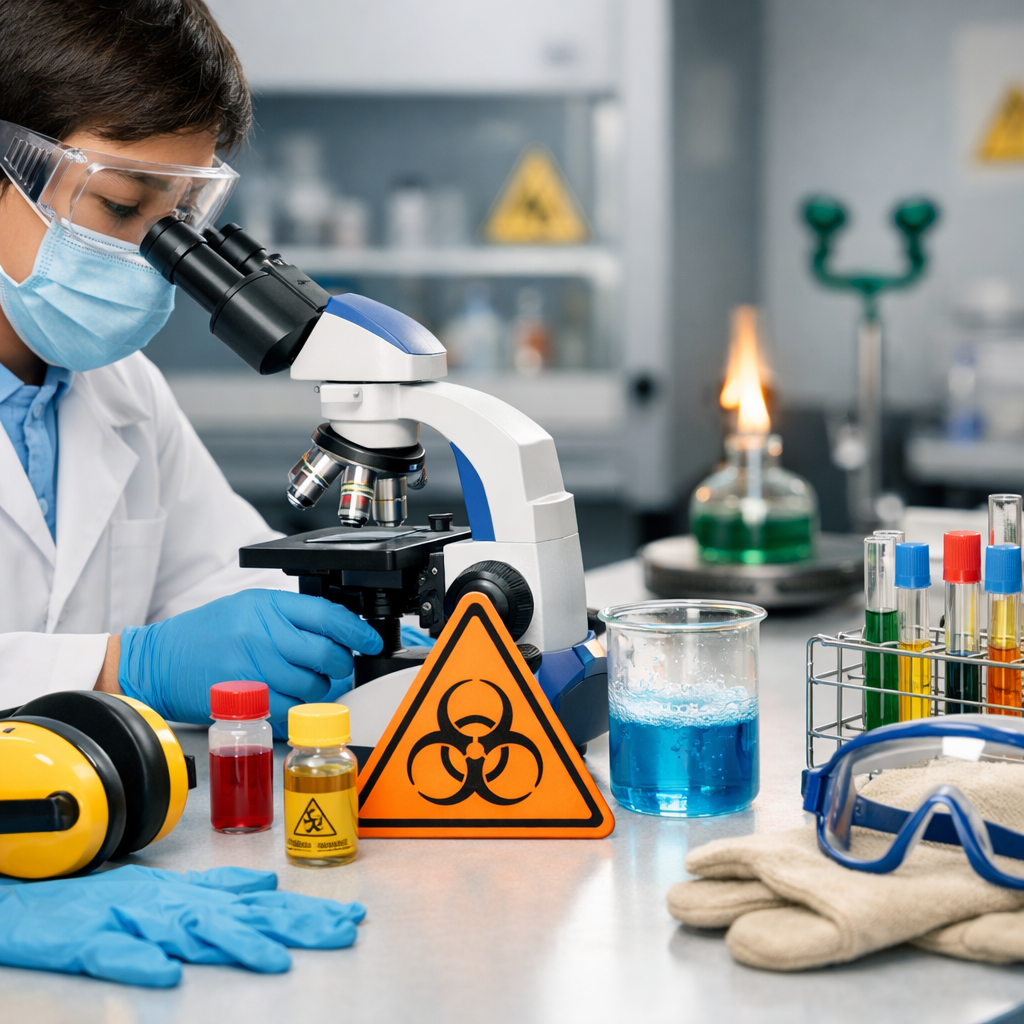
Label containers clearly if instructed, keep benches tidy, and clean small messes right away using the correct method. Never smell chemicals directly, taste anything in the lab, or point heated test tubes toward yourself or others.
Practical pre-lab checklist for students and families
A short routine before each class can make laboratory safety for students feel normal rather than stressful. This is useful for middle school, secondary school, and entry-level post-secondary settings.
Actionable checklist
- Wear closed-toe shoes and practical clothing
- Tie back long hair and secure loose items
- Bring required eye protection and other assigned PPE
- Read the experiment steps before the lab begins
- Identify hazards such as heat, chemicals, glass, or electricity
- Ask questions before starting, not during a risky step
- Find exits and emergency equipment
- Keep food, drinks, and horseplay out of the lab
- Report broken glass, spills, or damaged equipment right away
- Wash hands thoroughly after the experiment
Parents and guardians can support safer habits by helping students dress appropriately for lab days and reminding them that science class safety rules are not optional. These same habits translate well into co-op placements, skilled trades training, healthcare learning settings, and other early work environments.
Using the hierarchy of controls in a school lab
Even though students may not hear the term every day, the hierarchy of controls is highly relevant to laboratory safety for students. It is a practical way to reduce risk by focusing first on the hazard itself, not only on student behaviour.
| Control level | What it can look like in a school lab | Why it helps |
|---|---|---|
| Elimination | Removing an unnecessary hazardous step from the activity | Gets rid of the risk entirely |
| Substitution | Using a less hazardous chemical or lower-heat method | Reduces the chance of harm |
| Engineering controls | Fume hoods, guards, proper storage, ventilation | Separates people from hazards |
| Administrative controls | Teacher instructions, supervision, lab rules, limited access | Creates safer procedures and behaviour |
| PPE | Goggles, gloves, lab coats, proper footwear | Adds a final layer of protection |
For students, the takeaway is simple: goggles matter, but they are only one part of safety. The best protection comes from a well-planned activity, good supervision, maintained equipment, and clear rules.
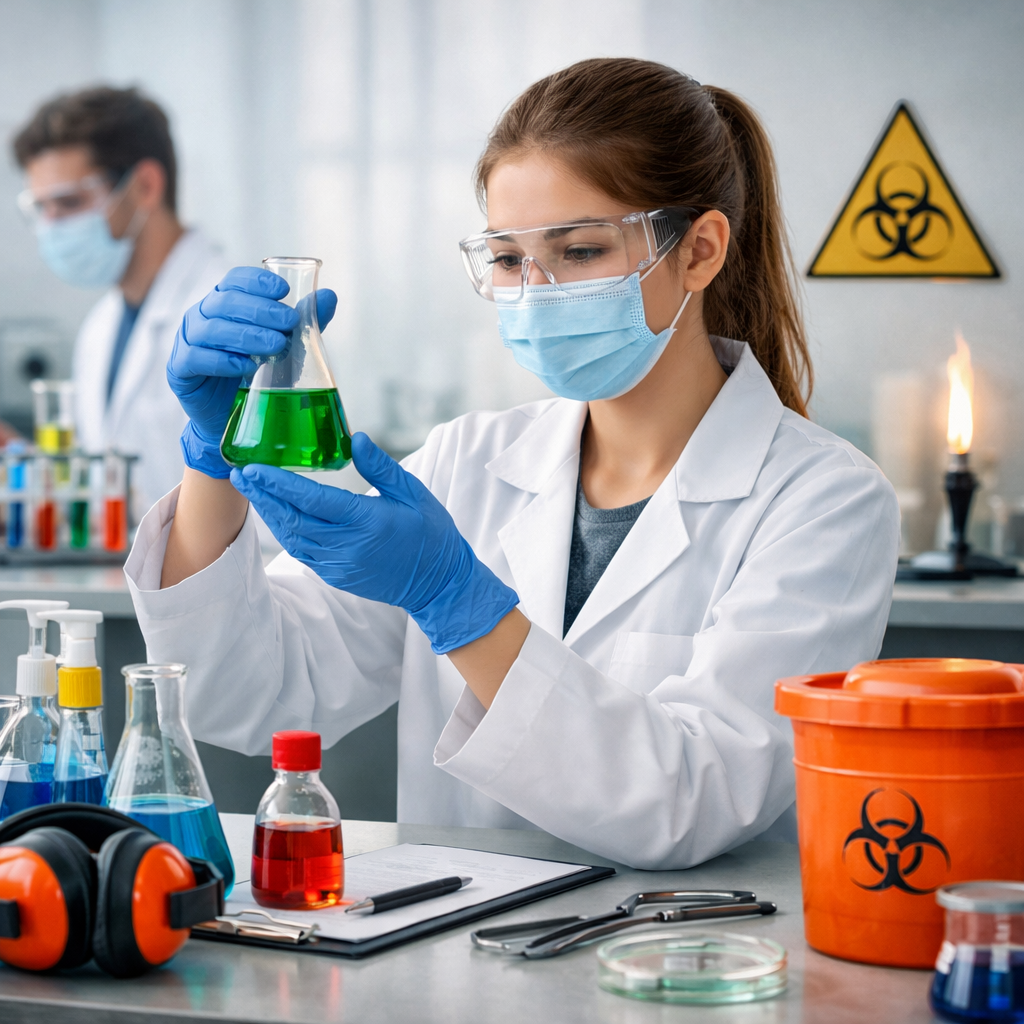
Schools looking to strengthen safety culture may also benefit from practical training resources through OHSE training and broader occupational health and safety information at OHSE.ca.
What students should do if something goes wrong
Even with good preparation, incidents can still happen. A calm and immediate response is part of laboratory safety for students.
If there is a spill, broken glass, unexpected reaction, burn, splash, or equipment failure, stop work and alert the teacher at once. Students should not hide mistakes or try to fix a hazardous situation without direction. A fast report often prevents a minor issue from becoming a serious one.
Basic response principles
- Stop the activity immediately
- Warn people nearby if there is an immediate hazard
- Tell the teacher or supervisor right away
- Use emergency equipment only as instructed or trained
- Follow school procedures for evacuation, cleanup, or first aid
- Do not re-enter or restart the experiment until cleared to do so
Schools should follow their own emergency plans, and students should always follow local school, workplace, manufacturer, or emergency guidance where applicable. General public health and safety information may also be found through Health Canada.
In the end, laboratory safety for students is not about making science intimidating. It is about making learning safer, smarter, and more confident. When students prepare properly, wear the right protection, follow instructions, and report hazards quickly, they build habits that protect them in school and in future jobs. Before any experiment begins, a few careful choices can make all the difference, and that is the foundation of strong laboratory safety for students.