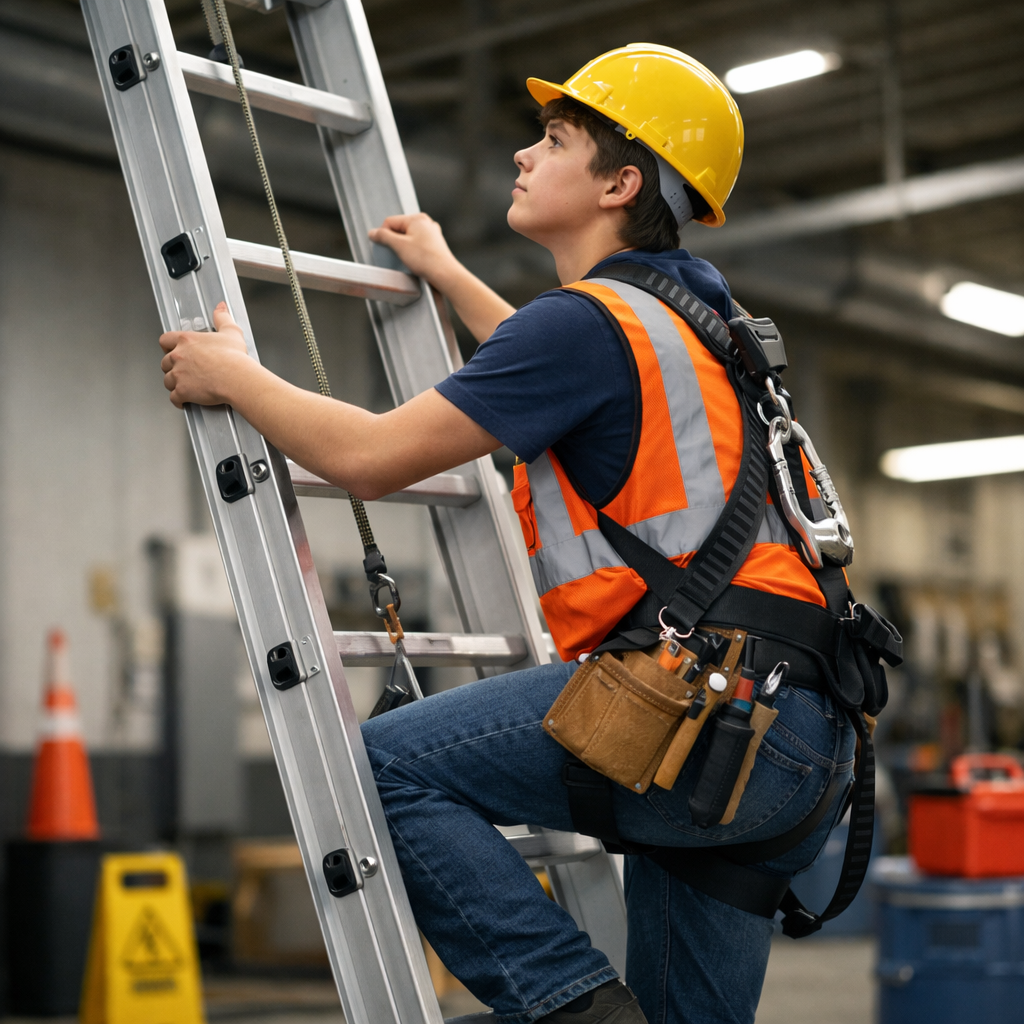

Ladder safety for young workers starts before anyone leaves the ground. For students, first-time employees, and young people helping at school, work, or home, ladders can seem simple to use. In reality, a quick task at height can turn into a serious fall when the wrong ladder is chosen, the setup is rushed, or supervision is missing.
Young workers in Canada may be especially at risk because they are still learning how to identify hazards, follow safe work procedures, and speak up when something feels unsafe. Parents, teachers, supervisors, and employers all have a role in building safe habits early. A ladder is not just a tool to grab and climb. It is equipment that must match the task, the surface, and the worker’s training.
This practical guide explains the critical rules to review before climbing. It focuses on prevention, age-appropriate decision-making, and basic Ontario and Canadian workplace expectations. For broader workplace safety guidance, readers can also visit OHSE.ca, along with trusted resources from CCOHS and the Government of Ontario.
Why ladder safety for young workers needs extra attention
Many young workers are eager to help and may say yes to a task before fully understanding the risk. That can be a problem when the job involves reaching overhead, carrying tools while climbing, or working on uneven ground. A ladder may be common on job sites, in retail stockrooms, in schools, or during basic maintenance, but common does not mean risk-free.
Inexperience is one factor. Another is hesitation to ask questions. A young worker may worry about seeming unprepared or slowing down the job. Supervisors should make it clear that asking for instruction is part of working safely, not a sign of weakness.

In Ontario, employers have duties to provide information, instruction, and supervision to protect workers. That principle matters for ladder use. If a young worker has not been shown how to inspect, set up, and use a ladder correctly, they should not be expected to figure it out on their own. When training is needed, practical courses through OHSE training can support safer work habits.
Choose the right ladder and control the hazard first
Start with the safest option for the task
One of the most important parts of ladder safety for young workers is understanding that a ladder is not always the best solution. Before climbing, ask whether the task can be done from the ground using an extension tool, moved to a safer location, or completed with different equipment. This reflects the hierarchy of controls: first try to remove or reduce the hazard before relying on individual behaviour alone.
For example, if a sign can be lowered for service, or if stock can be brought down with safer equipment, that may be better than climbing. If a ladder is still the right choice, then select the correct type and size for the job.
Basic ladder selection rules
- Use a ladder designed for the task and environment.
- Check that the ladder is tall enough so the worker does not stand on the top step or overreach.
- Confirm the ladder is in good condition, with no cracks, bent rails, missing feet, or loose parts.
- Use a step ladder only when fully opened and locked.
- Use an extension ladder only when it can be set at a stable angle and secured if required.
- Choose non-conductive ladders when there is any chance of electrical exposure.
Young workers should also know when not to use a ladder. If the area is busy, slippery, windy, poorly lit, or close to energized electrical equipment, stop and ask for direction. A task that looks easy can become dangerous fast when conditions change.
Ladder safety for young workers before climbing
Do a quick pre-use check
A short inspection takes only a moment and can prevent a fall. Before climbing, look at the ladder, the floor, and the work area. Make sure the feet are stable, the rails are undamaged, and the steps are clean and dry. Check above and around the ladder for doors, traffic, cables, and other obstacles.

Good ladder safety for young workers also means wearing suitable footwear. Shoes should fit well and have slip-resistant soles. Avoid climbing with wet, muddy, or oily footwear. Loose clothing, headphones, or anything that affects balance or awareness should also be avoided.
Safe setup matters as much as safe climbing
Even a good ladder becomes unsafe when placed on the wrong surface. Set it on firm, level ground. Do not place ladders on boxes, desks, pallets, or other objects to gain extra height. Keep the area at the base clear. If the ladder is near a doorway or walkway, control the area so it is not bumped or struck.
Supervisors, teachers, and families should be careful not to ask young people to improvise. If the ladder does not fit the task, pause the work and get the proper equipment. Rushing is a common cause of poor setup.
Critical climbing rules every young worker should follow
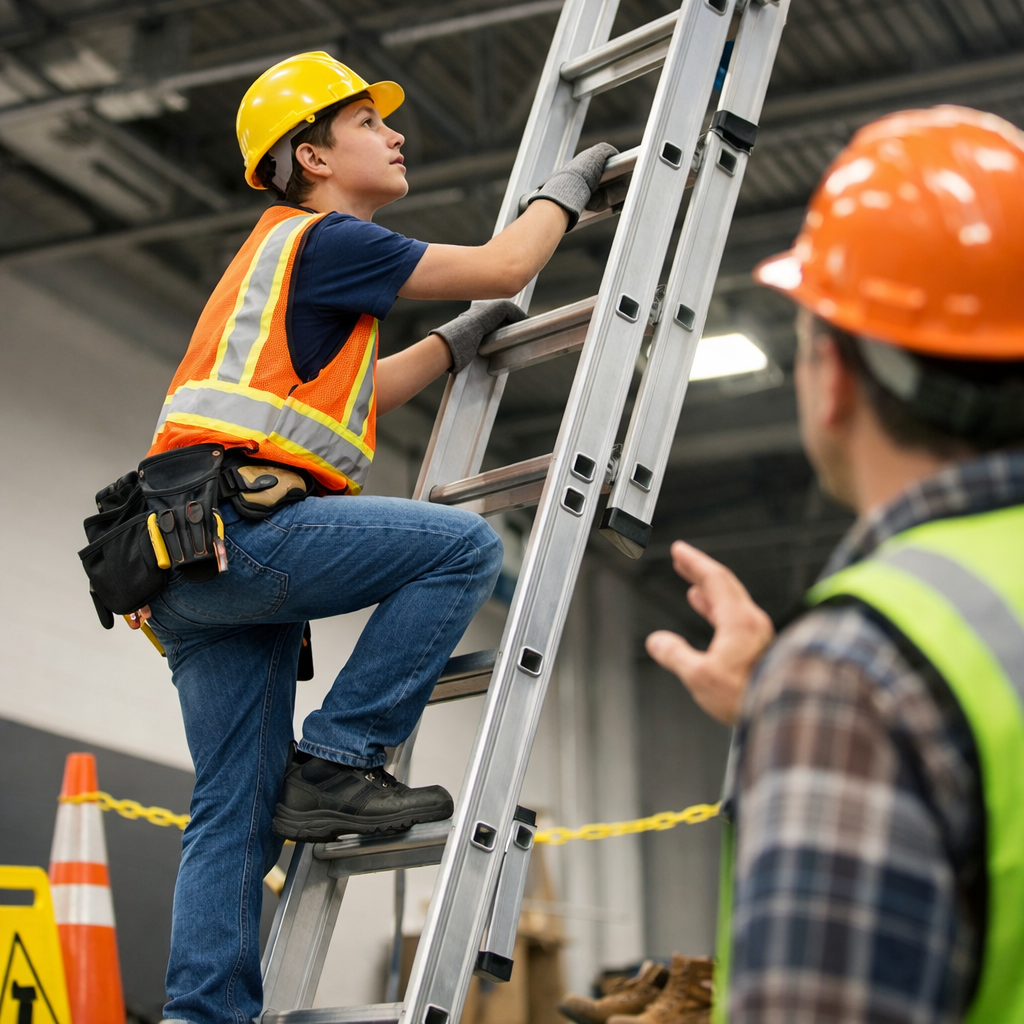
Use three points of contact
When climbing up or down, keep two hands and one foot, or two feet and one hand, in contact with the ladder whenever possible. Carrying items by hand reduces grip and balance. Use a tool belt, hoist, or have materials passed up safely if local procedures allow it.
Face the ladder and stay centred
Always climb while facing the ladder. Keep your body centred between the rails. Do not lean too far to either side. If something is out of reach, climb down and reposition the ladder. Overreaching is a major warning sign because it shifts balance and can cause the ladder to tip or slide.
Know where not to stand
Follow the manufacturer’s instructions and local workplace rules. As a general practice, avoid standing on the top step or top cap of a step ladder. Those areas are not meant for standing and can lead to loss of balance. Young workers should also avoid horseplay, sudden movements, or trying to descend too quickly.
Here is a simple reference table for safe habits:
| Situation | Safer choice | Avoid |
|---|---|---|
| Need more height | Get a taller, correct ladder | Standing on the top step or placing ladder on objects |
| Need to reach sideways | Climb down and reposition | Leaning beyond the rails |
| Carrying tools | Use a tool belt or safe hand-off | Climbing with full hands |
| Busy area | Control the space or wait for help | Setting up where others may strike the ladder |
Supervision, training, and a simple ladder safety for young workers checklist
Young workers should never guess
Safe ladder use depends on instruction, supervision, and a workplace culture that welcomes questions. If a student worker, co-op participant, or young employee has not been trained, they should stop and ask before climbing. Schools and employers should review site-specific procedures, ladder limits, reporting expectations, and who to contact if the task seems unsafe.
Parents and families can reinforce this message at home: if a young person does not feel sure, they should not proceed alone. The same principle applies to school maintenance activities, volunteer events, and part-time jobs. Follow local school, workplace, manufacturer, and emergency guidance where applicable.
Short actionable checklist
- Have I been shown how to use this ladder safely?
- Is this the right ladder for the task and height?
- Is the ladder in good condition?
- Is the ground firm, level, and clear?
- Can I keep three points of contact?
- Am I carrying anything that could affect balance?
- Can I do this task without overreaching?
- Is there a safer option than using a ladder?
- Do I need a supervisor, teacher, or experienced worker to help?
Ladder safety for young workers is about preparation, not confidence alone. The best habit is to slow down, assess the task, and speak up early. When young workers are trained, supervised, and encouraged to choose the safest method, ladder tasks become more controlled and far less likely to end in injury. For more prevention-focused guidance, consult CCOHS, Ontario resources, and practical workplace materials at OHSE.ca.