


Landscaping Equipment Safety: Essential OHSE Practices for Safer Outdoor Work


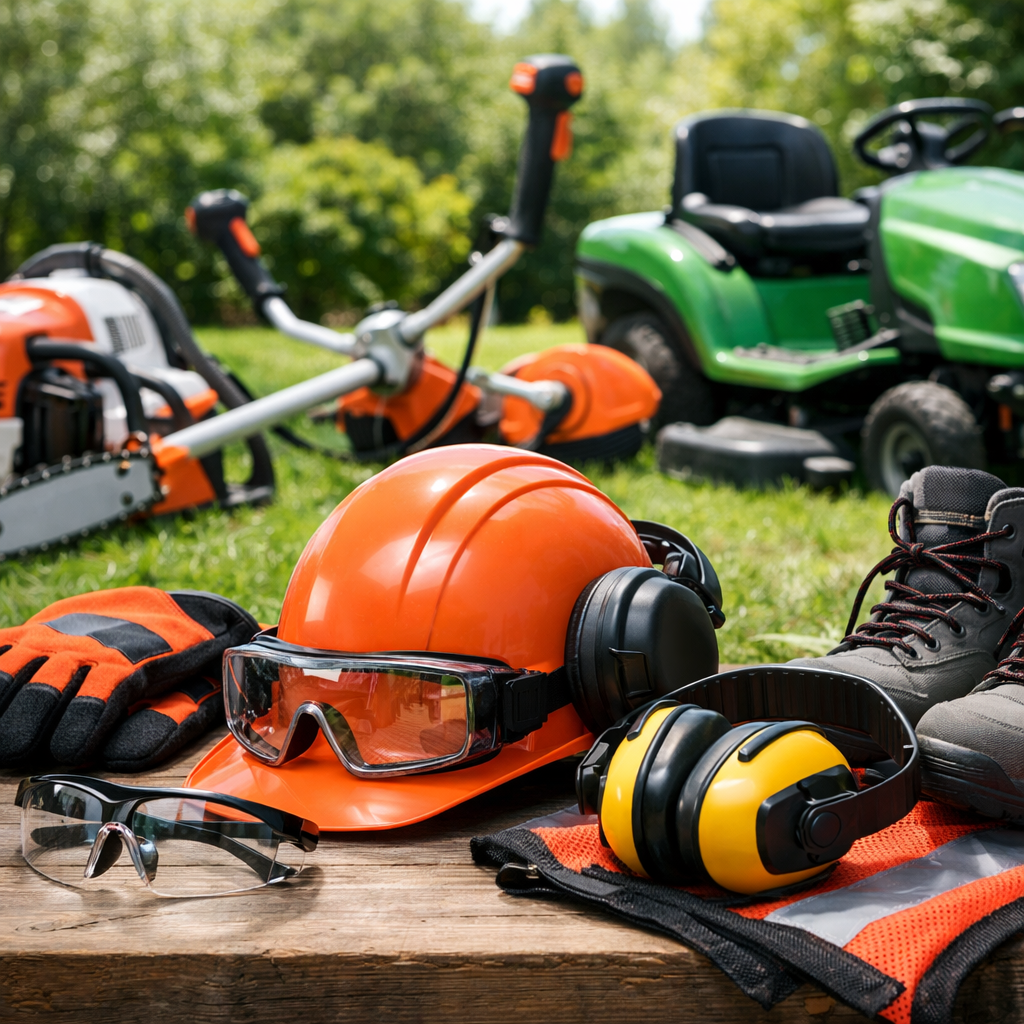
Landscaping equipment safety is a critical part of occupational health, safety, and environmental management for anyone working with mowers, trimmers, chainsaws, blowers, hedge cutters, compact loaders, and hand tools.
Whether the job involves maintaining a residential yard, a municipal park, or a commercial site, the risks can be serious if equipment is used incorrectly, poorly maintained, or operated without the right controls.
Landscaping teams often work in changing weather, on uneven ground, near traffic, around the public, and under time pressure. That combination increases the chance of cuts, eye injuries, hearing damage, strains, struck-by incidents, rollovers, slips, trips, and exposure to dust, fuel, vibration, and flying debris.
A strong approach to landscaping equipment safety goes beyond basic training. It includes hazard identification, the Hierarchy of Controls, proper personal protective equipment, machine guarding, safe fueling, maintenance checks, and clear compliance with OHSE requirements. Guidance from organizations such as OSHA and CCOHS supports employers in building safer systems of work that reduce injuries and improve daily operations.
Common Risks in Landscaping Equipment Safety
Most landscaping incidents happen during routine tasks, which is why familiar equipment should never be treated as low risk. Even a standard line trimmer can throw stones at high speed, while a ride-on mower can overturn on a slope or strike a hidden obstacle.
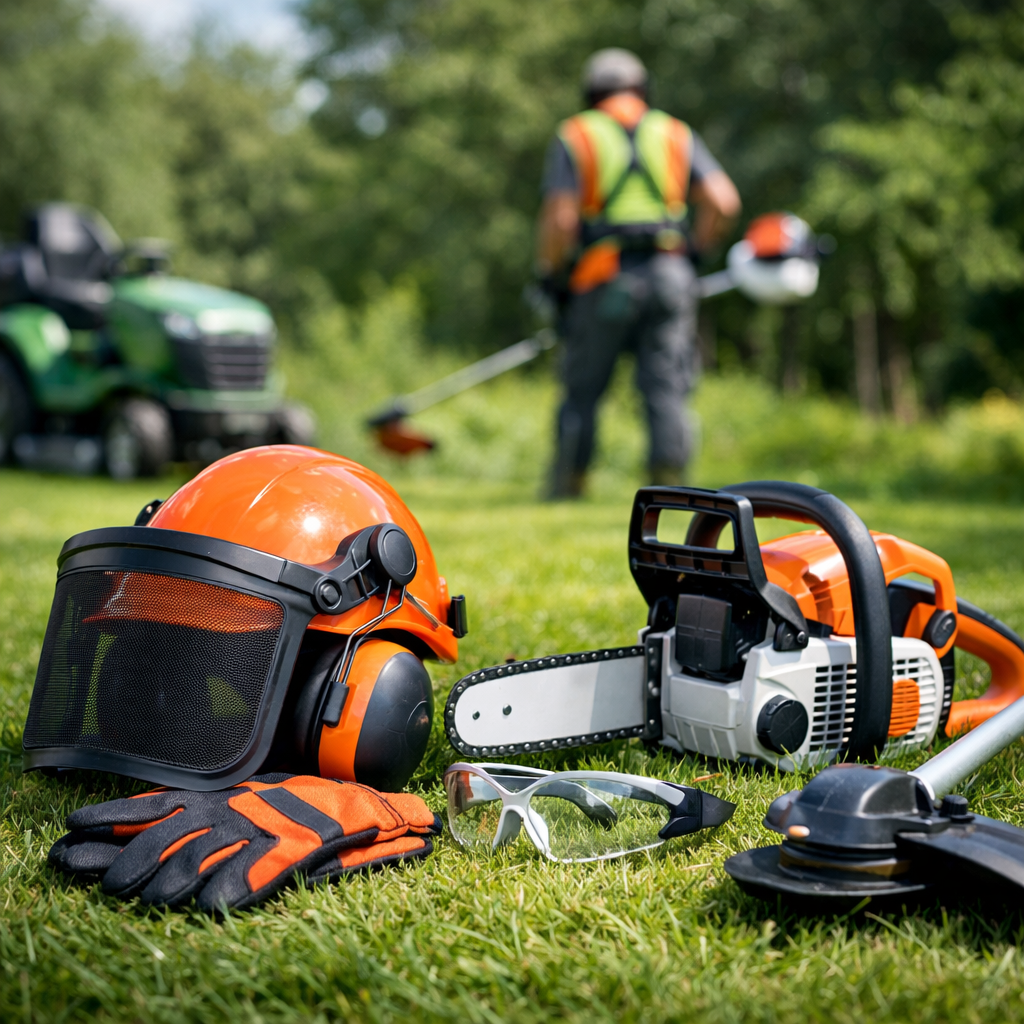
Understanding the main hazards is the first step in controlling them.
Physical and Mechanical Hazards
Blades, belts, chains, shafts, and moving parts can cause severe cuts, amputations, entanglement, or crush injuries. Guards removed for convenience create a major risk, especially during clearing jams or performing quick repairs.
Flying debris is another common hazard. Rocks, sticks, metal fragments, and broken tool parts can injure operators, coworkers, clients, or passersby.
Noise, Vibration, and Ergonomic Risks
Repeated use of blowers, hedge trimmers, and chainsaws can expose workers to high noise levels and hand-arm vibration. Over time, this may contribute to hearing loss, numbness, fatigue, and reduced grip strength.
Manual handling also matters. Lifting equipment in and out of trailers, carrying fuel, dragging hoses, or working in awkward postures can lead to back, shoulder, and knee injuries.
Environmental and Site Hazards
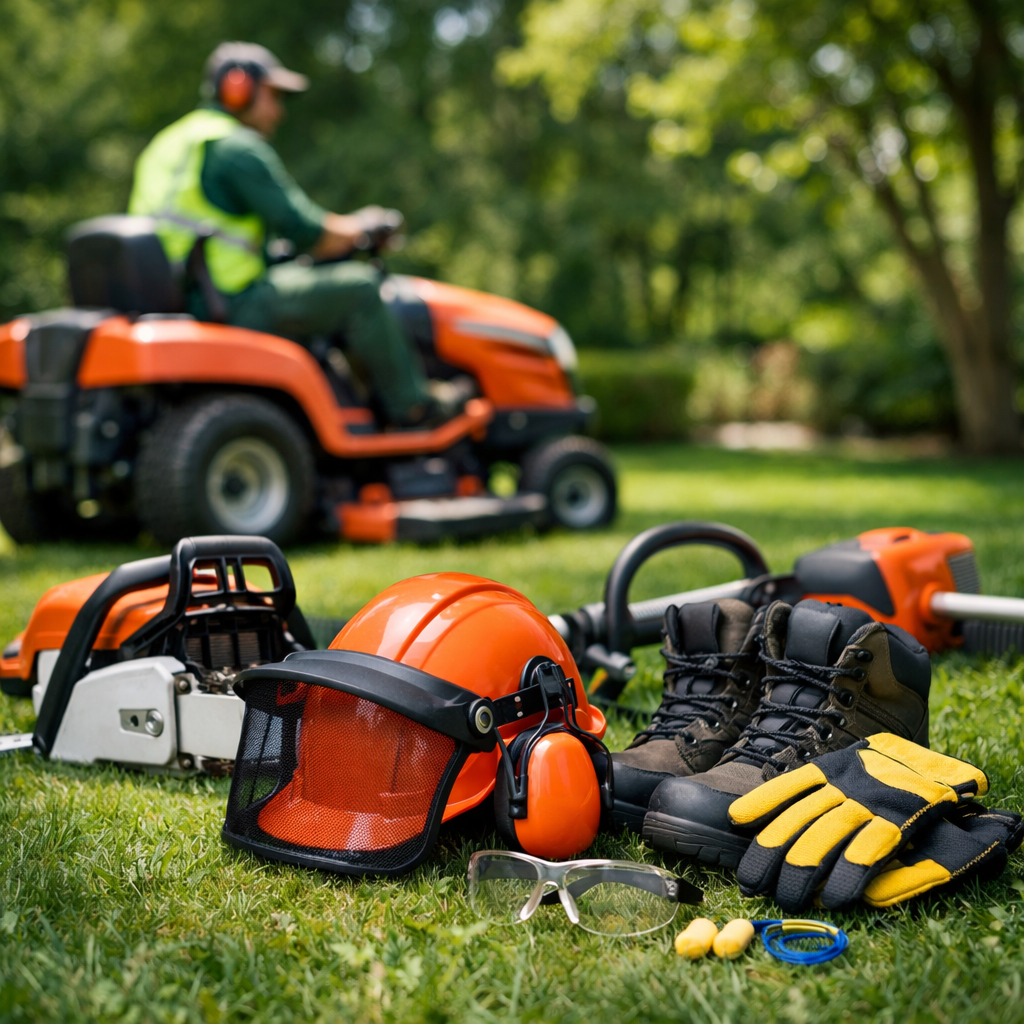
Outdoor work adds heat stress, UV exposure, rain, poor visibility, mud, and unstable ground. Operators may also encounter underground services, overhead power lines, insects, snakes, chemical residues, and traffic movement near roads or parking lots.
A simple mowing task can become high risk when it is done on a steep embankment, near pedestrians, or beside a public roadway.
Landscaping Equipment Safety Controls and Prevention Measures
Effective landscaping equipment safety depends on applying the Hierarchy of Controls. Personal protective equipment is important, but it should not be the first or only line of defense.
Apply the Hierarchy of Controls
- Elimination: Remove unnecessary tasks, such as trimming areas that can be redesigned with low-maintenance ground cover.
- Substitution: Use quieter or battery-powered equipment where suitable to reduce noise, vibration, and fuel exposure.
- Engineering controls: Fit guards, rollover protection systems, emergency shutoffs, anti-vibration handles, and debris shields.
- Administrative controls: Provide training, safe work procedures, traffic management plans, rest breaks, signage, and pre-start inspections.
- PPE: Use eye, hearing, hand, foot, respiratory, and head protection appropriate to the task.
Pre-Start Inspections and Safe Operation
Before any shift begins, equipment should be checked for leaks, dull blades, damaged cords, loose fasteners, worn guards, low tire pressure, and missing safety decals. Fuel caps, kill switches, harnesses, and braking systems should also be inspected.
Operators should only use equipment they are trained and authorized to handle. This is especially important for chainsaws, ride-on mowers, stump grinders, and compact machinery.
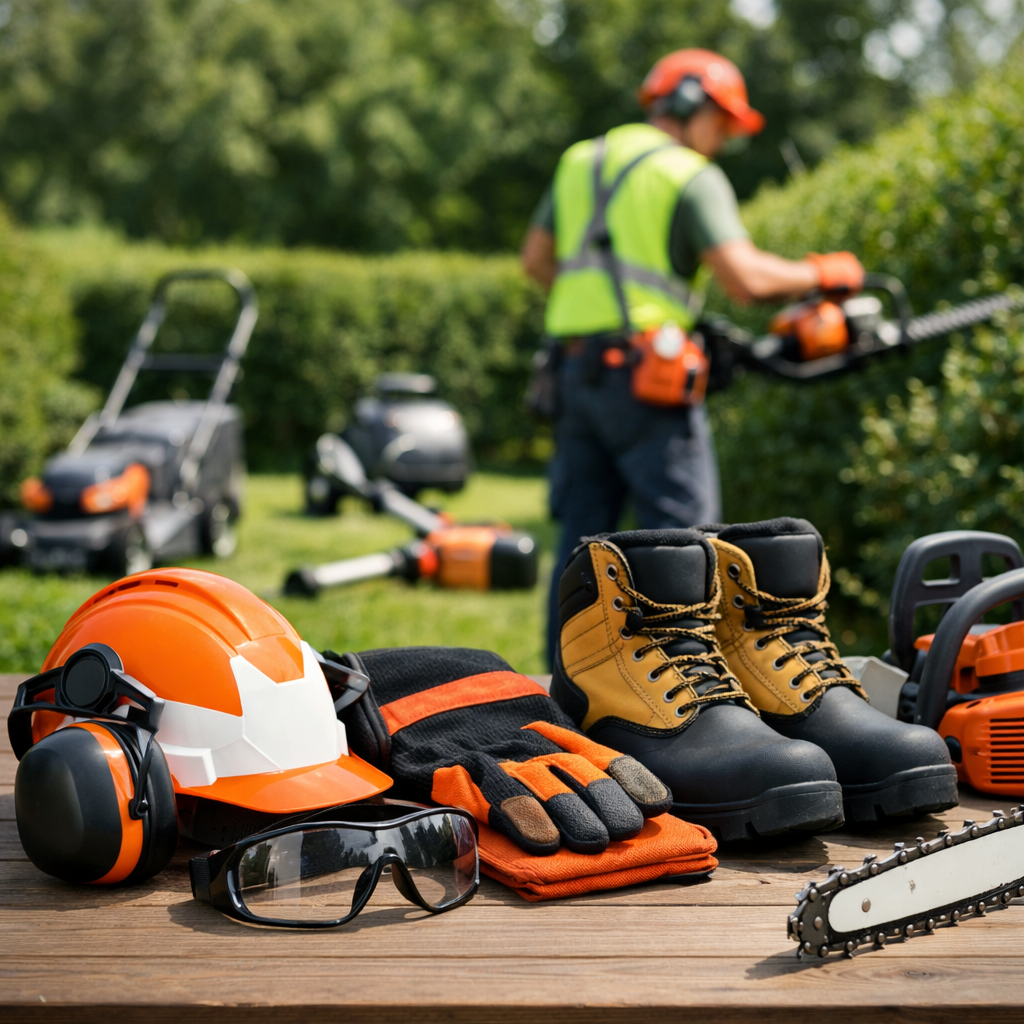
Practical controls include:
- Inspect the work area for rocks, branches, wire, toys, and hidden holes.
- Set exclusion zones around active equipment.
- Never refuel hot machinery.
- Shut down and isolate equipment before clearing blockages.
- Use three points of contact when mounting larger machines.
- Avoid operating ride-on equipment across steep slopes unless the manufacturer permits it.
- Secure tools and machinery properly during transport.
For broader site risk planning, teams may also benefit from reviewing internal resources such as workplace risk assessment and safe work procedures.
PPE for Landscaping Equipment Safety
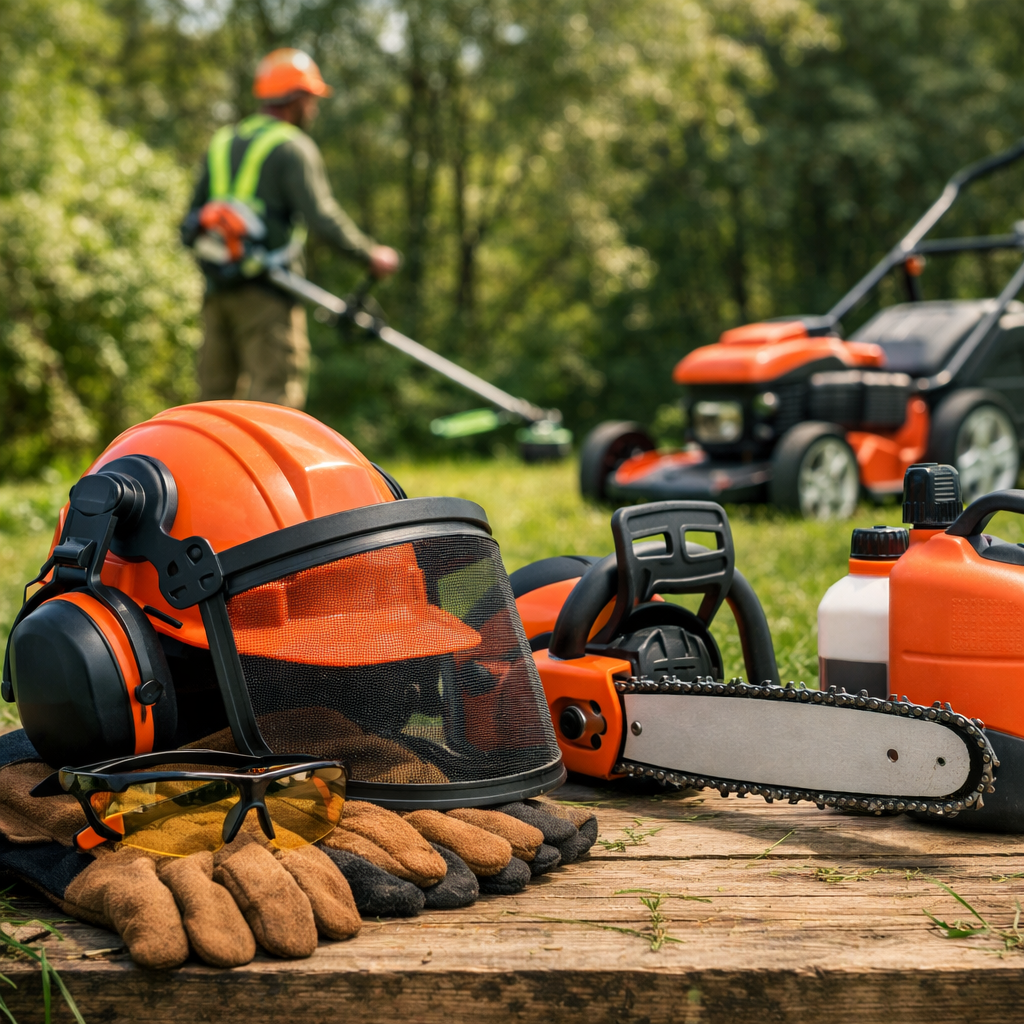
Choosing the right PPE is a core part of landscaping equipment safety, but it must match the hazard and the equipment being used. PPE should be well-fitted, maintained, and replaced when damaged.
Essential PPE by Task
| Task or Equipment | Main Hazards | Recommended PPE |
|---|---|---|
| Mowing and brush cutting | Flying debris, noise, foot injuries | Safety glasses or face shield, hearing protection, long pants, gloves, steel-toe boots |
| Chainsaw use | Cuts, kickback, noise, debris | Helmet, face protection, hearing protection, chainsaw chaps, gloves, cut-resistant boots |
| Leaf blowing and dusty cleanup | Dust inhalation, eye injury, noise | Safety glasses, hearing protection, dust mask or respirator as required, gloves, sturdy footwear |
| Fuel handling and maintenance | Chemical exposure, burns, hand injury | Chemical-resistant gloves, eye protection, protective clothing |
High-visibility clothing may also be necessary when working near vehicles, public roads, or shared accessways. In hot conditions, breathable protective clothing and hydration planning are equally important.
Workers should be trained not only to wear PPE, but to understand its limits. For example, hearing protection reduces noise exposure, but it does not remove the need for quieter equipment or shorter exposure times.
Training, Compliance, and Practical Workplace Examples
Compliance is a major OHSE responsibility in landscaping operations. Employers must provide safe equipment, information, training, supervision, and maintenance systems that meet applicable legal requirements. Workers must follow procedures, use protective equipment correctly, and report defects or hazards promptly.
Standards and guidance from OSHA’s lawn and landscape resources and CCOHS can help organizations strengthen policies, inspections, and incident prevention programs.
Key Compliance Priorities
- Document equipment-specific training and competency.
- Maintain inspection and servicing records.
- Use manufacturer instructions for operation and maintenance.
- Control hazardous substances such as fuel, oils, and pesticides.
- Report and investigate near misses, injuries, and equipment failures.
- Review emergency response plans for fires, injuries, traffic incidents, and severe weather.
Practical Examples of Landscaping Equipment Safety
A crew arrives at a commercial property to mow, edge, and blow pathways before opening hours. During the pre-start inspection, one worker notices that the mower discharge guard is damaged. Instead of continuing, the supervisor tags the equipment out of service and reassigns the task to another machine. That simple control prevents potential debris strike injuries and shows how maintenance supports landscaping equipment safety.
In another example, a worker is scheduled to trim a sloped drainage area using a ride-on mower. The risk assessment identifies rollover potential due to soft ground and gradient. The team changes the method by using a remote or handheld solution from a safer position, with barricades to keep people away. This is a practical use of the Hierarchy of Controls, where the safer method is selected before relying on PPE alone.
Consider also a leaf-blower task in a busy pedestrian zone. Without controls, dust and small stones could affect both workers and the public. A better system includes early scheduling, temporary exclusion zones, eye and hearing protection, dust control awareness, and a lower-noise battery blower where feasible.
Landscaping equipment safety should be treated as an everyday operational priority, not a paperwork exercise. The safest landscaping businesses build routines around inspections, training, housekeeping, hazard reporting, and equipment maintenance. When risks are identified early, controls are applied properly, and workers understand both the hazards and the safe methods, the result is a healthier workplace, stronger compliance, and fewer preventable injuries. In short, good landscaping equipment safety protects workers, clients, the public, and the long-term success of the business.