

Chemical spills, whether in an industrial setting, laboratory, or even a household, pose significant risks to health, safety, and the environment. Properly managing these incidents is critical to minimizing harm and preventing long-term consequences.

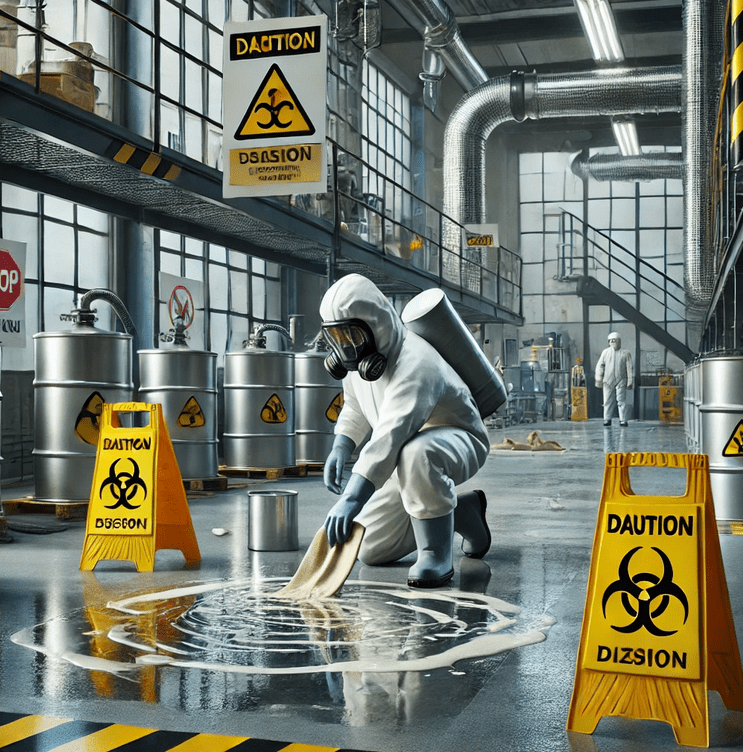
This article provides a comprehensive guide on how to handle chemical spills effectively, with a focus on risk assessment, response procedures, and preventive strategies.
1. Understanding the Risks of Chemical Spills
Immediate Hazards
- Health Risks: Skin burns, respiratory distress, eye irritation, or poisoning due to direct contact or inhalation.
- Fire and Explosion: Flammable chemicals can ignite, posing risks to life and property.
- Environmental Damage: Spills can contaminate soil, water bodies, and ecosystems if not contained promptly.
Long-Term Effects
- Chronic exposure to certain chemicals can lead to diseases, including respiratory issues and cancers.
- Persistent chemicals can cause lasting environmental damage, affecting wildlife and natural resources.
2. Steps to Respond to a Chemical Spill
A. Assess the Situation
- Identify the chemical involved by checking labels, Safety Data Sheets (SDS), or other documentation.
- Determine the scale of the spill—small spills can often be handled internally, while large spills may require external intervention.
B. Evacuate the Area
- If the spill involves hazardous fumes or fire risk, evacuate all personnel from the area.
- Use signage or barriers to restrict access to the affected area.
C. Notify Appropriate Authorities
- Inform your supervisor or safety officer immediately.
- For larger spills, contact emergency services or hazardous material response teams.
D. Contain the Spill
- Use spill containment materials like absorbent pads, sand, or booms to prevent the spread.
- Ensure proper ventilation if dealing with airborne hazards.
E. Clean Up and Decontaminate
- Use the recommended cleaning agents and follow SDS instructions.
- Dispose of contaminated materials in accordance with local environmental regulations.
3. Tools and Equipment for Spill Management
| Tool/Equipment | Purpose |
|---|---|
| Absorbent Materials | For soaking up liquid spills. |
| Neutralizing Agents | For neutralizing acids or bases. |
| Spill Containment Kits | Pre-assembled kits with essential tools for spill control. |
| PPE (Gloves, Masks, Goggles) | Protects responders from direct exposure to chemicals. |
| Ventilation Systems | Removes hazardous fumes from the spill area. |
4. Creating a Spill Response Plan
A. Develop a Protocol
- Outline step-by-step procedures for handling spills of various chemicals.
- Include emergency contact numbers and evacuation routes.
B. Train Employees
- Conduct regular training sessions to ensure everyone knows how to respond to spills.
- Include hands-on practice with spill kits and containment measures.
C. Perform Risk Assessments
- Identify high-risk areas where spills are more likely to occur.
- Evaluate the quantity and type of chemicals stored on-site.
D. Maintain Emergency Equipment
- Regularly inspect and restock spill kits and personal protective equipment (PPE).
- Ensure all safety devices, like eyewash stations, are in working condition.
5. Prevention Strategies
A. Proper Storage
- Store chemicals in clearly labeled containers designed for the substance.
- Segregate incompatible chemicals to prevent dangerous reactions.
B. Secondary Containment
- Use trays, bunds, or other containment systems to capture potential leaks or spills.
- Regularly inspect containment areas for cracks or damage.
C. Minimize Inventory
- Avoid overstocking chemicals, especially those that are hazardous or reactive.
- Implement a “first-in, first-out” policy to prevent expired or degraded chemicals.
D. Regular Inspections
- Perform routine checks of storage areas, handling equipment, and safety systems.
- Address any leaks, corrosion, or damage immediately.
6. Regulatory Compliance and Reporting
- OSHA Standards: Ensure compliance with OSHA’s Hazard Communication and Spill Prevention requirements.
- EPA Regulations: Follow Environmental Protection Agency guidelines for spill reporting and cleanup.
- Local Laws: Adhere to municipal or state-specific regulations regarding chemical handling and disposal.
7. Case Study: Lessons Learned from a Spill Incident
Scenario:
A manufacturing plant experienced a spill of a corrosive chemical due to improper storage. The spill caused injuries to two workers and required environmental remediation.
Key Issues Identified:
- Lack of secondary containment.
- Inadequate employee training.
- Insufficient PPE availability.
Corrective Actions:
- Installed proper containment systems.
- Enhanced training programs with regular drills.
- Restocked and upgraded PPE for high-risk areas.
8. Conclusion
Chemical spills can escalate quickly, but with proper preparation, response, and prevention strategies, their impact can be significantly minimized. A robust spill response plan, coupled with effective training and adherence to safety standards, ensures the safety of workers, the environment, and the organization. Remember, safety isn’t just a protocol—it’s a responsibility shared by all.