 Skip to content

Manhole smoke testing safety is a critical topic for any municipality, utility, or contractor using smoke to identify leaks and cross-connections in sewer or stormwater systems.
While the white “smoke” used is typically non-toxic, the work happens around live traffic, underground utilities, and sometimes inside confined spaces.
Without proper planning and controls, a simple test can quickly turn into an incident that affects workers, nearby businesses, and the public.
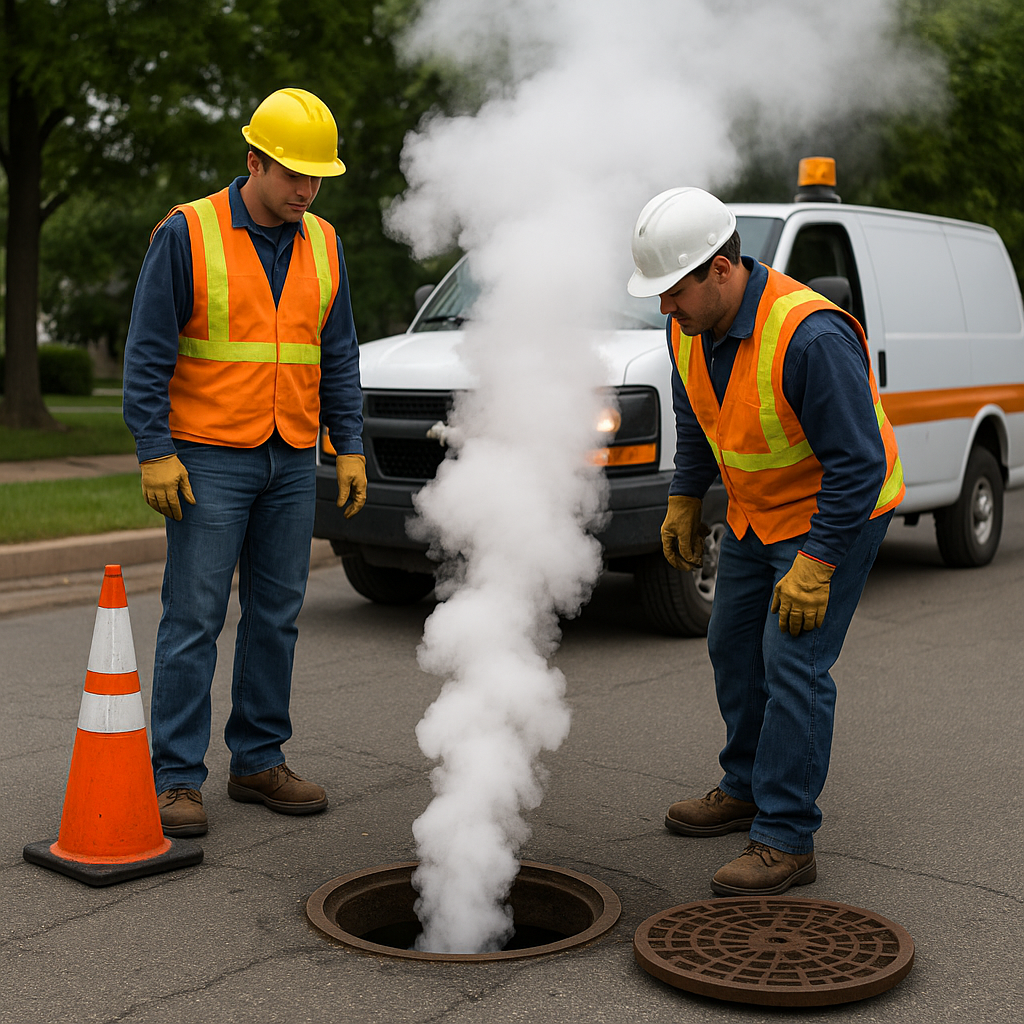
This type of testing is often misunderstood by the community. People may see smoke coming out of manholes, street drains, or even building vents and assume there is a fire or hazardous release.
A strong occupational health, safety, and environment (OHSE) approach to manhole smoke testing safety not only protects workers doing the job, but also reduces confusion, complaints, and unnecessary emergency responses.
- What is manhole smoke testing safety really about?
- Key hazards during manhole smoke testing safety operations
- Planning and communication for manhole smoke testing safety
- Worker protection in manhole smoke testing safety
- Protecting the public and environment during manhole smoke testing safety
- Incident response and continuous improvement
- Practical checklist for manhole smoke testing safety
- Bringing it all together
What is manhole smoke testing safety really about?
At a technical level, smoke testing involves blowing visible vapor into the sewer or storm system so crews can see where it escapes. It helps identify cracked pipes, open joints, missing clean-out caps, or illegal connections to the wrong system.
From an OHSE perspective, manhole smoke testing safety is about controlling exposures created by that process: moving vehicles, slips and trips around open covers, potential sewer gases, and public interaction.
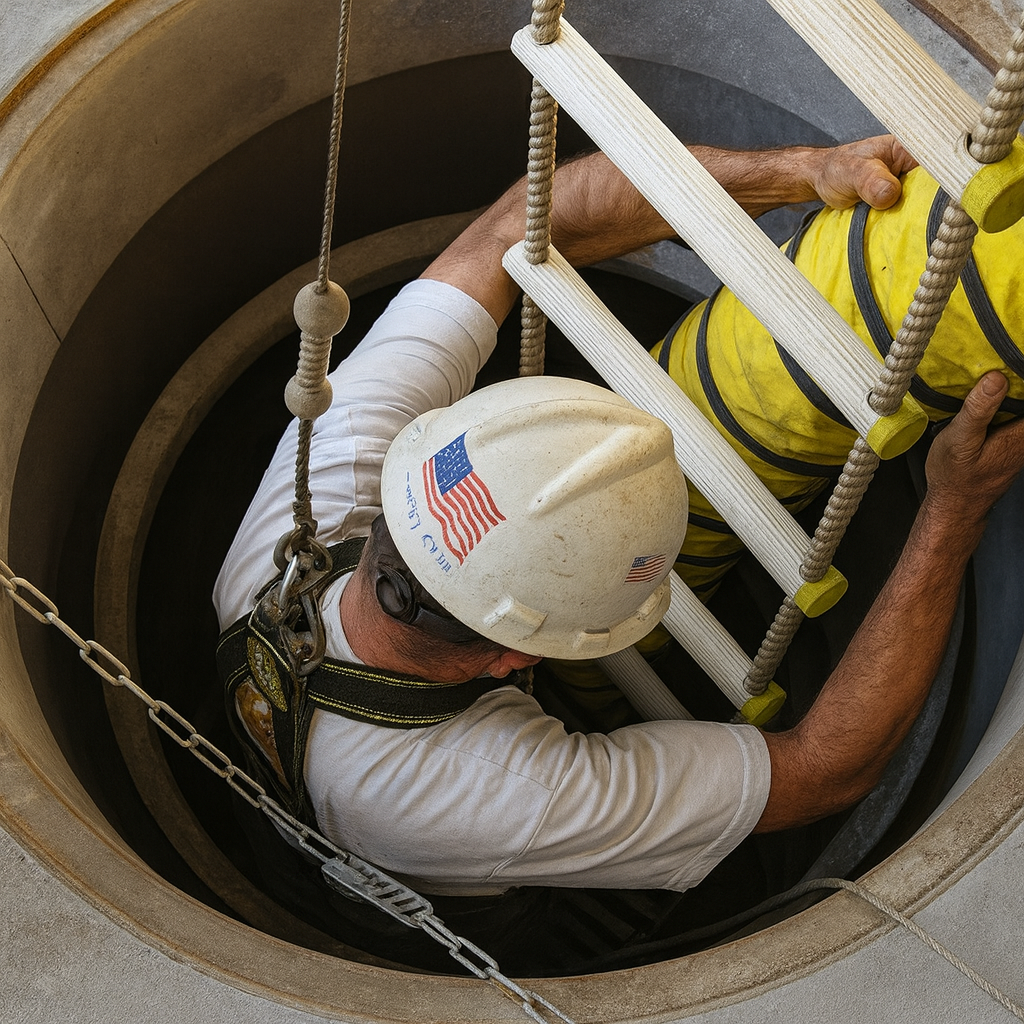
A good safety program ensures that workers understand both the purpose of the testing and the specific hazards on each site. This includes clear procedures, checklists, and training that align with your local regulations (for example, occupational health and safety laws and confined space standards).
Many organizations also integrate smoke testing into their broader sewer inspection and maintenance programs for better consistency and control.
Key hazards during manhole smoke testing safety operations
Several predictable hazards show up on nearly every job, and they should be addressed in your job hazard analysis or field-level risk assessment:
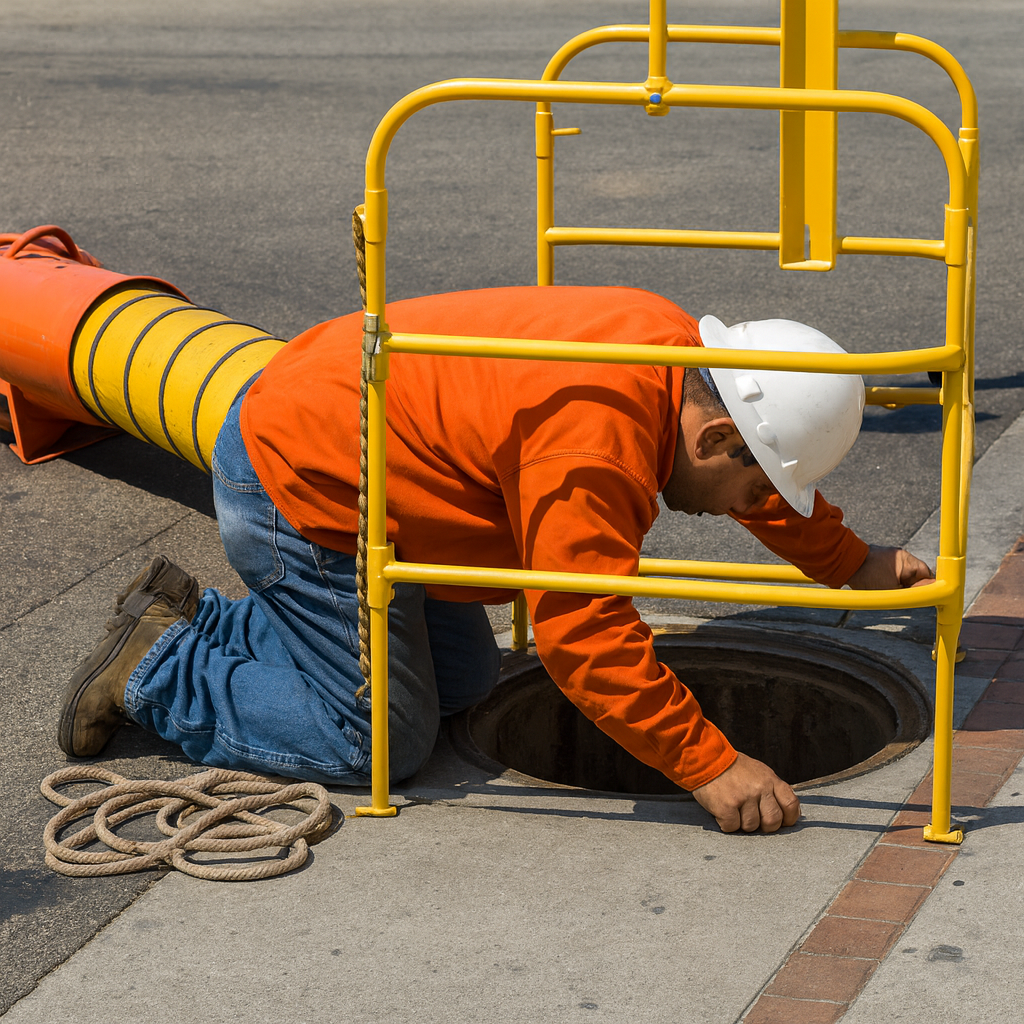
- Traffic and mobile equipment – Crews often work in or beside active roadways. Without proper traffic control, workers can be struck by vehicles, including their own work trucks.
- Open manholes and trip hazards – Lids removed for access create fall hazards for workers and the public. Hoses, cables, and equipment on the ground add trip risks.
- Sewer gases and oxygen deficiency – While the test “smoke” is usually non-toxic, the underlying sewer atmosphere can still contain hydrogen sulfide, methane, or low oxygen levels.
- Confined space entry – Entering a manhole or vault to connect equipment or investigate a problem often meets the definition of a confined space, with all associated entry requirements.
- Public alarm and complaints – Smoke appearing around homes, buildings, or yards may trigger emergency calls, complaints, or confrontations if people aren’t informed.
Recognizing these hazards is the first step in effective manhole smoke testing safety. The second step is to apply the hierarchy of controls: eliminate unnecessary entries, use engineering controls like barriers and ventilation, and support them with administrative controls and personal protective equipment (PPE).
Planning and communication for manhole smoke testing safety
Planning makes the difference between a smooth test and a chaotic day. Before mobilizing, supervisors should review maps, traffic conditions, nearby sensitive sites (schools, hospitals, long-term care), and weather forecasts. Rain or high winds can reduce the effectiveness of the test and complicate safety.
Public communication is a core part of manhole smoke testing safety:
- Send advance notices to residents and businesses in the affected area, explaining what smoke testing is, when it will occur, and who to contact with questions.
- Coordinate with local fire services and emergency dispatch so they know smoke sightings may be related to testing, not a fire.
- Post information on your organization’s website and social media, and consider linking to recognized resources such as the Canadian Centre for Occupational Health and Safety or similar national OH&S bodies.
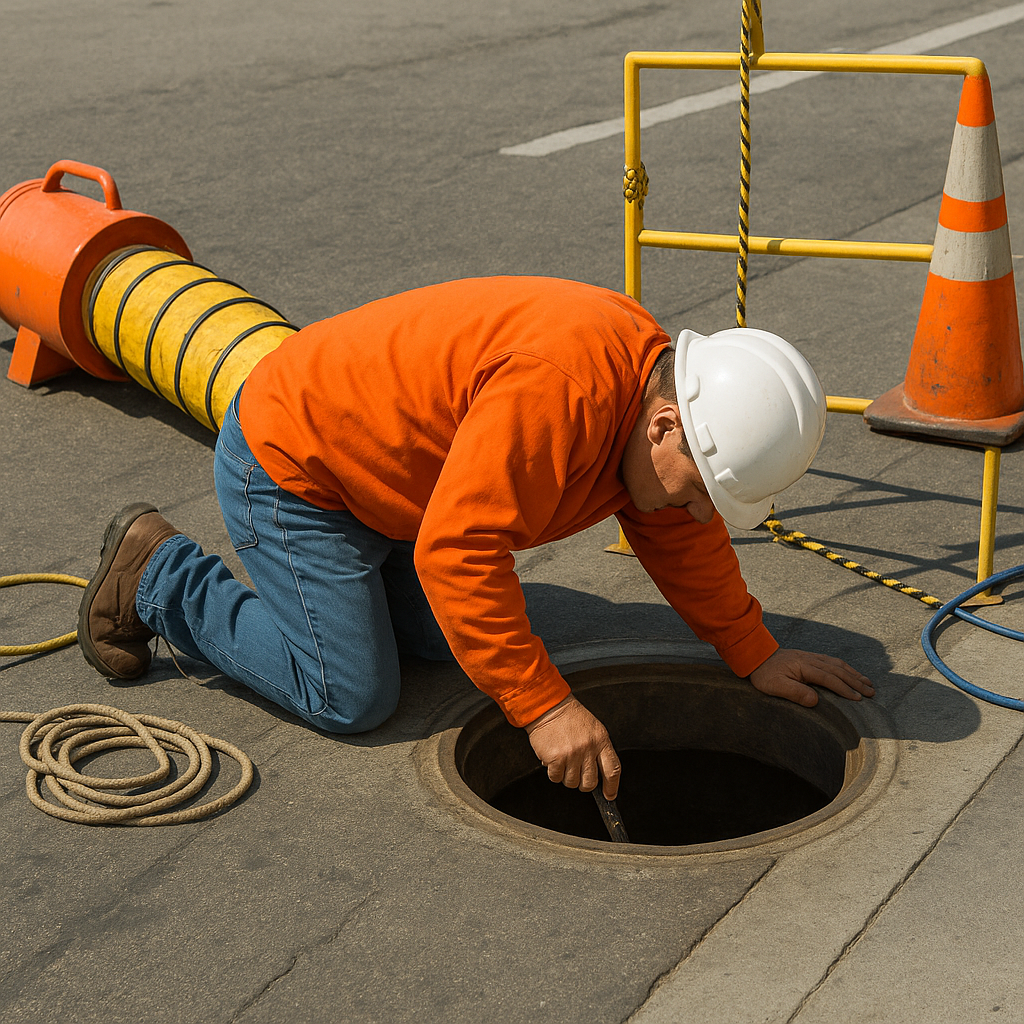
On your own site, you can link from the project notice to supporting pages like your public sewer safety FAQ or odor and smoke complaint form, which strengthens both communication and internal linking for your OHSE content.
Worker protection in manhole smoke testing safety
Protecting workers is central to manhole smoke testing safety and should be addressed through training, procedures, and equipment.
Training and procedures
Workers should be trained to:
- Understand how the smoke generator works and how to position hoses safely.
- Recognize signs of dangerous sewer atmospheres (for example, strong rotten-egg odor suggesting hydrogen sulfide).
- Follow confined space entry procedures whenever entering manholes, including testing the atmosphere and using permits where required.
- Set up and follow traffic control plans consistent with local road authority or transportation standards.
Written procedures should reference credible OH&S guidance from agencies like OSHA or your national regulator, and you can reinforce these by linking to your internal confined space entry program and traffic control procedure pages.
Personal protective equipment (PPE)
Typical PPE for manhole smoke testing safety includes:
- High-visibility garments appropriate for the traffic zone
- Safety boots with good traction
- Gloves suited to handling manhole covers and equipment
- Hard hats and eye protection where overhead or impact hazards exist
- Respiratory protection if workers may be exposed to sewer gases or if the smoke concentration is high in a confined area
PPE should never be the only control; it is part of a layered protection strategy that starts with sound planning and engineering controls.
Protecting the public and environment during manhole smoke testing safety
The goal of manhole smoke testing safety is to improve environmental performance by finding leaks, not to create new problems.
In most cases, the test smoke is designed to be non-staining and non-toxic. However, you still need controls around where and how it is released.
Good practice includes:
- Keeping smoke generators away from air intakes or building entrances where large plumes could enter occupied spaces.
- Monitoring for smoke inside nearby buildings when testing in dense urban areas, and having a plan to assist occupants if smoke appears indoors.
- Ensuring manhole covers and areas around them are restored to a safe condition once testing is complete—no missing lids, debris, or abandoned equipment.
From an OHSE and environmental perspective, smoke testing is a proactive tool: it helps reduce infiltration, exfiltration, and sewer overflows that can contaminate local waterways.
Linking smoke testing results to your environmental management program shows stakeholders that safety and environmental protection go hand-in-hand.
Incident response and continuous improvement
Even with strong controls, things can go wrong: a vehicle may ignore traffic signs, a member of the public may become upset, or smoke may unexpectedly enter a building. Manhole smoke testing safety planning should therefore include a clear incident response process:
- Workers know who to contact (supervisor, safety, emergency services) and in what order.
- Any medical symptoms (such as breathing difficulty) are treated seriously and escalated promptly.
- Near misses, complaints, and unusual smoke behavior are recorded and reviewed after the job.
After each project, supervisors and crews should debrief: what worked well, what caused delays, and how can manhole smoke testing safety be improved next time?
Adjust your procedures, training, and public communications based on real field experience. Over time, this continuous improvement approach builds a stronger safety culture and better technical results.
Practical checklist for manhole smoke testing safety
Before starting each day’s work, a short checklist helps confirm that controls are in place:
- Work area and manholes identified, with up-to-date maps reviewed
- Traffic control devices available and set up according to plan
- Communication with residents, businesses, and emergency services completed
- Atmospheric testing and confined space entry equipment in good working order
- Workers trained and briefed on the day’s hazards and controls
- Emergency contact numbers and reporting forms readily available
Supervisors can adapt this checklist into a printable field form and link it from your supervisor tools page so it’s easy for crews to access on tablets or phones.
Bringing it all together
When done thoughtfully, manhole smoke testing is not just an engineering diagnostic—it is a powerful example of how safety, operations, and environmental protection fit together.
Clear planning, effective traffic control, robust confined space procedures, and proactive communication with the public all contribute to manhole smoke testing safety.
By integrating these elements into your OHSE management system, documenting lessons learned, and reinforcing training, you reduce risk and build trust with both workers and the community.
In the end, strong manhole smoke testing safety protects people on the surface, workers underground, and the environment that depends on reliable sewer and stormwater systems.
No comments yet