


- Office Equipment Safety Guidelines: Practical OHSE Measures for a Safer Workplace
- Why Office Equipment Safety Guidelines Matter
- Key Risks and Practical Prevention Measures
- Applying the Hierarchy of Controls to Office Equipment Safety Guidelines
- PPE, Training, Compliance, and Daily Safe Work Practices
Office Equipment Safety Guidelines: Practical OHSE Measures for a Safer Workplace


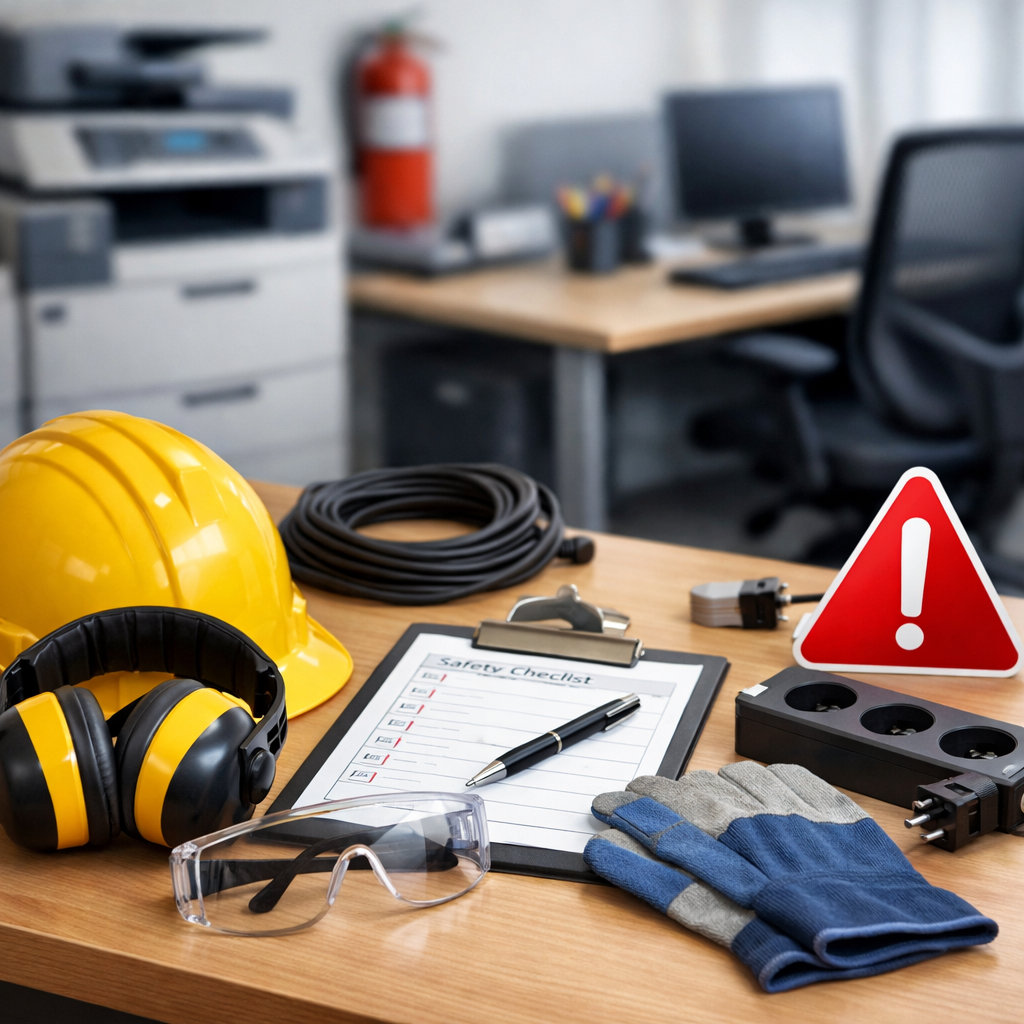
Office equipment safety guidelines are essential for reducing workplace injuries, preventing equipment damage, and supporting a healthy, productive environment.
Even in low-risk office settings, poorly maintained equipment, unsafe work habits, and inadequate training can lead to electric shock, strains, trips, burns, and fire hazards.
From computers and photocopiers to shredders, kettles, and extension cords, office equipment is used every day and often taken for granted. That is why employers and workers should apply clear safety procedures, regular inspections, and practical control measures that align with OHSE expectations.
Strong office safety programs also support legal compliance and due diligence. Guidance from organizations such as OSHA and the CCOHS emphasizes hazard identification, training, maintenance, and ergonomic design as key parts of a safe office environment.
If your business is reviewing its broader workplace safety checklist or updating an office risk assessment, office equipment controls should be a priority area.
Why Office Equipment Safety Guidelines Matter
Office environments may seem safer than industrial sites, but they still contain real hazards. Electrical devices, moving parts, hot surfaces, awkward postures, overloaded power boards, and cluttered walkways can all contribute to incidents.
Many office injuries develop gradually rather than through dramatic accidents. Repetitive keyboard use, poor monitor height, awkward reaching for printers, or lifting heavy paper boxes can result in musculoskeletal disorders over time.
Common risks linked to office equipment include:
- Electrical shock from damaged cords, exposed wiring, or faulty appliances
- Fire risks from overloaded outlets, overheating equipment, or poor housekeeping
- Manual handling injuries when moving printers, monitors, or storage boxes
- Cuts or pinch injuries from shredders, guillotines, staplers, and drawers
- Burns from kettles, coffee machines, laminators, or overheated devices
- Trips and falls caused by trailing cables, poorly placed equipment, or clutter
- Eye strain, neck pain, and back discomfort from poor workstation setup
These hazards affect not only employees but also contractors, visitors, and cleaning staff. A printer placed in a narrow corridor, for example, can create congestion and a trip hazard. A frayed power lead in a shared area can expose anyone nearby to electrical risk.
Effective office equipment safety guidelines help organizations move from reactive incident response to proactive prevention. They set expectations for how equipment should be selected, used, maintained, and reported when faulty.
Key Risks and Practical Prevention Measures
Electrical Safety and Fire Prevention
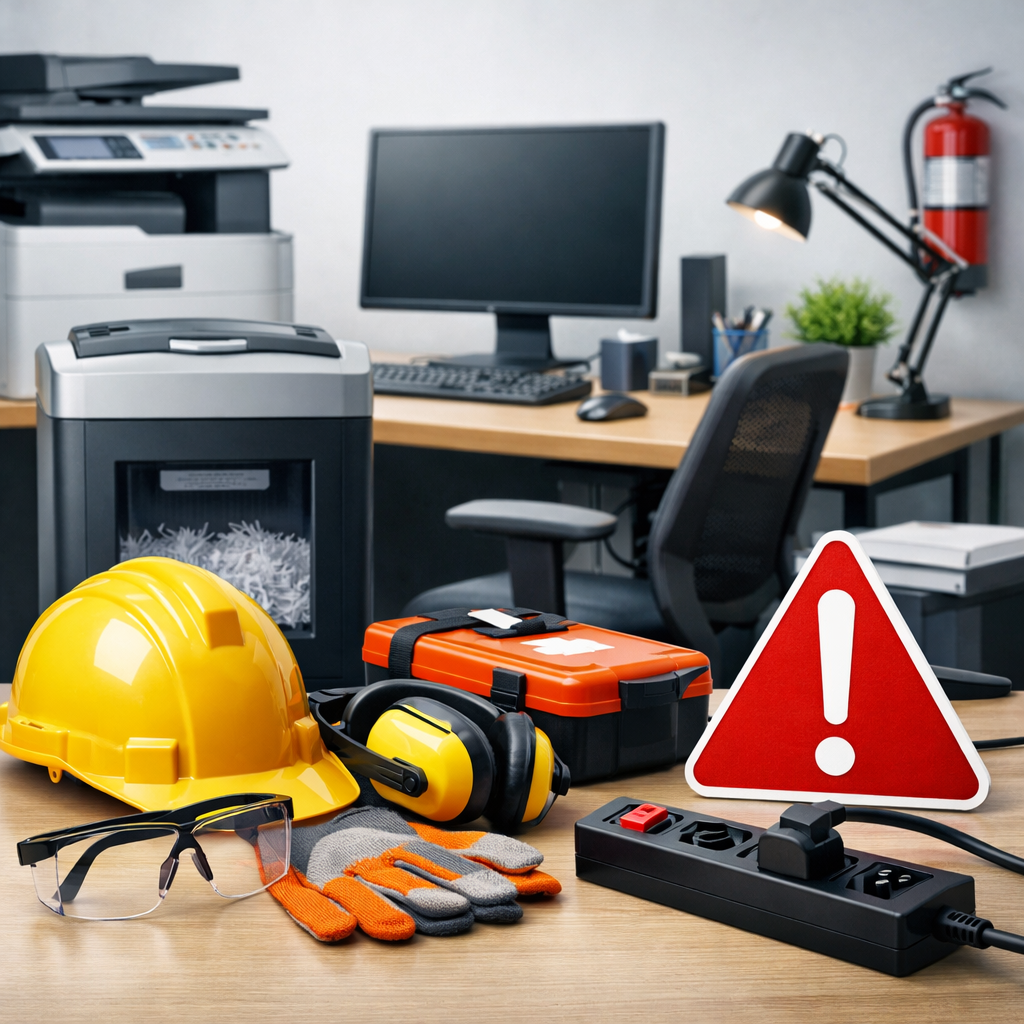
Electrical safety is one of the most important parts of office equipment control. Computers, monitors, chargers, portable heaters, microwaves, and multi-plug adapters can all become hazardous if used incorrectly.
Basic prevention measures include inspecting cords for wear, keeping liquids away from electrical devices, avoiding daisy-chaining power boards, and ensuring equipment has proper ventilation. Damaged equipment should be tagged out and removed from use immediately.
A practical example is a shared workstation where employees plug multiple devices into one extension board. Over time, the board overheats under constant load. A simple control measure is to install sufficient fixed outlets and prohibit unsafe adapter use through policy and training.
Ergonomics and Repetitive Strain Prevention
Computers, keyboards, mice, and office chairs are used for long periods, making ergonomics a core OHSE issue. Poor workstation design can lead to neck pain, shoulder tension, wrist discomfort, headaches, and fatigue.
Monitors should be positioned at a comfortable height, keyboards should allow neutral wrist posture, and chairs should support the lower back. Frequently used items should be easy to reach without twisting or overextending.
For example, an employee who works on a laptop all day without a riser or external keyboard may develop upper back strain. A laptop stand, separate keyboard, and adjustable chair are low-cost controls that can significantly reduce risk.
Manual Handling and Moving Equipment Safely
Office equipment is often heavier than expected. Photocopiers, boxes of paper, archive files, and desktop monitors can cause sprains and strains when lifted or moved incorrectly.
Workers should assess loads before lifting, use trolleys where possible, keep pathways clear, and ask for assistance with bulky items. Storage should also be arranged so heavier objects are placed between knee and shoulder height.
A practical example is relocating a printer from one room to another. Instead of one employee dragging it across the floor, the safer option is using a trolley, checking the route for obstacles, and assigning two trained workers if needed.
Applying the Hierarchy of Controls to Office Equipment Safety Guidelines
The Hierarchy of Controls is a proven OHSE method for reducing risk. It applies just as well in offices as it does in warehouses or workshops.
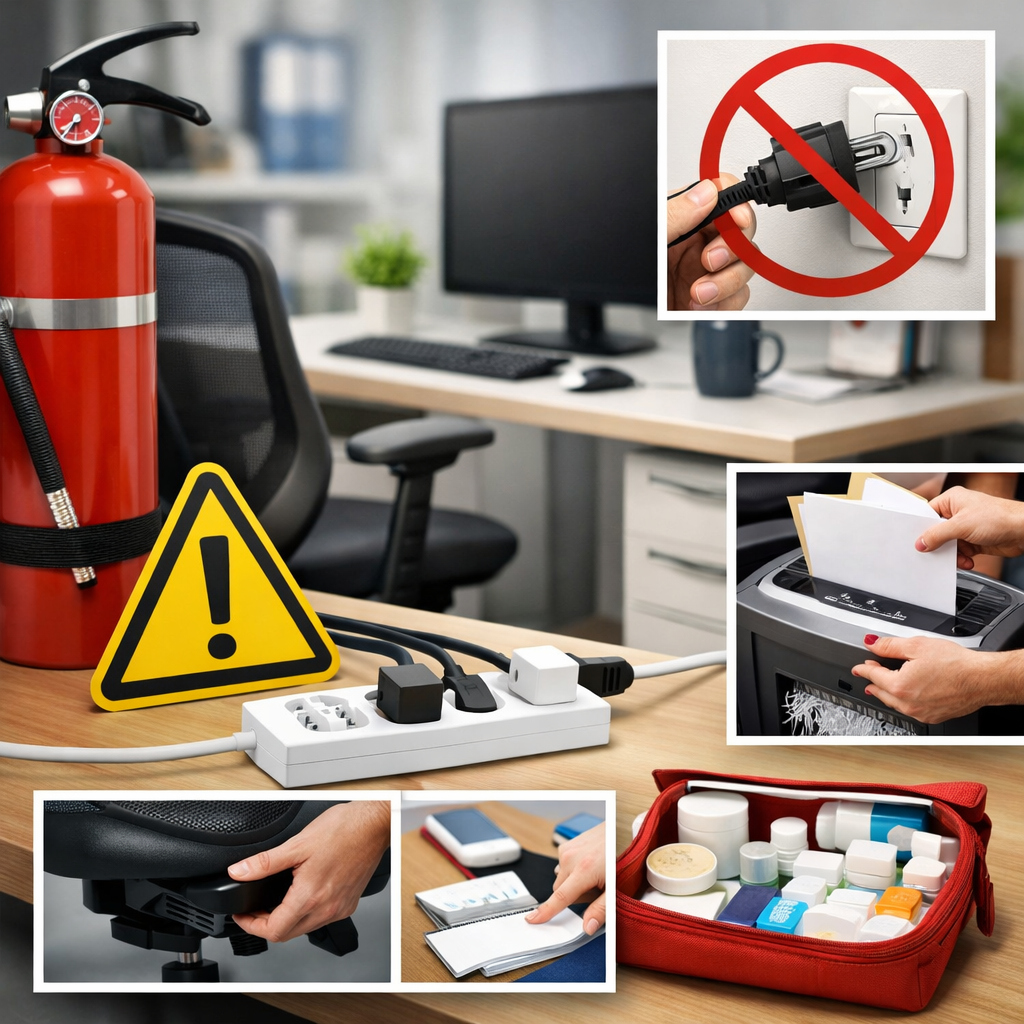
Using the hierarchy helps employers choose stronger, more reliable controls instead of relying only on worker caution.
| Hierarchy Level | Office Example | Practical Benefit |
|---|---|---|
| Elimination | Remove unnecessary extension cords from walkways | Eliminates trip and electrical hazards |
| Substitution | Replace unstable equipment with safer models | Reduces design-related risk |
| Engineering Controls | Install cable trays, surge protection, and ergonomic desks | Creates a safer physical environment |
| Administrative Controls | Training, inspections, reporting systems, safe-use procedures | Improves awareness and consistency |
| PPE | Gloves for cleaning chemicals or moving sharp-edged items if needed | Provides limited personal protection |
In most office settings, elimination, engineering, and administrative controls offer the strongest results. PPE is usually less prominent than in industrial workplaces, but it still has a place in specific tasks such as handling cleaning agents, changing toner, or moving damaged items with sharp edges.
When developing office equipment safety guidelines, organizations should not jump straight to warning signs or reminders. They should first consider whether the hazard can be removed, redesigned, or isolated.
PPE, Training, Compliance, and Daily Safe Work Practices
When PPE Is Needed in an Office
Personal protective equipment is not required for every office task, but it can be appropriate in certain situations. Staff handling cleaning chemicals in kitchenettes or maintenance cupboards may need gloves. Workers moving dusty archived files may need basic protective measures depending on the condition of materials and workplace policy.
Maintenance staff or contractors servicing electrical or mechanical office equipment may also require task-specific PPE. The important point is that PPE should be based on risk assessment, not assumption.
Training and Reporting Expectations
Training is one of the most effective administrative controls. Employees should know how to set up their workstation, use office devices correctly, identify signs of damage, and report hazards promptly.
Training should cover topics such as:
- Safe use of printers, shredders, laminators, and kitchen appliances
- Electrical safety and what to do with damaged leads or plugs
- Ergonomic workstation adjustment
- Manual handling techniques for office supplies and equipment
- Emergency procedures for fire, smoke, or electrical faults
- Hazard and incident reporting processes
Refresher training is especially useful when new equipment is introduced or office layouts change.
Compliance and Inspection Requirements
Compliance with health and safety legislation requires employers to provide safe equipment, safe systems of work, information, instruction, and supervision. Exact legal duties vary by location, but the principle remains the same: office risks must be assessed and controlled.
Routine inspections support compliance by identifying issues early. This can include checking cords, plugs, power boards, chair adjustments, storage practices, emergency access, and housekeeping standards. Employers should also keep maintenance and testing records where required.
For electrical guidance and general office safety advice, many businesses refer to resources from HSE, OSHA, and CCOHS. These sources help organizations benchmark their own procedures against recognized good practice.
Daily safe work practices make a major difference. Workers should switch off faulty devices, avoid blocking vents, store liquids away from electronics, keep cables tidy, and report unusual smells, sparks, overheating, or repetitive discomfort before problems escalate.
In conclusion, office equipment safety guidelines are a practical and necessary part of any OHSE program. They address risks such as electrical hazards, poor ergonomics, manual handling injuries, burns, and fire, while promoting prevention through the Hierarchy of Controls, targeted PPE, training, and regular compliance checks. By applying clear office equipment safety guidelines in everyday tasks, organizations can create a safer office that protects workers, supports productivity, and strengthens overall workplace health and safety performance.