

OHSE Officer Tools are the practical backbone of your daily safety routine—helping you spot hazards faster, verify controls, and document what matters with confidence.
This field-tested guide highlights ten OHSE Officer Tools you’ll actually use every day, across office, industrial, construction, healthcare, and laboratory environments.


The goal is simple: make your rounds more efficient, your reports more credible, and your decisions more defensible.
Before we dive in, here’s how this list was curated. We prioritized tools aligned with recognized best practices and standards (e.g., OSHA, NIOSH, ISO 45001, and Canadian guidance like CCOHS/WHMIS).
We also weighed day-to-day usability, portability, and the ability to generate consistent, auditable records—because OHSE Officer Tools must work as hard as you do on the floor, not just look good on a shelf.
- 1) Digital Inspection & Incident App (your daily command center)
- 2) Multi-Gas Detector (4-gas: O₂, H₂S, CO, LEL)
- 3) Sound Level Meter & Noise Dosimeter
- 4) Thermal Inspection Kit (IR Thermometer + Thermal Camera)
- 5) Portable Air Quality Monitor (CO₂, PM2.5, TVOC)
- 6) Lux Meter (Task & Emergency Lighting)
- 7) Lockout/Tagout (LOTO) Kit
- 8) Respirator Fit-Testing Kit (Qualitative or Quantitative)
- 9) Ergonomics Assessment Toolkit (Inclinometer, Force Gauge, Risk App)
- 10) GHS/WHMIS Label Printer + SDS Manager
- How to Choose OHSE Officer Tools without Wasting Budget
- Quick Daily Workflow Using OHSE Officer Tools
1) Digital Inspection & Incident App (your daily command center)
A reliable mobile-first inspection/incident tool centralizes checklists, observations, corrective actions, and photo evidence. It shortens the gap between finding a hazard and assigning a fix—ideal for trend analysis and management reports.
If your site runs regular toolbox talks, audits, and near-miss reporting, this is one of the OHSE Officer Tools you’ll use multiple times a day.
What to look for
- Offline-capable forms, photo/video attachments, e-signatures, and exportable PDFs/CSVs
- Action tracking with owners, due dates, and reminders
- Simple analytics (heatmaps, recurring findings, closure rates)
Pro tip: Link your reports to internal resources (e.g., /blog/incident-responders for response roles or /blog/respiratory-protection for mask guidance) so corrective actions are backed by clear references.
2) Multi-Gas Detector (4-gas: O₂, H₂S, CO, LEL)
Confined spaces, maintenance pits, and utility rooms demand atmospheric verification. A rugged, regularly calibrated 4-gas detector confirms oxygen levels and checks for toxic/flammable gases before entry and during work.
Among all OHSE Officer Tools, this one protects against invisible, high-consequence risks.
What to look for
- Bump test station compatibility and clear calibration logs
- Audible, visual, and vibrating alarms; data logging for documentation
- Replaceable sensors and filters, IP-rated housings
Pro tip: Pair readings with a simple pre-entry checklist in your app so gas tests and permits live in one record.
3) Sound Level Meter & Noise Dosimeter
Noise is a chronic hazard with cumulative effects. A Class 2 sound level meter (for spot checks) and a dosimeter (for shift exposure) help you assess against local OELs and hearing conservation criteria. These OHSE Officer Tools make noise mapping and control verification straightforward.
What to look for
- Calibrator support (94/114 dB), A/C/Z weighting, and time weightings (Fast/Slow)
- Logging with time stamps for shift profiling
- Robust windscreen and clips for secure worker mounting (dosimeter)
Pro tip: Reference NIOSH/OSHA hearing criteria in your reports and link to current program materials.
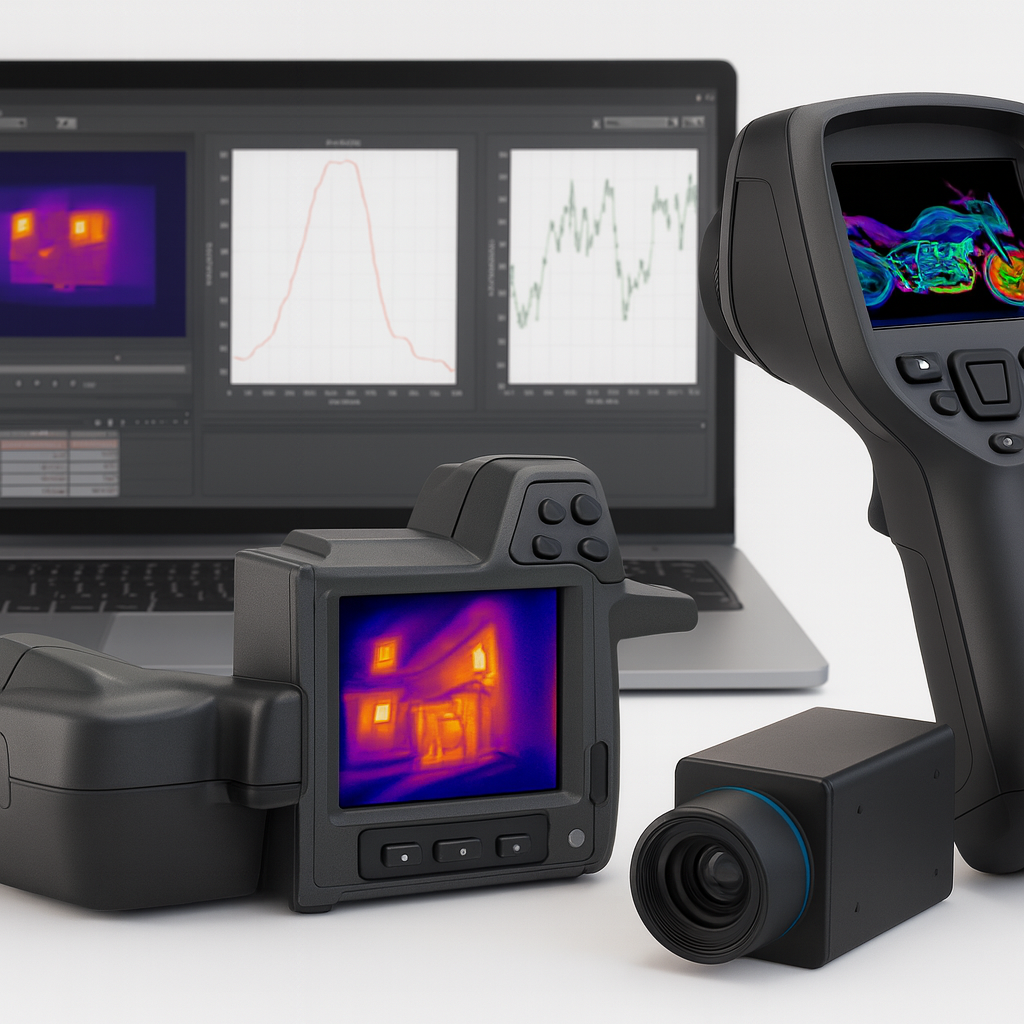
4) Thermal Inspection Kit (IR Thermometer + Thermal Camera)
From hot bearings and overloaded panels to HVAC imbalances, a thermal kit quickly flags anomalies you can investigate further.
It’s one of those OHSE Officer Tools that instantly elevates your inspections—great for preventive maintenance tie-ins.
What to look for
- Adjustable emissivity, min/max/avg capture, and image blending for context
- Focus/auto-focus and sufficient resolution for electrical/mechanical scans
- Easy image export to embed thermal shots in audit reports
Pro tip: Use before/after thermal images to show the impact of corrective actions—powerful for leadership reviews.
5) Portable Air Quality Monitor (CO₂, PM2.5, TVOC)
Indoor air quality affects comfort, cognition, and compliance. A handheld that logs CO₂, particulate matter, and total VOCs helps you distinguish nuisance odors from genuine ventilation or emission issues.
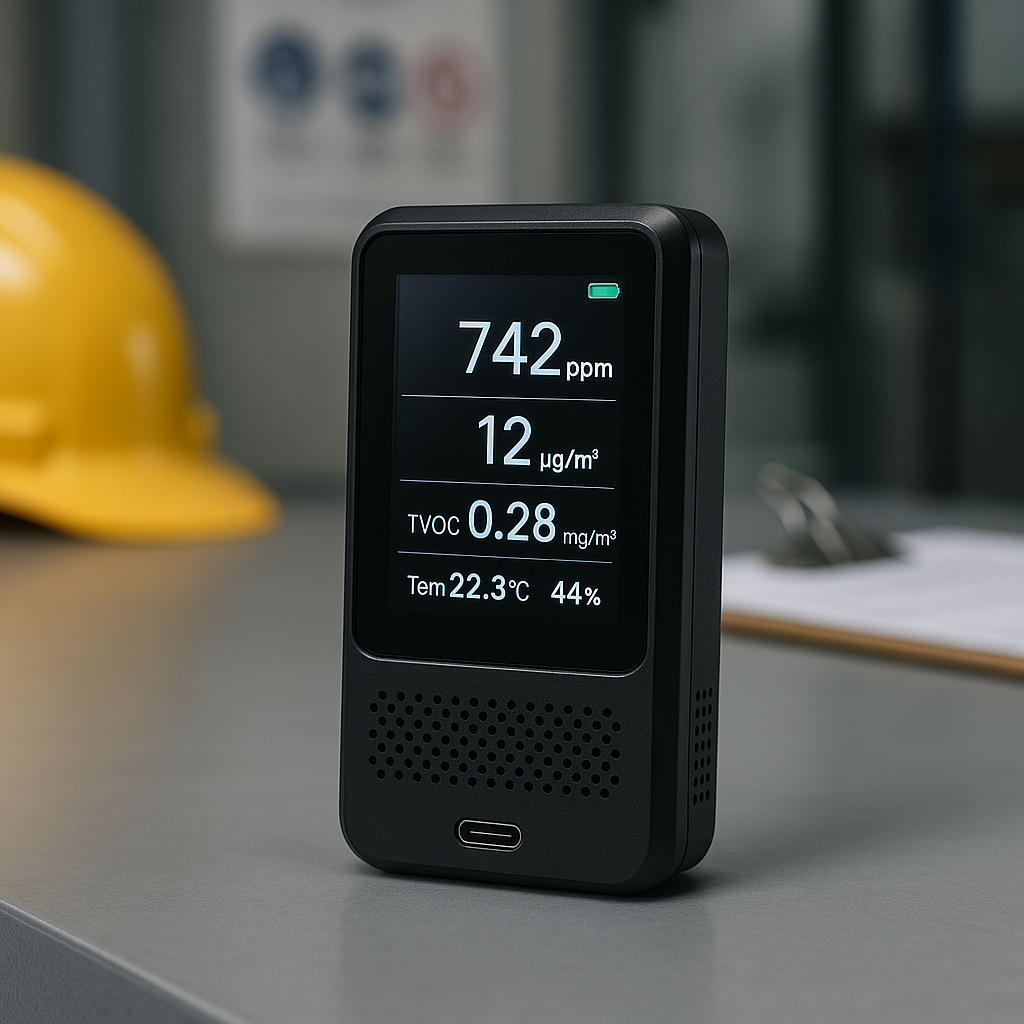
These OHSE Officer Tools are especially useful in offices, labs, and production areas with solvents.
What to look for
- Logging with exportable CSVs, stable sensors with periodic calibration
- Clear PM bands (e.g., AQI-aligned) and configurable alarms
- Swappable filters and protective cases for field durability
Pro tip: Pair trends with HVAC service notes and occupant complaints to demonstrate a data-driven IAQ response.
6) Lux Meter (Task & Emergency Lighting)
Lighting affects accuracy, fatigue, and safety signaling. A lux meter helps verify task lighting against recommended levels and confirm emergency/egress illumination after changes or outages.
Simple, quick, and often overlooked—yet one of the most cost-effective OHSE Officer Tools.
What to look for
- Cosine correction, data hold, and basic logging
- Range suitable for both office and industrial spaces
- Stable sensor head with protective cap
Pro tip: Document readings at the task plane (e.g., desktop height) and note reflectance/glare conditions for context.
7) Lockout/Tagout (LOTO) Kit
Energy isolation is a life-saving discipline. A dependable LOTO kit—padlocks, hasps, tags, valve and breaker devices—makes compliance practical during audits and training.

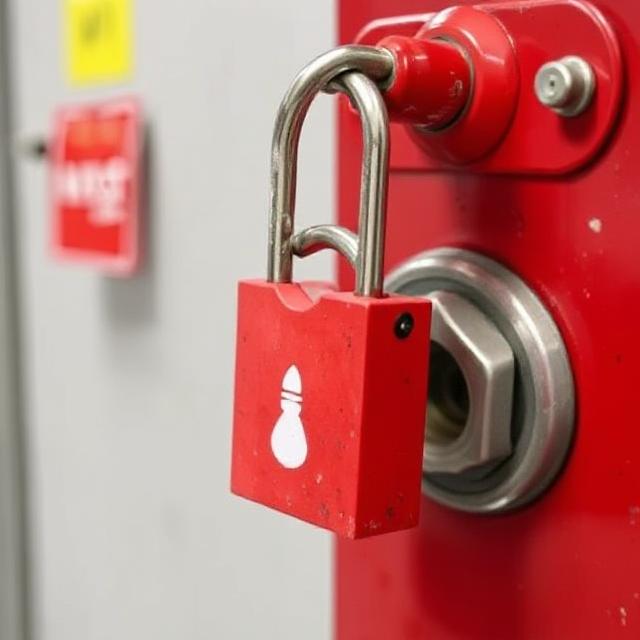
As OHSE Officer Tools go, this kit is a must-carry for any facility with energized equipment.
What to look for
- Non-conductive lock bodies, unique key profiles, and clear tagging
- Variety of device attachments (ball valves, gate valves, MCBs, MCCBs)
- A lock control board and key custody procedures
Pro tip: Keep a laminated LOTO hierarchy/flowchart with the kit for quick refreshers during spot checks.
8) Respirator Fit-Testing Kit (Qualitative or Quantitative)
If respirators are used, fit testing isn’t optional. A qualitative kit (saccharin/Bitrex) works for negative-pressure tight-fitting respirators; quantitative methods provide objective seal metrics.
As OHSE Officer Tools, fit-testing kits build confidence that PPE actually protects.
What to look for
- Clear instructions, hood, nebulizers, and reliable solutions (for qualitative)
- Annual calibration support and printable reports (for quantitative)
- Easy integration with your respiratory program documentation
Pro tip: Link users to your internal program page (e.g., /blog/respiratory-protection) so they can self-check donning, seal checks, and change-out schedules.
9) Ergonomics Assessment Toolkit (Inclinometer, Force Gauge, Risk App)
Musculoskeletal injuries are the most common and costly. A compact kit—digital inclinometer, push/pull force gauge, and a risk-rating app—lets you quantify awkward postures, high forces, and repetition.

It’s a set of OHSE Officer Tools that transforms “looks awkward” into objective data.
What to look for
- Simple angle capture (spine, shoulder, wrist), stable force range (e.g., 0–50 kgf)
- Rapid scoring frameworks (RULA, REBA, or task-based checklists)
- Exportable summaries for stakeholders and procurement
Pro tip: Pair findings with quick wins (height-adjustable worktables, tool balancers, anti-fatigue mats) to show immediate impact.
10) GHS/WHMIS Label Printer + SDS Manager
Clear hazard communication reduces mistakes. A rugged label printer with GHS/WHMIS templates and an SDS library (searchable, version-tracked) ensures containers and secondary labels are always compliant. These OHSE Officer Tools also streamline audits—no more hunting down outdated sheets.
What to look for
- Durable label stock, color pictograms, and barcode support
- Cloud SDS access with revision alerts and distribution logs
- Easy merging of QR codes linking to SDS for instant access
Pro tip: Use QR codes on labels that take workers straight to your SDS portal—fast, paper-light, and always current.
How to Choose OHSE Officer Tools without Wasting Budget
Choosing OHSE Officer Tools should follow your risk register and leading indicators. Start with the hazards you encounter most often (noise, chemicals, confined spaces, ergonomics) and the verifications you must perform for legal or internal requirements.
Build a baseline kit you carry always, and a second tier staged in your vehicle or at key shop floors. Finally, standardize your documentation flow—so readings, photos, and actions live together and support audits or incident investigations.
For deeper Canadian context and practical checklists, see OHSE.ca. If you’re building local service directories or safety-friendly suppliers, you can also cross-reference listings on ME IN CA to support procurement and training logistics.

Quick Daily Workflow Using OHSE Officer Tools
- Pre-round prep: Sync your inspection app, review open actions, and confirm calibrations (gas/noise/thermal).
- Field verification: Measure, photograph, and log—don’t rely on memory.
- Immediate actions: Assign owners and due dates while you’re still at the scene.
- Follow-through: Re-check high-risk areas within 24–72 hours and close the loop with evidence.
This rhythm keeps OHSE Officer Tools tied directly to outcomes, not just observations.
Final Thoughts
When you standardize, calibrate, and document, OHSE Officer Tools become more than gadgets—they become your evidence trail and your coaching kit.
Start with the ten above, build procedures around them, and keep refining based on your data. With a disciplined approach, you’ll reduce risk, speed up corrective actions, and boost credibility with management and the workforce—all powered by the right OHSE Officer Tools.