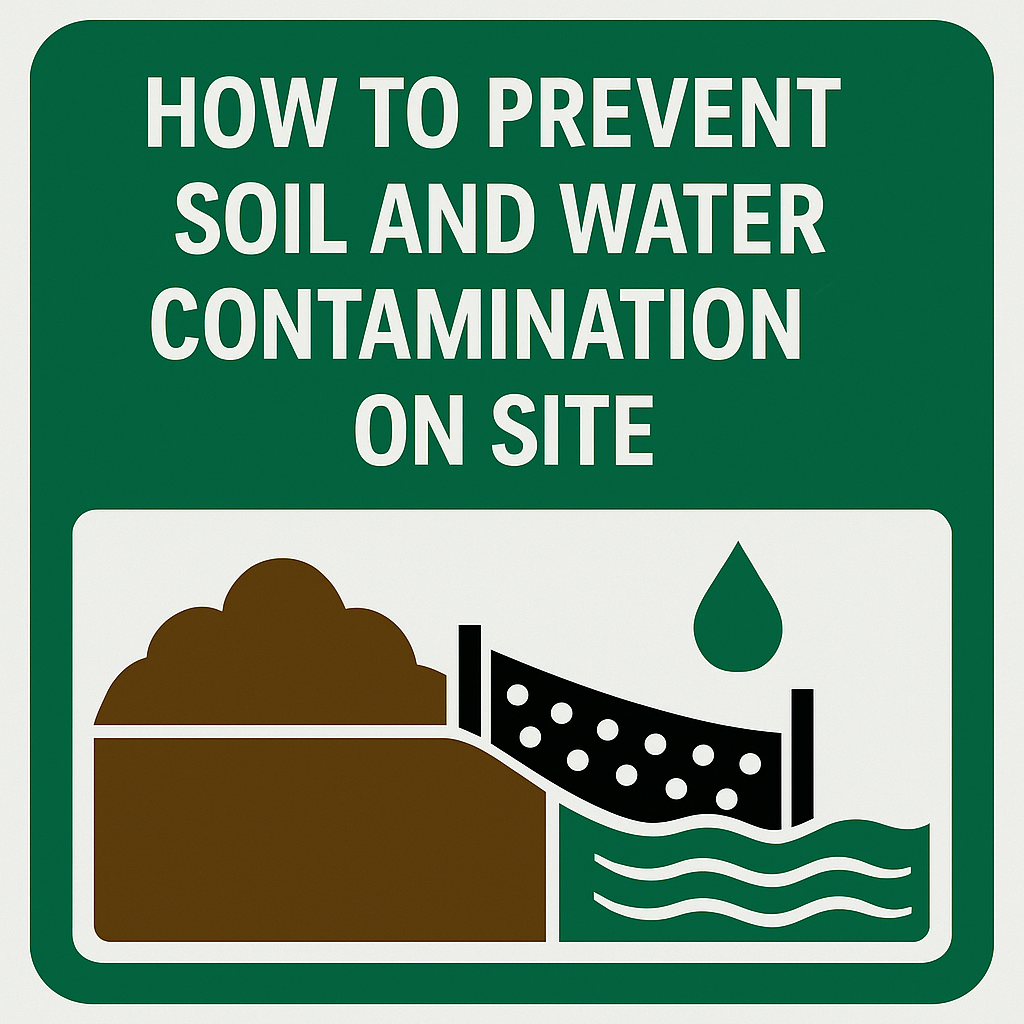
How to Prevent Soil and Water Contamination on Site is not just an environmental obligation—it’s a legal and reputational necessity.
Construction sites are significant sources of potential contamination. Activities like earthmoving, fuel storage, chemical use, and concrete washout can all release harmful substances into the environment.

According to the Environmental Protection Agency (EPA) (dofollow), construction runoff is a major source of sediment, nutrients, and pollutants that harm waterways.
Preventing soil and water contamination helps you:
✅ Comply with environmental regulations.
✅ Avoid costly fines and project delays.
✅ Protect local ecosystems and communities.
✅ Build your reputation as a responsible contractor.
- Understanding Soil and Water Contamination Risks
- How to Prevent Soil and Water Contamination on Site: Proven Strategies
- Maintaining and Monitoring Your Controls
- Special Considerations for Sensitive Sites
- Benefits of Preventing Soil and Water Contamination on Site
- Final Thoughts on How to Prevent Soil and Water Contamination on Site
Understanding Soil and Water Contamination Risks
Before you can master how to prevent soil and water contamination on site, it’s essential to understand where risks come from.
Common sources include:
- Sediment runoff from disturbed soil.
- Fuel and oil spills from equipment.
- Improper chemical storage or use.
- Concrete washout.
- Wastewater discharges.
- Poorly managed stockpiles.
Even small incidents can have lasting environmental impacts.
How to Prevent Soil and Water Contamination on Site: Proven Strategies
Here’s a step-by-step guide on how to prevent soil and water contamination on site effectively and practically.
1. Develop an Erosion and Sediment Control Plan (ESCP)
This is the cornerstone of contamination prevention.
- Identify areas of disturbed soil.
- Map drainage patterns and sensitive areas.
- Specify control measures (silt fences, sediment basins).
- Schedule inspections and maintenance.
Many jurisdictions require an ESCP before work begins.
2. Minimize Disturbed Areas
The less land you disturb, the less erosion risk you face.
- Plan work to limit clearing to essential areas.
- Phase work so only active areas are open.
- Stabilize exposed soil quickly after work is done.
- Use temporary seeding, mulch, or blankets to cover bare soil.
Less disturbance = less sediment in waterways.
3. Install Effective Sediment Controls
Proper barriers prevent soil from leaving the site.
- Use silt fences at downslope edges.
- Build check dams in channels to slow water.
- Install sediment traps or basins for large sites.
- Maintain controls by removing accumulated sediment.
Failure to maintain these controls is a top citation in environmental inspections.
4. Manage Stormwater Runoff
Uncontrolled runoff can carry sediment and pollutants.
- Grade sites to direct water to controls.
- Use diversion ditches to keep clean water away from disturbed areas.
- Install vegetated swales to slow and filter flow.
- Avoid creating steep slopes prone to erosion.
Good drainage planning prevents contamination before it starts.
5. Control Stockpiles and Materials
Stockpiles can be a hidden contamination source.
- Store soil, sand, gravel away from waterways.
- Cover stockpiles with tarps during rain.
- Use berms or silt fences around piles.
- Keep chemicals and hazardous materials in covered, contained areas.
Proper material management reduces accidental contamination.
6. Implement Spill Prevention and Response Plans


Spills are one of the biggest contamination risks.
- Store fuel and oil in double-walled tanks or spill pallets.
- Maintain spill kits on site.
- Train workers in spill response procedures.
- Conduct regular equipment maintenance to prevent leaks.
- Clean spills immediately and dispose of waste properly.
A good spill response plan is essential for every site.
7. Manage Concrete Washout Safely
Concrete wash water is highly alkaline and damaging to soil and water.
- Set up dedicated washout areas away from drains and waterways.
- Use lined pits or portable containers to collect waste.
- Never allow washout to flow onto bare ground.
- Dispose of hardened concrete and washout materials according to local regulations.
Concrete washout violations are common and costly.
8. Store and Use Chemicals Properly
Chemicals like paints, solvents, and adhesives can easily contaminate soil and water.
- Store chemicals in covered, secure areas.
- Keep MSDS/SDS sheets on site.
- Use secondary containment for liquid containers.
- Train workers on safe handling and spill response.
- Avoid over-ordering to reduce waste.
Responsible chemical management is non-negotiable.
9. Maintain Equipment to Prevent Leaks
Leaking oil or fuel is a major pollution source.
- Conduct regular inspections of all equipment.
- Repair leaks immediately.
- Refuel in designated areas with spill containment.
- Use drip pans during maintenance.
- Train operators to report issues immediately.
Proactive maintenance is cheaper than environmental remediation.
10. Train and Engage Your Crew
Even the best plan fails if workers don’t follow it.

- Conduct regular toolbox talks on erosion and spill prevention.
- Include environmental protection in site orientations.
- Post clear signage about washout areas and chemical storage.
- Empower workers to report issues without fear of punishment.
- Recognize and reward good environmental practices.
A well-informed crew is your best defense against contamination.
Maintaining and Monitoring Your Controls


Preventing soil and water contamination isn’t a set-it-and-forget-it task.
- Inspect controls weekly and after storms.
- Remove built-up sediment promptly.
- Repair damaged barriers immediately.
- Update your ESCP as site conditions change.
- Document all inspections and maintenance for regulatory compliance.
Consistent monitoring ensures your controls work when needed most.
Special Considerations for Sensitive Sites
Sites near water bodies or wetlands need extra care.
- Establish buffer zones of undisturbed vegetation.
- Avoid clearing within setback distances.
- Use enhanced sediment controls (multiple barriers).
- Coordinate with environmental consultants or regulators if required.
Protecting sensitive areas is both ethical and often legally mandated.
Benefits of Preventing Soil and Water Contamination on Site
Investing in prevention pays off:
✅ Avoids costly fines and stop-work orders.
✅ Protects your reputation with clients and the community.
✅ Reduces site restoration costs.
✅ Supports compliance with environmental permits.
✅ Demonstrates your company’s commitment to sustainability.
Final Thoughts on How to Prevent Soil and Water Contamination on Site
Learning how to prevent soil and water contamination on site is essential for every builder, contractor, and project manager.
By developing strong plans, using proven controls, training your team, and monitoring consistently, you’ll reduce environmental impacts and ensure compliance with the law.
For more ways to build a responsible jobsite culture, see our guide on Building a Safety-First Culture on Residential Construction Sites (internal link).