


- preventing office slip hazards: Practical OHSE Steps for a Safer Workplace
- Understanding the Risks of Preventing Office Slip Hazards
- Preventing Office Slip Hazards Through the Hierarchy of Controls
- Practical Measures for Preventing Office Slip Hazards Every Day
- PPE, Compliance, and Real Workplace Examples of Preventing Office Slip Hazards
preventing office slip hazards: Practical OHSE Steps for a Safer Workplace

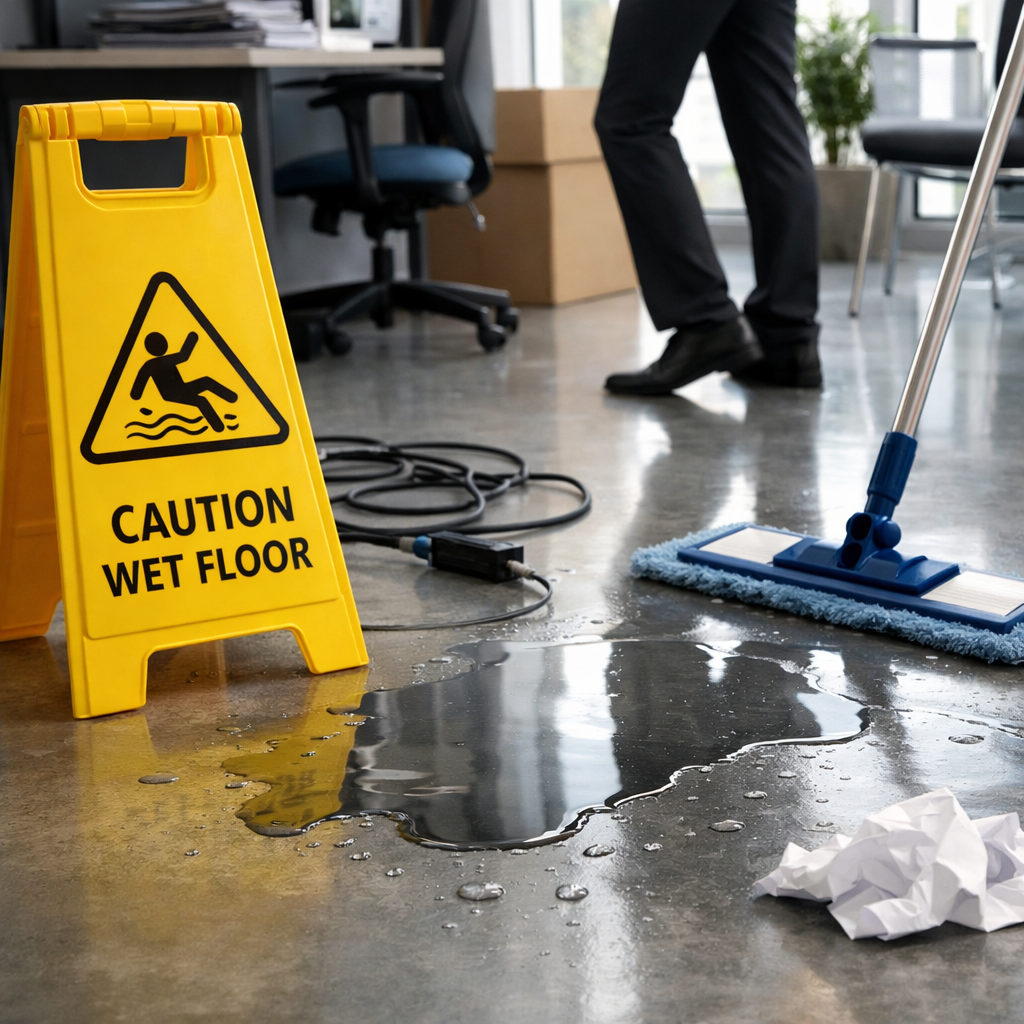
preventing office slip hazards should be a priority in every workplace because slips, trips, and falls remain one of the most common causes of office injuries.
Even in low-risk environments, a wet floor near the kitchen, loose cables under desks, or worn entrance mats can quickly lead to sprains, fractures, lost work time, and compensation claims.
An effective OHSE approach focuses on identifying hazards early, applying practical controls, and reinforcing safe behavior every day.
Office slips are often dismissed as minor incidents, yet the consequences can be serious for workers, visitors, and contractors.
Good housekeeping, suitable flooring, proper footwear, and clear reporting systems all play a role in reducing risk.
Guidance from organizations such as OSHA and the CCOHS supports a systematic approach to prevention, including inspection, training, and corrective action.
When businesses treat slip prevention as part of everyday safety culture rather than a reaction to accidents, they create safer, more efficient offices.
Understanding the Risks of Preventing Office Slip Hazards
Office slip hazards come from more than obvious spills.
Rainwater tracked in from entryways, polished floors, uneven surfaces, cluttered corridors, poor lighting, and rushed movement between meetings can all increase the chance of injury.
High-traffic areas deserve special attention because they combine frequent movement with changing conditions.
Reception areas, kitchens, break rooms, copier stations, washrooms, and car park entrances are common problem spots.
Workers carrying laptops, files, or drinks may not see a hazard until it is too late.
In practical terms, a single incident can cause bruises, muscle strains, back injuries, head trauma, or broken bones.
For employers, the impact can also include disrupted operations, incident investigations, absenteeism, rising insurance costs, and damage to workplace morale.
Older workers, pregnant employees, people with temporary injuries, and visitors unfamiliar with the layout may be more vulnerable.
That is why preventing office slip hazards should begin with a structured risk assessment instead of relying on assumptions.
Common office slip risk factors
- Wet floors from cleaning, weather, or spills
- Smooth or damaged floor surfaces
- Loose rugs, mats, or floor coverings
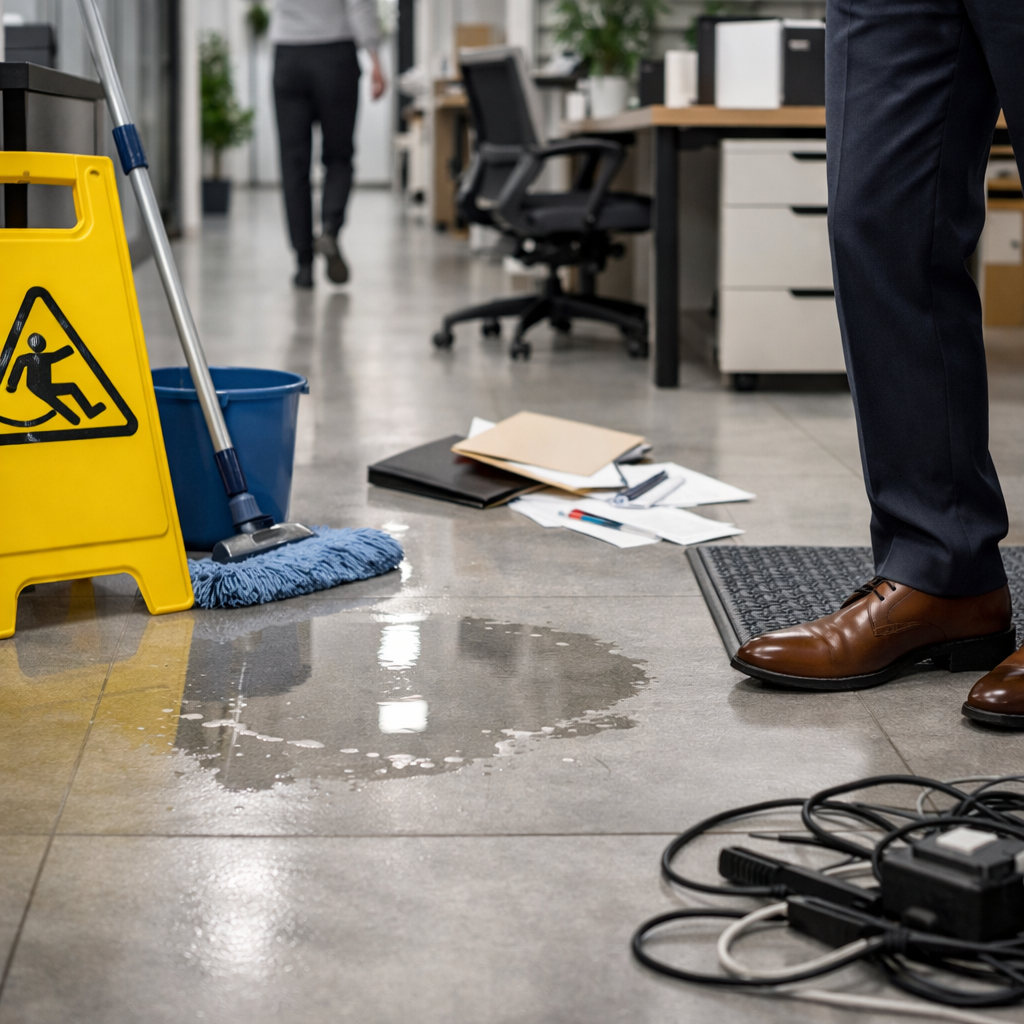
- Trailing electrical cords and charging cables
- Poor housekeeping and cluttered walkways
- Inadequate lighting in corridors, stairs, and storage rooms
- Footwear with poor grip
- Inconsistent hazard reporting or delayed cleanup
Regular inspections can reveal patterns, such as repeated spills near a coffee station or slipping incidents during rainy mornings.
These findings help employers target controls where they are most effective.
Preventing Office Slip Hazards Through the Hierarchy of Controls
The best OHSE programs use the Hierarchy of Controls to manage risk.
Although office slips may seem simple, the same safety principles used in industrial settings apply here as well.
Elimination and substitution
The first priority is to remove the hazard where possible.
For example, relocating a water dispenser away from a main walkway can eliminate frequent puddles.
Replacing highly polished flooring with slip-resistant materials is another strong long-term measure.
If a cleaning product leaves floors overly slick, substituting it with a safer alternative can reduce risk immediately.
Engineering controls
Engineering controls physically reduce the chance of slipping.
This may include installing absorbent entry matting, improving drainage near entrances, repairing uneven flooring, securing carpets, and adding anti-slip strips on stairs.
Automatic cable management systems can also keep walkways clear in open-plan offices.
Many businesses gain value from reviewing workplace risk assessment processes and linking floor-safety improvements to maintenance planning.
Administrative controls
Administrative controls are essential for preventing office slip hazards on a daily basis.
These include documented cleaning schedules, spill response procedures, inspection checklists, hazard reporting systems, and induction training for employees and contractors.
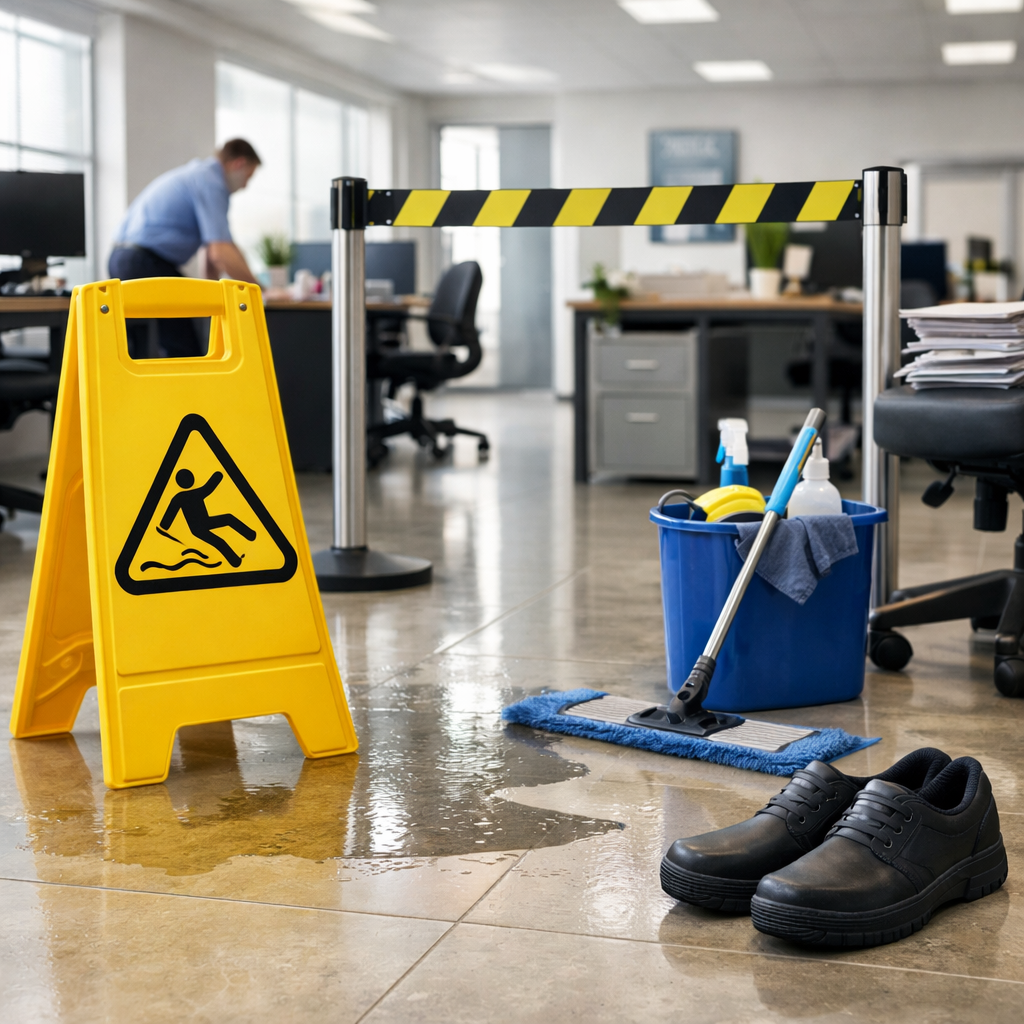
Warning signs should be used during mopping or when temporary hazards cannot be removed right away.
Supervisors should also encourage early reporting of loose tiles, damaged mats, and leaks.
PPE as a supporting control
Personal protective equipment is usually the last line of defense, but it still matters in some office environments.
Slip-resistant footwear may be appropriate for cleaners, facilities staff, mailroom workers, kitchen staff, and anyone moving between office and warehouse areas.
PPE should never replace hazard removal, but it can reduce residual risk when conditions cannot be fully controlled.
Practical Measures for Preventing Office Slip Hazards Every Day
Effective prevention depends on practical routines that staff can follow consistently.
Simple controls often make the biggest difference when they are clearly assigned and regularly checked.
Housekeeping and spill response
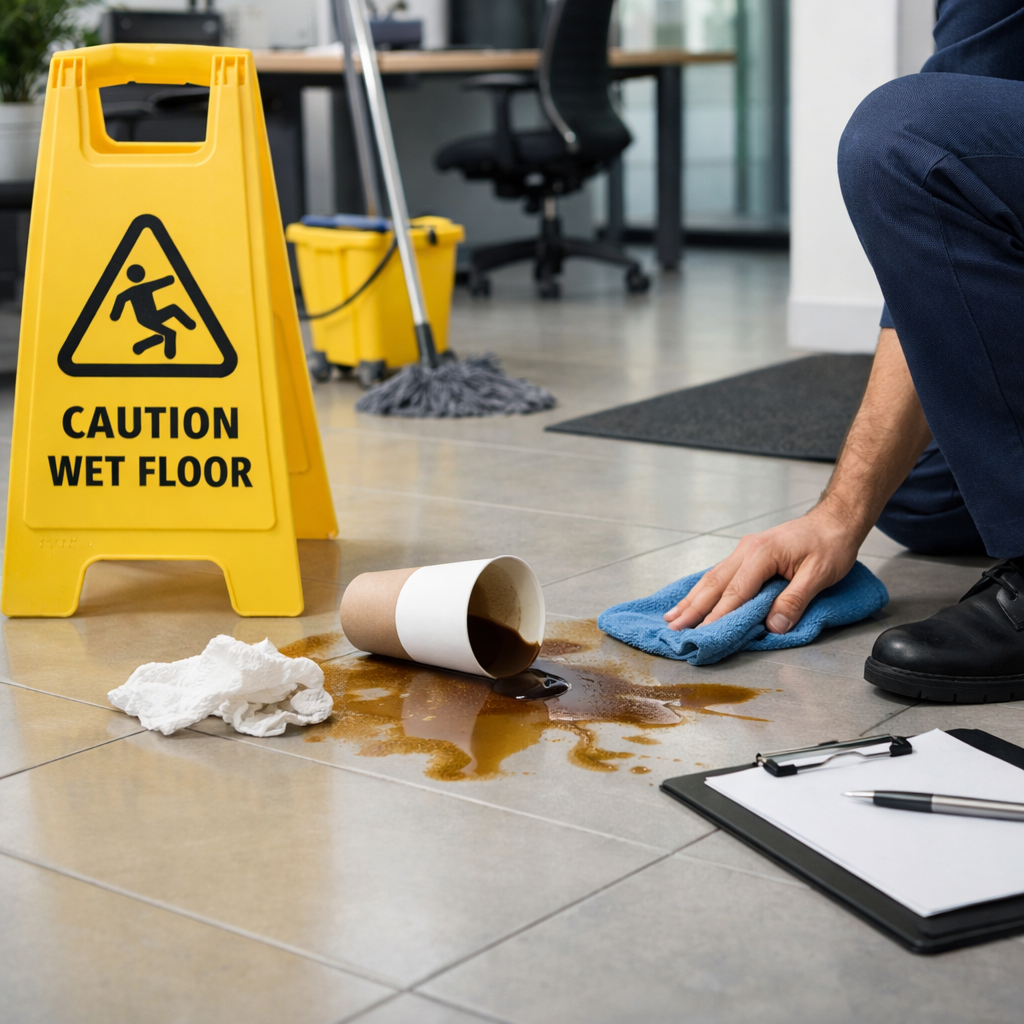
Spills should be cleaned immediately, not left for the next scheduled cleaning round.
Every department should know who responds, where absorbent materials are stored, and how hazards are isolated until cleanup is complete.
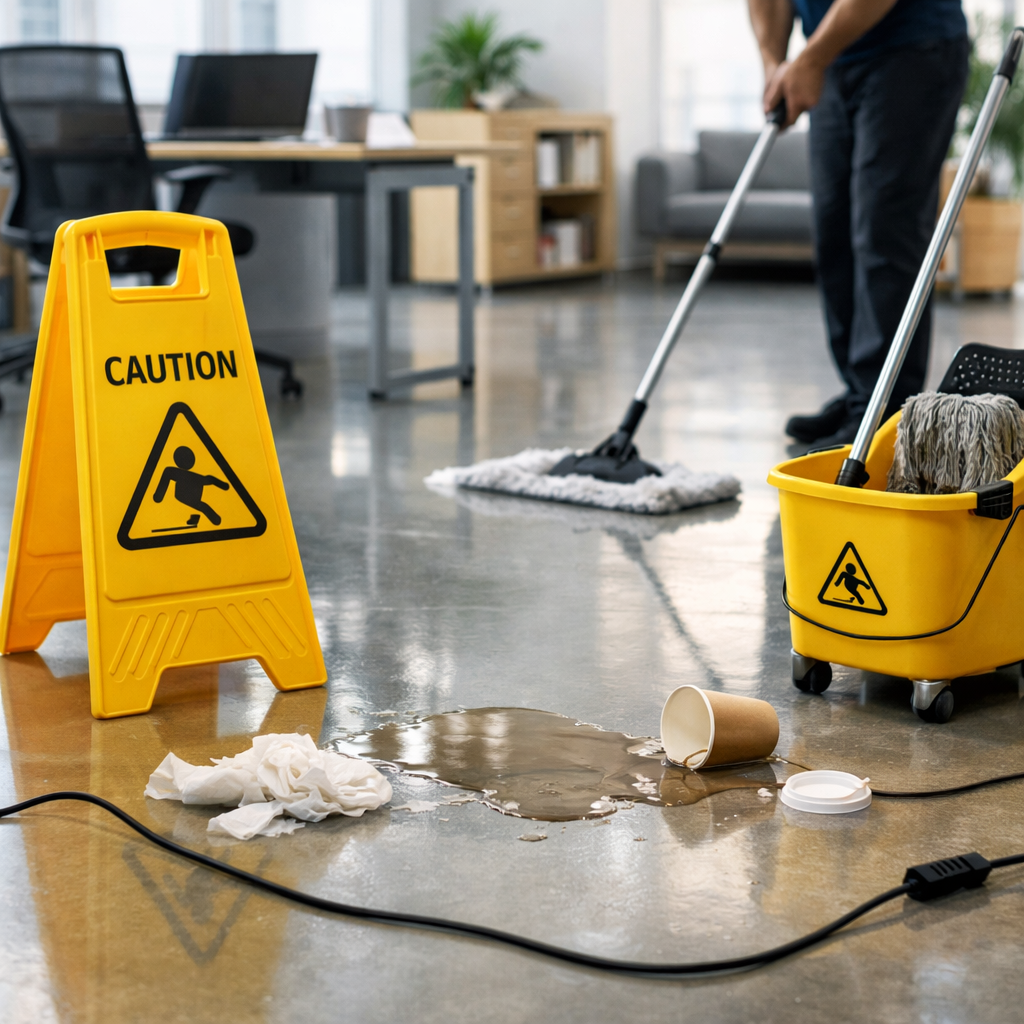
A coffee spill in a corridor may seem minor, but it can quickly spread through foot traffic.
Flooring, entrances, and seasonal planning
Entrances need extra attention in wet weather.
Absorbent mats should be large enough to allow several steps before someone reaches the main floor surface.
Mats must lie flat and be inspected for curled edges.
During winter or heavy rain, additional cleaning and monitoring may be needed to manage water tracked indoors.
Useful resources from the National Safety Council reinforce the importance of seasonal slip prevention.
Training and worker involvement
Training should explain not only what employees must do, but why these actions matter.
Workers are more likely to report hazards when they understand the injury potential and see management responding quickly.
Short toolbox talks, safety reminders, and incident reviews can keep the topic visible.
Many organizations also strengthen results by aligning office checks with their broader safety training programs.
| Office Area | Typical Slip Hazard | Practical Control |
|---|---|---|
| Entrance lobby | Rainwater on smooth flooring | Absorbent mats, wet floor signage, more frequent inspections |
| Kitchen or break room | Drink spills and dropped food | Immediate cleanup procedure, staff reminders, non-slip flooring |
| Open-plan office | Cables and clutter in walkways | Cable management, clear desk policy, routine housekeeping |
| Stairways | Worn edges or poor lighting | Anti-slip strips, prompt maintenance, improved illumination |
| Washrooms | Water on tiled floors | Regular checks, slip-resistant surfaces, quick-response cleaning |
PPE, Compliance, and Real Workplace Examples of Preventing Office Slip Hazards
Compliance is a key part of preventing office slip hazards.
Employers have a duty to provide a safe workplace, which includes maintaining floors, controlling foreseeable risks, and giving workers the information and supervision they need.
OHSE compliance should cover inspections, incident records, maintenance logs, training completion, and corrective actions.
If a slip incident occurs repeatedly in the same area, that is a sign the existing controls are not working well enough.
OSHA expectations and CCOHS guidance both support preventive action, worker participation, and prompt hazard correction rather than waiting for injuries to happen.
When PPE is necessary
In a standard office, most employees may not need special footwear.
However, some roles justify PPE based on risk exposure.
Cleaning crews working on freshly mopped floors, maintenance teams moving through plant rooms, or staff handling deliveries in wet loading areas may need slip-resistant shoes as part of their task-based controls.
Selection should be based on surface conditions, comfort, fit, and the likelihood of exposure to wet or contaminated floors.
Practical workplace examples
Consider a finance office where staff repeatedly slipped near the building entrance during storms.
An investigation found that the mat was too short and saturated within an hour.
The business installed longer absorbent runners, increased cleaner checks during bad weather, and added umbrella bag stations.
Reported near misses dropped significantly.
In another example, an administration team experienced several incidents around a shared printer area.
The cause was not liquid, but loose power cords and boxes of paper stored in the walkway.
After cable trays were installed and storage rules were enforced, the area became safer and easier to navigate.
These examples show that preventing office slip hazards depends on matching controls to the real cause, not just placing warning signs after the fact.
preventing office slip hazards is most effective when employers combine risk assessment, practical controls, PPE where needed, and consistent compliance monitoring.
Clean floors, safe entrances, proper maintenance, clear reporting, and engaged workers all contribute to fewer injuries and a stronger safety culture.
By applying the Hierarchy of Controls, learning from incidents and near misses, and following trusted OHSE guidance, offices can significantly reduce slip risks.
In the long term, preventing office slip hazards protects people, improves operational reliability, and demonstrates a genuine commitment to workplace health and safety.