


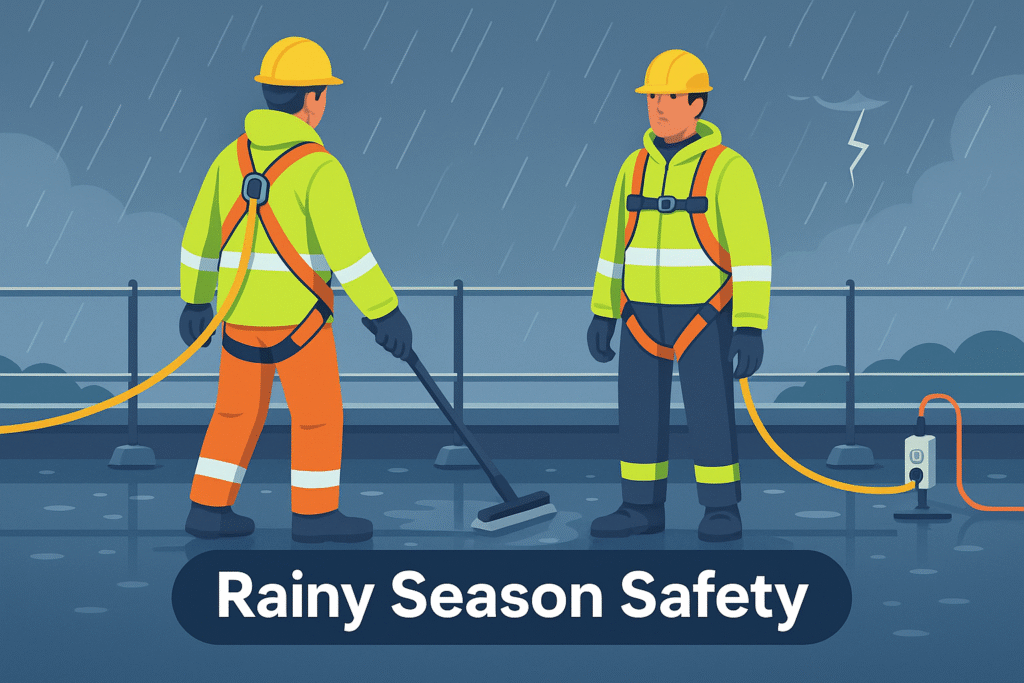
Rainy Season Safety is not just about avoiding work during storms—it’s about preparing for drizzle, wet surfaces, and sudden weather shifts that can make a roof job dangerous. Even light rain reduces traction, hides hazards, and increases electrical risks.
This article outlines practical, evidence-based controls for roof work in wet conditions, including weather gates, fall protection, slip prevention, drainage, and post-rain inspections.
- Why Rainy Roofs Are High-Risk
- Pre-Job Weather Gates
- Fall Protection in Wet Conditions
- Electrical & Lightning Controls
- Slip, Trip, and Stumble Prevention
- Tools and Materials in Rain
- Drainage and Temporary Weatherproofing
- Visibility & Communications
- After the Rain: Inspection & Recovery
- Quick Controls Checklist
- External Resources
- Conclusion
Why Rainy Roofs Are High-Risk
- Slippery Surfaces: Water drastically reduces friction, creating hydroplaning conditions on flat membranes.
- Hidden Hazards: Rain hides skylight edges, roof penetrations, and trip lines.
- Wind Factor: Gusts increase balance issues and turn unsecured objects into projectiles.
- Electrical Risks: Moisture amplifies shocks, short circuits, and lightning exposure.
Pre-Job Weather Gates
To ensure Rainy Season Safety, set measurable go/no-go thresholds:
| Condition | Stop-Work Trigger | Notes |
|---|---|---|
| Rainfall Intensity | Beyond light drizzle | Slippery surface risk multiplies |
| Wind Speed | Above site-specific threshold | Especially on pitched roofs |
| Lightning | Within 10–15 km radius | Apply 30/30 rule (suspend & wait) |
| Ponding Water | > 1 cm depth | Hydroplaning and slip hazard |
Tip: Document who is authorized to stop work and the criteria in the permit-to-work system.

Fall Protection in Wet Conditions
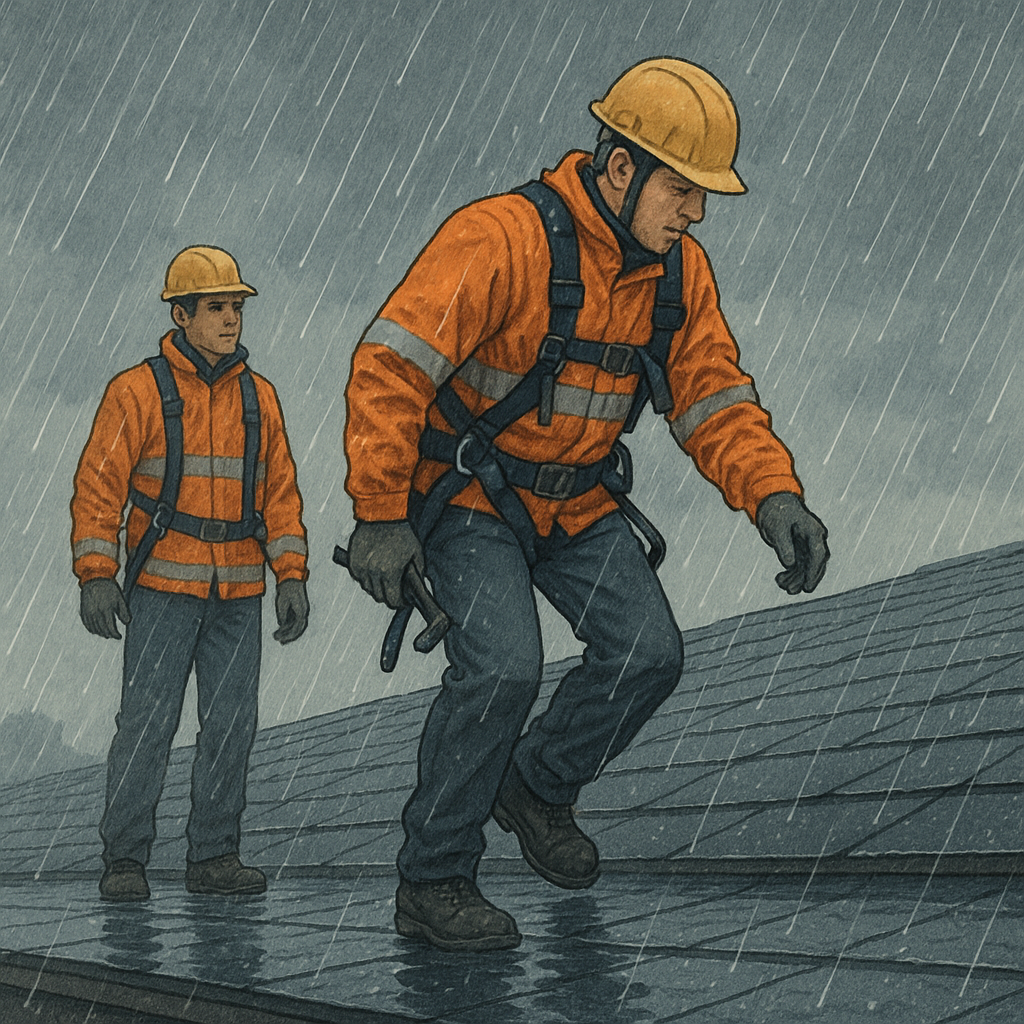
- Prefer guardrails and parapet clamps over personal fall arrest.
- If harnesses are required:
- Pre-plan anchors and mark them on roof maps.
- Inspect harnesses for waterlogging and corrosion.
- Secure ladders at top and bottom; follow the 4:1 ratio.
- Use non-conductive ladders near electrical exposures.
Electrical & Lightning Controls
- De-energize and lockout/tagout circuits whenever possible.
- Use only IP-rated, GFCI-protected connections.
- Elevate cords and connectors above ponded water.
- Apply the 30/30 lightning rule: stop if thunder follows lightning within 30 seconds.
Slip, Trip, and Stumble Prevention
Rainy Season Safety footwear and housekeeping essentials:
- Specify soft rubber, slip-resistant boots.
- Place temporary walkway mats from ladder access to work zones.
- Assign a “deck watcher” to squeegee water from access routes and skylight edges.
- Keep cords and hoses organized and tagged if unavoidable.
Tools and Materials in Rain
- Favor cordless tools with insulated housings.
- Store batteries and delicate equipment in sealed bins.
- Avoid adhesives and membranes if substrates are wet (follow manufacturer guidelines).
- Tether all tools and block palletized loads against wind.
Drainage and Temporary Weatherproofing
Before and during rain exposure:
- Clear scuppers and drains.
- Keep tarp kits, sandbags, and wet/dry vacuums ready.
- Use redundant tarps with overlapping seams when roofs must be opened.
- Apply secondary containment under mixing areas to prevent chemical runoff.
Visibility & Communications
- Require hi-vis waterproof jackets and anti-fog goggles.
- Standardize radio calls such as “edge,” “line tight,” “stop,” and “evacuate.”
- Mark muster points on the roof plan and confirm in toolbox talks.
After the Rain: Inspection & Recovery
- Inspect flashing, seals, and penetrations for water intrusion.
- Check ceilings below for damp patches and mold indicators.
- Document lessons learned: Did weather gates work? Did anchors hold?
- Feed findings back into next season’s Rainy Season Safety plan.
Quick Controls Checklist
✅ Weather gates set and stop-work authority named
✅ Roof plan updated with anchors and muster points
✅ Fall protection inspected and secured
✅ GFCI circuits and IP-rated connectors in place
✅ Walkway mats laid, squeegee rotation assigned
✅ Materials staged securely, tools tethered
✅ Drains cleared, tarps and sandbags staged
✅ Radios tested, clear evacuation signals agreed
✅ Post-rain inspection and IAQ plan ready
External Resources
- CCOHS – Canadian Centre for Occupational Health and Safety
- OSHA Fall Protection Standards
- NOAA Lightning Safety Guidelines
- NIOSH Ladder and Fall Safety
Internal Link: Explore related slip, trip, and storm-preparedness guides on OHSE.ca.
Conclusion
Rainy Season Safety is about preparation, not improvisation. By setting clear weather gates, strengthening fall protection, preventing slips, and rehearsing communication protocols, you protect not only workers but also the integrity of the building.
Treat drizzle as seriously as a storm, and you’ll avoid preventable incidents while building a culture of safety.