


remote site emergency planning: Critical Tips for Safer Field Operations
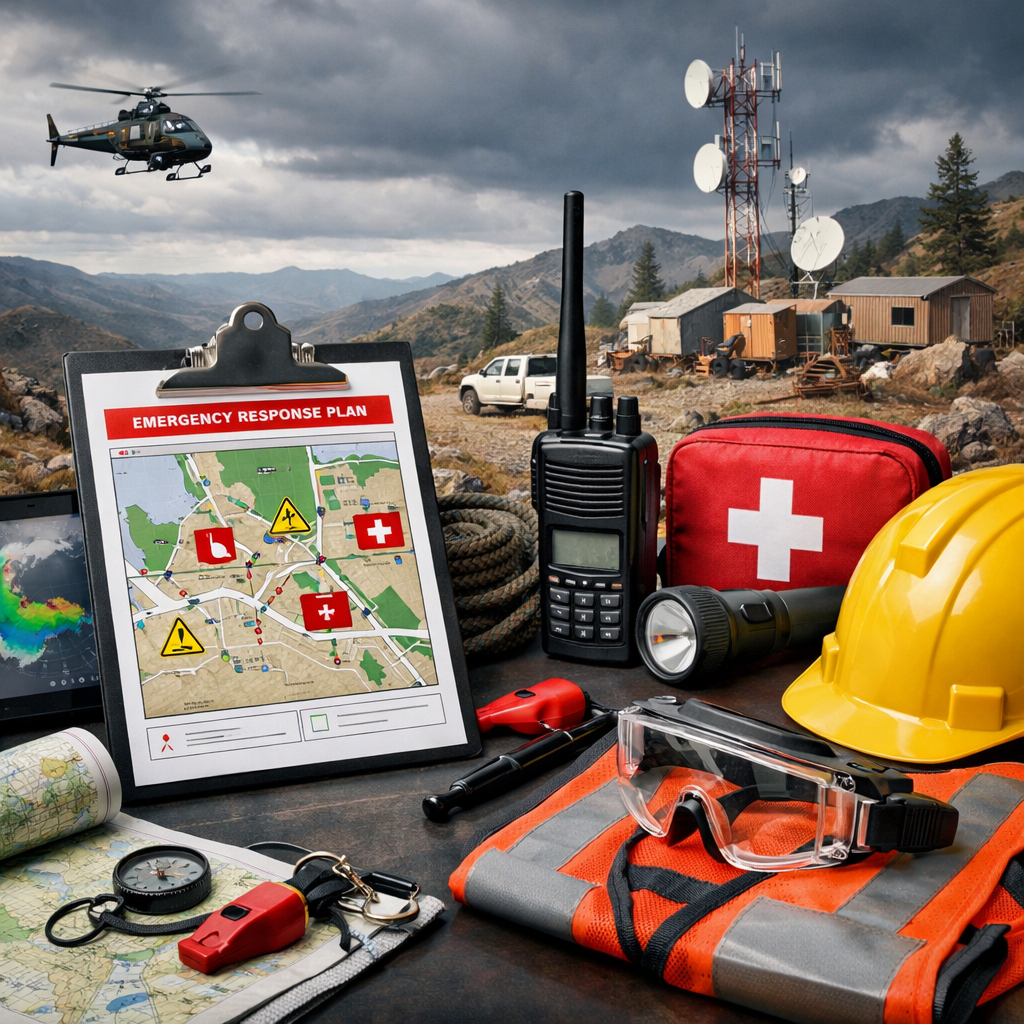


remote site emergency planning is one of the most important safety responsibilities in field operations, especially where crews work far from hospitals, public roads, and reliable phone coverage.
Whether the job involves drilling, surveying, utilities, environmental work, construction, or maintenance, the time between an incident and professional medical help can be much longer than in urban workplaces.
That delay increases the seriousness of injuries, weather exposure, fire, vehicle breakdowns, and communication failures.
A strong plan does more than satisfy compliance expectations. It helps supervisors make faster decisions, gives workers confidence, and reduces confusion when every minute matters.
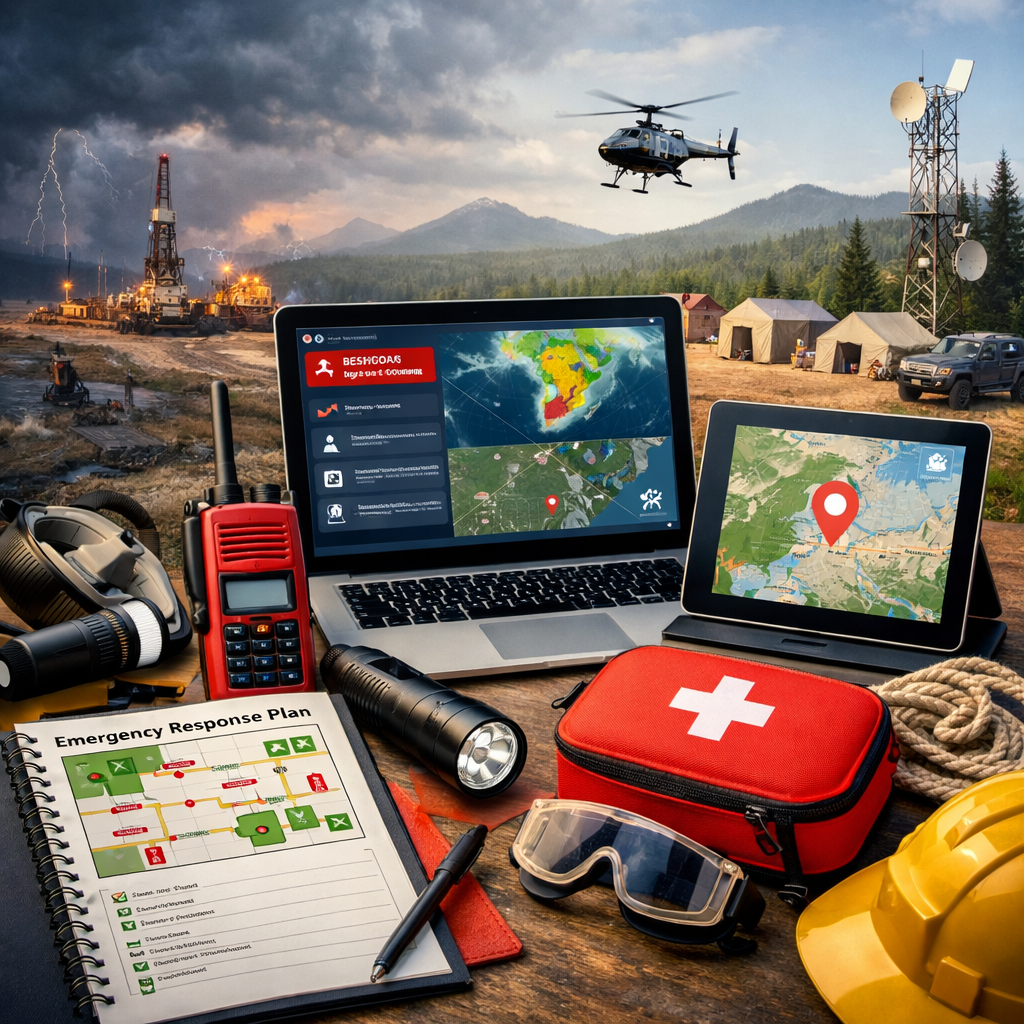
In practical terms, effective remote site emergency planning should cover four core areas: communications, rescue access, environmental hazards, and emergency supplies.
It should also reflect the hierarchy of controls by reducing hazards before work starts, not relying only on personal protective equipment and last-minute reactions.
remote site emergency planning starts with a site-specific risk assessment
No two remote locations have the same risk profile.
A bush road project in summer faces very different emergency conditions than a winter transmission line inspection, a desert pipeline repair, or a coastal monitoring program.
That is why remote site emergency planning should begin with a documented risk assessment tied to the exact location, season, work scope, crew size, and travel route.
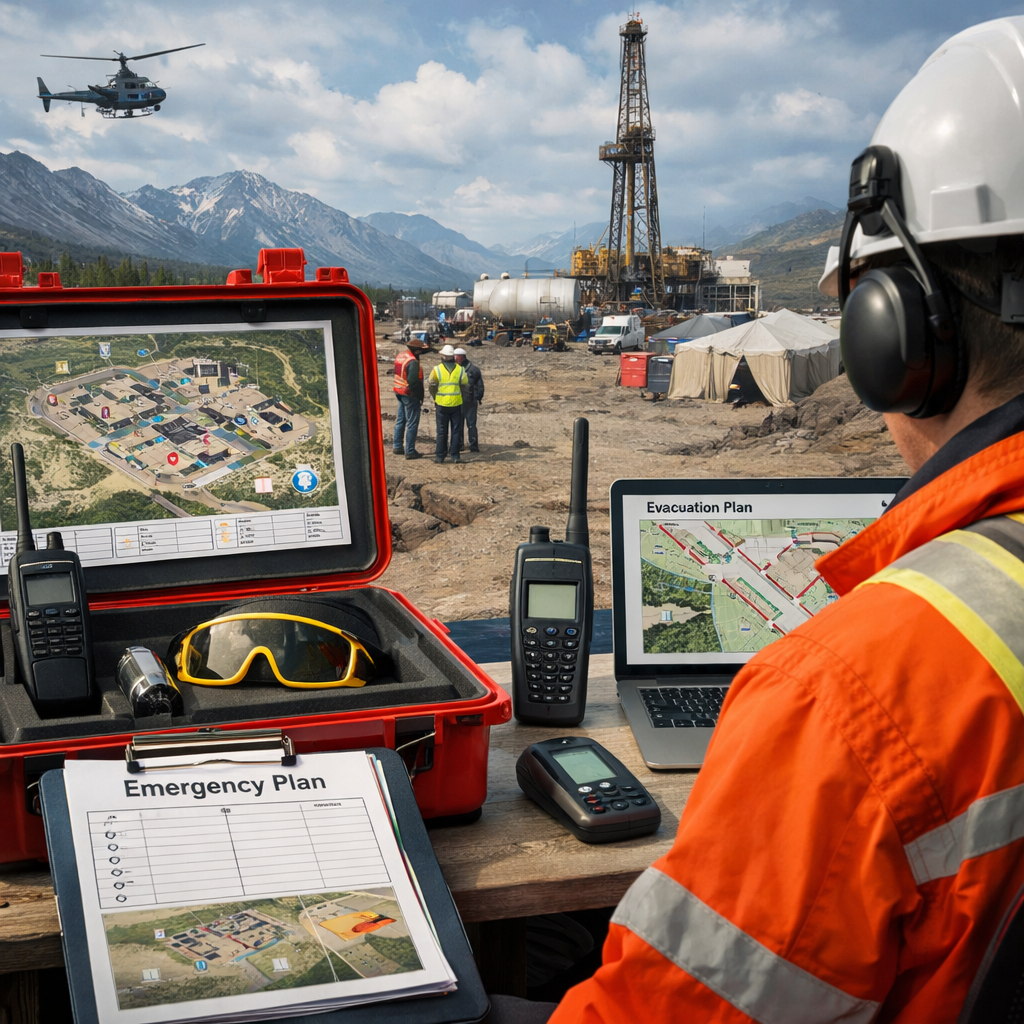
Start by identifying credible emergency scenarios.
These often include severe injury, cardiac events, vehicle collisions, wildfire, flood, lightning, wildlife encounters, hazardous material exposure, heat stress, hypothermia, and workers becoming stranded overnight.
From there, assess how likely each event is, how severe the consequences could be, and what controls can lower the risk.
The hierarchy of controls is useful here.
For example, if unstable slopes or flood-prone crossings create unacceptable exposure, the best control may be to eliminate the route or postpone work.
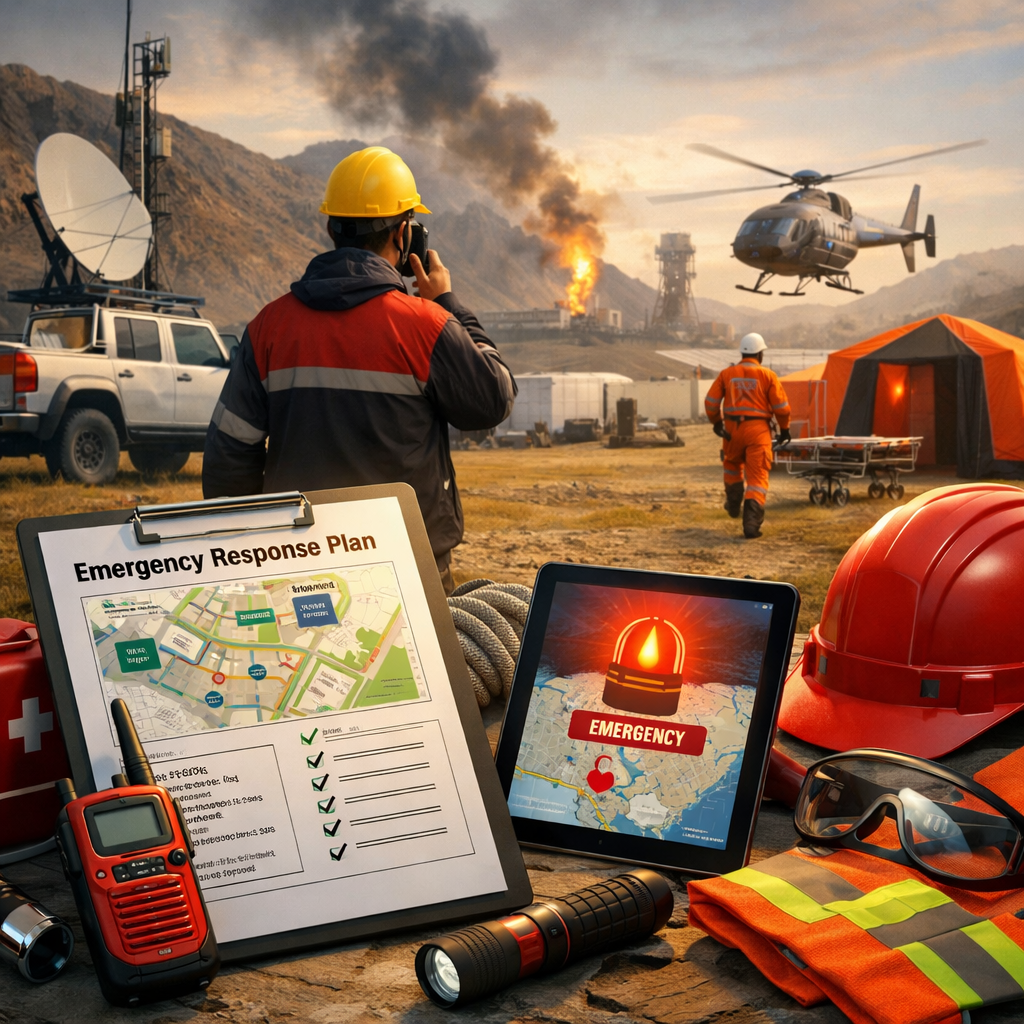
If communications are unreliable, substitute consumer cell phones with satellite devices and radios designed for the terrain.
Administrative controls may include check-in schedules, permit systems, fatigue management, and clear stop-work authority.
PPE remains important, but it should never be the primary emergency strategy.
Both CCOHS and OSHA emphasize hazard assessment, emergency readiness, and worker training as core parts of safe field operations.
If your organization already uses incident reporting or field safety forms, connect the plan to those systems.
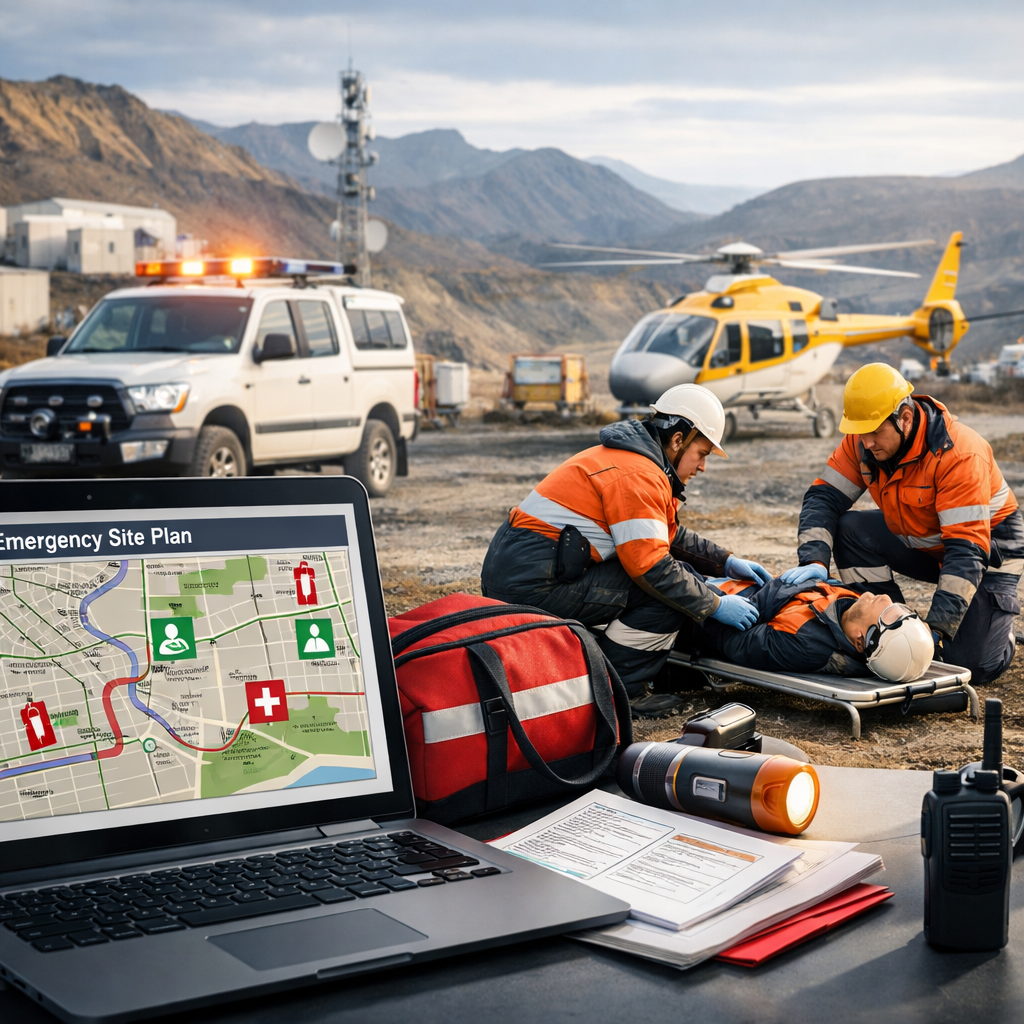
You can also align remote readiness with internal resources such as your safety management system or field work risk assessment process.
Communications are the backbone of remote site emergency planning
When crews operate outside reliable mobile coverage, communication failure can quickly turn a manageable event into a life-threatening one.
That makes communications the backbone of remote site emergency planning.
Build redundancy into every communication method
One device is not enough in remote work.
Field teams should have layered communication options based on the site, terrain, and task duration.
- Primary communication: satellite phone, digital radio network, or approved site radio
- Secondary communication: backup satellite messenger or alternate radio channel
- Emergency signaling: personal locator beacon, GPS distress device, whistles, flares where appropriate, and vehicle horn signals
- Administrative controls: scheduled check-ins, escalation timelines, and a missed-contact response protocol
A written callout procedure should define who the crew contacts first, what information must be given, and when outside emergency services should be activated.
That information should include the exact location, number of injured persons, nature of injury, access conditions, weather, and the safest route in.
Use location data that rescuers can actually follow
One common weakness in remote site emergency planning is vague location reporting.
Saying a crew is “near the north lease road” or “about an hour past the camp” is not enough for outside responders.
Teams should carry and practice using GPS coordinates, map references, site access descriptions, and pre-identified helicopter landing zones where relevant.
Supervisors should also leave a travel plan with a designated contact before departure.
This plan should include expected arrival times, route details, crew names, vehicle identifiers, and trigger times for escalation if the team fails to report in.
For higher-risk operations, consider testing communication devices at the start of each shift and documenting battery levels, spare power banks, and charging methods.
Plan rescue access before the work begins
Rescue access is often the difference between a rapid response and a prolonged evacuation.
In remote settings, road washouts, locked gates, river crossings, mud, snow, and dense vegetation can delay responders even when help has been called quickly.
That is why remote site emergency planning must include realistic rescue access mapping, not just a phone number for emergency services.
Think through the full rescue route
Supervisors should ask practical questions before mobilization.
Can an ambulance reach the work zone, or only the staging area?
Will the injured worker need to be carried, transported by UTV, or extracted by air?
Are there gate codes, bridge limits, steep grades, or seasonal road restrictions that responders need to know?
For isolated projects, pre-coordination with local emergency services can be valuable.
Some employers share maps, coordinates, access notes, and work schedules with responders in advance so there are fewer surprises during a real event.
On larger sites, internal rescue capability may also be necessary.
This can include trained first aid attendants, rescue equipment, stretcher systems, and vehicles suitable for off-road casualty transport.
| Planning Element | Why It Matters | Practical Control |
|---|---|---|
| Access roads | Delays from washouts, snow, mud, or locked gates | Inspect routes, record gate codes, identify alternates |
| Casualty movement | Injured worker may not be able to walk out | Provide stretcher, rescue sled, or off-road transport |
| Responder navigation | Outside crews may struggle to find the exact site | Share GPS coordinates and access maps in advance |
| Air evacuation | Ground transport may be too slow | Identify landing zones and weather limitations |
Training matters just as much as equipment.
Crew leaders should run drills that simulate realistic delays, poor weather, and communication gaps.
A tabletop exercise is useful, but a field-based practice evacuation often reveals issues with terrain, carrying distances, and coordination that paper plans miss.
Address environmental hazards in remote site emergency planning
Environmental conditions can create emergencies on their own or make every other emergency harder to manage.
For that reason, remote site emergency planning should account for weather, terrain, water, wildlife, and air quality, along with any industry-specific hazards at the location.
Match controls to the environment
Heat, cold, storms, and changing ground conditions are major concerns in field operations.
High temperatures can lead to dehydration, fatigue, poor judgment, and heat illness.
Cold environments bring frostbite, hypothermia, reduced dexterity, and vehicle reliability problems.
Lightning, wildfire smoke, flash flooding, avalanches, and unstable slopes may require work stoppage or evacuation triggers.
The best plans set objective thresholds in advance.
Examples include stopping work during lightning within a defined radius, halting travel on roads after heavy rainfall, or suspending outdoor tasks when wildfire smoke reaches harmful levels based on local public health guidance such as the CDC and regional authorities.
Environmental hazards should also be reflected in training.
Workers need to recognize early signs of heat exhaustion, cold stress, altitude illness, and exposure-related fatigue.
They should know when to retreat, how to shelter in place, and how to protect an injured person from worsening exposure while awaiting rescue.
Wildlife planning is another overlooked issue.
Depending on the region, this may involve bear deterrents, snakebite response, insect protection, food storage rules, and vehicle checks before travel.
Stock the right supplies and keep them ready to use
Even a well-designed response can fail if the site lacks the supplies needed to stabilize workers and sustain the team until help arrives.
In remote field work, supplies should be selected for credible worst-case delays, not ideal response times.
That principle is central to remote site emergency planning.
Go beyond a basic first aid kit
Supply needs depend on the work and the environment, but most remote crews should carry more than standard office-style first aid contents.
- Medical supplies: trauma dressings, tourniquets where permitted and trained, splints, blankets, burn care, and eyewash
- Communication support: spare batteries, charging cables, power banks, and written contact lists
- Survival items: drinking water, water treatment, high-energy food, shelter materials, fire-starting tools where safe, and extra clothing
- Vehicle recovery items: traction aids, tow gear, shovel, tire repair tools, and fuel planning controls
- Site documents: maps, emergency procedures, SDS access if chemicals are present, and worker medical information where appropriate and lawful
Supplies must also be inspected.
Expired medications, dead batteries, damaged stretchers, and half-stocked kits are common findings after incidents.
A simple inspection checklist before departure can prevent those failures.
It is also wise to assign responsibility clearly so one person verifies emergency equipment readiness every trip or shift.
Finally, remember that supplies only help when workers know how to use them.
First aid training, radio drills, navigation practice, and scenario-based exercises should all support the written plan.
When companies review incidents and near misses, they should update procedures, routes, and equipment lists so the system keeps improving.
In the end, effective remote site emergency planning protects workers by turning uncertainty into preparation.
When communications are reliable, rescue access is thought through, environmental hazards are controlled, and supplies are matched to real risks, field operations become safer, faster, and more resilient.
For any organization sending people into isolated areas, remote site emergency planning is not just a compliance task. It is a practical, life-saving part of doing the job responsibly.