


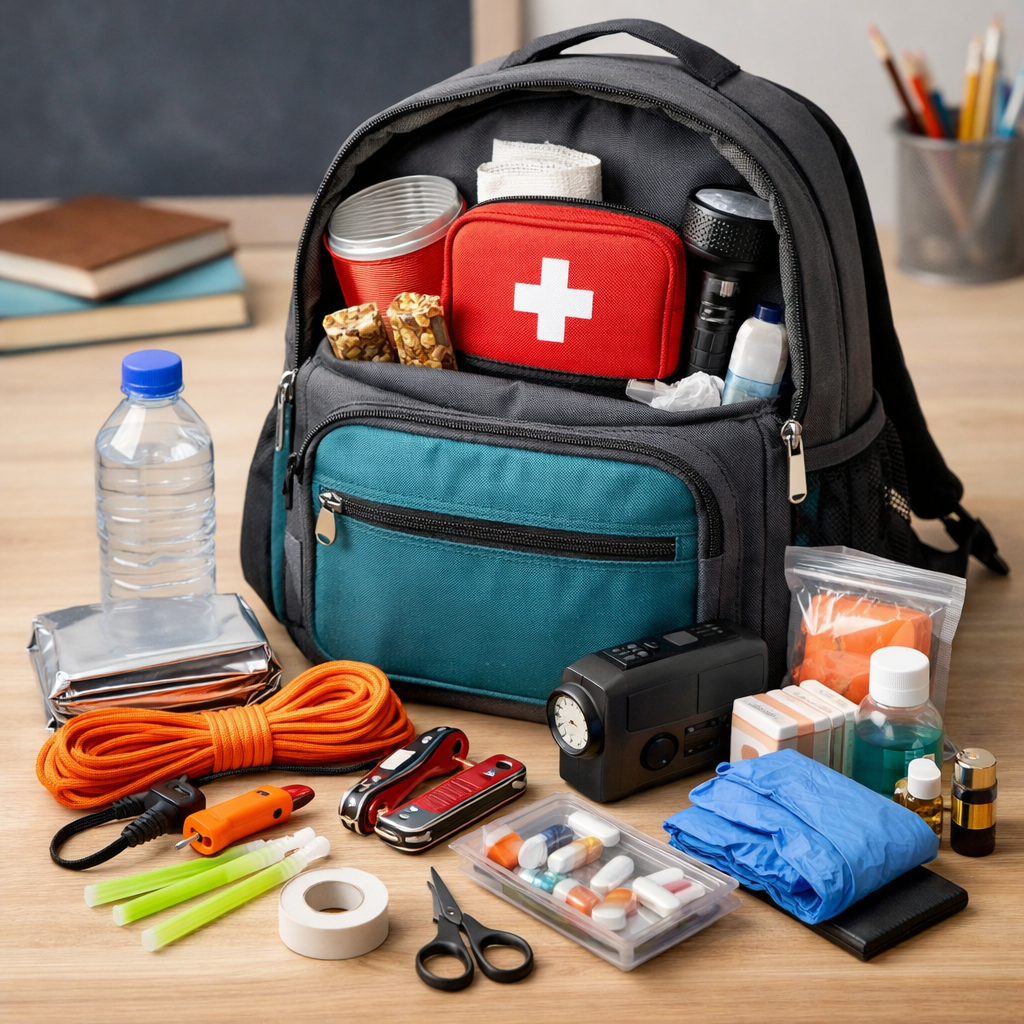

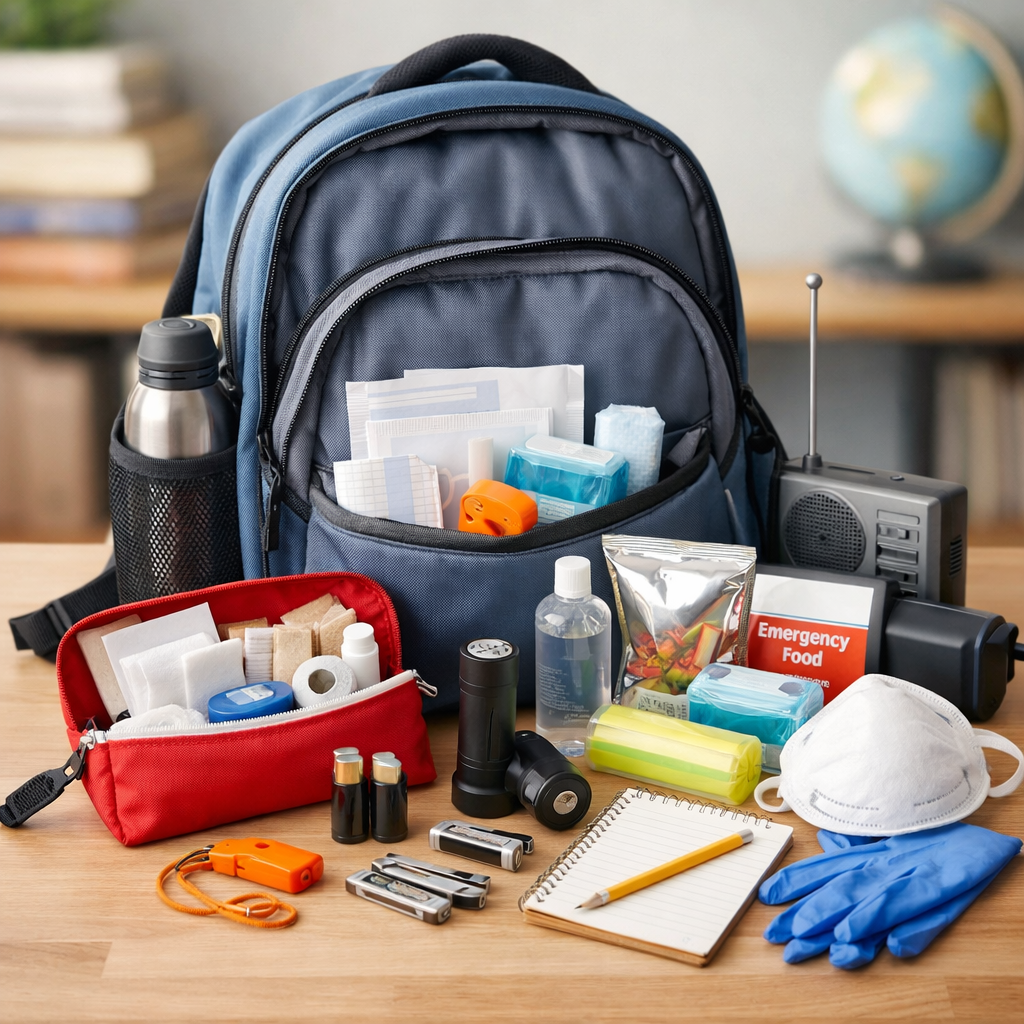
School backpack emergency kit planning helps students handle small problems calmly, safely, and with less disruption to the school day.
For Canadian families, a simple kit is not about fear. It is about being prepared for common situations such as a minor scrape, a headache addressed under school rules, a sudden weather change, a delayed bus, or an unexpected lockdown or evacuation where students may need basic comfort items. When packed thoughtfully, a school backpack emergency kit supports independence while still respecting school policies and age-appropriate safety limits.
At home and at school, prevention comes first. That means choosing safe items, checking them regularly, and making sure children know how and when to use them. Schools, parents, and students should always follow local school rules, manufacturer instructions, and emergency procedures. For broader Canadian health and safety guidance, families can also review resources from CCOHS, the Government of Ontario, and Health Canada.
Why a school backpack emergency kit matters
A well-planned school backpack emergency kit helps with low-level, everyday issues before they become bigger distractions. A student who has tissues, a spare mask if required by school preference, lip balm, or a weather-appropriate layer is often more comfortable and better able to focus.
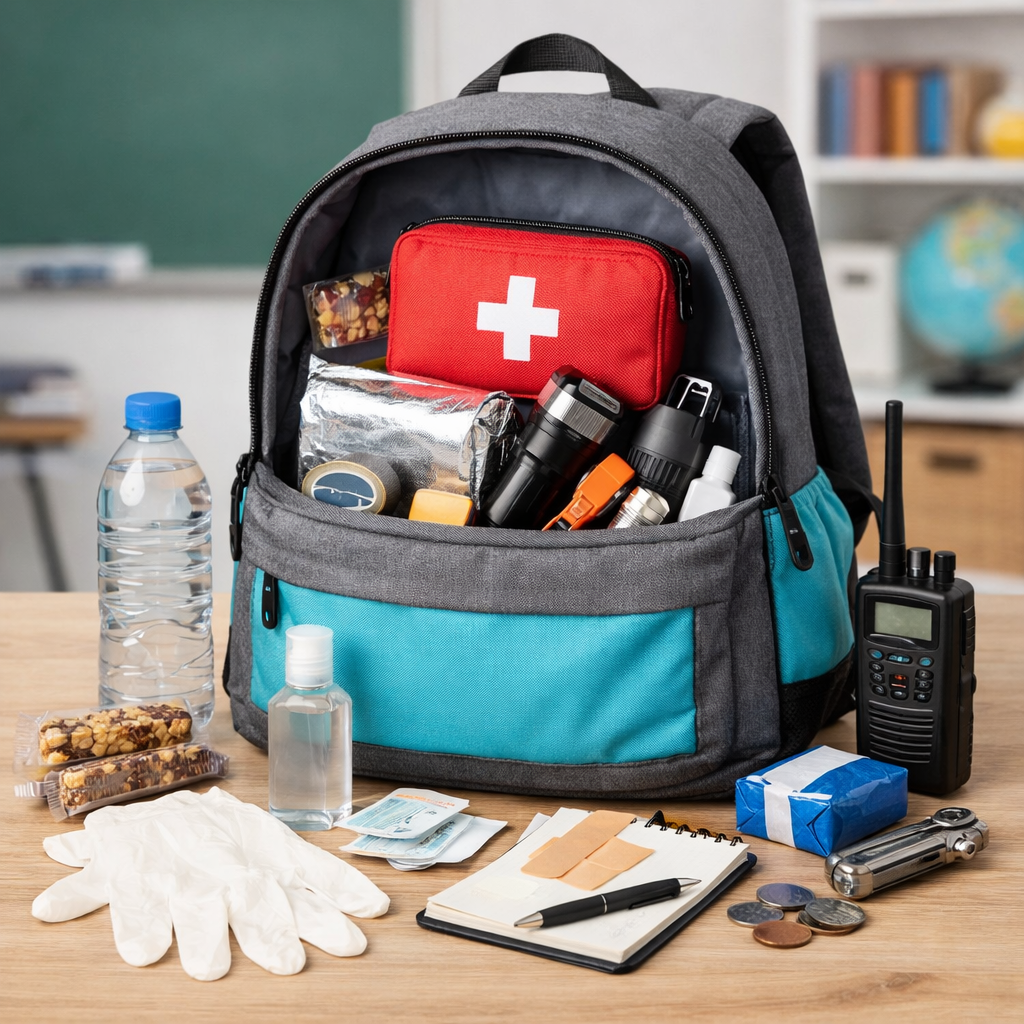
It can also support school safety planning. During an evacuation, shelter-in-place event, or transportation delay, small essentials can make a student feel more secure. The goal is not to replace school first aid, supervision, or emergency response. Instead, it is to give students a few approved personal supplies they can access quickly and safely.
For Ontario and across Canada, this approach fits well with basic prevention principles: identify likely risks, remove unnecessary hazards, and prepare practical controls. In safety terms, this is a simple way to reduce the impact of predictable day-to-day problems.
What to put in a school backpack emergency kit
The best school backpack emergency kit is light, simple, and tailored to the student’s age, commute, and school rules. Younger children need fewer items and more parent oversight. Older students may carry a little more, especially if they take transit, stay for sports, or have part-time work after school.
Core items for most students
- Student identification and contact information kept in a small card or pouch, based on school guidance.
- Tissues in a travel pack.
- Hand sanitizer in a small, leak-proof container if permitted.
- A few adhesive bandages for minor scrapes, if allowed by the school.
- A small pack of wipes for spills or messy hands.
- Lip balm for dry weather.
- A refillable water bottle, if practical and allowed in class.
- A non-perishable snack that fits school allergy policies.
- A spare pair of socks, especially useful in wet or snowy weather.
- A compact weather layer such as light gloves, a hat, or a foldable poncho depending on the season.
- A menstrual product if age-appropriate.
- A few dollars or a transit backup plan for older students, where appropriate.
Items for specific needs
Some students need individualized supplies. This may include prescription medication carried and stored exactly as the school and family have arranged, or comfort and sensory items for students who benefit from them. These decisions should be made carefully with the school.
If a student participates in after-school programs, athletics, co-op, or a part-time job, the kit may also include extra personal care items or a charging cable and power bank if permitted. Families can find additional prevention-focused safety resources at OHSE.ca, and older students preparing for work or placements may benefit from training support through OHSE training resources.
What should stay out of a school backpack emergency kit
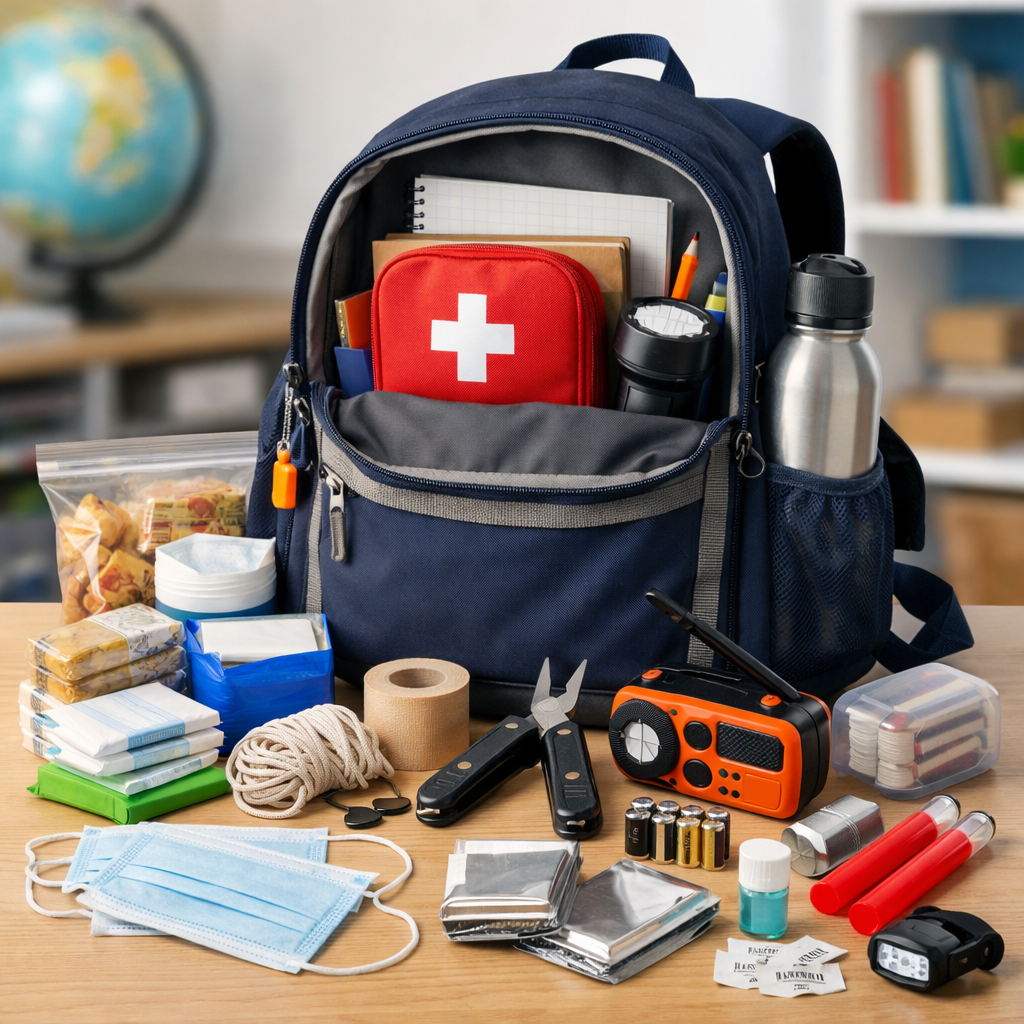
Not every useful-seeming item belongs in a student bag. A safe school backpack emergency kit avoids sharp tools, heavy objects, breakable containers, scented products that may affect others, and anything banned by school policy.
Families should be especially careful with medication. Students should not carry or use medications unless this is permitted and managed according to school rules, parent direction, and medical guidance. The same goes for medical devices or health products that require supervision. Avoid anything that could spill, trigger allergies, be used unsafely, or create confusion during an emergency.
Simple risk-control approach for families
A practical way to think about this is through a basic hierarchy of controls:
| Risk | Better control | What to avoid |
|---|---|---|
| Minor discomfort from weather | Pack spare socks or a light layer | Overloading the backpack with bulky gear |
| Small spills or messes | Use sealed wipes and tissues | Glass bottles or leaking liquids |
| Hunger during delays | Choose a safe, allergy-aware snack | Foods that conflict with school policies |
| Personal health needs | Follow school-approved care plans | Unapproved medication or unclear instructions |
This kind of planning keeps the kit useful while reducing new hazards.
How to build and maintain a school backpack emergency kit
Building a school backpack emergency kit works best when parents and students do it together. Start with likely situations: weather changes, transit delays, spills, minor scrapes, and longer school days. Then choose only the lightest, safest items that address those situations.
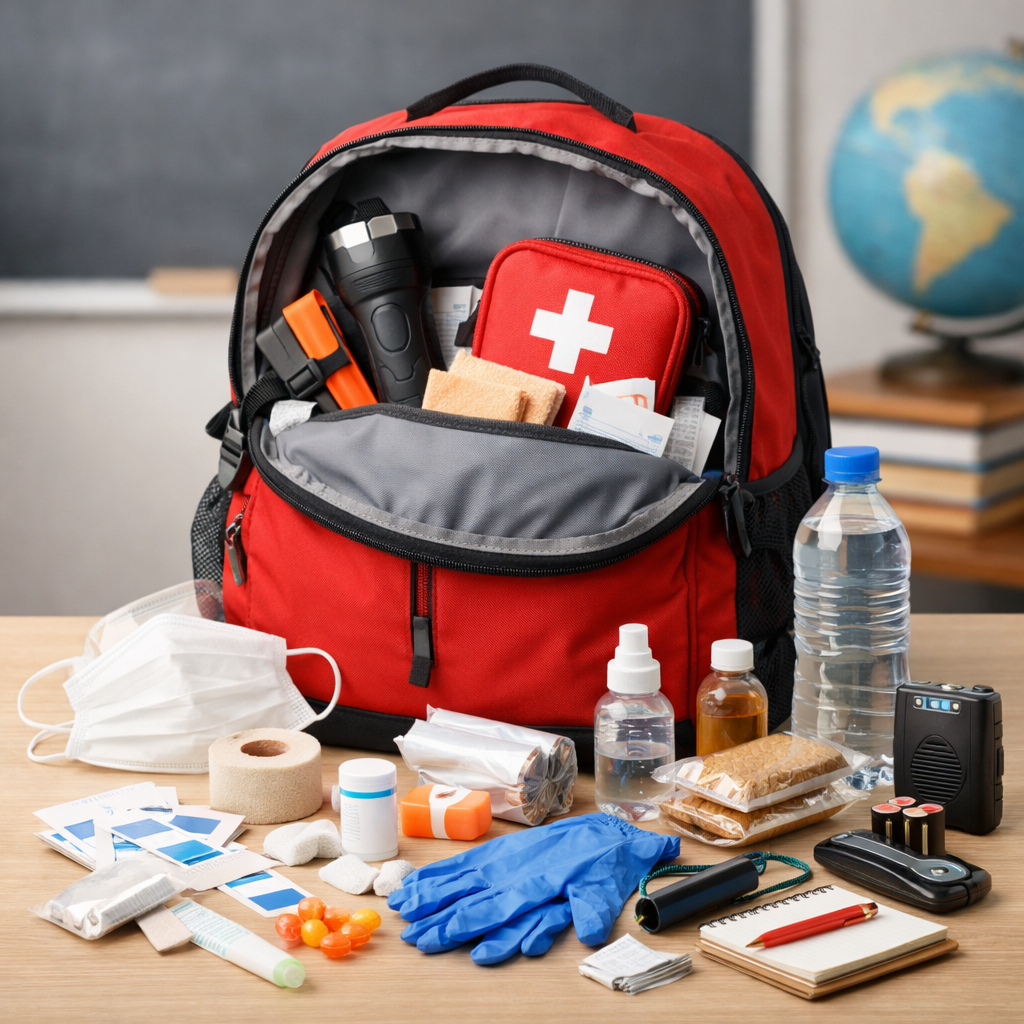
Use a small zip pouch so supplies stay organized and easy to find. Label it clearly. Show the student what each item is for, what not to touch without permission, and when to go straight to a teacher, school office, coach, or supervisor instead of handling a problem alone.
Short actionable checklist
- Check school policies before packing anything health-related.
- Keep the kit small enough to avoid unnecessary backpack weight.
- Use sealed, durable containers to prevent leaks.
- Replace used, expired, or seasonally inappropriate items every month.
- Update contact details when family or caregiver information changes.
- Review allergy rules before adding snacks or personal care products.
- Teach students to report injuries, symptoms, or emergencies to staff immediately.
For younger children, adults should inspect the kit regularly. For teens, a monthly self-check can build responsibility. Either way, the kit should change with the season. In winter, warm basics matter more. In warmer months, water access and sun-related comfort may be more relevant, depending on school activities and local guidance.
It is also worth checking backpack fit and weight. An emergency pouch should not make the bag too heavy. A good kit solves problems without creating a strain risk. This is particularly important for growing children and for students who walk long distances or use public transit.
Teaching students how to use the kit responsibly
A school backpack emergency kit is only effective if the student understands its purpose. The message should be calm and clear: these items are for small needs and short-term support, not for treating serious injuries or breaking school rules.
Students should know when to use the kit, when to ask for help, and when to leave everything alone and follow staff instructions. During an evacuation, lockdown, or other school emergency, they should always follow school procedures first. Personal items come second.
Parents can practise simple scenarios at home. For example: your socks are soaked after recess; your bus is delayed; you have a small paper cut; you need a tissue during class; you are staying after school longer than planned. These small conversations help students use the kit confidently and appropriately.
In the end, a school backpack emergency kit is a practical tool for comfort, readiness, and everyday safety. When it is age-appropriate, policy-compliant, and reviewed often, it helps students manage minor issues while supporting the larger safety systems already in place at school. For Canadian families, that makes the school backpack emergency kit a smart part of back-to-school planning all year long.