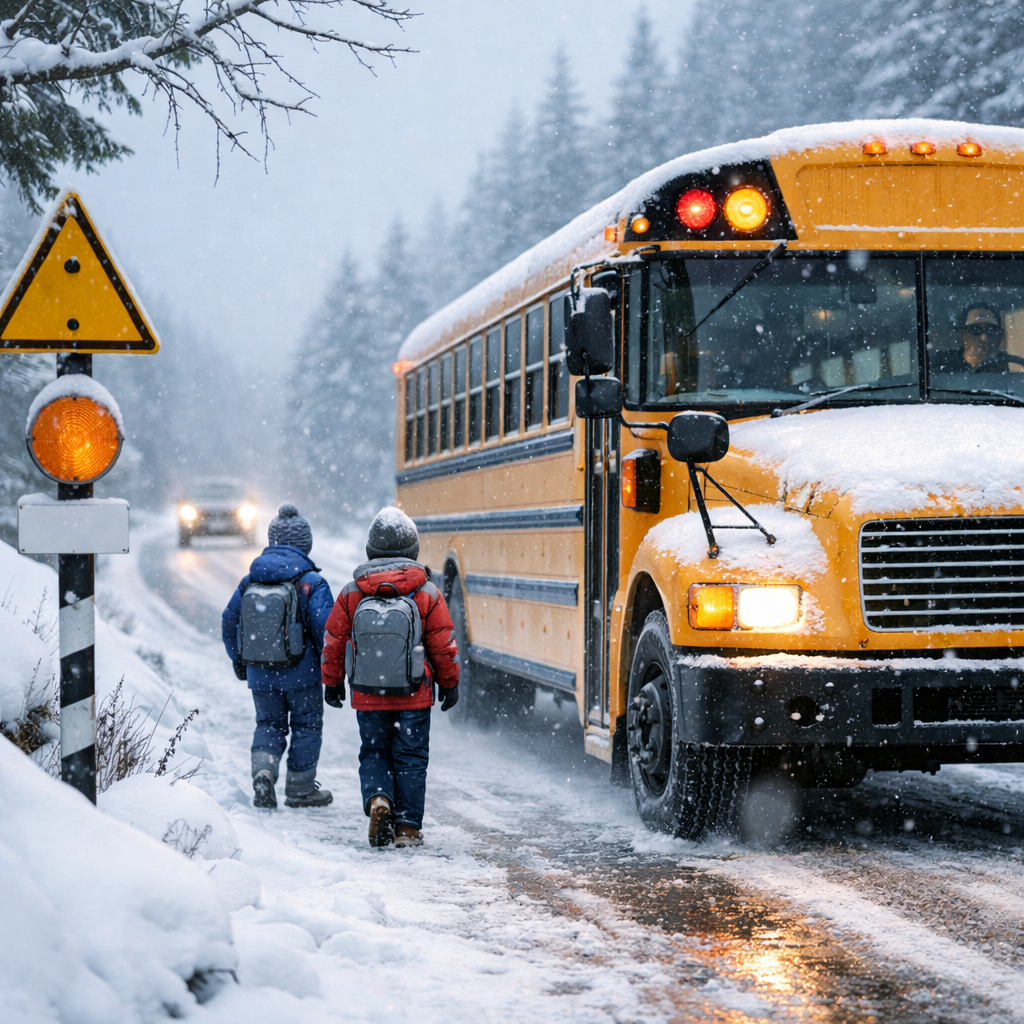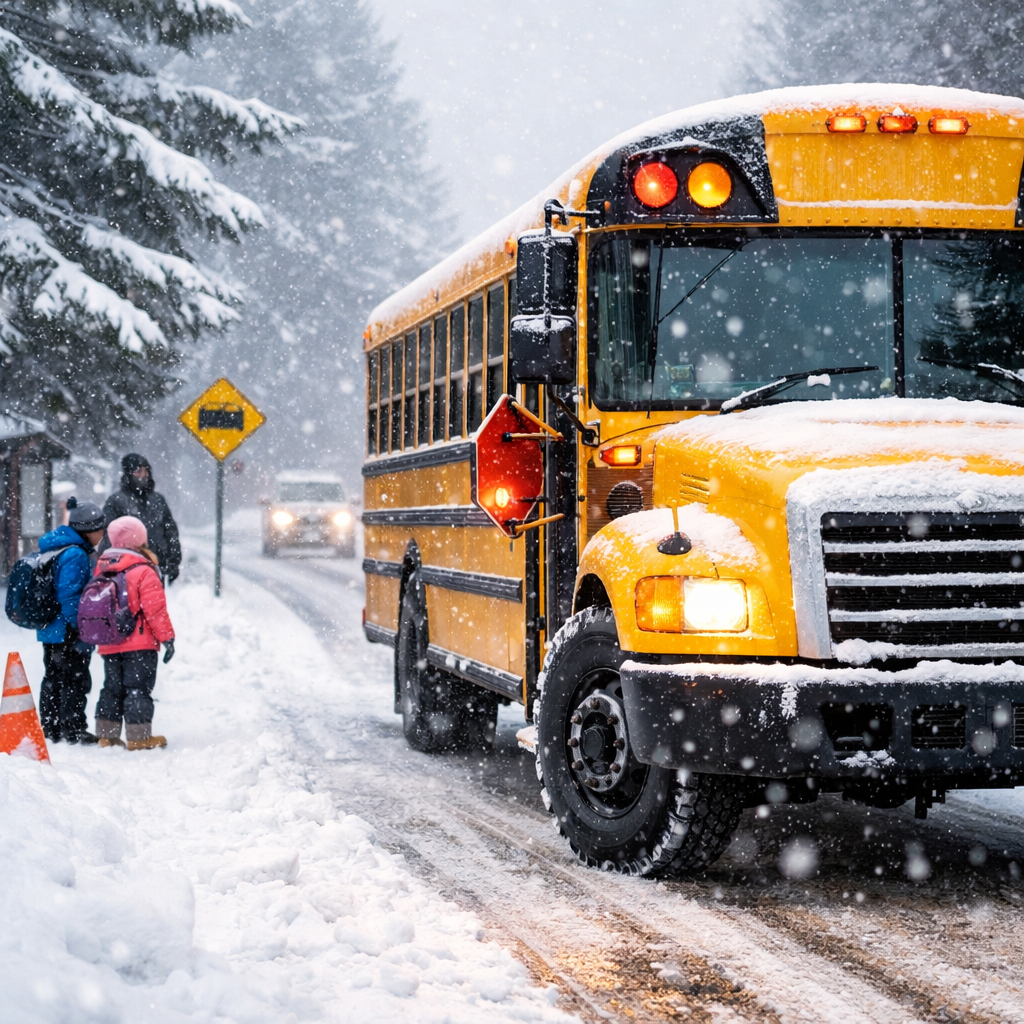

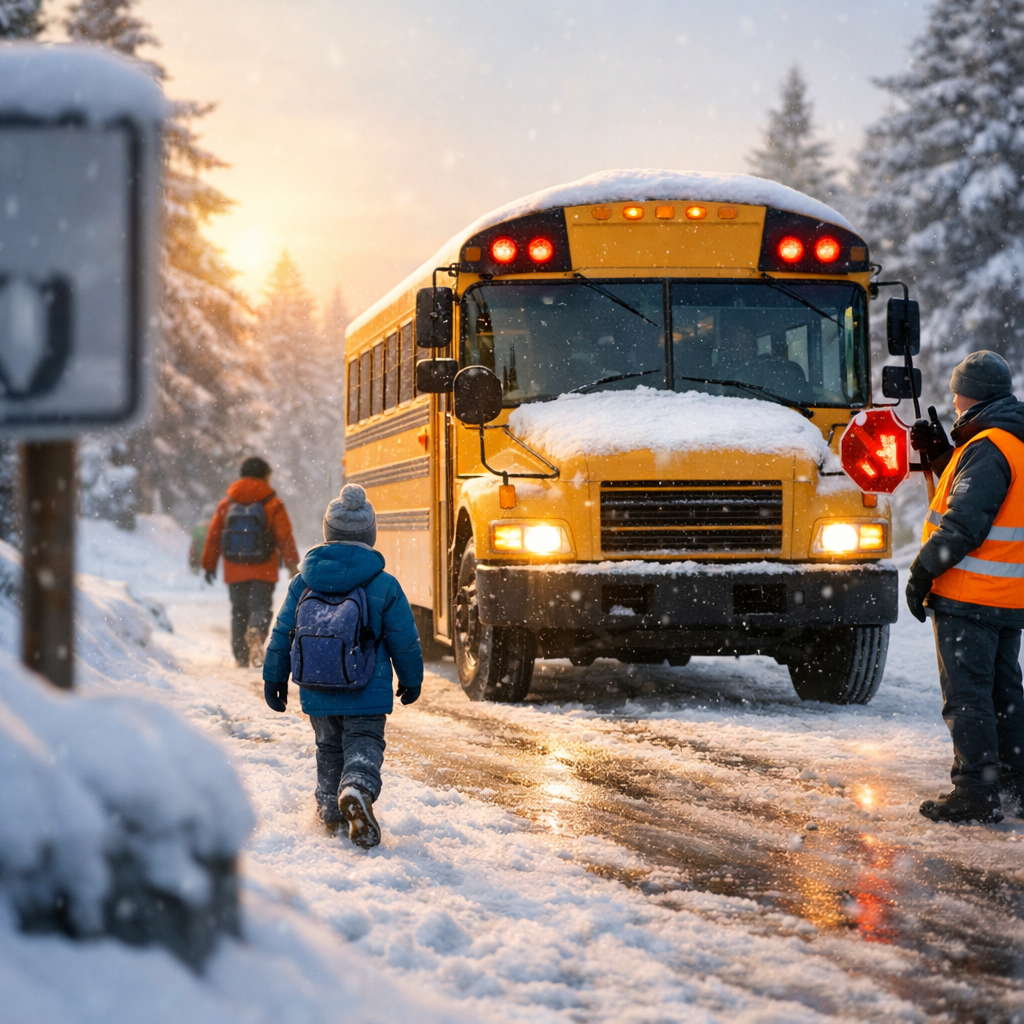
School bus winter safety matters most when roads, sidewalks, and bus loading areas turn slippery. In Canadian winters, snow, ice, wind, freezing rain, and reduced daylight can quickly change a routine trip into a higher-risk situation for students, parents, drivers, and school staff.
A practical winter safety plan focuses on prevention: preparing for delays, dressing for the weather, choosing safe pickup spots, adjusting driving habits, and following clear loading and unloading rules. For Ontario families and schools, the safest approach is to follow local school board procedures, transportation provider instructions, and public guidance from organizations such as CCOHS and the Government of Ontario.
Why school bus winter safety needs extra attention
Winter creates multiple hazards at the same time. Roads may look clear but still contain black ice. Snowbanks can narrow streets and block sightlines. Bus steps and handrails can become wet and slippery, while heavy boots, backpacks, and bulky coats can affect balance and movement.
For students, the main risks are slips and falls, being too close to a moving bus, crossing in poor visibility, and waiting outdoors without enough protection from cold wind or snow. For drivers and schools, winter adds braking challenges, longer stopping distances, schedule disruptions, and communication issues when conditions change quickly.
Using a simple hazard-control mindset can help. In OHSE terms, the best controls start with reducing exposure where possible, then improving the environment, equipment, and behaviour. That can include changing pickup routines during storms, clearing snow and ice from access areas, maintaining buses properly, and teaching students calm, repeatable safety habits. Families looking for broader prevention resources can also explore OHSE.ca for practical safety information.
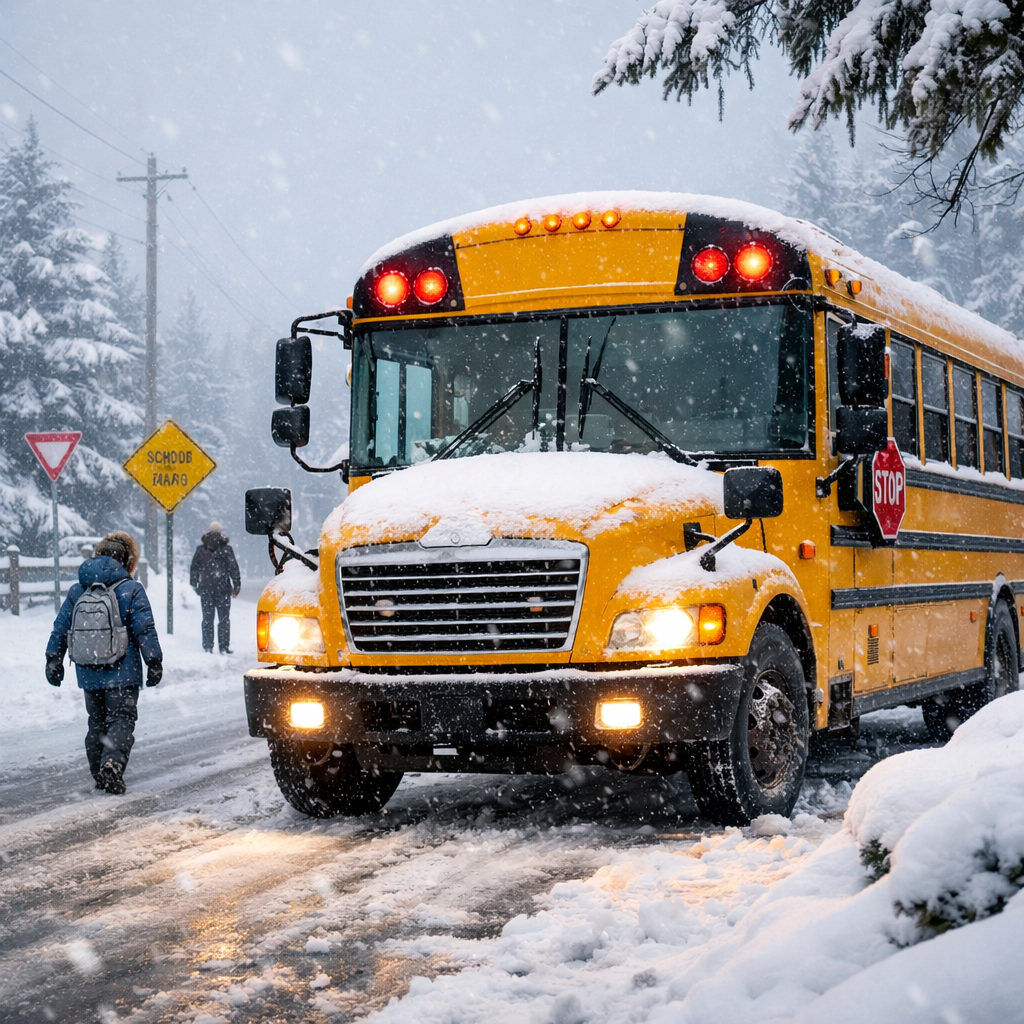
School bus winter safety rules for students and families
Before leaving home
Winter safety starts before the bus arrives. Students should dress in layers, wear boots with traction, and use hats, mittens, and weather-appropriate outerwear. Loose scarves, dangling drawstrings, or oversized items that can catch on handrails or doors should be secured.
Parents and caregivers should build extra time into the morning routine. Rushing increases the chance of slips on icy driveways and sidewalks. If weather is severe, confirm transportation updates through the school or transportation provider before leaving.
At the bus stop
Students should stand back from the curb or road edge and avoid rough play, pushing, or sliding on snowbanks. Snow piles can hide uneven surfaces, ice patches, or traffic approaching from the side. If visibility is poor, bright winter clothing or reflective details can help drivers see students more easily.
Where possible, choose or use a stop area with a clear walking path and good sightlines. Adults supervising younger children should stay alert for turning vehicles, snowplows, and reduced traction near intersections.
- Arrive a few minutes early so there is no need to run.
- Wait in a safe spot away from traffic and away from snowbanks that block visibility.
- Keep bags closed and straps secure.
- Never approach the bus until it has fully stopped and the driver signals it is safe.
- Use handrails and take one step at a time when boarding.
Crossing and unloading in winter conditions
Crossing near a bus can be especially dangerous in snow and ice conditions. Students should always follow the driver’s instructions and cross only when directed. Running in front of the bus, walking too close to the front bumper, or assuming other vehicles will stop can lead to serious incidents.
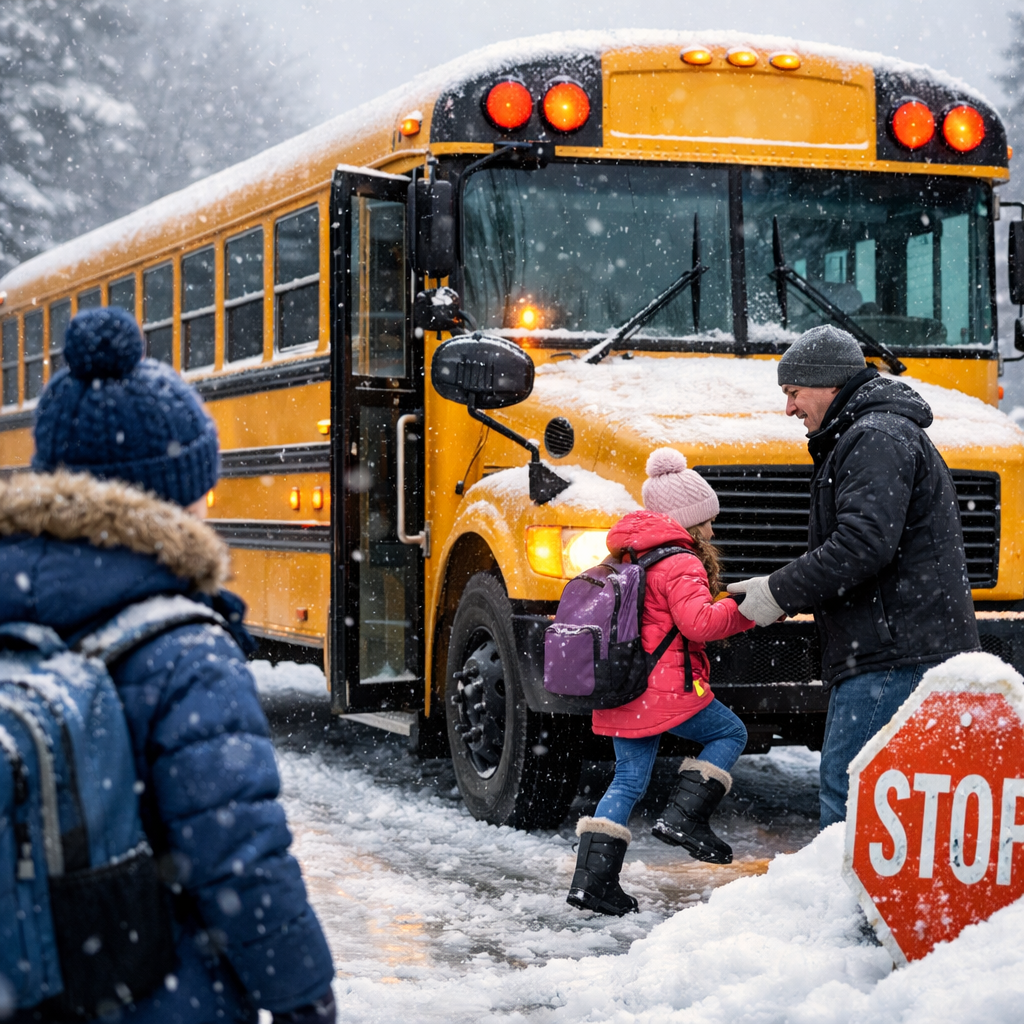
When getting off the bus, students should step down carefully, watch for icy ground, and move well away from the bus once they are clear. If something drops near the bus, they should never bend down to pick it up without getting the driver’s attention first.
School bus winter safety practices for drivers and schools
Vehicle readiness and route planning
Drivers and operators play a central role in school bus winter safety. Pre-trip inspections become even more important in winter. Items such as tires, brakes, lights, mirrors, wipers, defrosters, heaters, emergency equipment, and step surfaces should be checked according to workplace procedures and manufacturer guidance.
Route planning should account for hills, tight turns, drifting snow areas, and locations where students may be hidden by parked cars or snowbanks. If a stop becomes unsafe because of weather or road conditions, schools and operators should follow local procedures for reassessment and communication.
Driving behaviour in snow and ice
Safe winter driving requires slower speeds, greater following distance, gentle braking, and smooth steering. Sudden movements can cause skidding even at low speed. Drivers should expect longer stopping distances and remember that children may move unpredictably near loading zones.
Visibility is another major issue. Frosted windows, blowing snow, early darkness, and splashed road grime can reduce a driver’s view. Keeping windows, mirrors, lights, and signs clear is a basic but critical control measure. Training refreshers can also help reinforce seasonal driving habits; where relevant, schools and employers may benefit from safety education resources at learn.ohse.ca.
| Winter hazard | Main risk | Practical control |
|---|---|---|
| Icy bus steps | Slip and fall during boarding | Clear moisture and ice, use handrails, board slowly |
| Snowbanks at stops | Blocked visibility for students and drivers | Use safer stop locations and maintain clear sightlines where possible |
| Black ice on roads | Loss of control or longer stopping distance | Reduce speed, increase following distance, brake gently |
| Heavy winter clothing | Restricted movement on stairs or seats | Secure loose items and move carefully |
Practical prevention steps for snow, ice, and extreme cold
The most effective winter safety plans are simple and consistent. Schools can review bus-zone maintenance, communicate delay and cancellation procedures clearly, and remind families about safe waiting and crossing habits. Property managers and staff should clear snow and apply appropriate ice control measures to walkways, loading areas, and entrances according to site procedures.
Students should be reminded that a snow day atmosphere can lead to risk-taking. Sliding near the curb, throwing snow, crowding the bus door, or walking behind the bus can become much more dangerous when traction and visibility are poor.
Cold exposure is also part of school bus winter safety. Students may have to wait longer during storms or traffic disruptions, so weather-appropriate clothing matters. Families should also have a backup plan if a child misses the bus or if service is delayed. As always, follow local school, workplace, manufacturer, and emergency guidance where applicable.
Short actionable checklist
- Check weather and school transportation updates before leaving.
- Wear warm layers, boots with grip, and visible winter clothing.
- Leave early and walk carefully on snow- or ice-covered surfaces.
- Wait well back from the road and avoid horseplay.
- Board only after the bus stops and the driver signals.
- Use handrails and watch for icy steps.
- Cross only when instructed and stay where the driver can see you.
- For schools and operators: inspect buses, adjust routes as needed, and communicate changes clearly.
Building a safer winter routine
School bus winter safety works best when everyone follows the same routine: families prepare early, students wait and board carefully, drivers adapt to road conditions, and schools support safe stops and clear communication. Small preventive steps make a real difference during Ontario winters, especially when snow and ice affect traction, visibility, and timing.
By focusing on calm habits, hazard awareness, and practical controls, communities can reduce common winter risks around school transportation. Review your local procedures regularly, reinforce safe behaviour with children, and use trusted guidance from sources such as CCOHS, Ontario, and Parachute. Consistent school bus winter safety practices help students arrive and return home more safely all season long.