


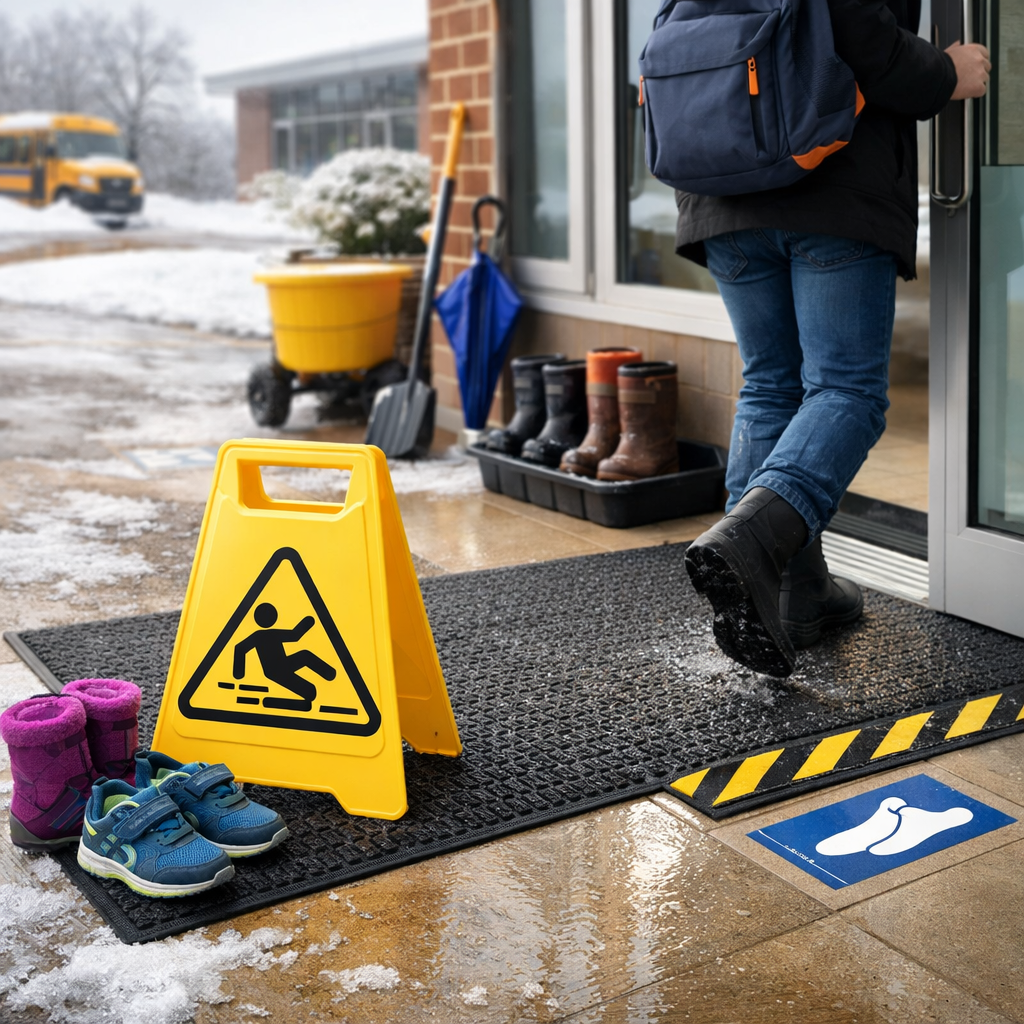

School entrance slip prevention starts before the first bell rings. In Canadian winters, snow, slush, ice, and tracked-in water can quickly turn a school doorway, vestibule, or main hall into a high-risk area for students, staff, parents, visitors, and young workers.
A practical prevention plan helps schools reduce falls, protect busy entrances, and keep daily routines moving safely. The goal is not only to react to bad weather, but to control hazards at the door, on the walkway, and inside the building before slips happen.
For Ontario and other Canadian schools, the most effective approach combines good housekeeping, outdoor ice control, proper matting, clear supervision, and regular inspections. Resources from CCOHS, Ontario, and trusted safety education sources such as OHSE.ca can support a stronger entrance safety program.
- Why school entrance slip prevention matters in winter
- School entrance slip prevention outdoors: control snow and ice before it comes inside
- School entrance slip prevention indoors: mats, moisture control, and housekeeping
- Using the hierarchy of controls for school entrance slip prevention
- A short school entrance slip prevention checklist
Why school entrance slip prevention matters in winter
School entrances are high-traffic transition zones. Students may arrive carrying backpacks, sports equipment, lunches, or musical instruments, while staff and visitors may be rushing to get inside. When snow and slush are tracked through doors, floors can become slippery within minutes.
This is why school entrance slip prevention should focus on the full path of travel, not just the inside floor. Hazards often begin in parking lots, sidewalks, bus loading areas, ramps, stairs, and drop-off zones. If ice is not controlled outside, indoor floors will be harder to keep safe.
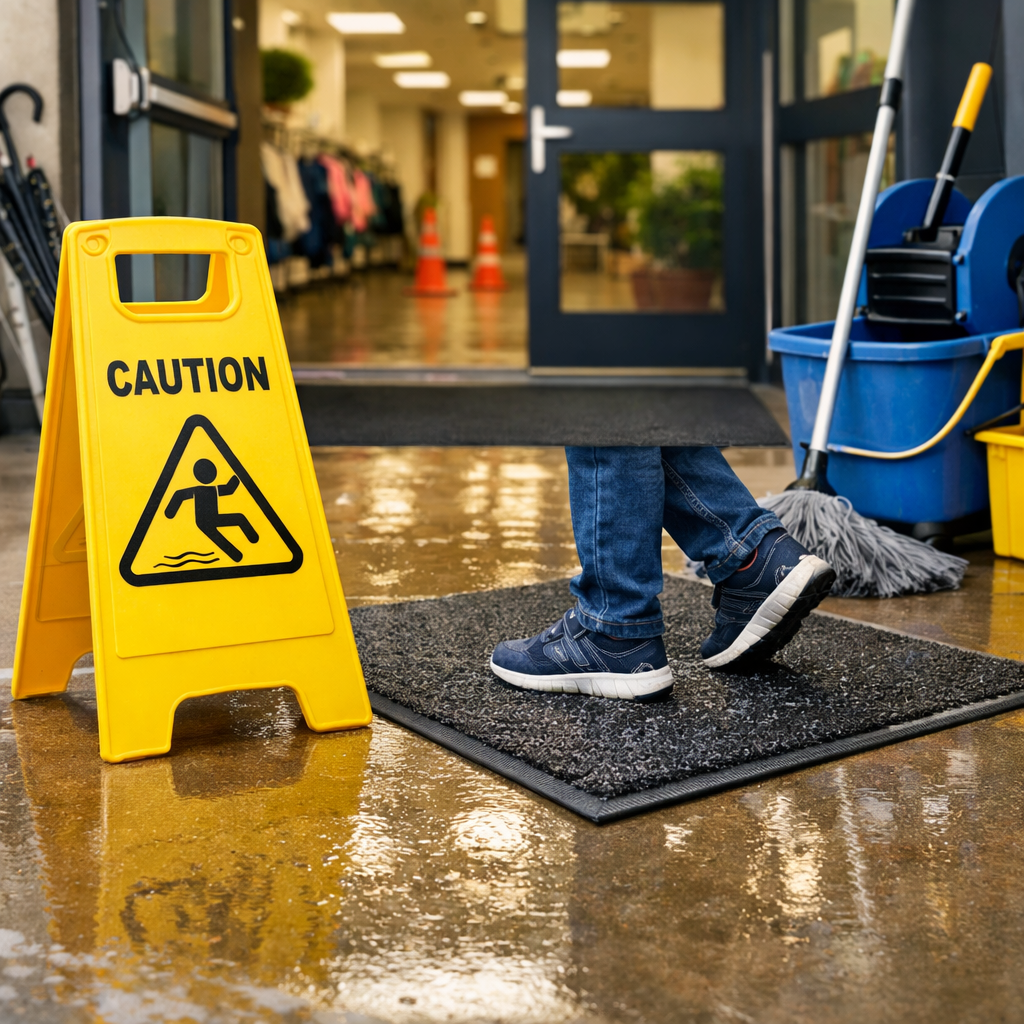
Young children may not recognize slippery surfaces right away. Older students may move quickly, wear footwear with poor traction, or gather near entrances during arrival, dismissal, and recess. Custodial staff, educational workers, office staff, and contractors can also face increased risk when carrying supplies through wet entry areas.
In practical terms, schools need layered controls that reduce exposure at every step. This follows the general prevention mindset promoted by organizations such as CCOHS: identify the hazard, assess where people are exposed, and put realistic controls in place.
School entrance slip prevention outdoors: control snow and ice before it comes inside
Prioritize the approach to the door
Outdoor conditions strongly affect indoor slip risk. Snow clearing and de-icing should focus first on the routes people actually use, including sidewalks, curb cuts, accessible paths, ramps, stairs, and the immediate landing at each school entrance.
Even a well-mopped lobby will become slippery again if students continue walking through packed snow or freezing slush just outside the doorway.
Use practical outdoor controls
- Clear snow early and often during active weather.
- Apply suitable ice control products based on temperature, surface type, and manufacturer guidance.
- Pay extra attention to shaded areas, refreezing zones, and surfaces near downspouts.
- Keep drains, grates, and runoff paths open so meltwater does not pool and refreeze.
- Inspect handrails, stairs, and ramps for buildup that reduces traction.
- Separate pedestrian routes from vehicle splash zones where possible.
Schools should also review whether certain entrances become problem areas in repeated freeze-thaw conditions. If one doorway consistently develops ice, a temporary closure or rerouting plan may be safer than trying to manage constant refreezing.
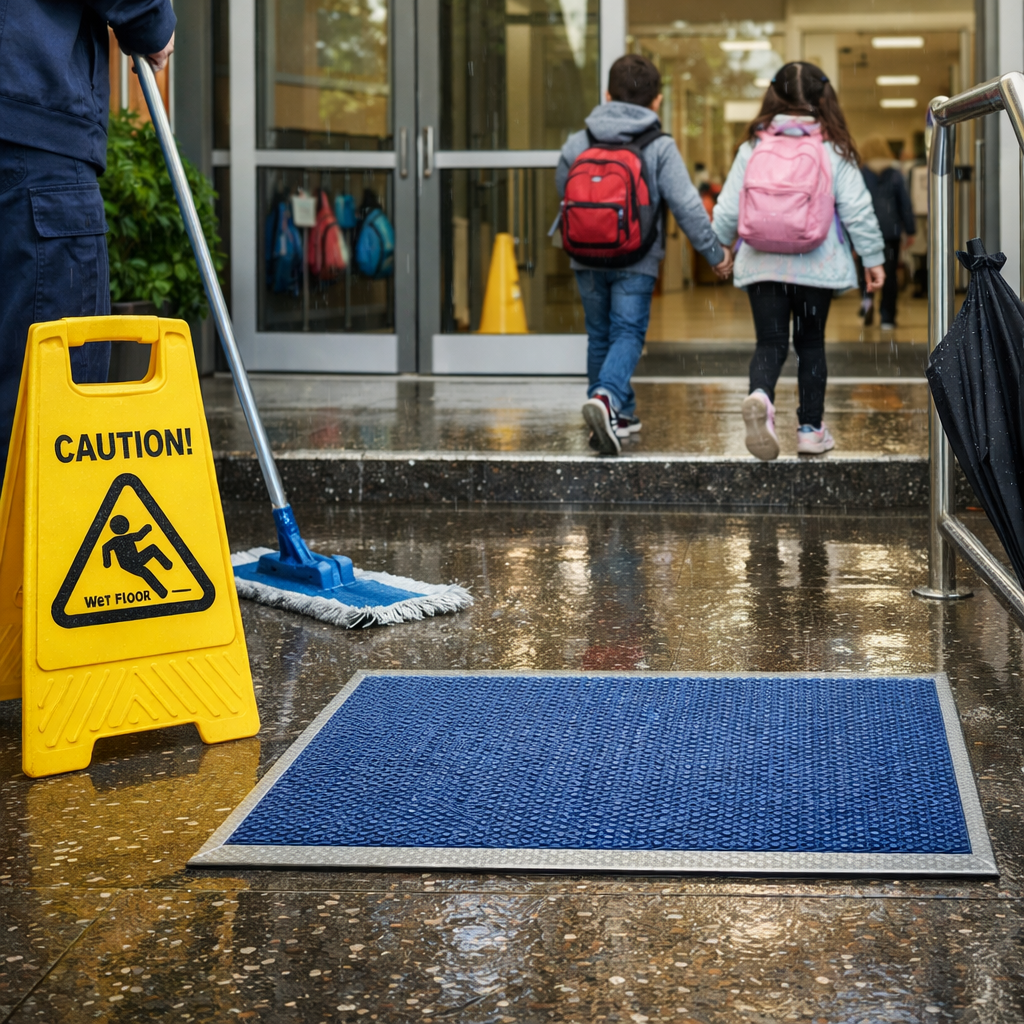
Where winter work is assigned to school staff or contractors, roles should be clear. Everyone should know who checks the site, who applies product, when re-inspection happens, and how hazards are reported. If schools need broader workplace safety learning for staff, OHSE training resources may help support internal procedures.
School entrance slip prevention indoors: mats, moisture control, and housekeeping
Build a moisture-control zone
Once people enter the building, the next line of defence is a well-designed moisture-control area. This should begin at the threshold and continue through the vestibule and into the lobby or main corridor. The aim is to capture snow, water, and grit before it spreads farther into the school.
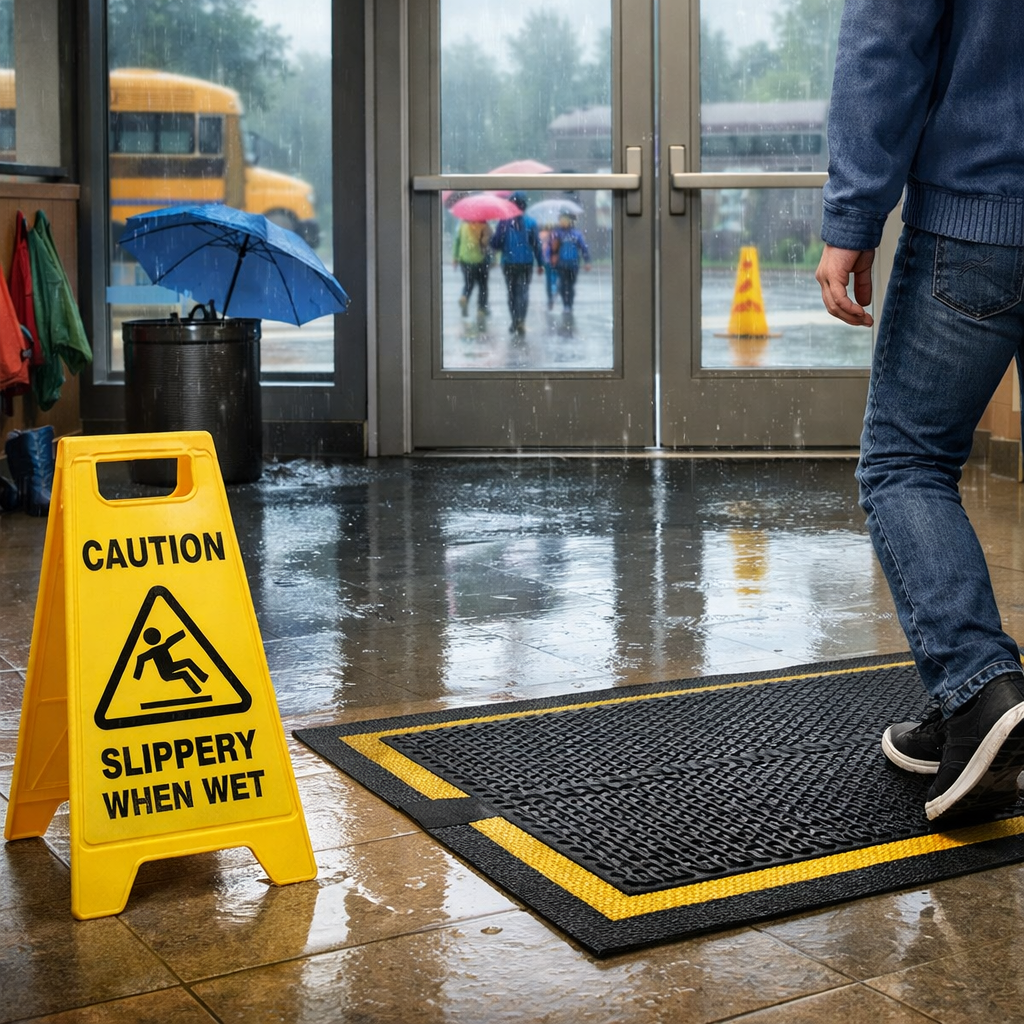
Good matting is one of the most important parts of school entrance slip prevention. Mats should lie flat, resist movement, and be large enough for several footsteps so shoes can shed moisture effectively. Curled edges, saturated mats, or gaps between mats can create new trip and slip hazards.
Support mats with active housekeeping
Mats alone are not enough during busy winter periods. Floors may need repeated checks and quick response cleaning throughout arrival times, lunch periods, recess returns, and dismissal. Wet floor signs may be appropriate during active cleaning, but signs should support control measures, not replace them.
Practical indoor controls include:
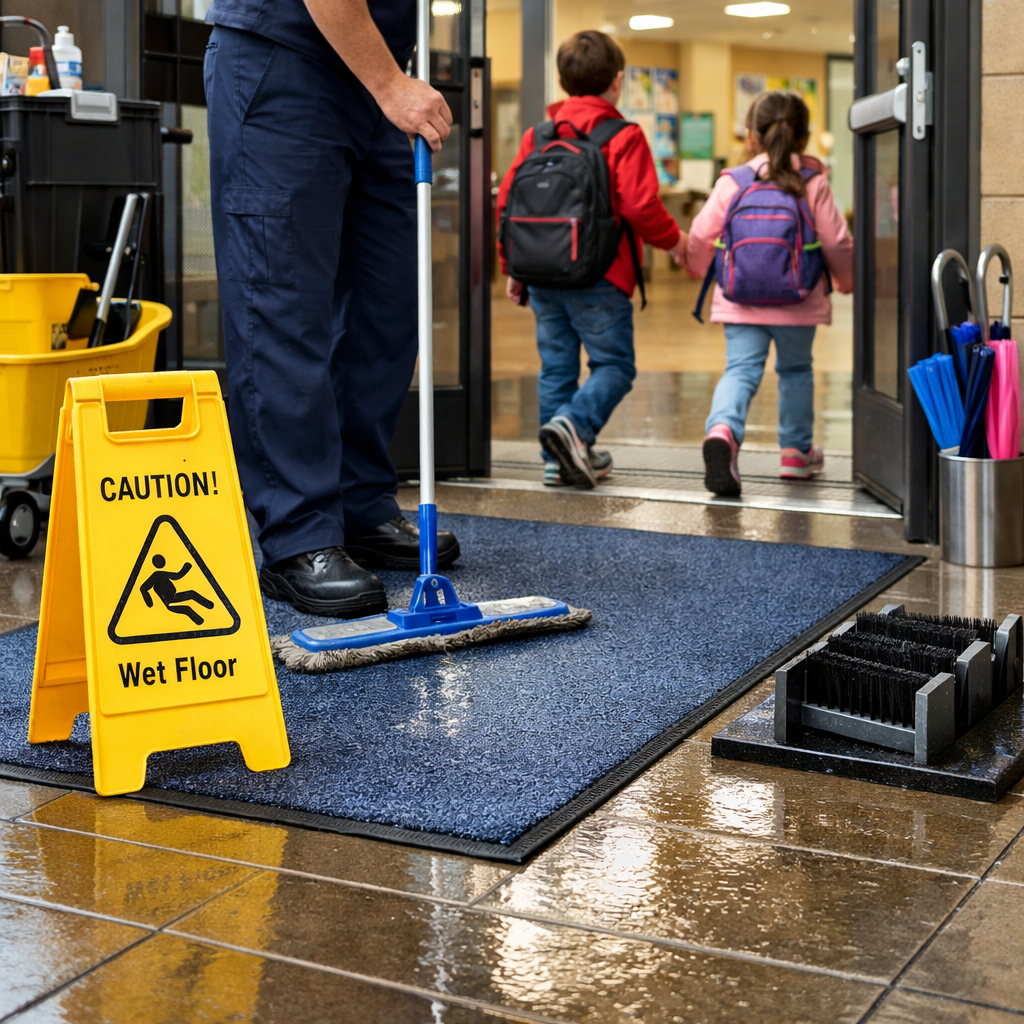
- Replacing soaked mats promptly.
- Mopping or spot-drying visible wet areas before water spreads.
- Using entrance flooring that maintains traction when wet.
- Keeping umbrellas, boot trays, and storage areas from blocking walking routes.
- Ensuring lighting is strong enough for people to see wet spots and slush buildup.
- Checking that doors close properly so wind, snow, and meltwater do not worsen conditions.
It also helps to reduce congestion. If one entrance becomes overcrowded, schools can stagger traffic flow, direct visitors to a monitored entry, or use barriers to guide people along the driest route. In schools with younger children, staff reminders to walk, wipe boots, and hold handrails can make a real difference.
Using the hierarchy of controls for school entrance slip prevention
The hierarchy of controls is a useful way to organize decisions. While winter weather cannot be eliminated, exposure can still be reduced through better design, maintenance, and behaviour.
| Control level | School entrance example | Practical benefit |
|---|---|---|
| Elimination | Close a hazardous entrance temporarily during severe icing | Removes exposure from that route |
| Engineering controls | Install canopies, drainage improvements, slip-resistant flooring, and handrails | Reduces water buildup and improves traction |
| Administrative controls | Inspection schedules, snow-clearing procedures, traffic flow plans, and staff monitoring | Improves consistency and faster response |
| PPE | Appropriate winter footwear for staff and workers outside | Supports traction but does not replace other controls |
For most schools, the best results come from combining engineering and administrative controls. For example, a covered entrance with quality mats is stronger when paired with frequent checks, assigned responsibilities, and rapid cleanup.
In Ontario, schools should also follow local board procedures, site-specific maintenance practices, and manufacturer instructions for de-icing products, floor finishes, and mat systems. General public health and injury-prevention information from Parachute and federal guidance from Health Canada may also be useful where relevant.
A short school entrance slip prevention checklist
Daily winter checklist for schools
- Inspect sidewalks, ramps, stairs, and entry landings before arrival times.
- Clear snow and treat icy areas using site-approved methods.
- Check that drains and runoff paths are open.
- Place secure entrance mats with enough length for multiple steps.
- Monitor vestibules and lobbies for tracked-in water and slush.
- Replace saturated mats and dry wet floors promptly.
- Use caution signs only where active wet-floor hazards are being addressed.
- Remind students and visitors to walk, wipe boots, and use handrails.
- Recheck entrances during recess, lunch, and dismissal.
- Report recurring trouble spots for longer-term correction.
Effective school entrance slip prevention is not complicated, but it does require consistency. Small oversights at the doorway can quickly lead to bigger risks inside the building.
By controlling snow and ice outside, managing moisture inside, and assigning clear responsibilities, schools can make entrances safer for students, staff, families, and visitors all winter long. For Canadian schools, a calm and practical prevention plan is the best foundation for school entrance slip prevention that works every day.