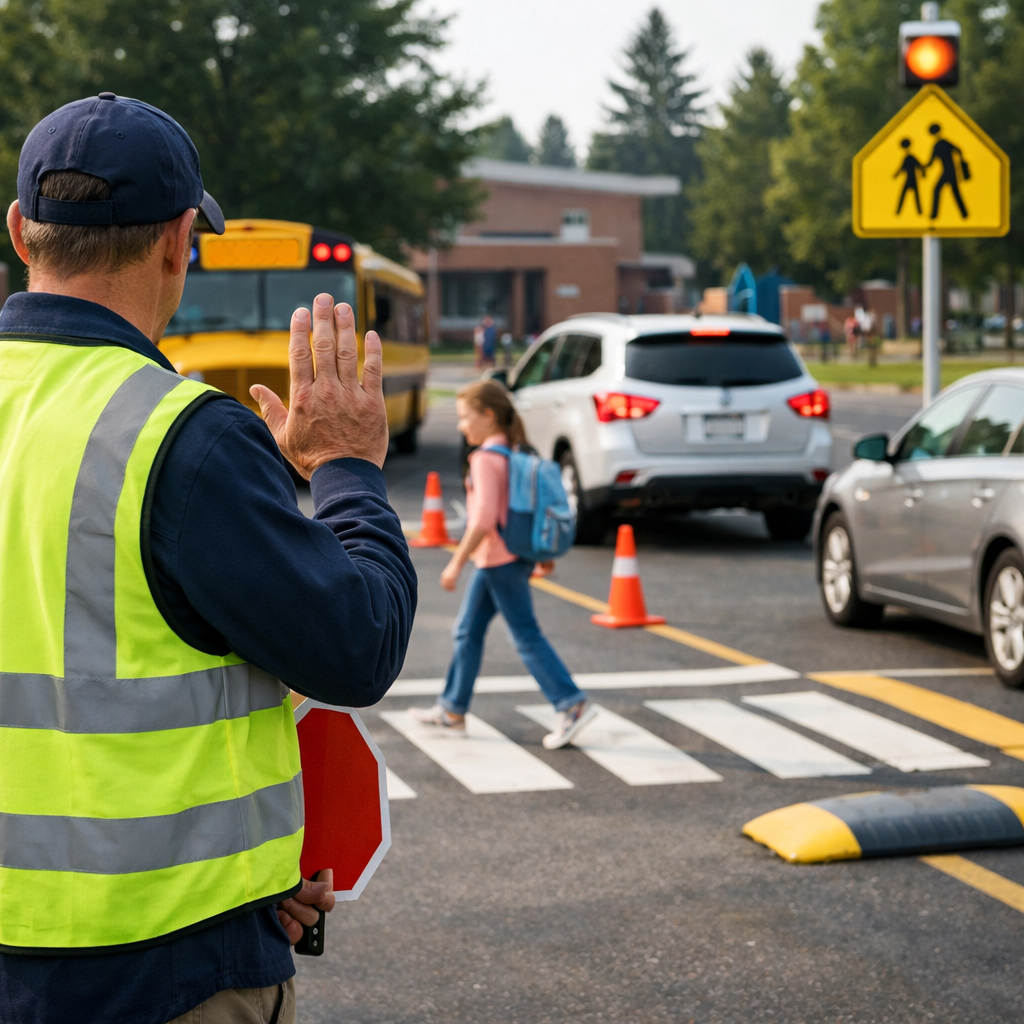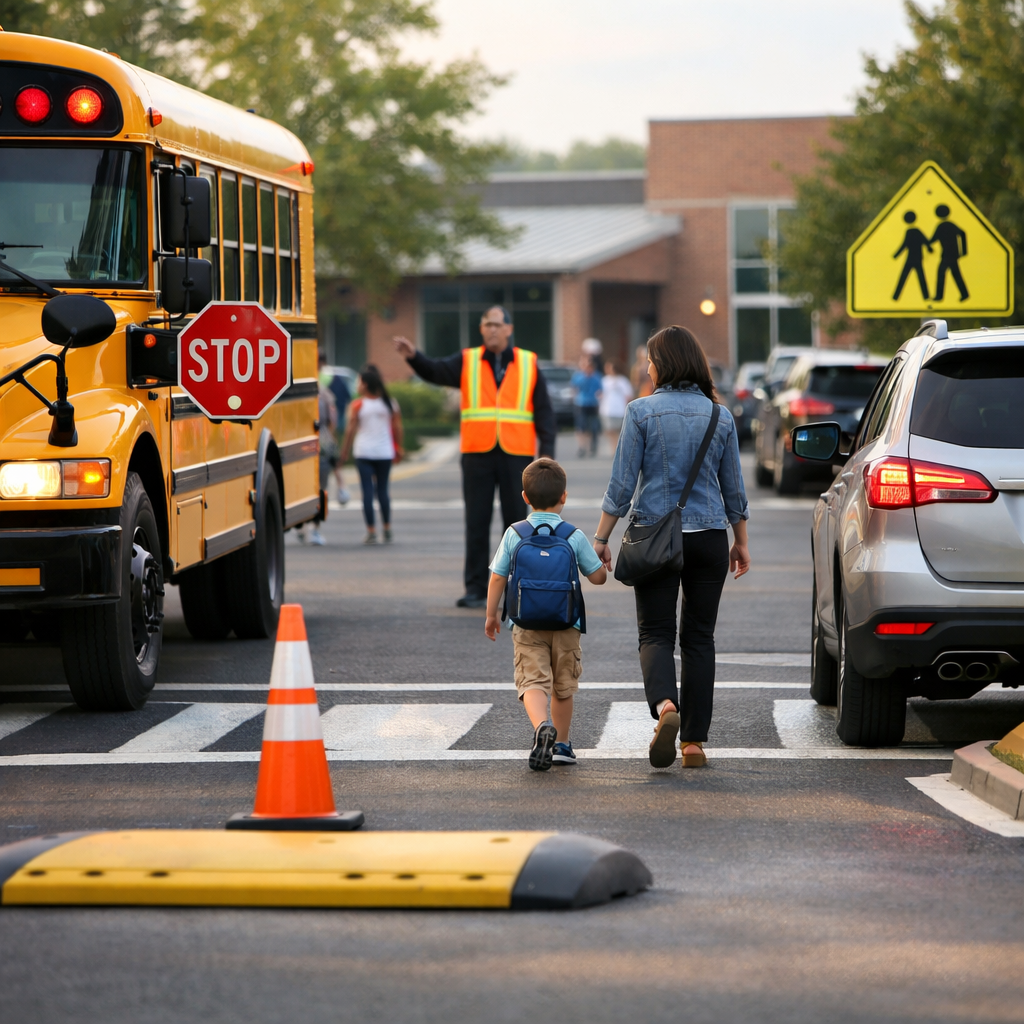

School parking lot safety matters every day because the school lot is one of the busiest shared spaces on campus. Parents, school bus drivers, staff, students, cyclists, and delivery vehicles all move through the same area, often within a short time window during morning drop-off and afternoon pick-up.
That mix creates predictable risks: backing vehicles, distracted walking, speeding, poor visibility, congestion, and confusion about right of way. For Canadian schools and families, the goal is simple: create a calm, organized traffic environment where drivers can see clearly, pedestrians know where to walk, and everyone follows the same rules.
This practical guide explains the main hazards, the controls that work best, and the daily habits that help reduce incidents. It is intended for school leaders, workers, parents, older students, and community members who share responsibility for safer school grounds. For broader workplace and safety guidance, readers can also explore OHSE.ca and training resources at learn.ohse.ca.
Why school parking lot safety needs a clear plan
School lots are not ordinary parking areas. They combine vehicle movement with children who may be small, difficult to see, excited, distracted, or unfamiliar with traffic patterns. During peak periods, a safe design can fail if people stop in the wrong place, cross between parked vehicles, or rush to save a few seconds.
In Ontario and across Canada, schools also need procedures that fit their site layout, student age group, staffing levels, weather conditions, and nearby roads. Winter adds snowbanks, ice, and reduced sightlines. Darkness during parts of the school year can also make it harder for drivers to spot pedestrians in time.
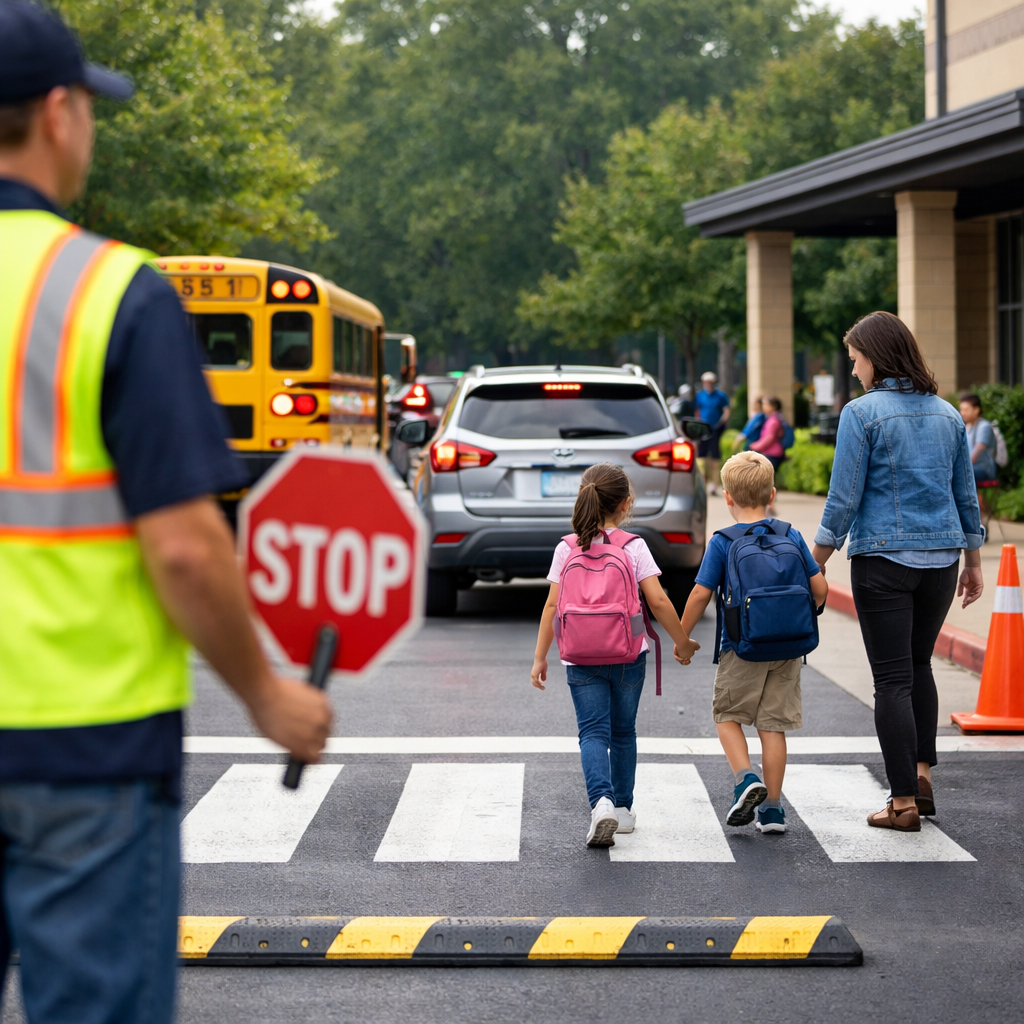
A good school parking lot safety plan should define how vehicles enter and exit, where buses load, where families drop off, where staff park, and where pedestrians cross. It should also assign responsibilities for supervision, signage checks, snow clearing, visitor instructions, and incident reporting. Guidance from organizations such as CCOHS and public safety resources from Parachute can support prevention-focused planning.
Common hazards to watch for
- Vehicles backing out near walking paths
- Children crossing outside marked routes
- Drivers stopping in fire routes or bus zones
- Congestion that blocks visibility
- Distracted driving or phone use
- Slippery pavement, snowbanks, and poor drainage
- Insufficient lighting during darker hours
- Visitors who do not know the site rules
School parking lot safety controls that reduce risk
The best approach is to use the hierarchy of controls where practical. Elimination and engineering controls usually provide stronger protection than reminders alone. In a school setting, that means improving traffic flow and physical layout first, then supporting those changes with procedures, communication, and supervision.
Engineering and site design measures
Many school parking lot safety problems improve when the layout is simpler and more predictable. One-way traffic patterns can reduce conflicts. Separate areas for buses, parent drop-off, deliveries, and accessible parking can limit mixing. Marked walkways, raised crossings, speed humps, pavement markings, and highly visible signs can all help draw attention to pedestrian priority areas.
Schools should also review sightlines at corners, exits, and crossings. Fences, landscaping, snow storage, and parked vehicles should not block views. Lighting should support visibility at entrances, walkways, and loading areas. Where younger children are present, barriers may help guide them toward safer crossing points rather than allowing direct movement into vehicle lanes.
Administrative controls and supervision
Rules only work when they are clear and consistently followed. Schools should communicate arrival and departure procedures to staff, families, student transportation partners, and visitors. That can include maps, signs, reminders in newsletters, and orientation for new families. Staff assigned to outdoor supervision should understand the traffic plan and know how to report hazards quickly.
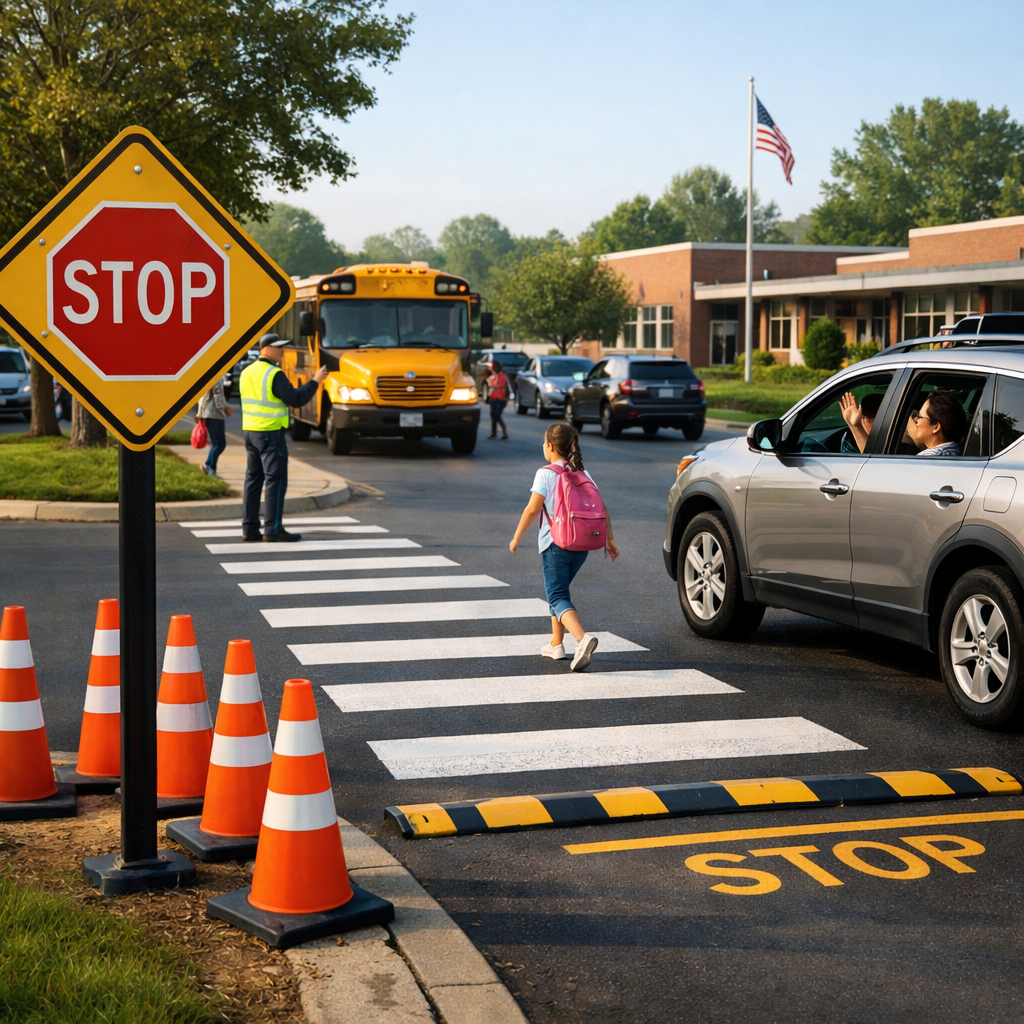
Administrative controls may include staggered dismissal, designated pick-up numbers or zones, no-idling expectations where applicable, speed rules, and procedures for special events. In Ontario, schools should also align site practices with broader guidance from Ontario.ca and follow local school board and municipal requirements.
| Risk | Typical Cause | Practical Control |
|---|---|---|
| Pedestrian struck by vehicle | Unmarked crossing or blocked sightline | Marked crossings, supervision, improved visibility |
| Backing collision | Drivers reversing in busy areas | One-way flow, pull-through parking where possible |
| Slip or fall near vehicles | Ice, snow, puddles, poor maintenance | Snow clearing, de-icing, drainage, inspection |
| Traffic congestion | Improper stopping and unclear zones | Signed loading areas, staff direction, family reminders |
Safe habits for parents, students, and school workers
Daily behaviour is just as important as design. Parents and caregivers can support school parking lot safety by slowing down, avoiding sudden stops, and using only designated drop-off and pick-up areas. Even brief double-parking or stopping outside marked zones can force children to cross unpredictably and reduce visibility for others.
Students should be taught to use sidewalks and marked crossings, make eye contact with drivers before stepping forward, and avoid walking behind moving or idling vehicles. Younger children may need direct adult supervision all the way to the school entry point, especially in winter or during busy dismissal periods.
School workers, including educators, maintenance staff, and yard supervisors, also play a role. Deliveries and waste collection should be scheduled to avoid peak student movement where possible. Workers who direct traffic or supervise outdoor areas should wear high-visibility clothing if required by local procedures and remain focused on the task without distractions.
Short actionable checklist
- Use marked drop-off and pick-up zones only
- Keep speeds low and watch for small pedestrians
- Do not block crossings, sidewalks, or bus areas
- Walk children to the safest route, not the closest shortcut
- Check for ice, snow, puddles, and blocked sightlines
- Report damaged signs, faded markings, or lighting issues
- Follow staff direction and local school traffic rules
- Review procedures at the start of each school term
Seasonal planning and continuous improvement for school parking lot safety
Conditions change throughout the year, so prevention cannot be a one-time effort. Rain can reduce braking performance and visibility. Snowbanks can narrow lanes and hide children. Spring thaw can create potholes and standing water. Special events may bring unfamiliar drivers onto school property. A strong inspection process helps schools identify these changing risks before they contribute to an incident.
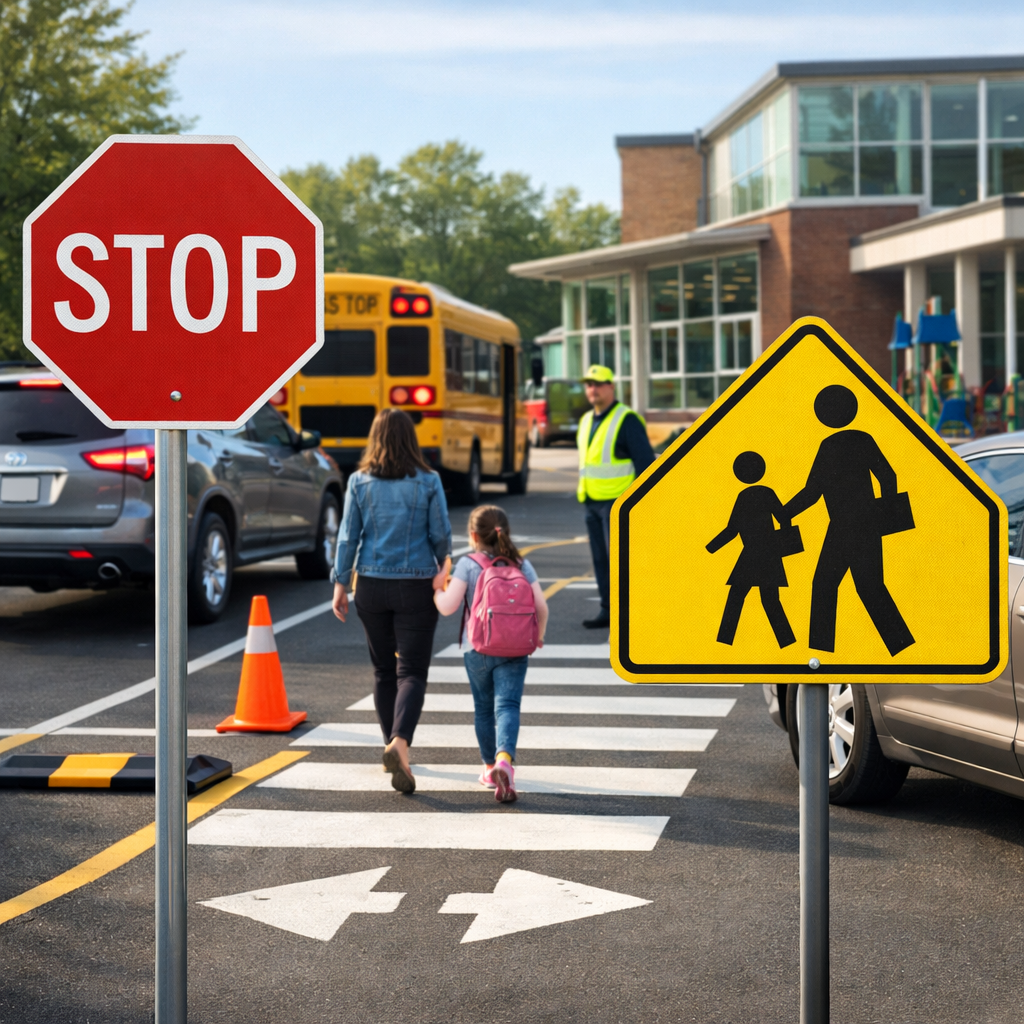
It is useful to inspect the site before each term, after significant weather, and whenever traffic patterns change. Schools can review near misses, parent feedback, staff observations, and contractor concerns to identify trouble spots. If a crossing is often ignored, the issue may be more than behaviour alone; the route may be inconvenient, poorly marked, or hard to see from a driver’s position.
Continuous improvement may include repainting lines, adjusting signs, moving barriers, changing supervision points, or updating family communications. When work or training duties involve traffic management, schools should ensure workers receive appropriate instruction and follow local procedures, manufacturer guidance, and emergency directions where applicable. Additional general safety information is available from Health Canada.
School parking lot safety improves when everyone shares the same expectations and follows a practical plan. Clear routes, lower speeds, better visibility, active supervision, and consistent habits can significantly reduce vehicle and pedestrian risks. For schools, families, and workers in Canada, the most effective approach is calm, organized, and prevention-focused: design safer spaces, communicate the rules, inspect regularly, and keep improving school parking lot safety throughout the year.