


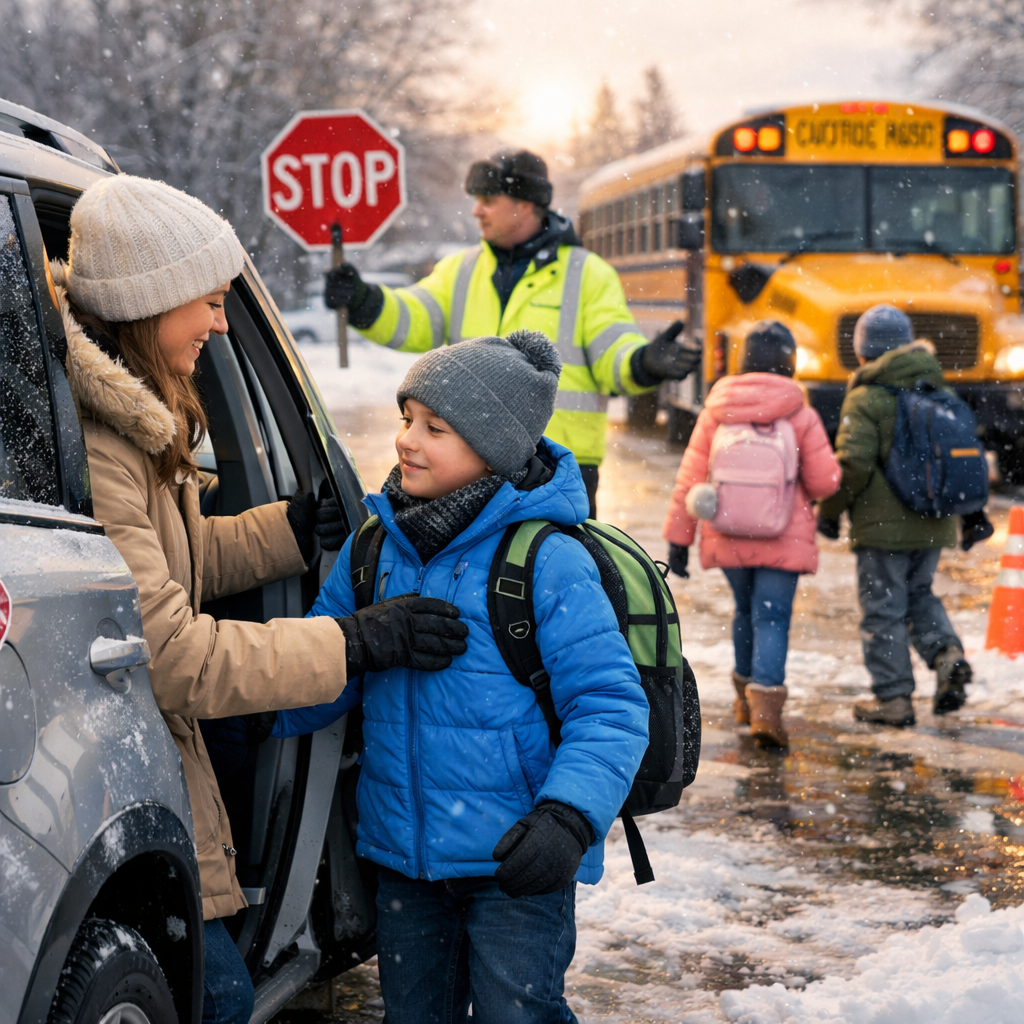

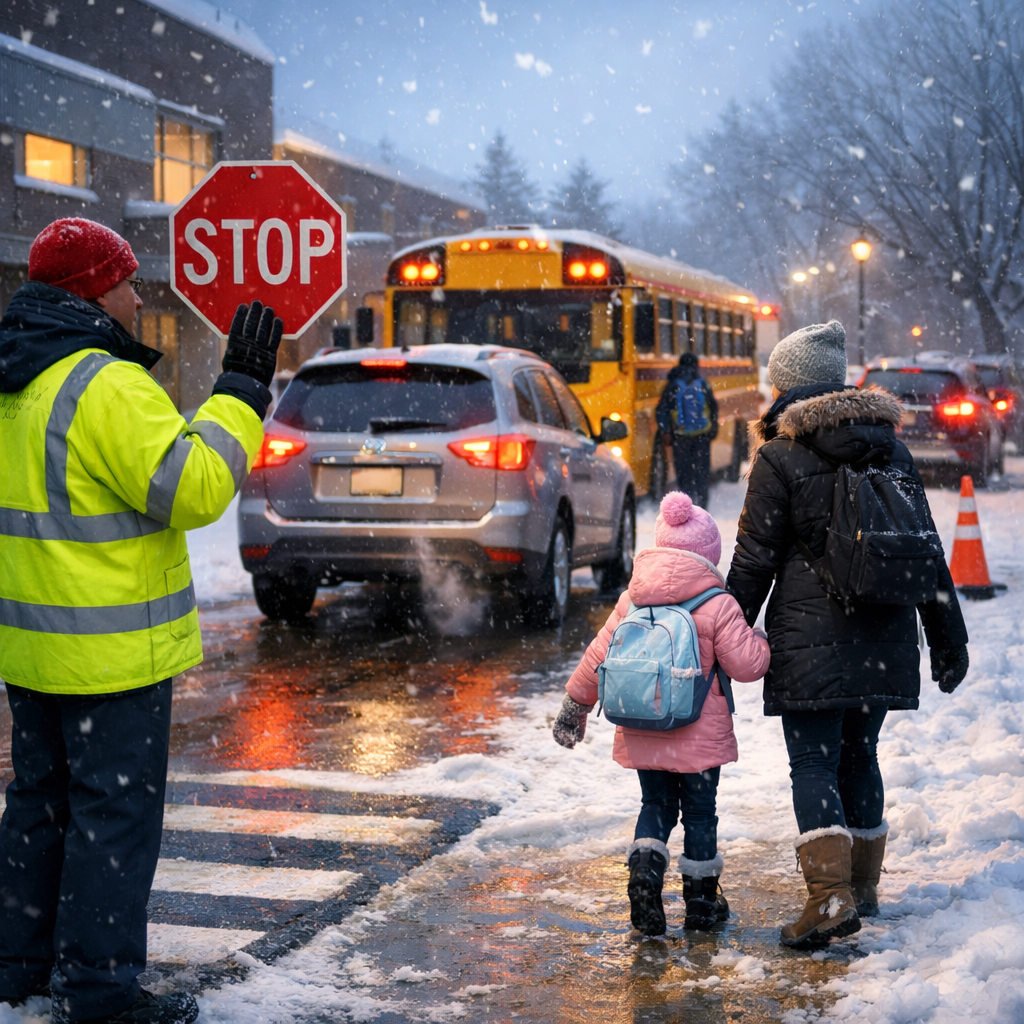
School pickup winter safety matters most in the few hectic minutes when families, staff, buses, and student walkers all share the same icy space. In Ontario and across Canada, winter pickup areas can quickly become slippery, crowded, and hard to navigate, especially during freeze-thaw cycles, active snowfall, and early darkness.
A parking lot that feels routine in September can become a serious slip, trip, and vehicle hazard in January. For parents, caregivers, school staff, student helpers, and young workers involved in dismissal routines, the safest approach is to slow down, plan ahead, and focus on preventing predictable risks before they lead to a fall or a near miss.
This practical guide explains how to improve school pickup winter safety with simple habits, parking lot awareness, and basic winter risk controls. It is written for Canadian families and school communities and supports a calm, prevention-focused approach that fits real school-day conditions.
Why school pickup winter safety needs extra attention in winter
Winter changes both the walking surface and the behaviour of traffic. Ice may be hidden under light snow, painted lines can disappear, and snowbanks may narrow sightlines near crosswalks, curbs, and parent loading zones.
At the same time, drivers may be dealing with fogged windows, longer stopping distances, heavy boots, gloves, backpacks, and children who are eager to get into warm vehicles. These small factors add up quickly, which is why school pickup winter safety depends on reducing speed, improving visibility, and limiting rushed decisions.
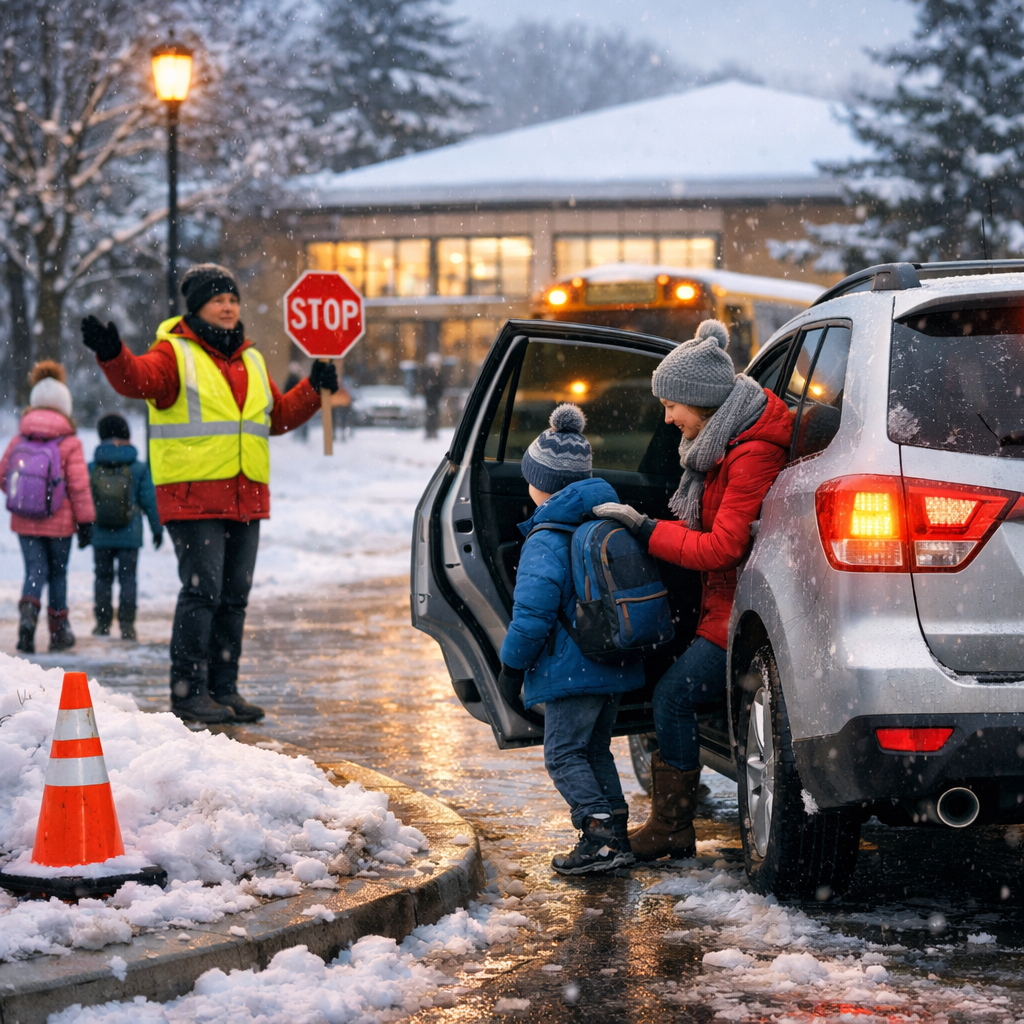
Common seasonal hazards include:
- Black ice near entrances, curb edges, ramps, and shaded areas
- Snow buildup that blocks walking routes or forces pedestrians into traffic lanes
- Slush that refreezes after temperatures drop
- Poor visibility from snowfall, darkness, dirty windshields, or idling vehicle exhaust
- Children stepping between parked vehicles where drivers cannot see them
- Cars sliding when braking or turning too sharply on slick pavement
Good winter safety also aligns with general prevention principles supported by organizations such as CCOHS and public guidance from the Government of Ontario. Schools and families do not need complicated systems to improve safety, but they do need consistency.
School pickup winter safety for drivers, parents, and caregivers
Slow down early and expect longer stopping distances
The most effective driving adjustment in winter pickup areas is reducing speed well before you enter the school zone or parking lot. Braking late on packed snow or polished ice can cause a slide even at low speed.
Leave extra distance between your vehicle and the one ahead. Avoid sudden acceleration, hard braking, and quick steering inputs. If the lot is especially slippery, treat every turn, stop sign, and crosswalk approach as a potential low-traction area.
Prepare the vehicle before entering the pickup zone
School pickup winter safety starts before your tires reach the lot. Clear snow and ice from windows, mirrors, lights, and the roof so your visibility is not reduced and loose snow does not blow onto other vehicles or pedestrians.
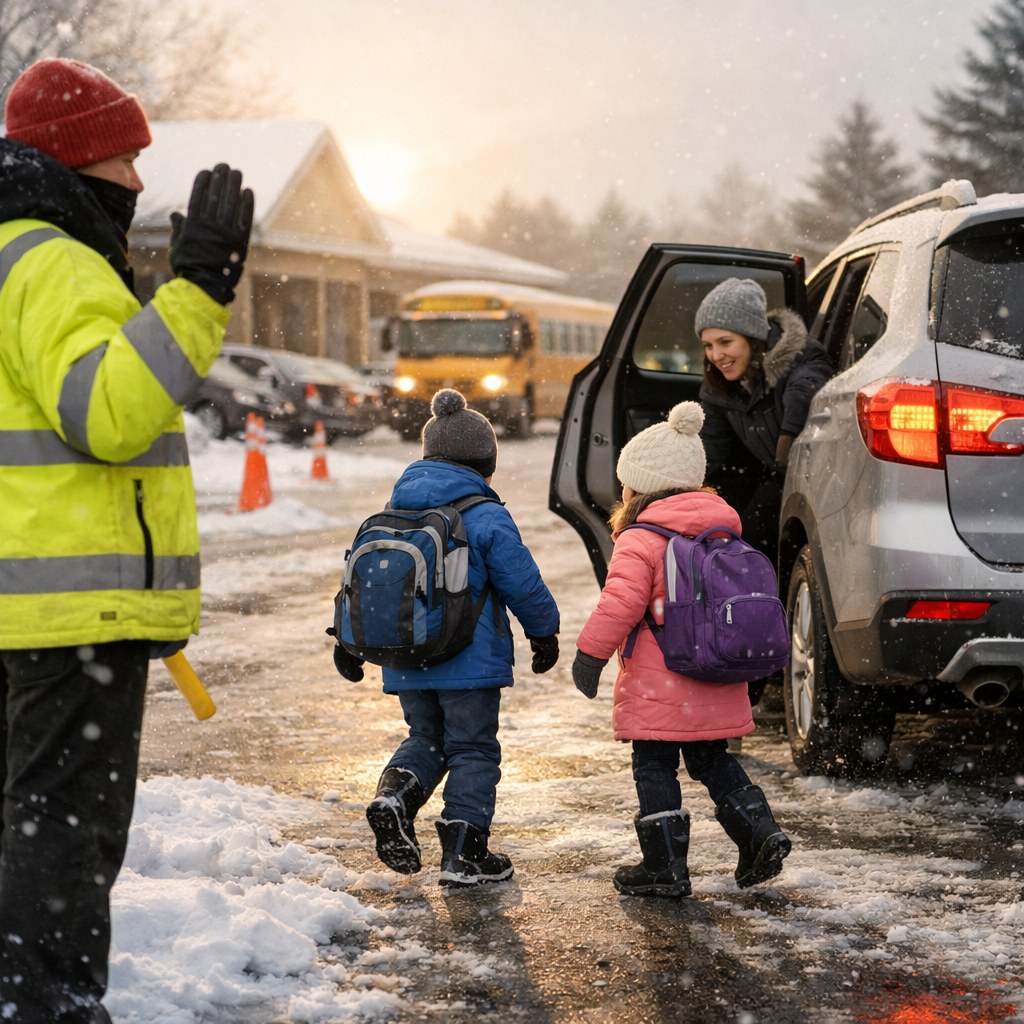
Defog windows in advance, keep windshield washer fluid topped up for winter conditions, and make sure footwear does not interfere with brake or accelerator control. If children need help with buckles, backpacks, or sports gear, park in a designated space first rather than stopping in a live traffic lane.
Use designated routes and loading areas
Follow the school’s posted pickup procedures, one-way traffic flow, and no-stopping zones. These controls are designed to separate vehicles from walkers and reduce conflict points. Cutting across lanes, making informal U-turns, or waving children to cross between cars can undermine school pickup winter safety in seconds.
If the lot is congested, it may be safer to park legally a short distance away and walk to a designated meeting point. This can reduce both pressure and exposure to sliding vehicles near the main entrance.
School pickup winter safety for walking families and students
Choose the safest path, not just the shortest one
In winter, the shortest path is not always the safest. Walk on cleared sidewalks or marked pedestrian routes whenever possible, even if it adds a minute or two. Snowbanks, puddled slush, and compressed footprints can hide uneven surfaces that increase the risk of slipping.
Children should be reminded to avoid shortcuts through moving traffic, bus lanes, or unplowed edges of the lot. A simple family rule helps: stop, look, make eye contact, and cross only where the route is intended for pedestrians.
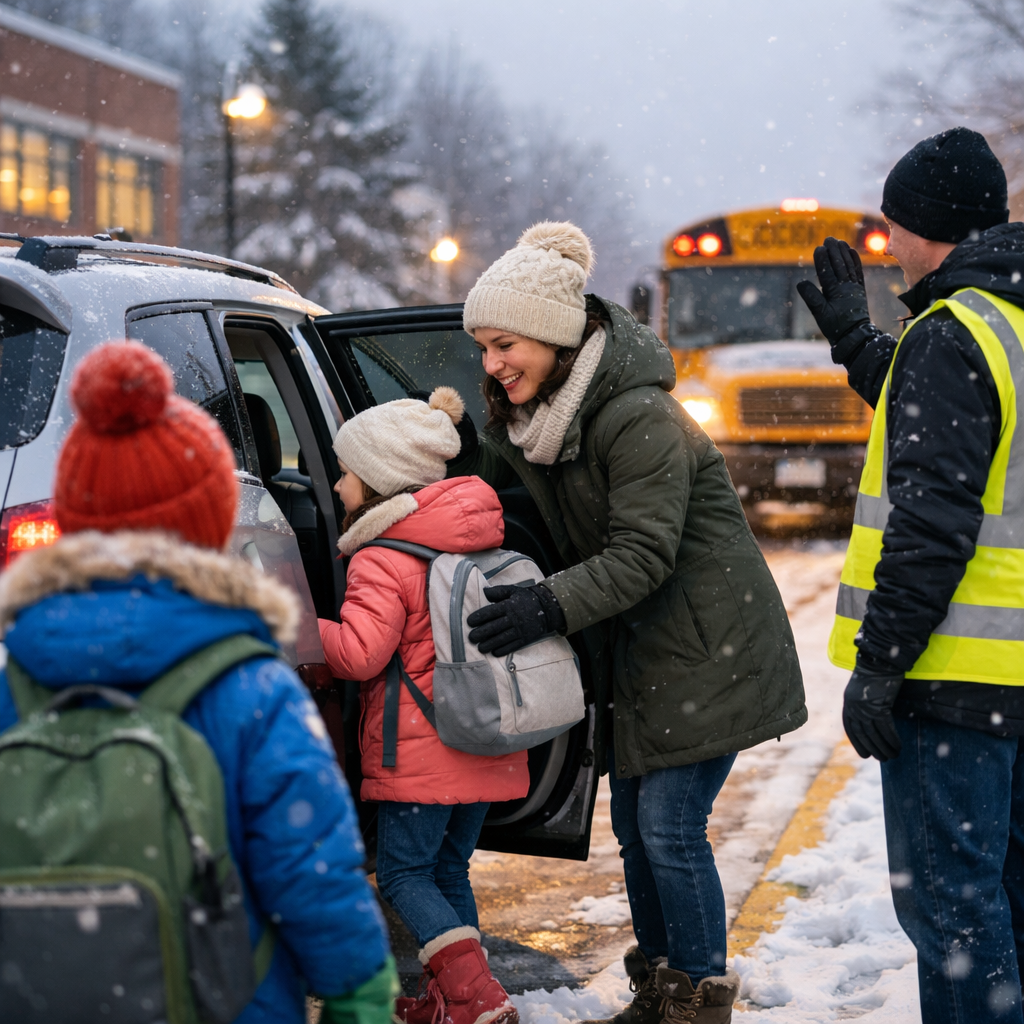
Wear footwear and clothing that support winter traction and visibility
Footwear matters for school pickup winter safety, especially during freeze-thaw weather. Boots with good tread can improve grip on packed snow and slush, while smooth-soled shoes can increase slip risk. Encourage children to take smaller steps and keep hands free for balance rather than carrying too many loose items.
Visibility also matters during dark afternoons or active snowfall. Bright clothing, reflective details, and avoiding oversized hoods that block side vision can make it easier for drivers to see students and caregivers in busy loading areas. For broader injury-prevention information, families can also review practical resources from Parachute.
Keep children close in high-traffic areas
Young children can move unpredictably, especially when they are cold, excited, or distracted. Hold hands in active parking areas and agree on a fixed waiting point before pickup begins. Older students should avoid gathering behind reversing vehicles or standing near snowbanks that block their view of approaching traffic.
If a child drops something under or near a vehicle, they should tell an adult rather than reaching for it immediately. This is a simple but important school pickup winter safety habit that can prevent a serious incident.
Practical winter controls schools and workplaces can support
School pickup winter safety improves when the physical environment and the human routine work together. Schools, contractors, and workplaces connected to school transportation can think in terms of the hierarchy of controls: remove hazards where possible, reduce exposure through layout and procedures, and support safe behaviour with reminders and training.
| Hazard | Practical control | Why it helps |
|---|---|---|
| Icy walking surfaces | Prompt snow clearing and sanding or salting of key routes | Reduces slips at entrances, crossings, and curb edges |
| Poor sightlines | Snowbank management and clear pedestrian corridors | Improves visibility between drivers and walkers |
| Traffic congestion | One-way flow and designated loading zones | Reduces reversing, confusion, and conflict points |
| Rushed pickup routines | Clear communication to families and staff | Sets expectations and supports safer behaviour |
Where staff, student workers, or contractors are involved in outdoor supervision, winter hazard awareness should be part of routine safety planning. Practical training resources may be helpful through OHSE training, and broader workplace safety information is available at OHSE.ca.
Schools should also encourage reporting of recurring problem spots such as refreezing puddles, blocked drains, dimly lit corners, or loading areas where vehicles regularly stop outside the intended zone. Timely reporting supports corrective action before dismissal periods become more hazardous.
A short school pickup winter safety checklist
Use this quick checklist before and during pickup:
- Leave early enough that no one feels rushed
- Clear all vehicle windows, mirrors, lights, and the roof
- Drive slowly and increase following distance in the lot
- Use the school’s designated pickup route and loading area
- Park first if children need help getting in safely
- Walk on cleared paths and avoid shortcuts through traffic
- Wear winter footwear with good traction
- Keep children close and use a consistent meeting point
- Watch for black ice near curbs, ramps, and shaded areas
- Follow local school procedures and weather-related guidance
School pickup winter safety is not about adding stress to the end of the day. It is about making a busy routine more predictable when weather, ice, and limited visibility raise the risk level. With slower driving, safer walking routes, proper winter footwear, and clear school procedures, families and staff can reduce slips, close calls, and confusion in icy parking lots.
In Canadian winters, small choices make a big difference. When everyone follows the same plan and gives themselves extra time, school pickup winter safety becomes a practical daily habit rather than a last-minute concern.