


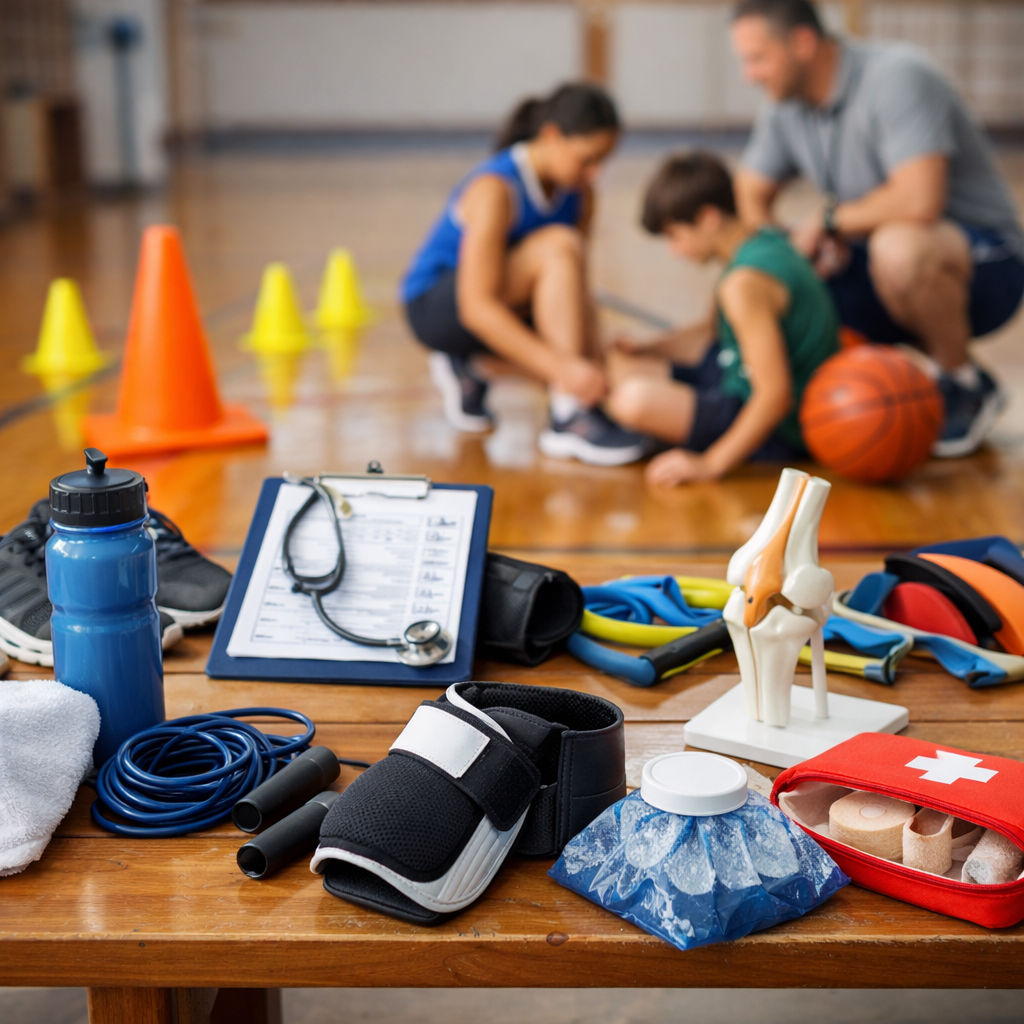

School sports injury prevention starts long before the first whistle. For Canadian students, parents, coaches, and schools, the safest approach is a simple one: prepare the body properly, use the right equipment, build safe habits, and allow enough recovery between practices and games.
Whether the sport is basketball, soccer, volleyball, hockey, track and field, or intramurals, many common injuries are linked to preventable factors such as rushed warm-ups, poor-fitting gear, overuse, slippery surfaces, or returning too soon after pain or strain. A calm, practical plan can reduce risk while helping students perform better and enjoy school sports with more confidence.
In Ontario and across Canada, schools and families can also look to trusted safety guidance from organizations such as CCOHS, Parachute, and the Government of Ontario at Ontario.ca. For broader school and workplace safety topics, OHSE.ca offers practical resources, and training support may be useful through OHSE training resources where appropriate.
Why school sports injury prevention matters
School sports help students build fitness, teamwork, resilience, and routine. But even in well-run programs, injury risks can appear when students are tired, distracted, growing quickly, or trying to push through discomfort.
Good school sports injury prevention is not about making sports overly cautious. It is about identifying hazards early and using sensible controls. In practical terms, that means checking playing areas, setting age-appropriate expectations, teaching proper technique, and making sure students understand that pain is a warning sign, not a challenge.
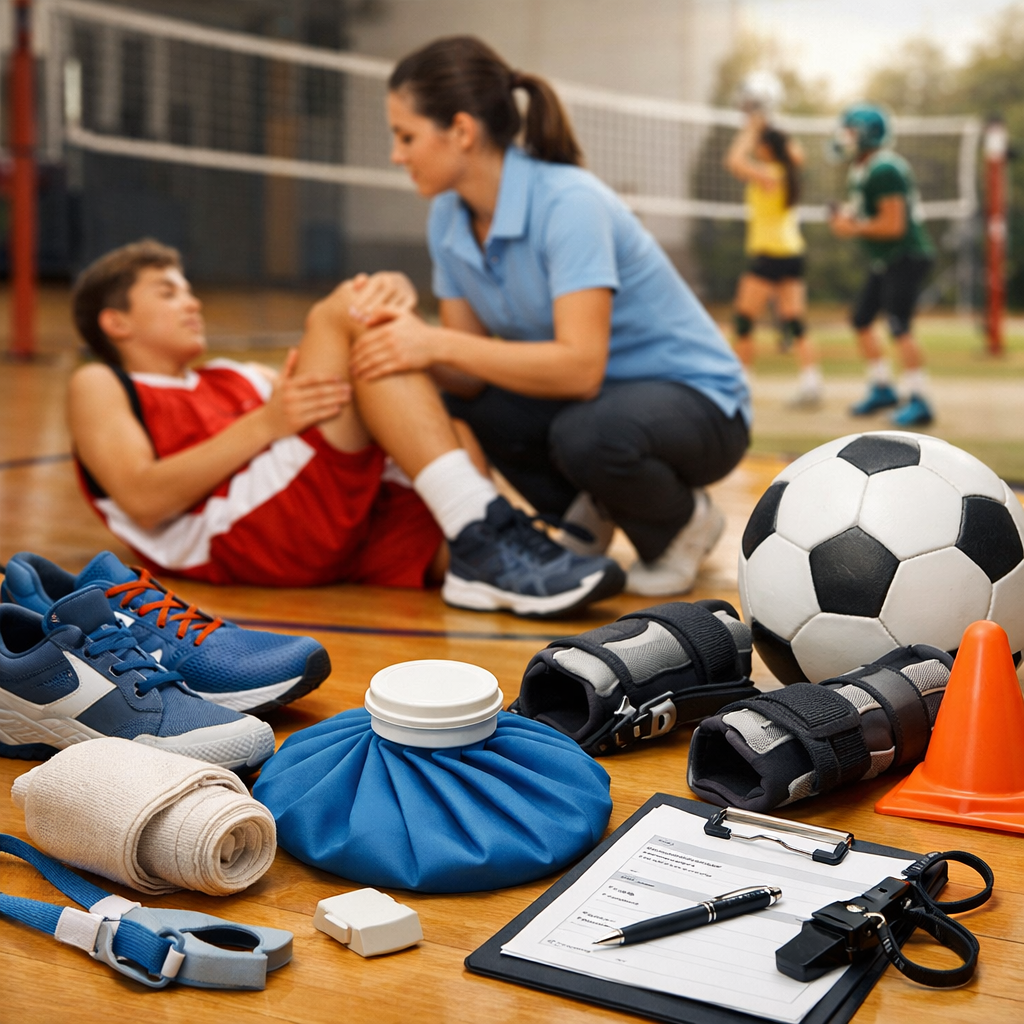
A practical prevention mindset
A helpful way to think about prevention is to use the hierarchy of controls. While schools may not use that term every day in sports, the idea is useful:
- Eliminate hazards where possible, such as removing obstacles from a gym floor.
- Substitute unsafe practices with safer drills or lower-contact options when needed.
- Use administrative controls such as rules, supervision, scheduling breaks, and return-to-play procedures.
- Use personal protective equipment like properly fitted helmets, mouthguards, or sport-specific footwear.
Protective equipment matters, but it should support good planning, not replace it. The safest school sports programs combine equipment, supervision, conditioning, and recovery habits.
School sports injury prevention with a smart warm-up
A rushed lap around the gym is not enough. A smart warm-up gradually prepares muscles, joints, balance, coordination, and attention for the demands of sport. It should be active, sport-specific, and appropriate for the student’s age and fitness level.
What a good warm-up should include
Most school teams benefit from a short sequence that builds from light movement to more challenging actions. This may include:
- Easy jogging, skipping, or cycling movement to raise body temperature
- Dynamic mobility work for hips, ankles, shoulders, and thoracic spine
- Activation exercises such as glute bridges, mini-squats, or calf raises
- Balance and control drills, especially for knees and ankles
- Sport-specific movements like short accelerations, shuffles, jumps, landings, or passing drills
Dynamic warm-ups are generally more useful before activity than long static stretching. Students should finish the warm-up feeling alert and ready, not tired.
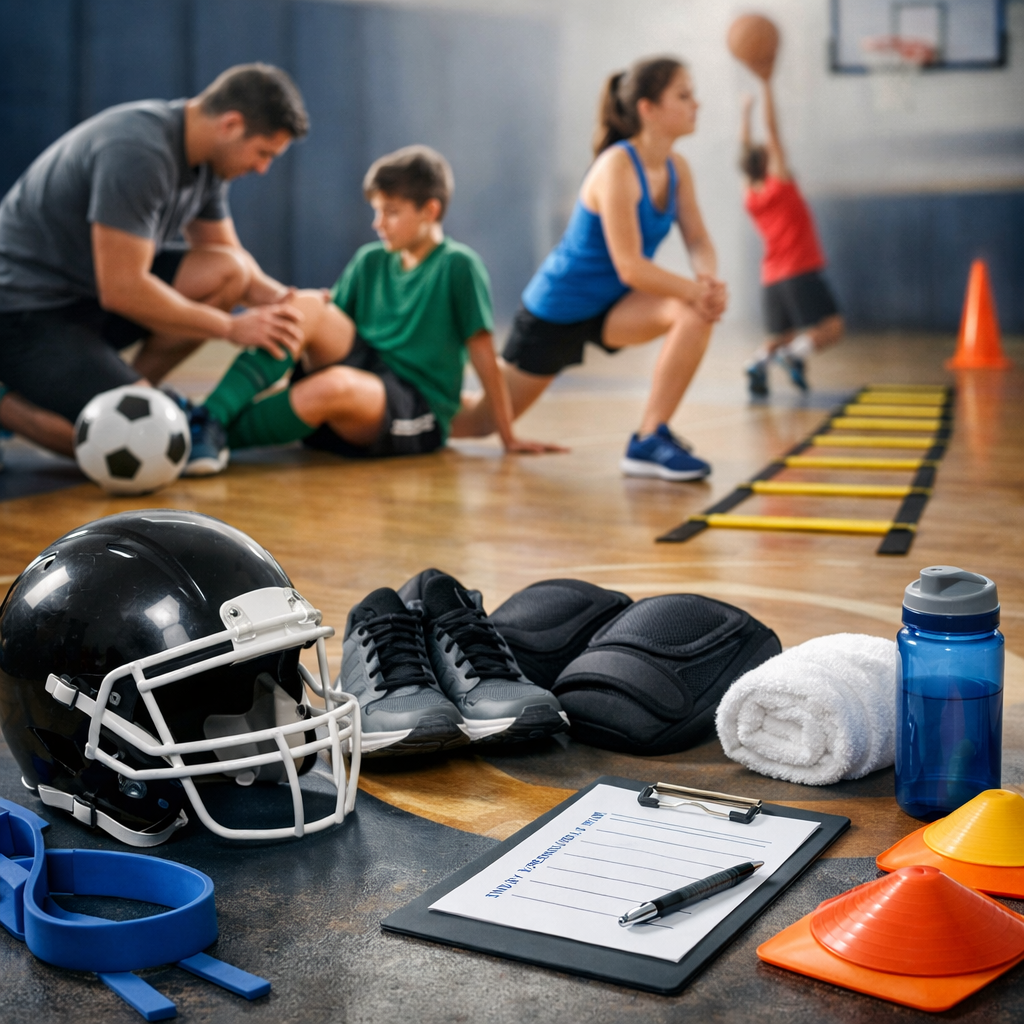
Warm-up habits that reduce avoidable risk
Consistency matters. If students only warm up properly before games but not practices, the prevention benefit is reduced. Coaches and teachers can make warm-ups more effective by starting on time, keeping routines simple, and explaining why each movement matters.
Technique is also part of school sports injury prevention. Students should be taught how to land softly, cut under control, decelerate safely, and avoid body positions that place unnecessary strain on knees, ankles, shoulders, or lower backs.
Equipment, footwear, and environment checks
Proper equipment can lower risk when it fits correctly, is used as intended, and is maintained. Poorly fitted shoes, damaged helmets, loose shin guards, or worn court surfaces can turn a normal practice into an incident.
What students and families should check
Before each season, confirm that required gear is appropriate for the sport, the student’s size, and the playing environment. Manufacturer instructions should always be followed, and any school-specific rules should come first.
| Area | What to check | Why it matters |
|---|---|---|
| Footwear | Correct size, sport-specific grip, secure laces, good tread | Helps reduce slips, falls, and awkward joint loading |
| Protective gear | Proper fit, no visible damage, used as required | Improves protection during contact or impact |
| Playing surface | Dry floor, level field, clear boundaries, no clutter | Reduces trip, slip, and collision hazards |
| Clothing | Weather-appropriate, allows movement, no snag hazards | Supports safe participation indoors and outdoors |
School environment and supervision
Schools should inspect gyms, fields, goals, nets, mats, and storage areas on a routine basis. Wet entrances, uneven ground, poor lighting, and unsecured equipment are common hazards that should be addressed before activity begins.
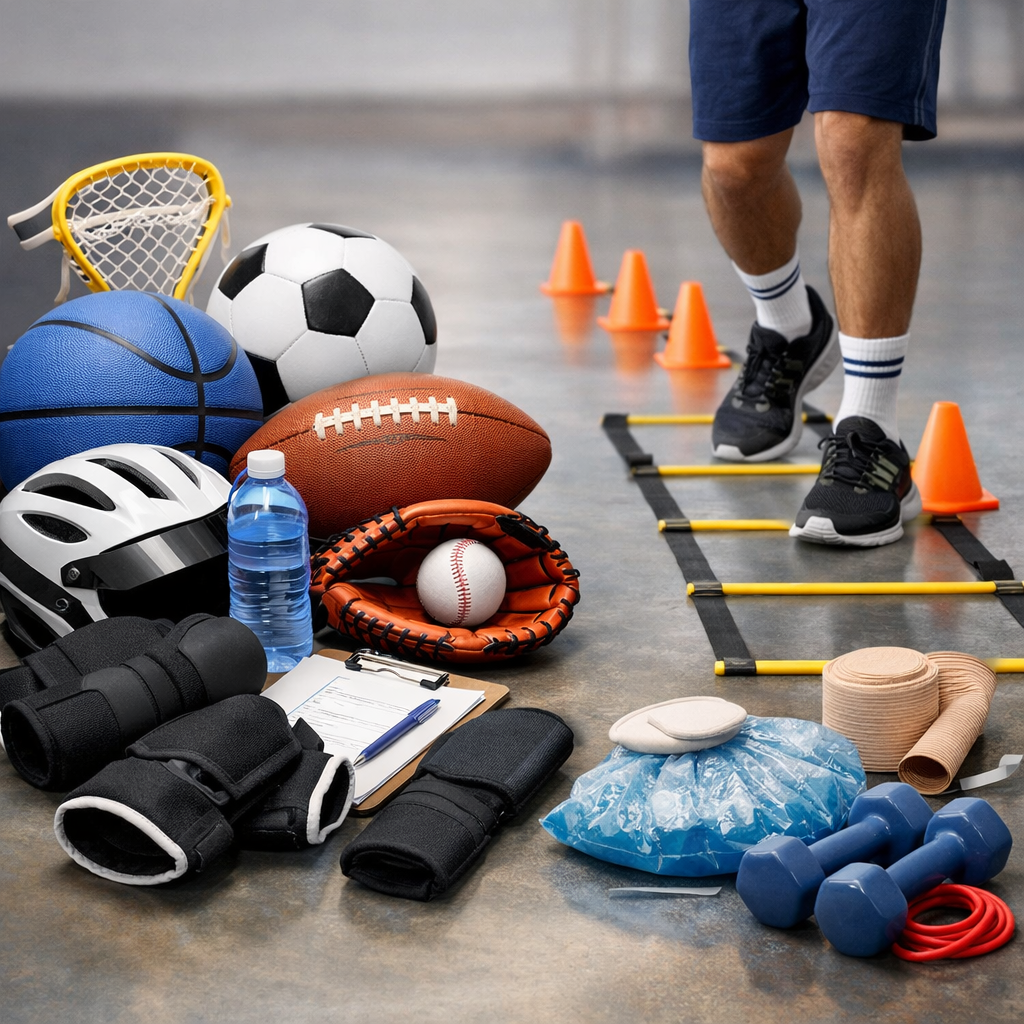
Supervision matters too. Younger students may need closer instruction on spacing, body control, and equipment handling. In contact or higher-speed activities, clear rules and immediate correction of unsafe play are essential parts of school sports injury prevention.
Recovery habits, overuse prevention, and return-to-play decisions
Not all sports injuries happen in one dramatic moment. Many develop slowly from repetitive stress, fatigue, or returning too quickly after soreness or minor strain. That is why recovery is not optional. It is part of performance and part of prevention.
Daily recovery habits students can build
- Get regular sleep and maintain a steady routine during the season
- Drink enough fluids before, during, and after activity as appropriate
- Eat balanced meals and snacks to support growth and energy
- Use rest days and vary intensity across the week when possible
- Report pain, dizziness, unusual fatigue, or repeated soreness early
Students sometimes hide pain because they do not want to miss a game or let teammates down. Parents, coaches, and teachers can help by creating a culture where early reporting is treated as responsible, not weak.
When to pause and seek guidance
If a student has significant pain, swelling, instability, reduced range of motion, or symptoms after a hit or fall, they should stop activity and follow local school, medical, manufacturer, or emergency guidance as applicable. This article is for prevention only and does not replace professional assessment.
Return-to-play decisions should be gradual and guided by school procedures, qualified health professionals where needed, and sport-specific expectations. Returning too soon increases the chance of another injury and can turn a short absence into a much longer one.
A short school sports injury prevention checklist
Use this simple checklist before practices and games:
- Complete a full dynamic warm-up
- Check shoes, braces, helmets, or other required gear
- Inspect the gym, field, or court for hazards
- Review safe technique and sport rules
- Bring water and plan breaks for heat or heavy effort
- Speak up early about pain, fatigue, or unsafe conditions
- Cool down and allow proper recovery before the next session
School sports injury prevention works best when everyone shares responsibility. Students can prepare honestly, parents can support recovery and equipment checks, coaches can reinforce technique and pacing, and schools can maintain safe facilities and clear procedures. With smart warm-ups, proper gear, and steady recovery habits, school sports can stay challenging, enjoyable, and much safer for everyone involved.