


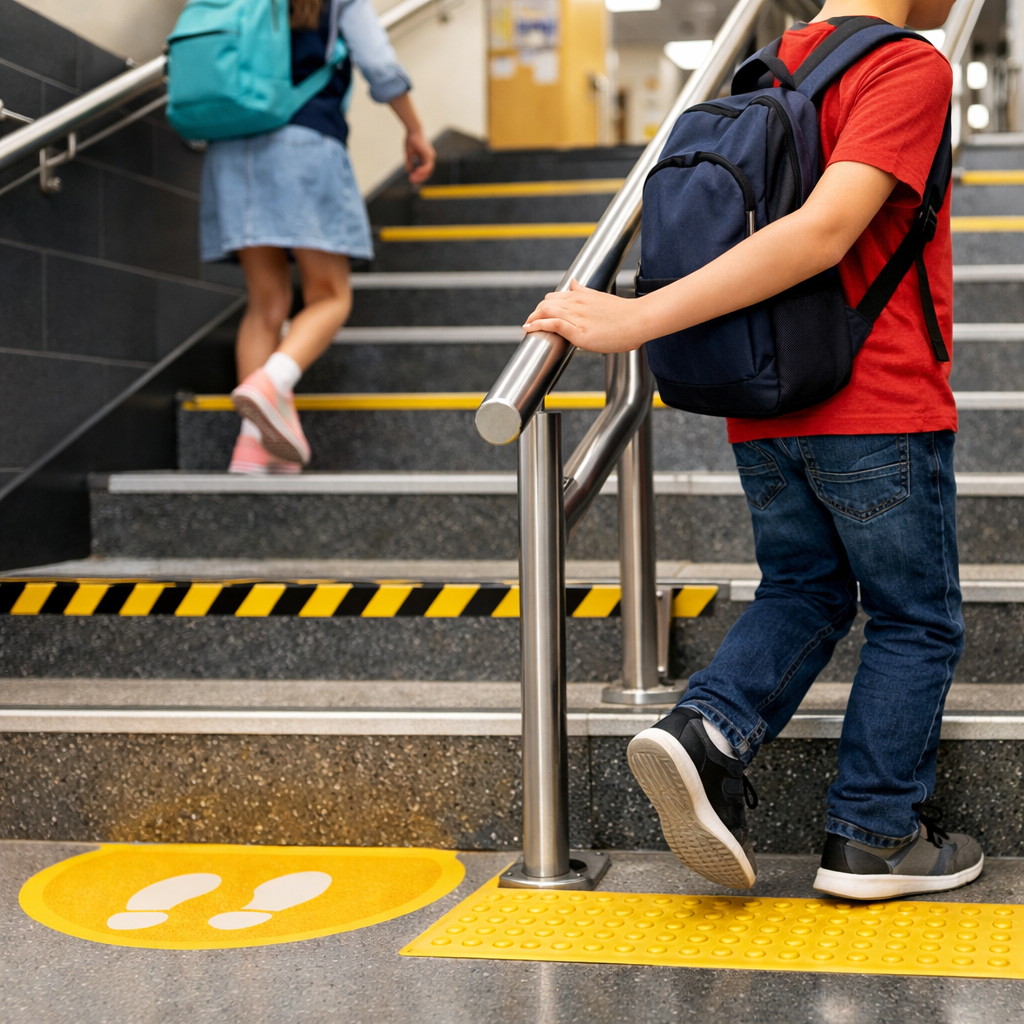


School stairway safety matters every day in busy Canadian schools, especially during class changes, arrivals, dismissals, assemblies, and emergencies. Stairs can become high-risk areas when floors are wet, backpacks block movement, handrails are ignored, or large groups rush at the same time.
For students, staff, families, and school leaders, the goal is simple: reduce slips, trips, falls, and crowd injuries with practical prevention steps. Good stair safety depends on the condition of the space, clear supervision and rules, age-appropriate behaviour, and a school culture that treats safe movement as part of learning and work. For more school and workplace safety guidance, readers can explore OHSE.ca.
Why school stairway safety needs daily attention
Stairways combine several common hazards in one place. People change direction, adjust their pace, carry bags or equipment, talk with friends, and move in groups. In elementary schools, younger children may still be learning balance, spacing, and handrail use. In secondary schools, speed, distraction, and crowding often increase the risk.
Weather also affects school stairway safety in Canada. Snow, slush, salt, and rain can be tracked indoors, making stair treads and landings slippery. Loose footwear, worn soles, and clutter left near entrances or on steps can turn an ordinary staircase into a hazard. Schools should follow local board policies and broader guidance from trusted organizations such as the Canadian Centre for Occupational Health and Safety and the Government of Ontario.
In a school workplace, stairways also affect teachers, custodians, office staff, educational assistants, visitors, and student workers. That means prevention is not just a student behaviour issue. It is also a facilities, supervision, maintenance, and training issue.
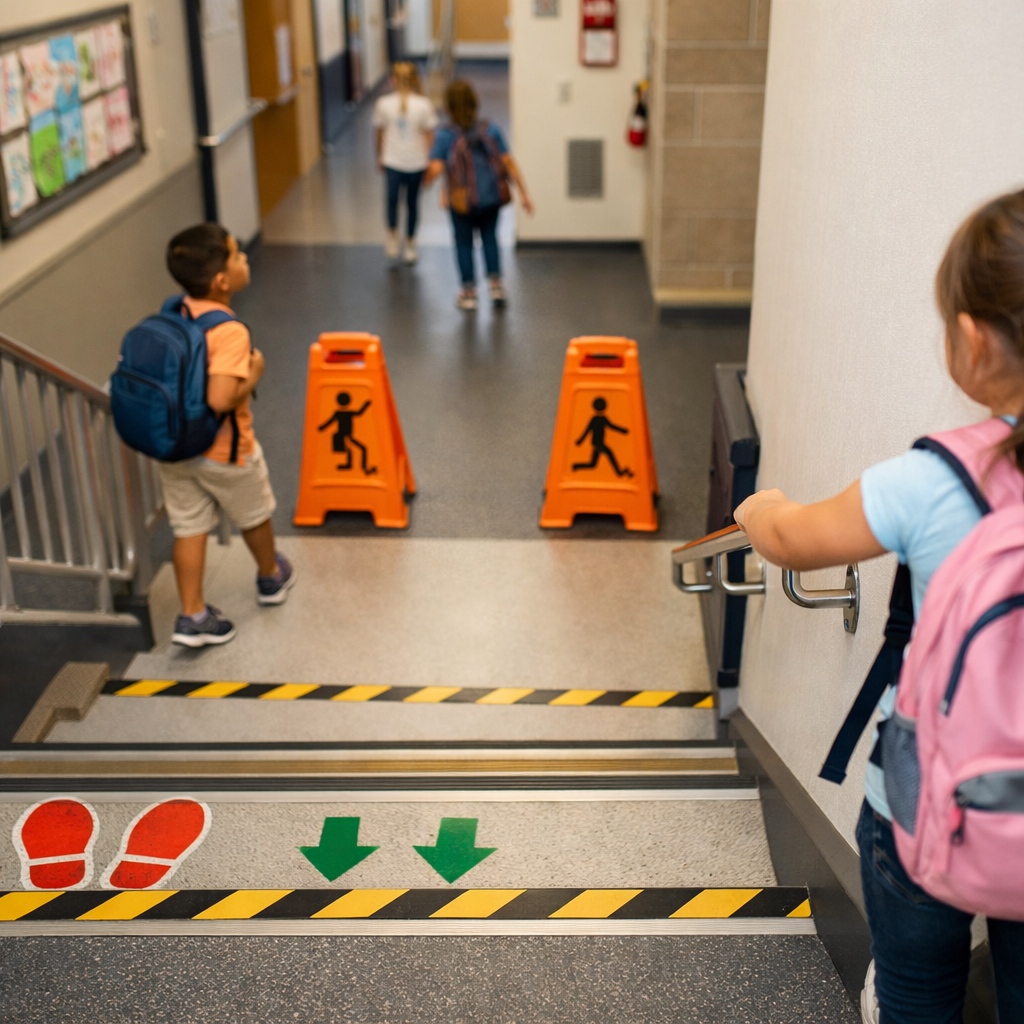
Common hazards that affect school stairway safety
Slip, trip, and fall hazards
The most obvious risks are wet steps, worn nosings, poor lighting, damaged handrails, uneven surfaces, and objects left on stairs. Even a small amount of water on a landing can lead to a serious fall if students are moving quickly between classes.
Backpacks, sports gear, musical instruments, lunch bags, and classroom materials can also affect balance and visibility. If students cannot see the next step clearly, they are more likely to miss it.
Crowd movement and behaviour hazards
Not all stair injuries come from surface conditions. Pushing, stopping suddenly, sitting on steps, using phones while walking, jumping steps, horseplay, and trying to pass others on narrow stairways can all contribute to crowd injuries. A minor stumble can quickly affect several people when the staircase is full.
During fire drills, lockdown transitions, or weather-related schedule changes, movement patterns may be different from normal routines. Schools should account for these situations in their planning and supervision.
Who may need extra support
Some students and workers may face added challenges on stairs, including younger children, people with temporary injuries, those carrying equipment, and individuals with mobility, vision, or balance concerns. A practical school stairway safety plan should consider accessibility, traffic flow, and alternative routes where appropriate.
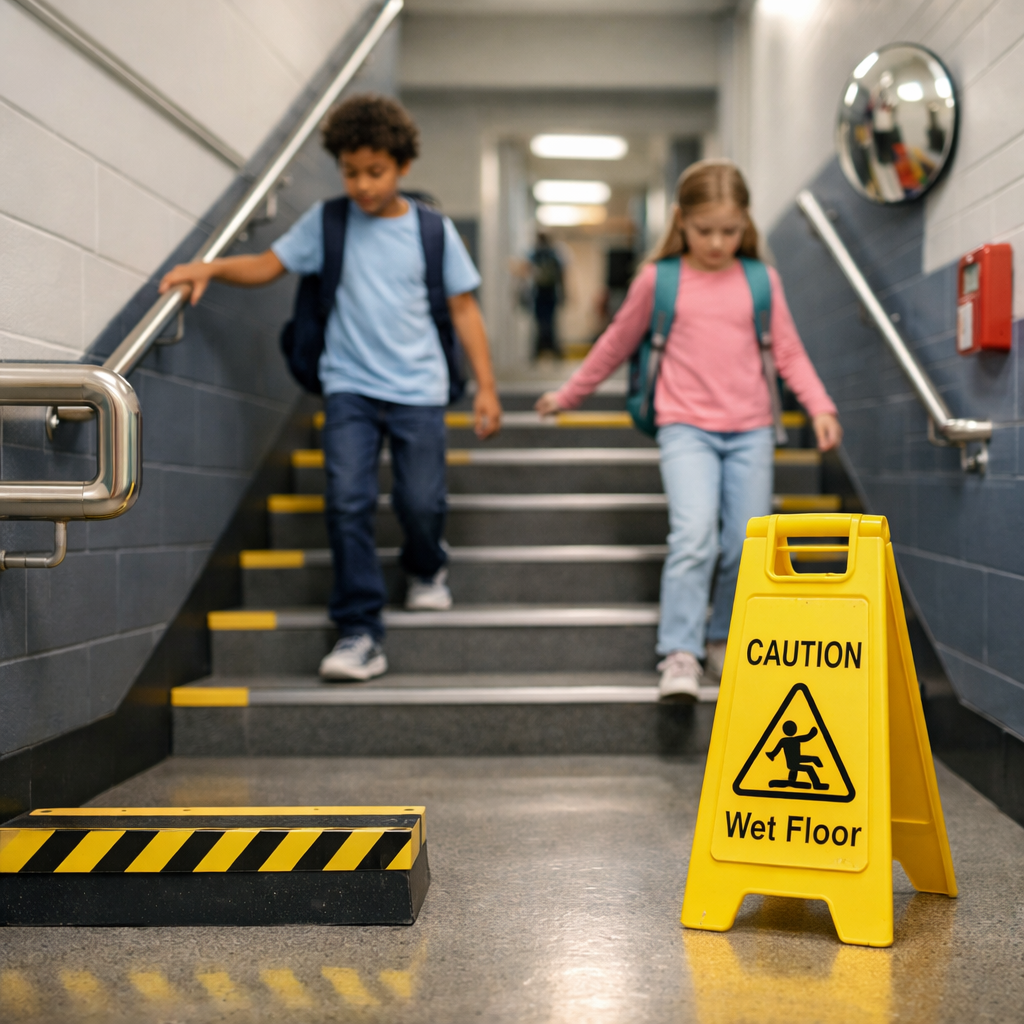
- Wet or dirty treads and landings
- Poor lighting or blocked sightlines
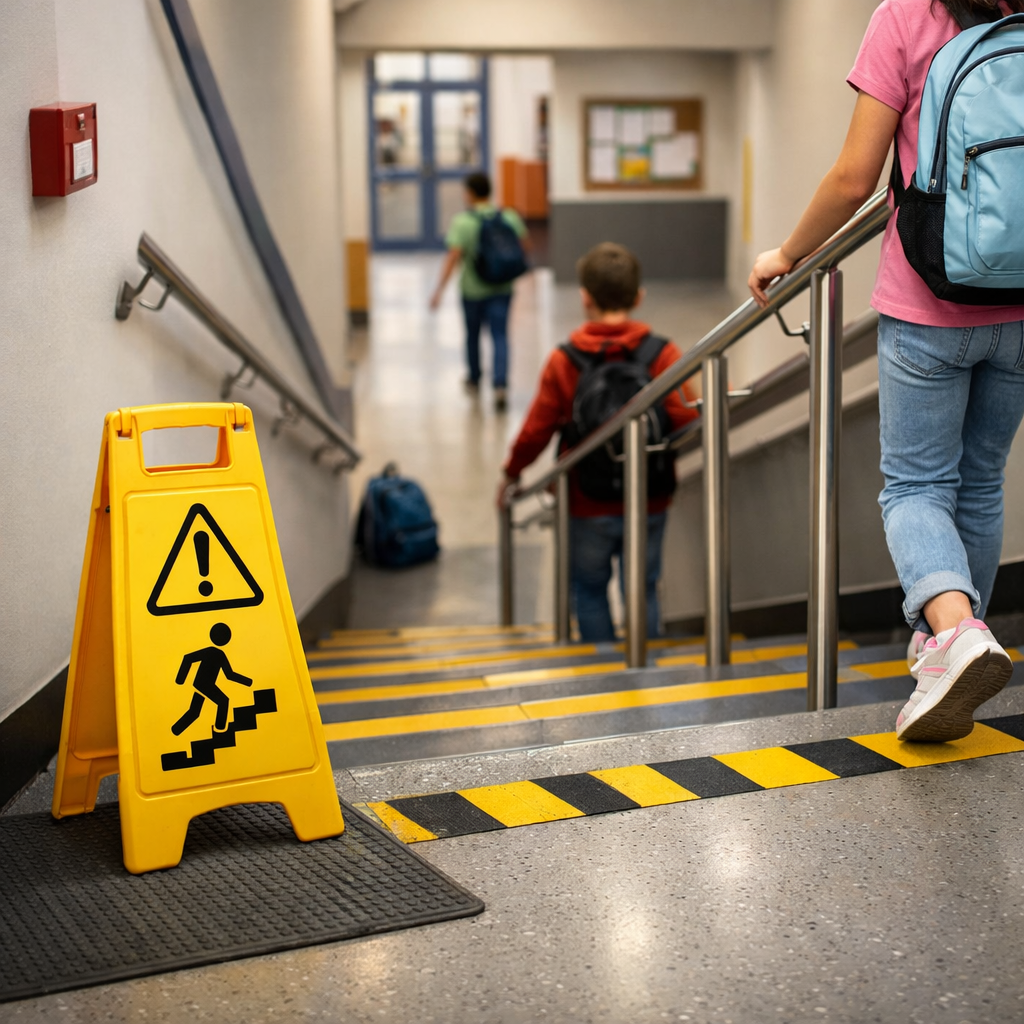
- Loose mats near stair entrances
- Worn anti-slip surfaces or damaged edges
- Backpack congestion and items carried by hand
- Running, pushing, or phone distraction
- Overcrowding at bells, lunch, and dismissal
Practical controls for better school stairway safety
The best prevention plans use the hierarchy of controls where possible. In schools, that means improving the physical environment first, then strengthening administrative controls such as supervision, schedules, and rules, and finally reinforcing safe personal habits.
1. Improve the physical stair environment
Good housekeeping is one of the strongest controls. Keep stairs, landings, and entry points clean and dry. Repair damaged treads, ensure handrails are secure, maintain lighting, and remove clutter immediately. If a spill happens, it should be addressed right away using local school procedures.
Where needed, schools can improve traction, visibility, and flow by using durable stair-edge markings, anti-slip surfaces, and clear signage. Entrances should be managed during winter so moisture does not travel from doors to staircases.
2. Reduce crowding through routines and supervision
Many school stairway safety issues can be reduced by managing how people move. Schools may stagger dismissal from certain areas, assign directional flow on busy staircases, or increase adult presence during peak times. Teachers can remind students to walk, keep right where appropriate, and leave space between each person.
Supervision matters most where bottlenecks occur, such as near cafeterias, gyms, and main entrances. Calm reminders usually work better than reactive discipline when building safer habits.
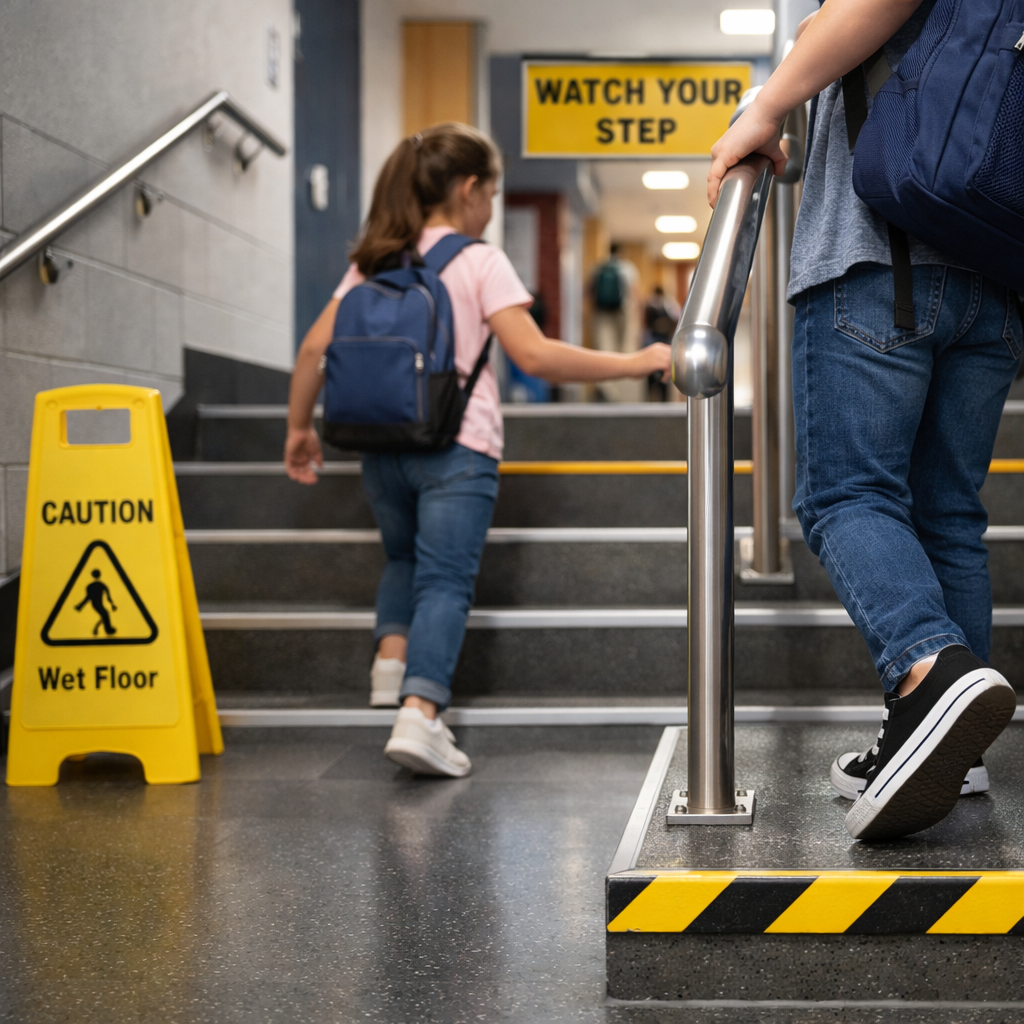
3. Teach safe behaviour clearly and often
Students should be taught simple expectations that match their age and setting. These should be reviewed at the start of the year, after schedule changes, and whenever patterns of unsafe behaviour appear. Staff training is also important, especially for those responsible for hall duty, emergency procedures, or maintenance reporting. Schools looking to strengthen safety knowledge may also find practical training resources at learn.ohse.ca.
Core messages should include holding the handrail when possible, walking instead of running, keeping steps clear, watching where you are going, and reporting hazards quickly. For broader injury prevention information, Parachute and Health Canada offer helpful public safety resources.
| Hazard | Possible Cause | Practical Control |
|---|---|---|
| Slippery steps | Water, slush, spills, worn surfaces | Clean promptly, improve traction, maintain entrance mats |
| Trips on stairs | Clutter, poor lighting, damaged edges | Remove objects, repair defects, improve visibility |
| Crowd injuries | Rushing, pushing, congestion | Supervise peak times, manage flow, reinforce walking rules |
| Missed steps | Phone use, oversized loads, distraction | Promote hands-free movement and attention on stairs |
School stairway safety checklist for students, families, and schools
Quick daily actions
A short checklist can help turn awareness into routine. These actions are simple, practical, and suitable for most school settings.
- Students: Walk, do not run, on stairs.
- Students: Use the handrail when available.
- Students: Keep your phone away until you reach your destination.
- Students: Carry only what you can manage safely and keep your view clear.
- Families: Choose footwear with good grip, especially in wet or icy weather.
- Families: Encourage children to report spills, broken rails, or crowding concerns.
- Schools: Inspect stairs, lighting, rails, and floor conditions regularly.
- Schools: Clean up water, slush, and debris quickly.
- Schools: Review traffic flow and supervision during high-volume times.
- Schools: Follow local emergency and accessibility procedures where applicable.
What to do if a hazard is found
If a stairway hazard is noticed, students should tell a teacher or staff member right away rather than trying to manage it on their own unless it is safe and expected for them to do so. Staff should follow school reporting procedures, isolate the area if needed, and arrange prompt cleanup or repair. If an injury occurs, follow local school, workplace, manufacturer, or emergency guidance as applicable.
Building a stronger culture of school stairway safety
Strong school stairway safety is not about one poster or one reminder after a fall. It comes from consistent maintenance, clear expectations, respectful supervision, and practical design choices that make safe behaviour easier. When schools treat stair safety as part of everyday health and safety, students and workers are more likely to move calmly and look out for one another.
For Canadian schools, especially in Ontario, the most effective approach is prevention-focused and routine: inspect the environment, control seasonal slip risks, manage crowd flow, teach safe habits, and respond quickly to problems. With these steps in place, school stairway safety becomes a shared responsibility that helps prevent slips, trips, falls, and crowd injuries before they happen.