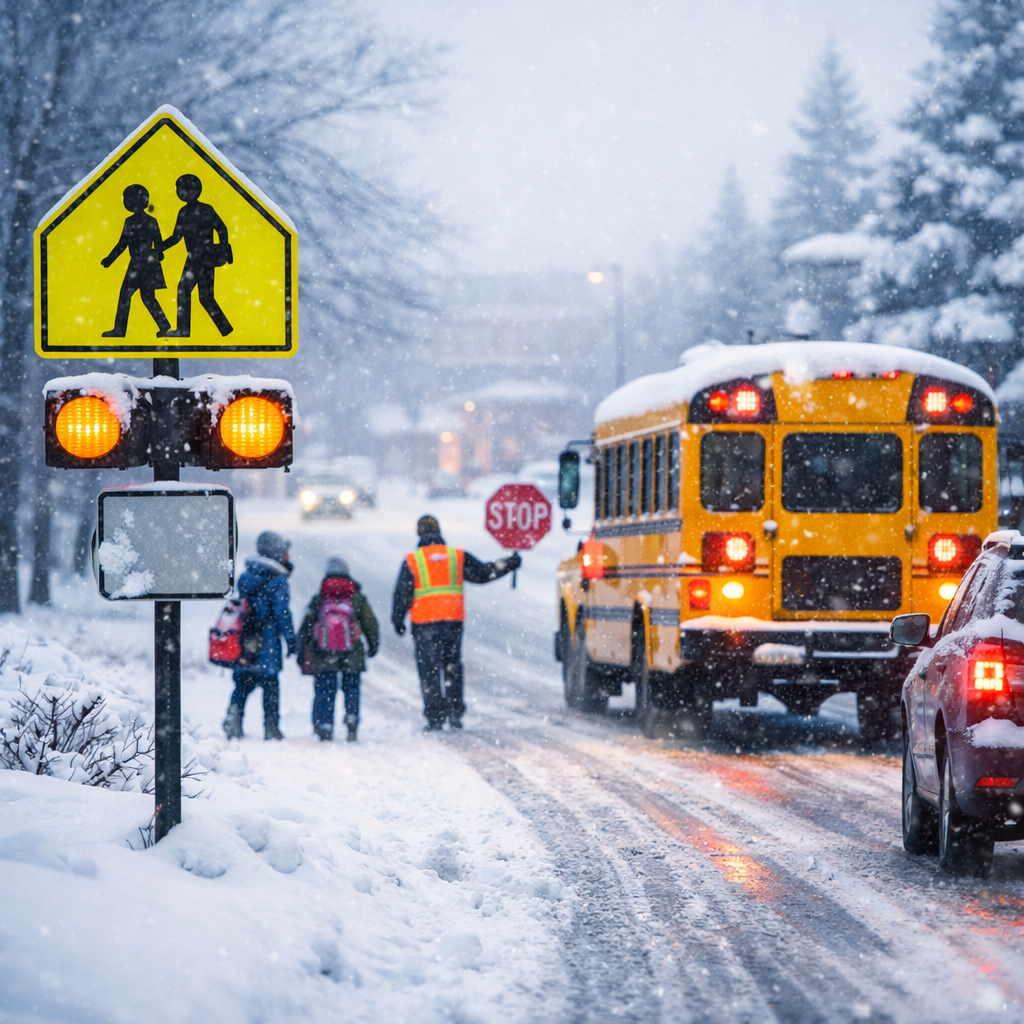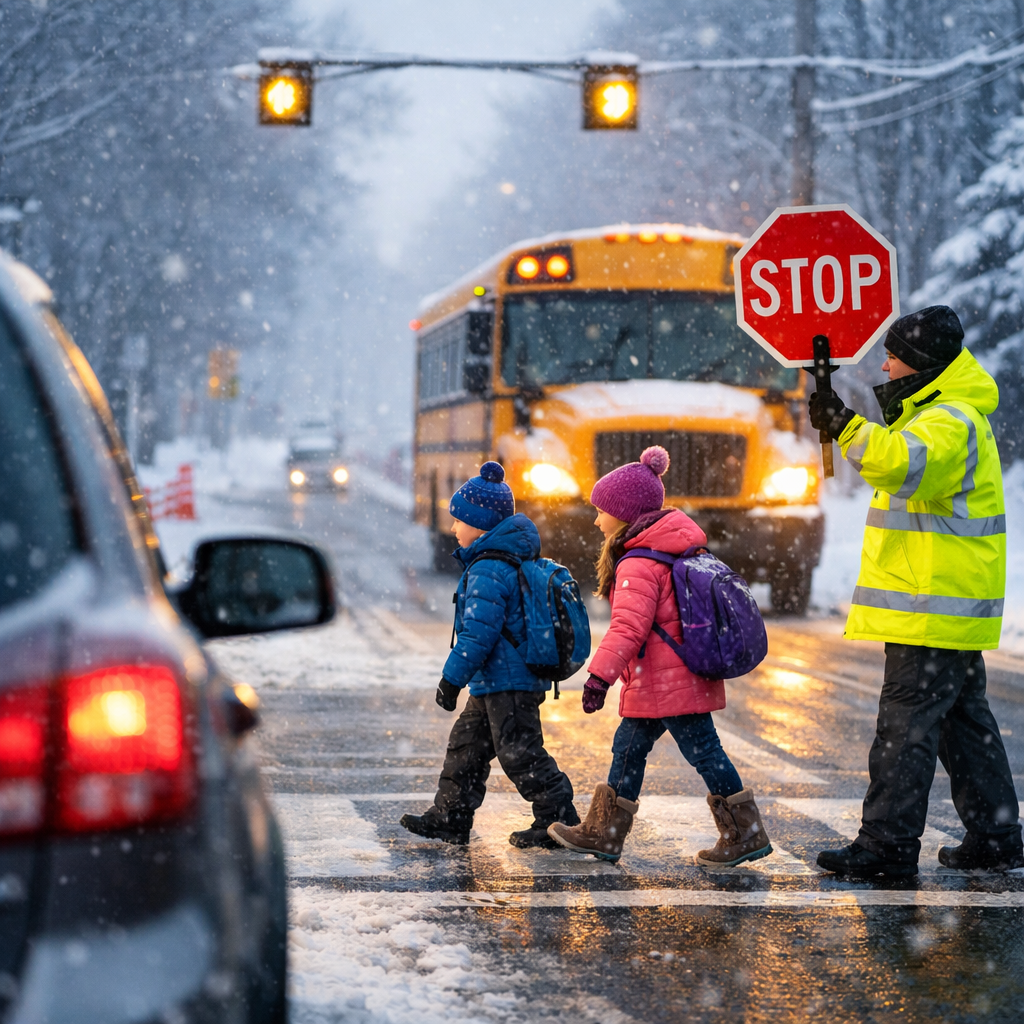

School zone winter driving demands slower speeds, sharper attention, and better planning than almost any other daily trip. Snow, ice, low winter light, bulky clothing, and busy drop-off areas can quickly turn a routine school run into a high-risk situation for children, parents, bus drivers, and other motorists.
In Ontario and across Canada, school areas already require extra caution. Winter adds hidden hazards such as black ice, longer stopping distances, blocked sightlines, and children moving unpredictably around snowbanks or parked vehicles. A prevention-focused approach helps protect everyone, whether you are driving your child to school, walking from a parking area, operating a school bus, or commuting through a neighbourhood school zone.
- Why school zone winter driving requires a different mindset
- Critical school zone winter driving hazards to watch for
- Practical school zone winter driving tips for parents and drivers
- A short actionable checklist for safer winter school trips
- School zone winter driving habits that schools and families should reinforce
Why school zone winter driving requires a different mindset
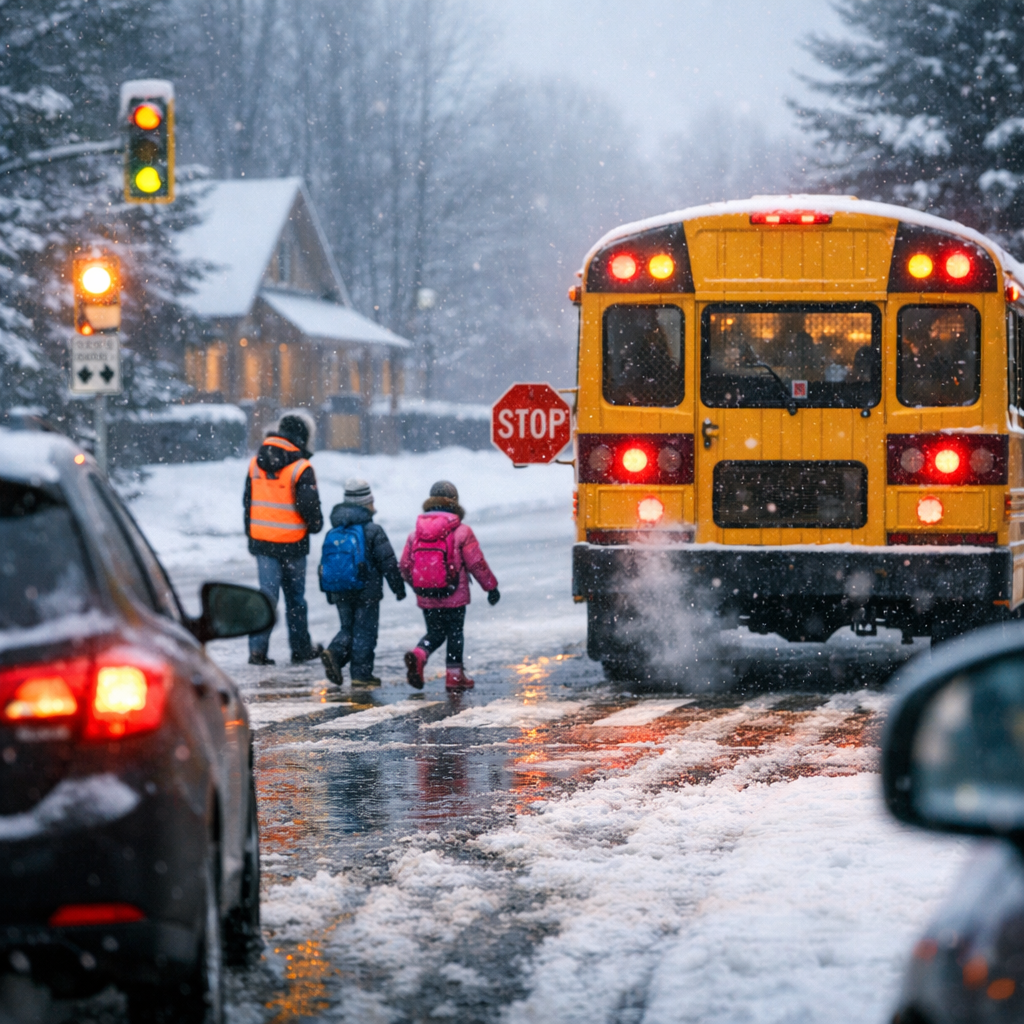
Children are less visible in winter clothing, may have reduced hearing under hats or hoods, and can slip or dart unexpectedly while trying to avoid puddles, snow piles, or traffic. Drivers also face a reduced margin for error. Braking, steering, and visibility are all affected by winter conditions, even at low speeds.
Good school zone winter driving starts before the vehicle moves. Clear all windows, mirrors, lights, cameras, and sensors. Remove snow from the roof, hood, and trunk so it does not slide onto the windshield or blow onto another vehicle. Use winter tires where appropriate, keep washer fluid topped up, and make sure wiper blades are in good condition. These are simple controls that lower risk before you even enter the school area.
Parents and schools can also support safer routines by reducing last-minute rushes. Leave early, choose approved drop-off locations, and review safe arrival plans with children. For broader seasonal safety resources, readers can visit OHSE.ca and trusted guidance from CCOHS.
Critical school zone winter driving hazards to watch for
Snowbanks, ice, and reduced visibility
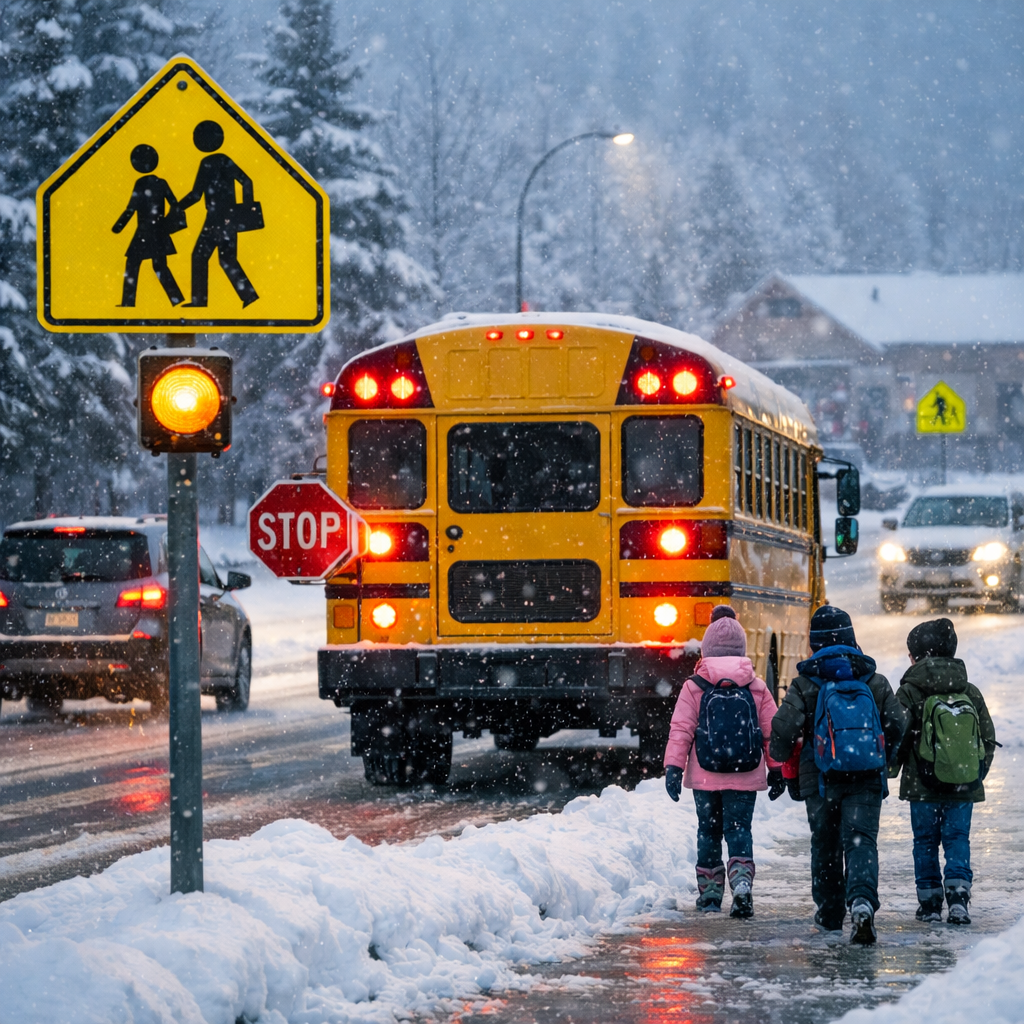
Snowbanks near intersections and crosswalks can block sightlines for both drivers and children. A child stepping out from behind a snow pile may only be visible at the last moment. Frosted windows, blowing snow, and dim morning or afternoon light make this worse.
Slow down well before the school zone begins. Scan sidewalks, curb edges, and gaps between parked vehicles. Keep headlights on when conditions reduce visibility, following local requirements and manufacturer guidance where applicable.
Congestion during drop-off and pick-up
Many close calls happen when adults stop in unsafe places, make sudden U-turns, back up without a clear view, or wave children across traffic. Winter conditions make these actions even more dangerous. Crowded curb lanes, idling vehicles, and rushed families create confusion at the exact moment clear communication is most important.
The safest approach is to use designated school loading areas, obey posted signs, and avoid double-parking. If you must park, choose a legal space away from the heaviest congestion and walk children to a safe crossing point.
Pedestrians, cyclists, and buses
Not every student arrives by car. Some walk, use mobility aids, or bike during colder months when conditions allow. School buses also need extra space to stop and turn in winter. Give them room, stay alert around bus loading zones, and never pass illegally or aggressively. Follow local school and roadway rules at all times.
Practical school zone winter driving tips for parents and drivers
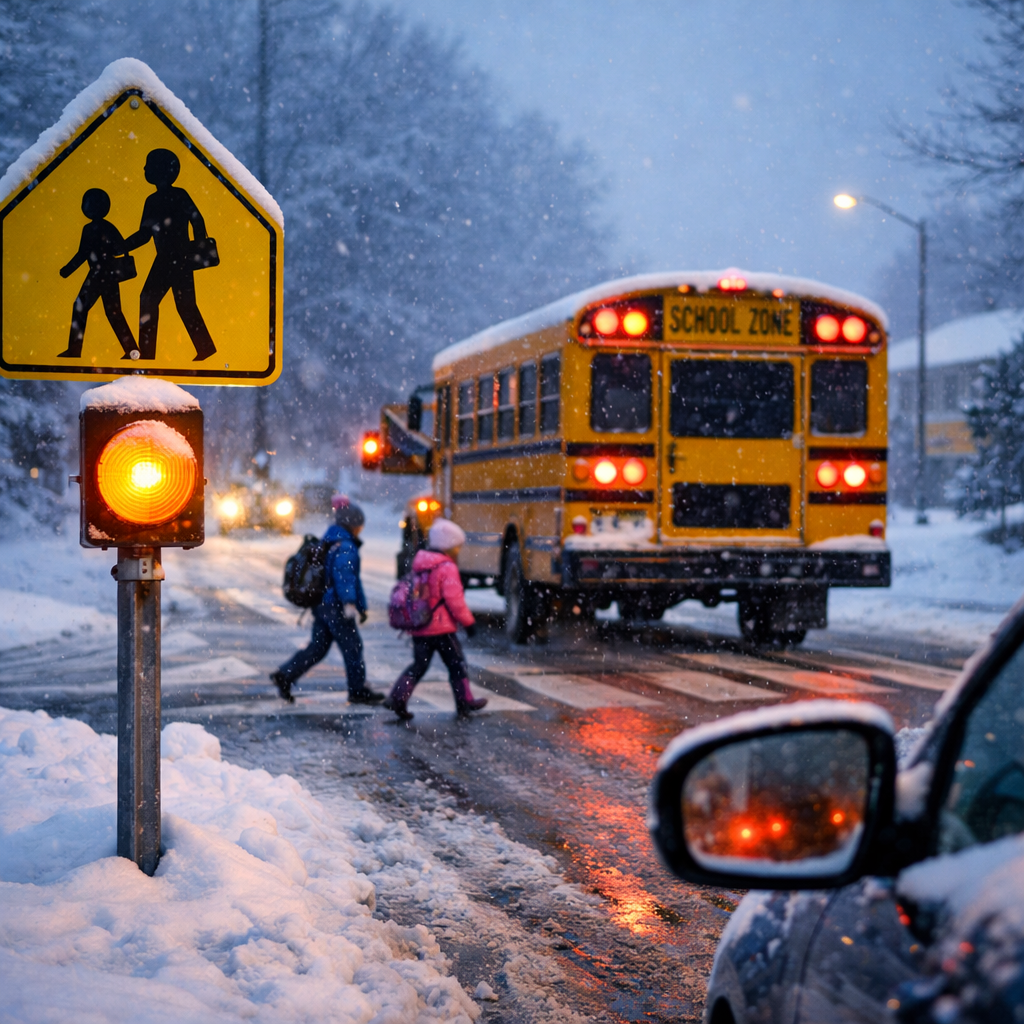
A calm, repeatable routine is one of the best defences against winter school zone incidents. Think in terms of hazard recognition, speed control, space management, and communication.
- Leave early: extra time reduces rushing, hard braking, and unsafe parking choices.
- Reduce speed smoothly: brake early and gently to avoid skids on packed snow or ice.
- Increase following distance: winter stopping distances are longer, even with winter tires.
- Watch for child-sized movement: look low and near snowbanks, crosswalks, and between vehicles.
- Avoid distractions: put phones away and finish navigation setup before driving.
- Use designated drop-off areas: this supports safer traffic flow and school supervision.
- Keep children on the curb side: if possible, have them exit onto the sidewalk, not into traffic.
- Never rely only on cameras or sensors: winter grime and snow can limit their effectiveness.
These actions reflect basic risk control principles used in workplaces too: remove hazards where possible, use safer systems, and support people with training and clear procedures. If your role involves transporting students or driving for work, winter readiness training can also support safer decisions. Relevant learning resources may be found at learn.ohse.ca.
A short actionable checklist for safer winter school trips
Use this quick checklist before and during each trip. It is simple enough for families, schools, and young workers who may drive near schools as part of their day.
| When | Action | Why it matters |
|---|---|---|
| Before leaving | Clear snow and ice from all windows, mirrors, lights, and roof | Improves visibility and prevents snow from shifting while driving |
| Before leaving | Allow extra travel time | Reduces rushing and risky choices in the school zone |
| Approaching school | Slow down early and scan for pedestrians | Gives more time to react on slippery surfaces |
| At drop-off | Use designated areas and legal stopping locations | Reduces congestion and confusion |
| When children exit | Unload on the sidewalk side whenever possible | Keeps children out of active traffic lanes |
| Leaving the area | Check mirrors, blind spots, and surroundings carefully | Children may approach unexpectedly from behind snowbanks or vehicles |
Applying the hierarchy of controls to school travel
For a practical safety lens, families and schools can apply a simple version of the hierarchy of controls. Eliminate or reduce exposure by avoiding the busiest access point when possible. Use engineering and environmental controls such as cleared walkways, visible signage, working lights, and well-managed pick-up lanes. Apply administrative controls through school procedures, staggered pick-up plans, and clear parent instructions. Personal habits, such as winter footwear and high-visibility outerwear, provide an added layer of protection.
Ontario families may also find general public safety and transportation information through Ontario.ca. For child injury prevention information, Parachute is another approved Canadian resource.
School zone winter driving habits that schools and families should reinforce
Children benefit from simple, repeated safety messages. Teach them to use designated crossings, make eye contact with drivers before stepping forward, and avoid walking behind reversing vehicles. Remind them that snowbanks are not safe waiting spots and that running in parking lots or loading zones increases risk.
Schools can support school zone winter driving safety by reviewing traffic patterns, communicating pick-up rules clearly, and monitoring problem areas during severe weather. Employers can support workers who drive near schools by reinforcing winter driving expectations, trip planning, and distraction-free policies. This is especially useful for young workers, delivery drivers, maintenance staff, and anyone travelling during peak school hours.
Winter conditions can change quickly, so it is important to follow local school instructions, workplace procedures, vehicle manufacturer guidance, and emergency direction where applicable. If a route, driveway, or loading area becomes unsafe due to ice, poor plowing, or visibility issues, choose the safer option rather than forcing a routine that no longer fits the conditions.
School zone winter driving is safest when everyone accepts that a few extra minutes, a lower speed, and a more cautious routine are worth it. Parents, caregivers, bus operators, workers, and everyday drivers all share responsibility for protecting children near schools. By planning ahead, reducing speed, improving visibility, and using clear drop-off habits, you can make school zone winter driving calmer, more predictable, and much safer throughout the Canadian winter.