

Security Guard Safety Responsibilities begin the moment a guard starts their shift. Tasked not only with safeguarding property and people, but also ensuring occupational health and safety compliance, security guards are an essential part of a workplace’s risk management strategy.
Their dual role in physical protection and safety enforcement places them at the frontline of many hazards.

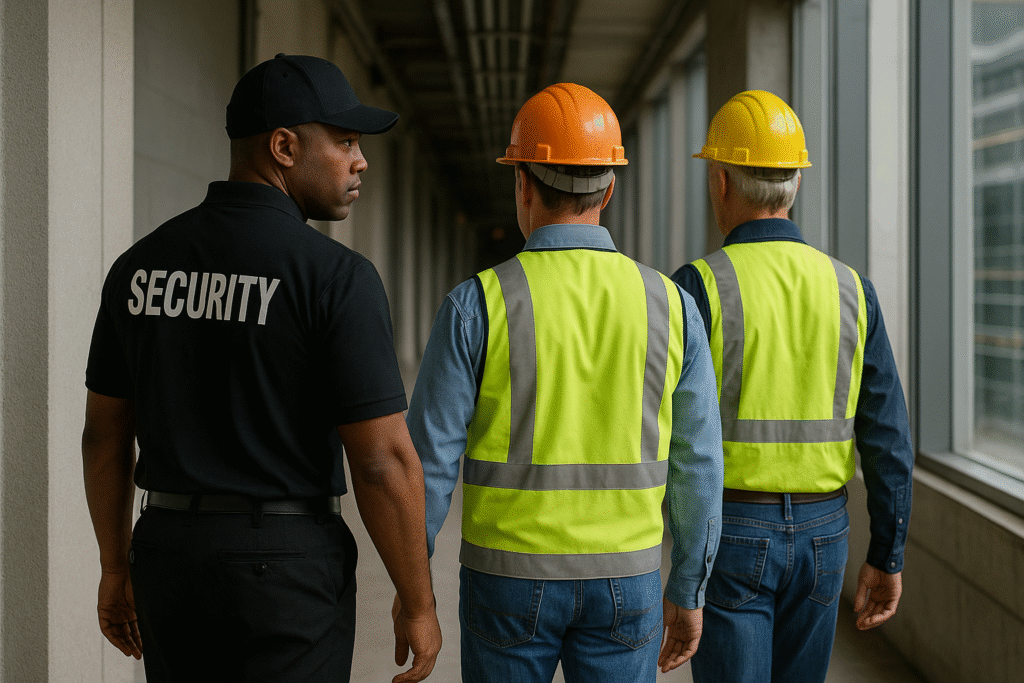
In this article, we’ll delve deep into the critical OH&S responsibilities of security guards, explore real-life scenarios, and highlight how they can promote a safe and secure environment for all.
- Why Security Guards Are Crucial to OH&S
- Hazard Identification and Reporting
- Access Control and Safety Checks
- Emergency Preparedness and First Response
- Enforcing Safety Policies and Procedures
- Night Shifts and Lone Work Hazards
- Site-Specific Safety Responsibilities
- Security Guard Safety Toolbox Talks
- The Link Between Security and Safety Compliance
- Training and Certification for OH&S in Security
- Conclusion
Why Security Guards Are Crucial to OH&S
Security guards are not just gatekeepers—they are proactive safety monitors. From identifying slip hazards to handling emergencies like fires or medical incidents, their role aligns closely with OH&S standards.
As Safe Work Australia and CCOHS emphasize, a safe workplace depends on awareness, vigilance, and timely intervention—all of which fall under a guard’s duty.
Their routine patrols, incident reporting, and enforcement of safety rules contribute directly to reducing accidents and enhancing emergency preparedness. They often serve as the first responders in many incidents, making their OH&S knowledge and situational judgment incredibly valuable.
Hazard Identification and Reporting
One of the core security guard safety responsibilities is recognizing unsafe conditions before they become incidents. Security personnel must be trained to identify risks such as:
- Blocked emergency exits
- Wet or oily floors
- Exposed wiring or faulty equipment
- Unauthorized access to hazardous areas
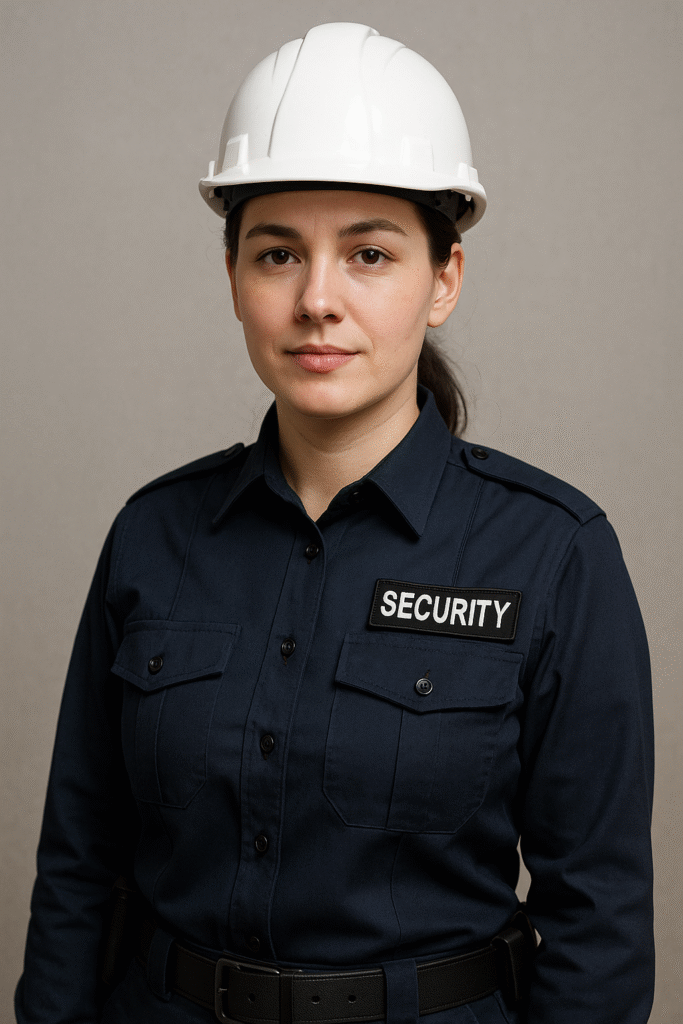
A trained security guard should not only report these risks but also act where safe to mitigate them. They often fill out hazard report forms or log entries to notify the OHS team and assist in follow-up actions.

Access Control and Safety Checks
Monitoring who enters and exits a building is more than just security—it’s a matter of safety. Controlling access ensures that unauthorized personnel don’t accidentally enter dangerous or restricted areas, especially in facilities like:
- Laboratories with chemical hazards
- Warehouses with high forklift traffic
- Construction sites with fall risks
During access checks, security guards can verify proper PPE usage, confirm safety training credentials, and deny access to unqualified individuals.
This proactive approach aligns with occupational safety laws and strengthens a company’s due diligence in high-risk environments.
Emergency Preparedness and First Response
Security guards are often the first to arrive during emergencies. They must be well-trained in:
- Fire evacuation procedures
- CPR and first aid
- Emergency communication protocols
- Handling aggressive or violent behavior
During drills or actual emergencies, guards direct evacuations, assist vulnerable individuals, and communicate with emergency services.
Their presence and competence can make the difference between a controlled incident and a major crisis.
Note: Many jurisdictions require security guards to be certified in first aid and emergency response. Refer to your regional regulations, such as those listed on OHSE.ca, to ensure compliance.
Enforcing Safety Policies and Procedures
Security guards also play a key role in enforcing safety rules, especially in large workplaces where supervisors may not see every infraction. For example:
- Ensuring workers wear helmets in construction zones
- Reminding visitors to sign in and wear ID badges
- Enforcing “no smoking” rules near flammable materials
This constant reinforcement helps build a strong safety culture where everyone understands the expectations and consequences of unsafe behavior.
Night Shifts and Lone Work Hazards
Many security guards work alone or at night, introducing additional safety concerns. OH&S requirements for lone workers apply, meaning:
- Guards must have access to check-in systems or personal alert devices
- Employers should conduct risk assessments for isolated work
- Fatigue management practices must be in place for long or overnight shifts
Ensuring guards are safe while protecting others is a legal and ethical duty under most workplace safety regulations.
Site-Specific Safety Responsibilities
Depending on the workplace, security guard duties can include unique OH&S requirements. For example:
- Hospitals: Dealing with biohazards and potentially violent patients
- Factories: Monitoring confined space entries and lockout/tagout procedures
- Schools: Coordinating lockdowns and emergency drills
In all cases, site-specific training is critical to equip guards with the knowledge and tools they need to act quickly and correctly.
Security Guard Safety Toolbox Talks
To keep safety knowledge current, security teams should engage in regular toolbox talks or briefings on topics like:
- Electrical hazards
- Safe confrontation techniques
- Emergency escape routes
- Dealing with weather-related threats

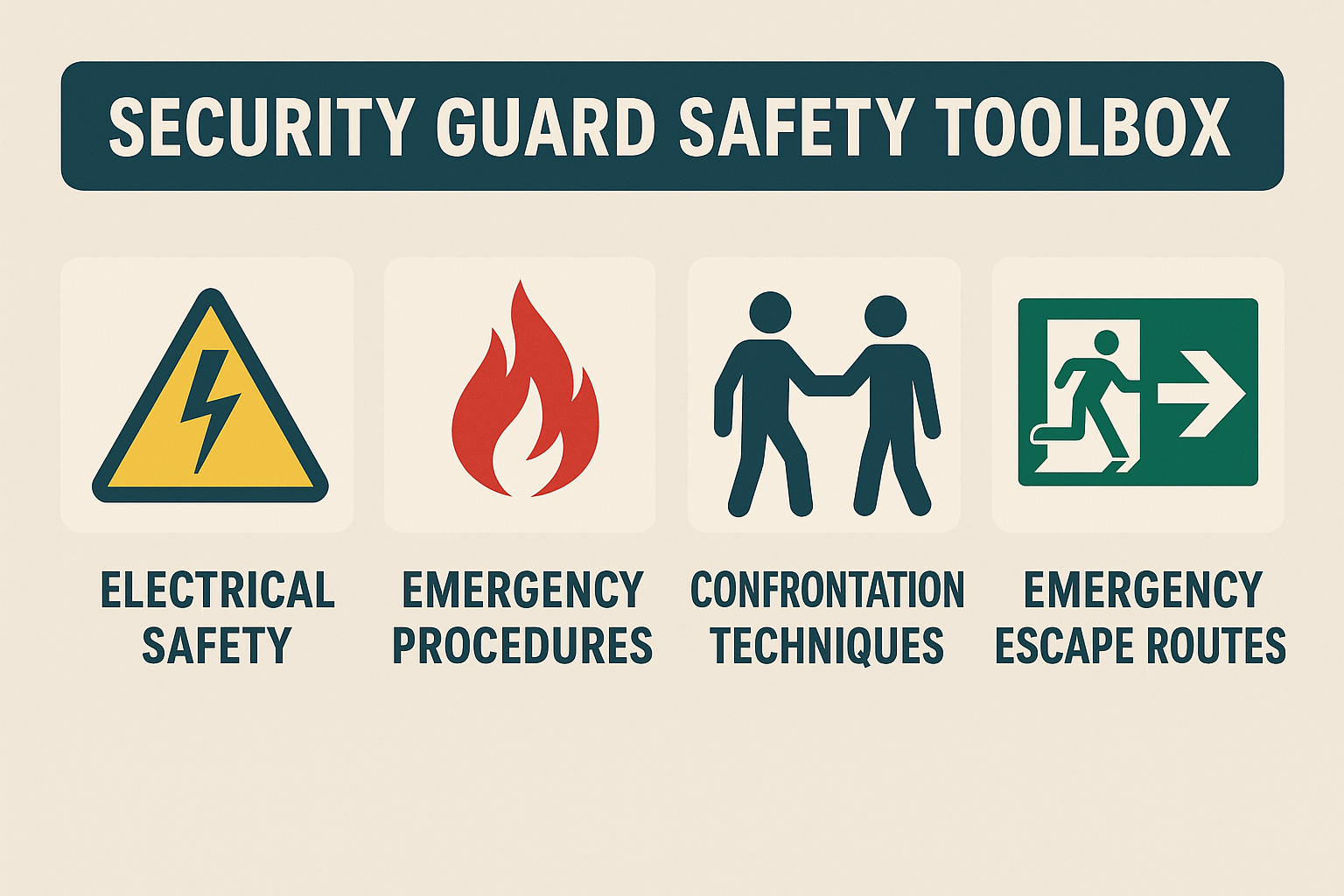
These short, focused sessions not only refresh knowledge but also promote a sense of teamwork and safety commitment among guards.
The Link Between Security and Safety Compliance
Security personnel help businesses meet various OH&S compliance requirements by:
- Maintaining logs of incidents and observations
- Participating in safety audits or walkthroughs
- Supporting investigations after workplace accidents
- Reporting near misses and unsafe acts
These contributions support continuous improvement in safety systems, a cornerstone of modern OH&S frameworks like ISO 45001.
Training and Certification for OH&S in Security
To effectively perform their duties, guards need more than just basic security training. Recommended certifications include:
- WHMIS/GHS Training
- First Aid & CPR
- Conflict Resolution Training
- Emergency Response Planning
Some provinces also offer advanced OH&S modules tailored for security professionals. Investing in this training is not just smart—it can save lives.
Conclusion
Security Guard Safety Responsibilities go far beyond watching doors and writing reports. They are safety enforcers, first responders, and risk detectors all in one.
Their contribution to occupational health and safety is immense and often underappreciated. Employers must ensure guards are fully integrated into safety systems, properly trained, and empowered to act when it matters most.
By recognizing and strengthening these responsibilities, we don’t just protect property—we protect people.
For more workplace safety insights, read our article on Top 10 Daily Habits That Make Workplaces Safer.
External references with DoFollow links: