


Security Guard Workplace Safety: Reducing Risks and Protecting People on Every Shift


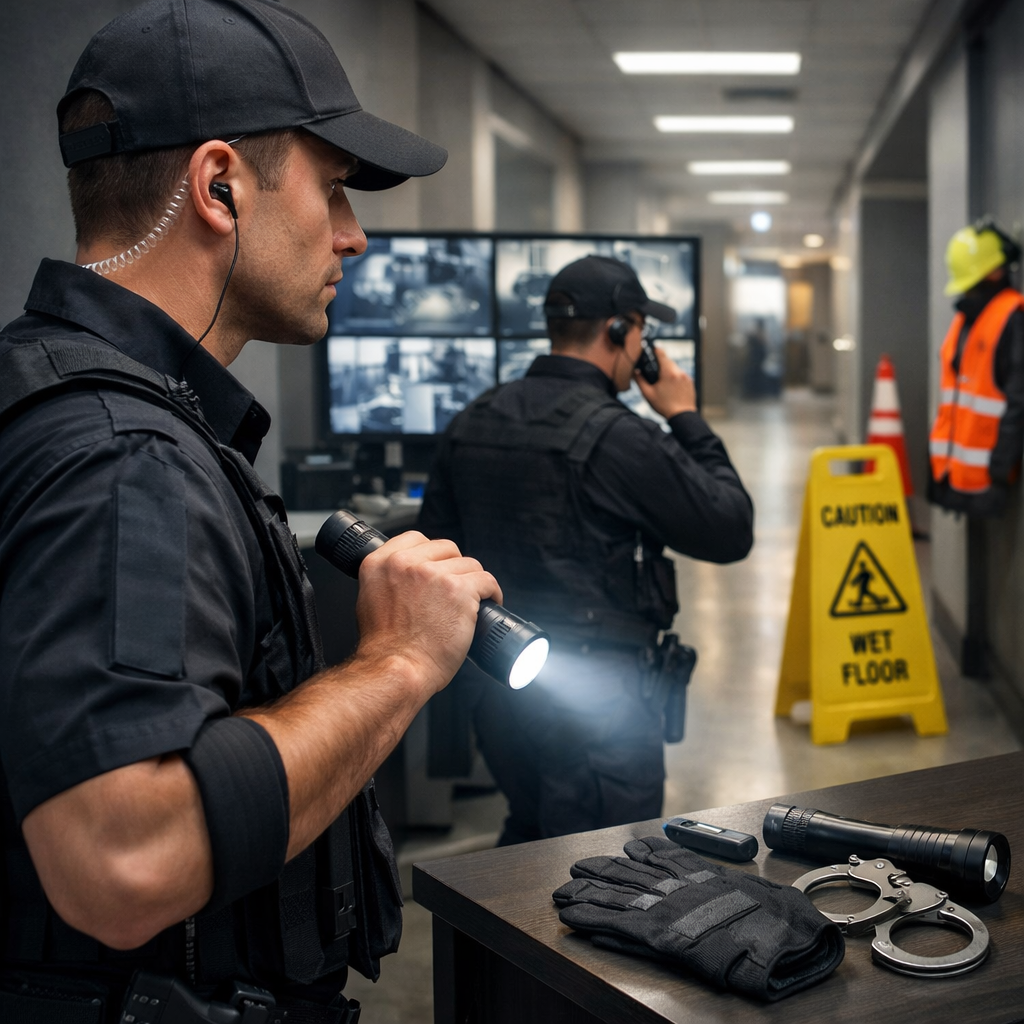
security guard workplace safety is a critical part of protecting not only security personnel, but also employees, visitors, contractors, and the public. Guards often work in unpredictable settings where they may face violence, fatigue, environmental hazards, and emergency situations with little warning.
Because the role is so dynamic, workplace safety for security teams cannot rely on basic orientation alone. It requires clear procedures, site-specific risk assessments, proper supervision, the right personal protective equipment, and ongoing training that reflects real conditions on the job.
Whether a guard is stationed at a retail entrance, a hospital ward, a construction site, a warehouse gate, or a corporate office, the hazards can vary widely. A strong safety program helps employers meet their legal duties while giving guards the tools to make sound decisions under pressure.
Organizations that prioritize prevention also tend to see fewer incidents, lower turnover, and more confident staff. In practical terms, that means fewer injuries, better reporting, and faster responses when problems arise.
Understanding Security Guard Workplace Safety Risks
Security guard workplace safety begins with understanding the range of hazards present in daily operations. While physical assault is one of the most recognized risks, it is far from the only one. Security work often combines lone work, irregular hours, emotional stress, traffic exposure, slips and falls, and direct contact with the public.
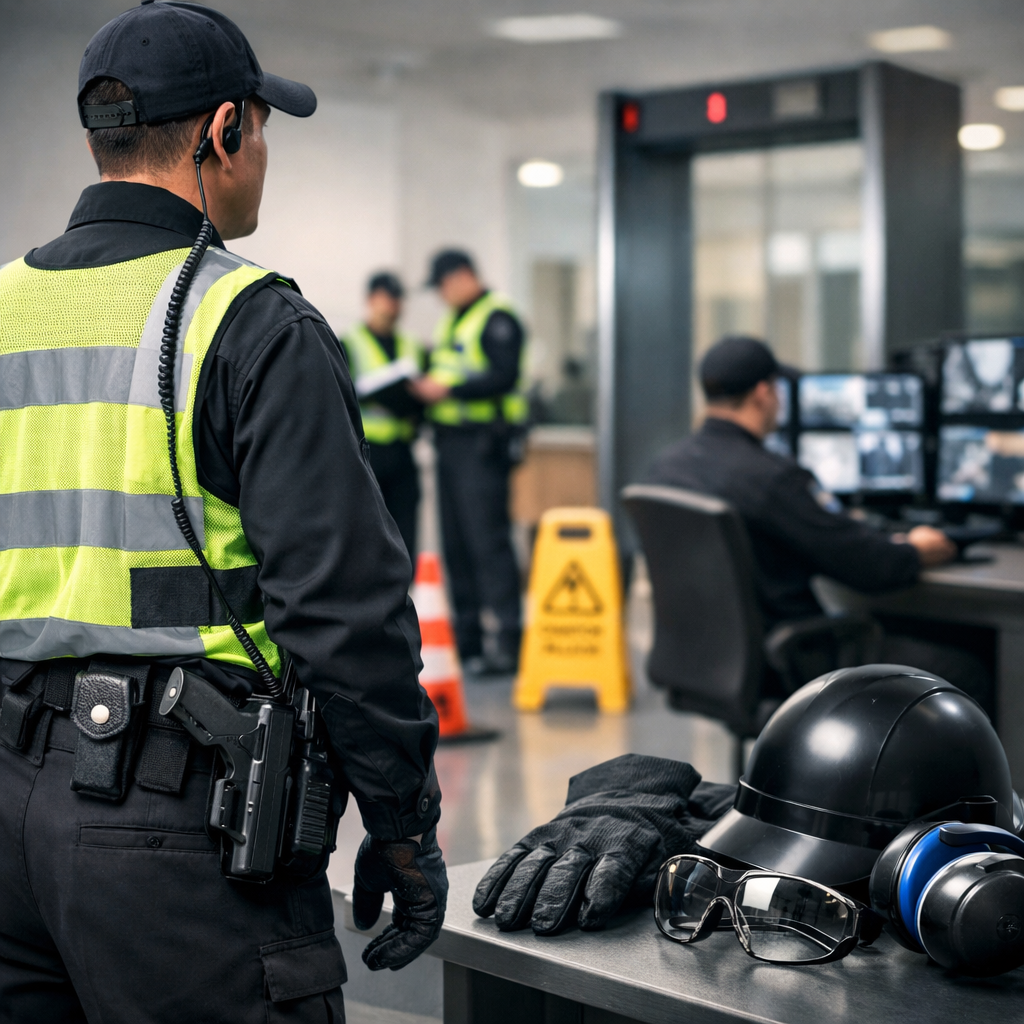
Many guards work at times when fewer supervisors or co-workers are present. Night shifts, isolated patrol routes, parking areas, and remote access points can increase vulnerability. In these conditions, a small incident can escalate quickly if communication systems fail or emergency support is delayed.
Common hazards security guards face
- Violence and aggression: verbal abuse, threats, physical assault, and weapon-related incidents
- Lone work risks: delayed emergency response, reduced visibility, and isolation during patrols
- Fatigue: long shifts, overnight schedules, and reduced alertness affecting judgment
- Slip, trip, and fall hazards: uneven surfaces, wet floors, stairs, icy walkways, and poor lighting
- Traffic and vehicle exposure: parking enforcement, gate control, loading docks, and roadside assignments
- Environmental conditions: heat, cold, rain, poor air quality, and noise exposure
- Psychological strain: conflict management, traumatic events, and chronic stress
- Manual handling: moving barriers, lifting equipment, or handling supplies
Practical examples make these risks easier to recognize. A mall security guard may be injured while intervening in a shoplifting incident. A hospital guard may face aggressive behavior in an emergency department. A construction site guard may slip on muddy access roads during a night patrol. Each case shows why security guard workplace safety must be tailored to the actual site.
Employers should review incident trends, near misses, environmental conditions, and job tasks regularly. Guidance from CCOHS and OSHA can support hazard identification and program development.
Prevention Strategies and the Hierarchy of Controls
Effective security guard workplace safety depends on prevention first. The best approach is to apply the Hierarchy of Controls, which means addressing hazards at the source where possible before relying only on worker behavior or PPE.
Applying the Hierarchy of Controls
| Control Level | How It Applies to Security Work | Practical Example |
|---|---|---|
| Elimination | Remove the hazard completely | Stop foot patrols in a condemned or structurally unsafe area |
| Substitution | Replace a risky task or tool with a safer option | Use remote video monitoring for high-risk isolated zones when appropriate |
| Engineering Controls | Use physical changes to reduce exposure | Install better lighting, barriers, panic buttons, and CCTV coverage |
| Administrative Controls | Change procedures, staffing, and training | Use buddy systems, check-in protocols, de-escalation training, and fatigue management |
| PPE | Provide protective equipment as the last line of defense | High-visibility vests, safety footwear, gloves, or body armor where required |
In many workplaces, administrative and engineering controls provide the biggest gains. For example, guards assigned to a parking structure benefit from improved lighting, visible cameras, reliable radios, and scheduled welfare checks. A retail site may reduce confrontation risks by setting clear escalation procedures and ensuring guards do not work alone during peak periods.
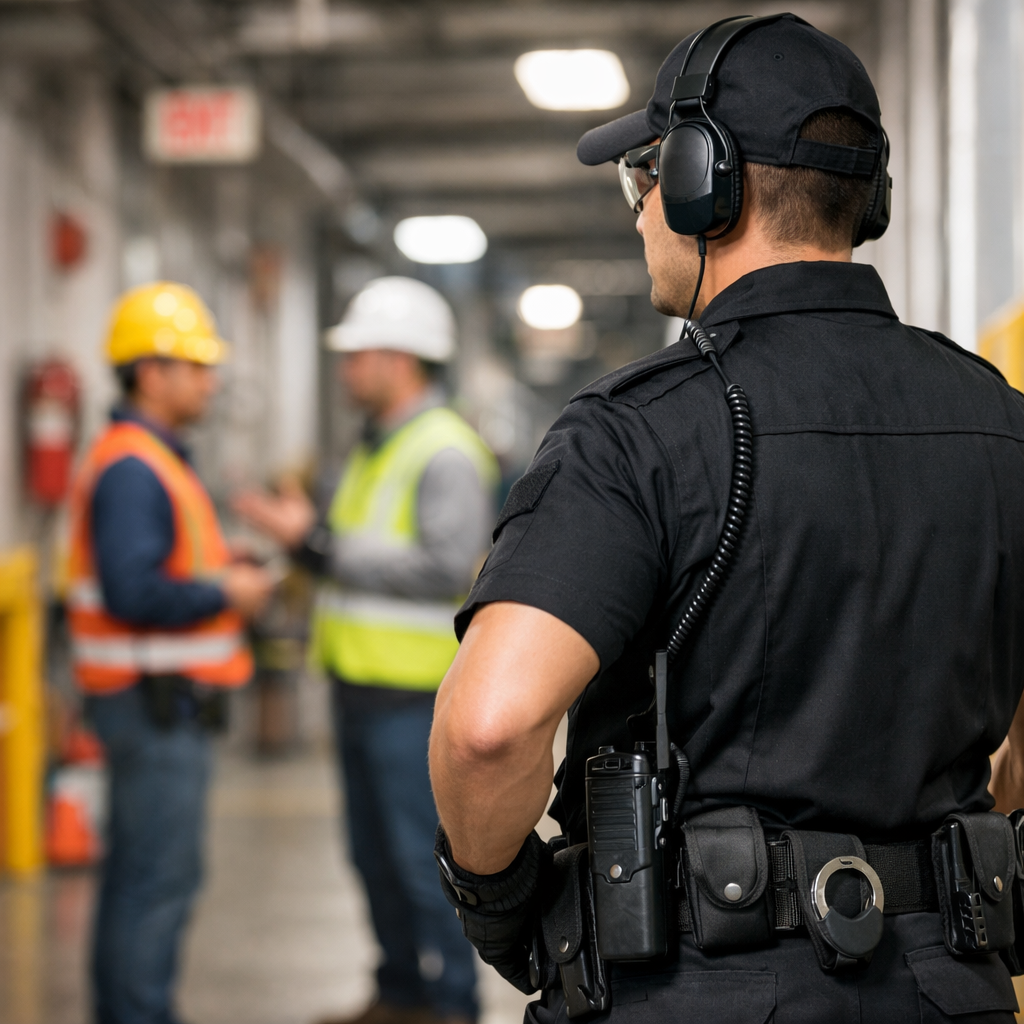
Violence prevention deserves special attention. Guards should be trained to recognize early warning signs such as pacing, shouting, clenched fists, intoxication, or attempts to block exits. Response protocols should prioritize distance, communication, backup, and safe withdrawal where needed.
Pre-shift briefings are another simple but powerful control. A short review of known risks, trespass concerns, maintenance issues, weather conditions, and expected events can help guards prepare before exposure begins. Employers can also improve outcomes with digital reporting tools and clear post-incident follow-up. Related guidance in workplace risk assessment and incident reporting best practices can strengthen these systems.
PPE, Training, and Safe Work Practices
Personal protective equipment should match the actual hazards at the site. Security guard workplace safety is weakened when PPE is generic, poorly fitted, or provided without training. Guards need to know when PPE is required, how to inspect it, and what its limitations are.
Typical PPE for security guards
- High-visibility clothing for traffic, parking, and low-light duties
- Slip-resistant safety footwear for indoor and outdoor patrols
- Weather-appropriate outerwear for cold, heat, or rain exposure
- Protective gloves for searches or handling unknown materials where policy allows
- Hearing protection in noisy industrial environments
- Eye protection for construction, warehouse, or maintenance-related zones
- Body armor or stab-resistant vests where risk assessments support their use
- Flashlights and communication devices as essential operational safety tools
Training should go far beyond induction. Guards need refreshers in conflict de-escalation, emergency response, radio use, first aid awareness, evacuation support, hazard reporting, and site-specific procedures. If the role includes access control, patrol, incident response, or interacting with vulnerable populations, training must reflect those duties closely.
Fatigue management is equally important. Security work often involves rotating shifts, overtime, and reduced sleep quality. Employers should monitor scheduling patterns, limit excessive consecutive shifts, and encourage reporting when a worker is too fatigued to perform safely. A tired guard is more likely to miss hazards, make errors, or respond slowly during emergencies.
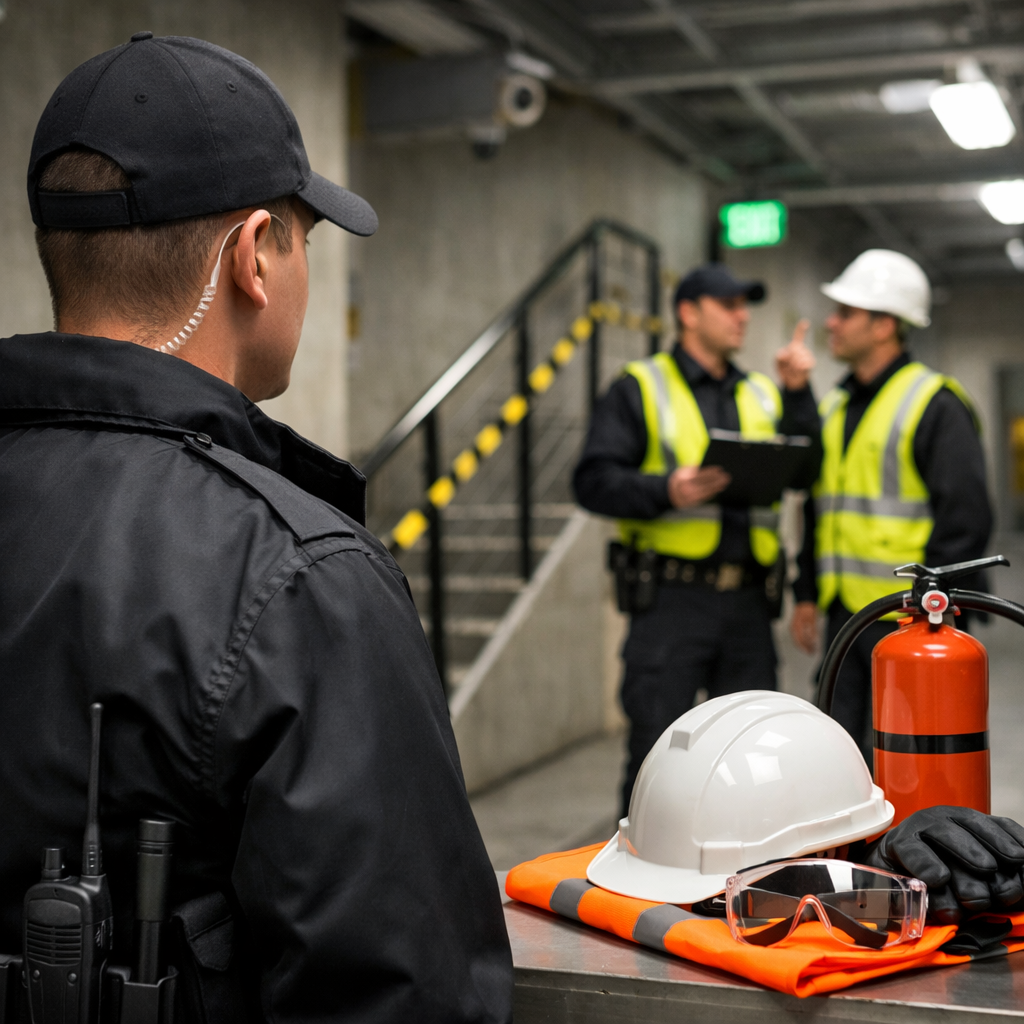
Consider a practical example. A guard working 12-hour night shifts at a logistics yard may have to monitor trucks, check IDs, patrol exterior routes, and respond to alarms. Without weather gear, proper lighting, warm-up breaks, and reliable communication, the risk profile increases sharply. With those controls in place, the same job becomes significantly safer.
Compliance, Reporting, and Building a Strong Safety Culture
Security guard workplace safety also depends on legal compliance and a strong reporting culture. Employers have a duty to provide safe work environments, adequate information, instruction, supervision, and suitable equipment. Workers, in turn, must follow procedures, use equipment properly, and report hazards and incidents promptly.
Safety compliance should include documented risk assessments, violence prevention procedures, emergency plans, PPE requirements, and incident investigation processes. Records of inspections, training, corrective actions, and supervisor reviews can help demonstrate due diligence while improving day-to-day performance.
Key elements of a compliant safety program
- Site-specific hazard assessments for each assignment
- Clear lone worker and communication procedures
- Violence and harassment prevention measures
- Emergency response plans for fire, medical events, intruders, and severe weather
- Routine inspections of radios, lighting, access points, and PPE
- Near-miss, incident, and injury reporting systems
- Supervisor follow-up and corrective action tracking
- Worker participation in safety meetings and reviews
Near-miss reporting is especially valuable. If a guard is almost struck by a reversing vehicle, confronted in a blind stairwell, or unable to reach dispatch on a dead radio battery, those events should trigger corrective action before a serious injury occurs. Strong safety cultures treat these reports as learning opportunities, not reasons for blame.
Management visibility matters too. When supervisors perform site visits, review concerns quickly, and act on recommendations, guards are more likely to trust the system and speak up early. That can prevent minor issues from becoming major incidents.
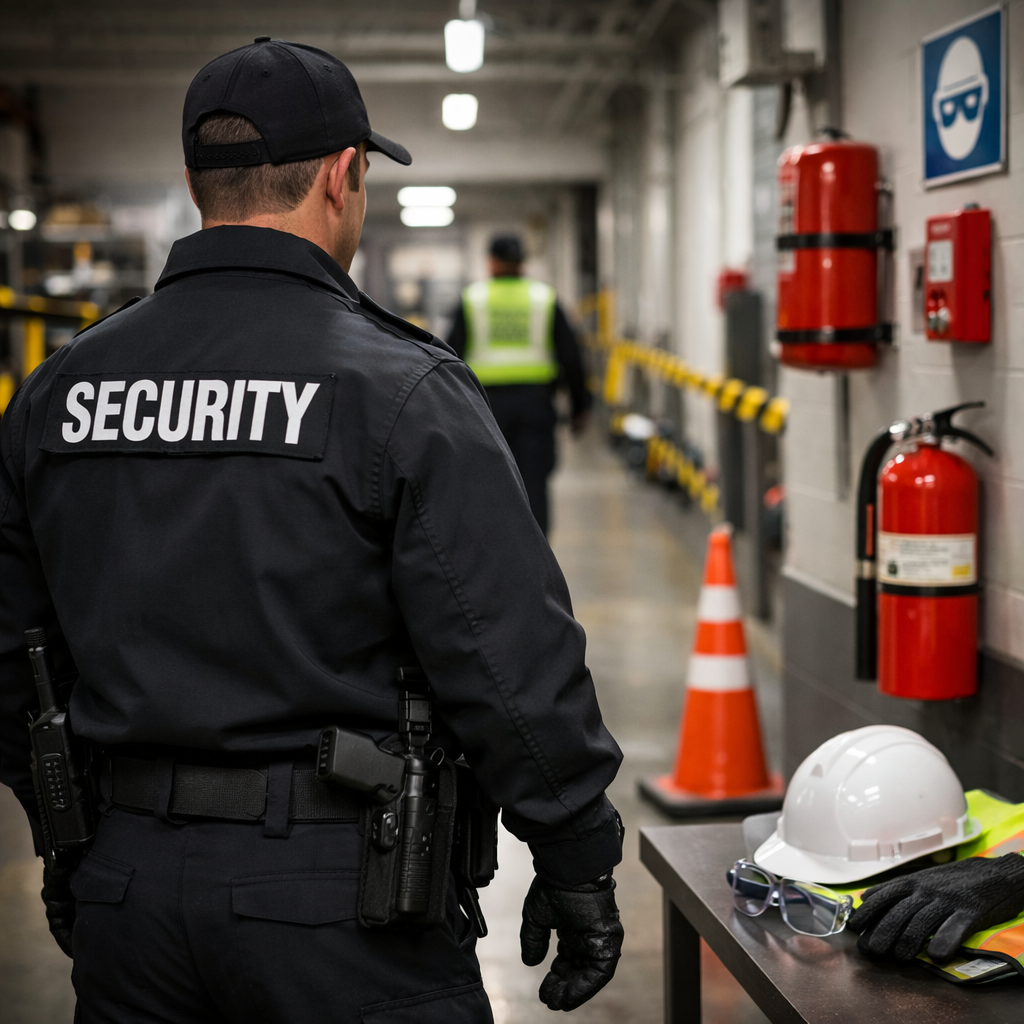
In conclusion, security guard workplace safety requires more than alertness and experience. It depends on recognizing real risks, applying the Hierarchy of Controls, providing the right PPE, meeting OHSE requirements, and reinforcing safe work practices through training and supervision. When employers and guards work together, security guard workplace safety becomes a practical, daily standard that protects people, property, and professional performance on every shift.