


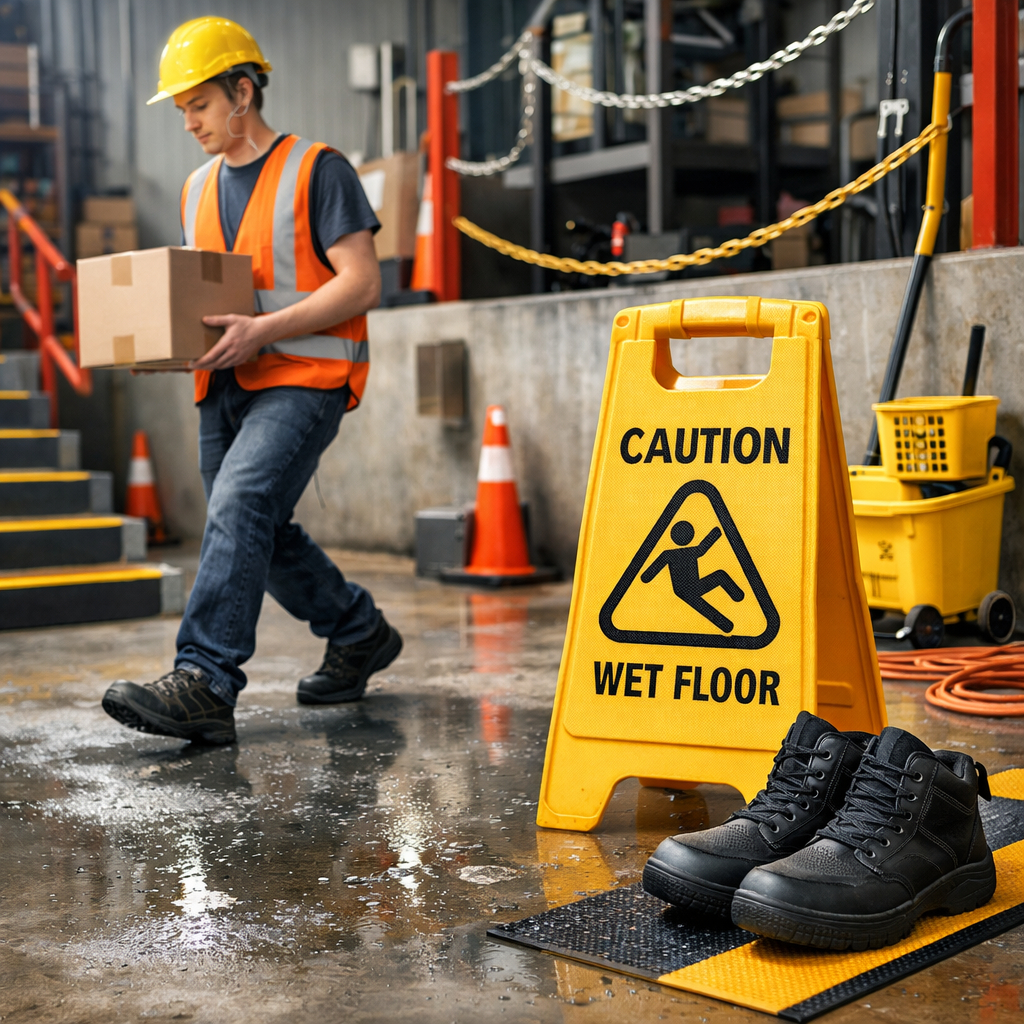

Slip trip and fall prevention for young workers starts with small daily habits that are easy to learn and important to keep. For students in part-time jobs, co-op placements, apprenticeships, retail work, food service, warehouses, recreation settings, and school environments, these incidents can happen quickly during ordinary tasks like carrying supplies, rushing to clock in, mopping a floor, climbing a short step, or walking through a cluttered hallway.
Young workers are often still building confidence at work. That can make it harder to spot hazards, speak up about unsafe conditions, or slow down when the job gets busy. The good news is that practical prevention works. With basic awareness, good housekeeping, proper footwear, and clear reporting habits, many common incidents can be avoided.
In Canadian workplaces and schools, prevention is a shared responsibility. Employers, supervisors, teachers, and workers all play a role. Resources from CCOHS, Ontario, and Parachute can help families and young workers understand hazards and safe routines. For more workplace safety guidance, readers can also explore OHSE.ca and training options at learn.ohse.ca.
- Why slip trip and fall prevention for young workers matters every day
- Smart everyday habits that support slip trip and fall prevention for young workers
- Control hazards early: housekeeping, reporting, and the hierarchy of controls
- Where young workers often face slip, trip, and fall hazards
- A short actionable checklist for slip trip and fall prevention for young workers
Why slip trip and fall prevention for young workers matters every day
Slips, trips, and falls are often seen as minor incidents, but they can cause strains, sprains, bruises, fractures, and head injuries. Even a fall from a low height, such as a small ladder or loading dock edge, can lead to serious harm. In many entry-level jobs, young workers move between customers, stock, equipment, cords, wet entrances, and changing floor surfaces throughout a shift.
New workers may also feel pressure to work fast, avoid asking questions, or clean and carry items at the same time. These behaviours increase risk. Prevention is not about fear. It is about noticing simple hazards before they cause an injury.
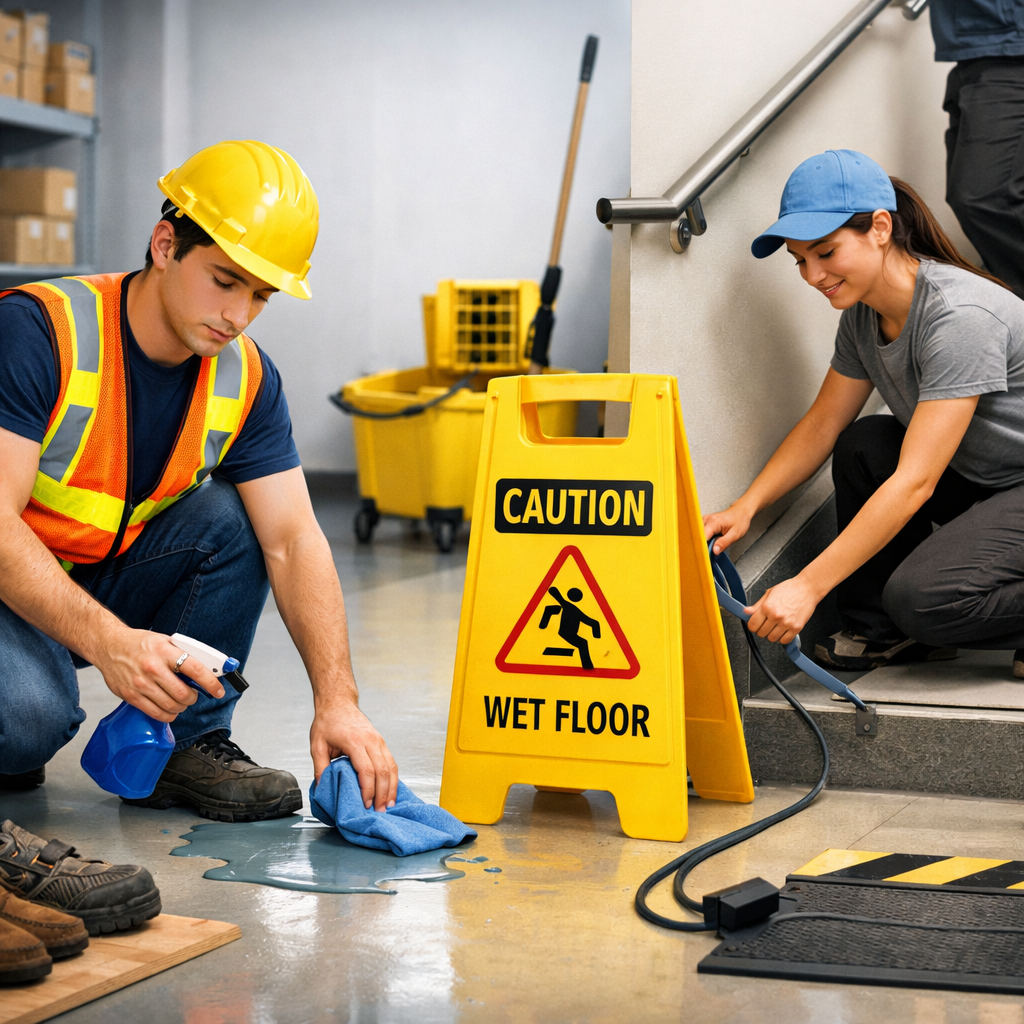
Common causes include:
- Wet or greasy floors
- Loose mats, rugs, or uneven flooring
- Cords, boxes, bags, or tools left in walkways
- Poor lighting in back rooms, stairwells, or parking areas
- Improper footwear for weather or floor conditions
- Running, rushing, or carrying loads that block vision
- Using chairs, shelves, or unstable surfaces instead of proper step stools
For young workers in Ontario and across Canada, the safest approach is to treat these hazards as normal parts of the job that need active control, not as things to ignore.
Smart everyday habits that support slip trip and fall prevention for young workers
Watch the path before you walk
One of the most effective habits is scanning the path ahead. Before moving, look for spills, clutter, damaged flooring, icy entrances, uneven ground, or items on stairs. This matters especially when entering a workplace from outdoors, moving from carpet to tile, or stepping into a kitchen, washroom, stockroom, or shop area.
If you are carrying something, make sure you can still see where you are going. If the load blocks your view, split it into smaller loads or ask for help.
Slow down in high-risk moments
Rushing increases mistakes. Slow down when floors are wet, when turning corners, when going through busy doors, and when using stairs. Hold handrails where available. Avoid texting, looking at a device, or talking in a way that distracts you while walking through active work areas.
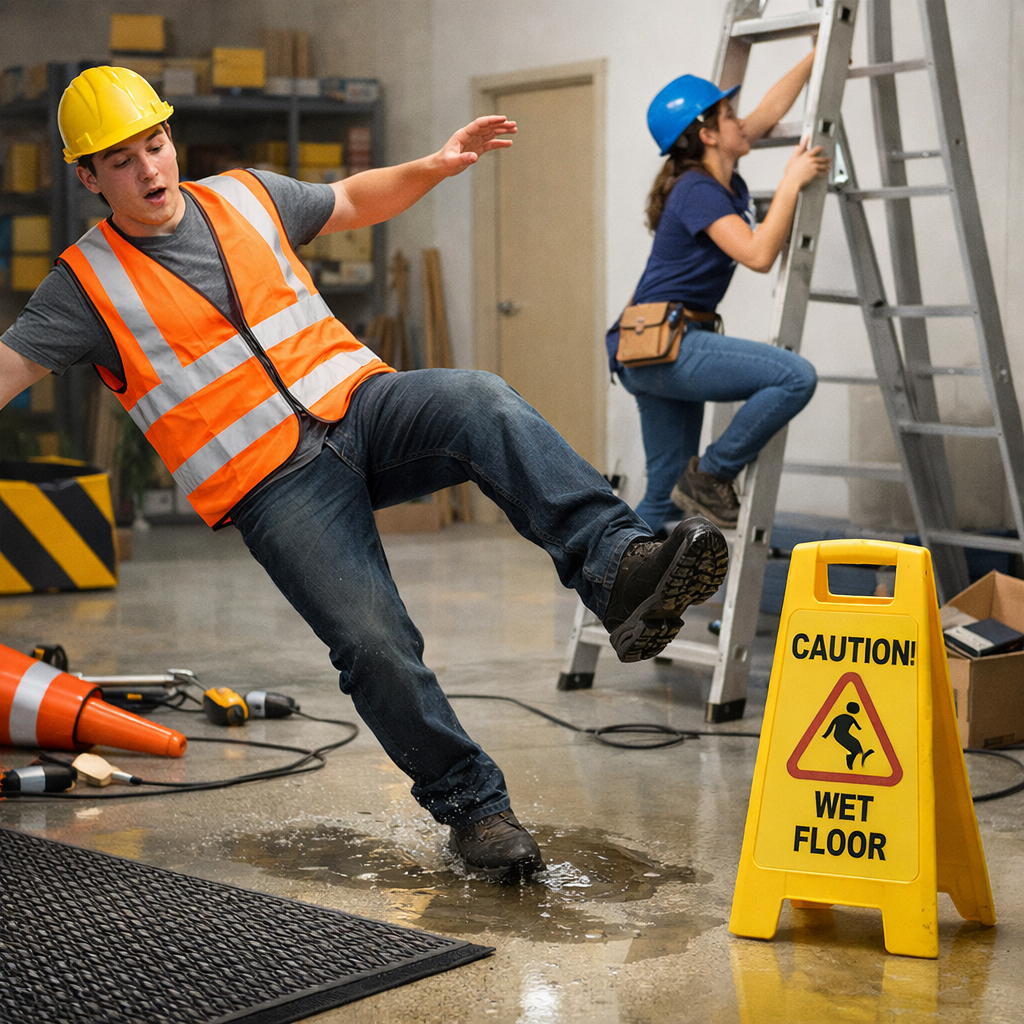
Young workers sometimes think speed proves competence. In reality, safe pacing is a sign of good judgment.
Choose footwear that matches the job
Footwear is a basic but important control. Shoes should fit properly, have good traction, and match the floor and weather conditions. In food service, cleaning, healthcare, and retail settings, slip-resistant footwear may be needed. In winter, outdoor slush and salt can make indoor floors slippery, so wipe shoes well and report soaked entrance areas.
Follow school, workplace, and manufacturer guidance for footwear requirements. If you are unsure, ask a supervisor before your first shift.
Keep one hand free when possible
Holding too many items makes balance harder. Keeping one hand free can help with doors, rails, and stability. This simple habit is useful on stairs, ramps, loading areas, and uneven outdoor surfaces.
Control hazards early: housekeeping, reporting, and the hierarchy of controls
Good slip trip and fall prevention for young workers is not only about personal caution. It also depends on the workplace setting being kept safe. That is where the hierarchy of controls is useful. While personal awareness matters, stronger controls should be used first when possible.
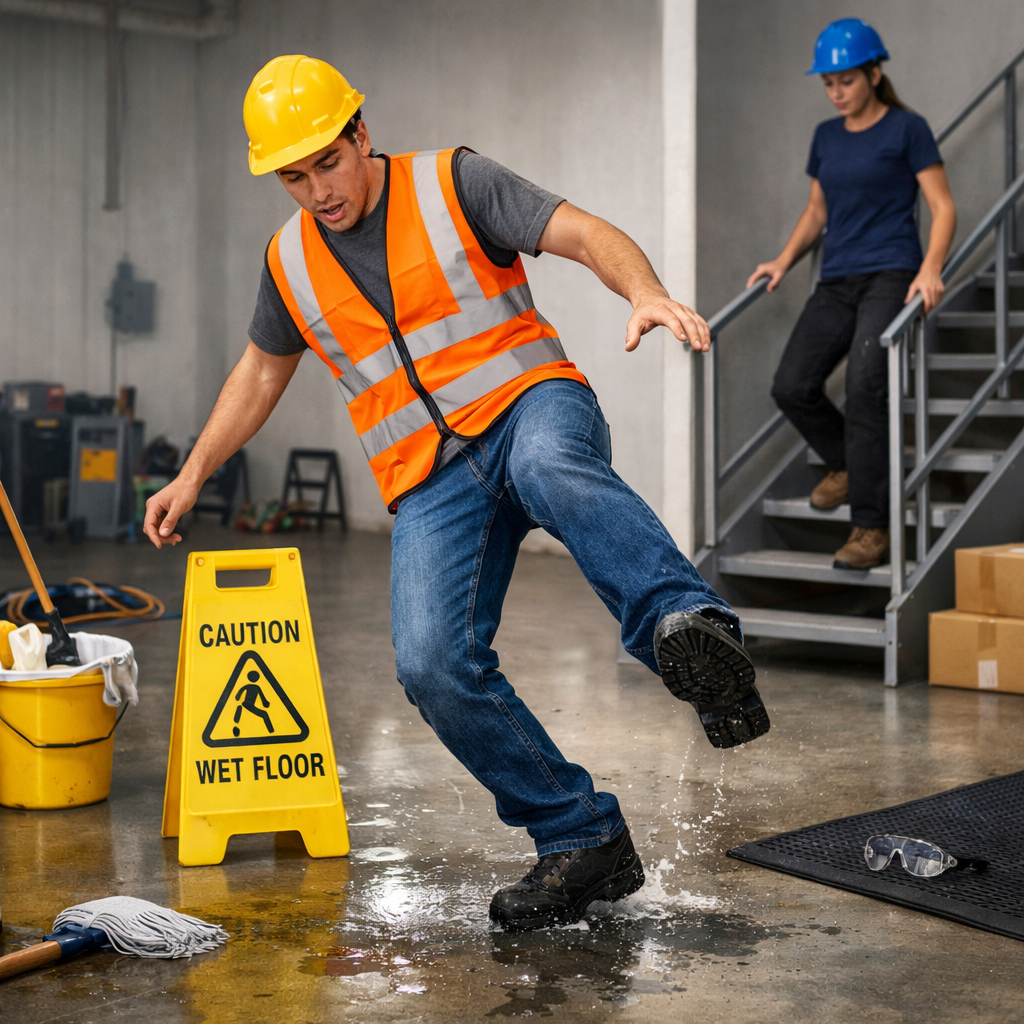
Use the hierarchy of controls in a practical way
| Level of control | Example for slips, trips, and falls |
|---|---|
| Elimination | Repair a leaking machine so water does not reach the floor |
| Substitution | Use a safer cleaning product or method that leaves less residue |
| Engineering controls | Install better drainage, non-slip flooring, lighting, or guardrails |
| Administrative controls | Set cleaning schedules, post signs, train staff, and keep aisles clear |
| PPE | Wear job-appropriate slip-resistant footwear when required |
For young workers, this means it is reasonable to expect hazards to be fixed, not just worked around. If a floor stays wet every shift, if a stair edge is damaged, or if clutter is always blocking access, report it. Employers and schools should respond with real controls.
Good housekeeping prevents many incidents
Housekeeping is one of the simplest and most effective controls. Put items back after use, store bags and stock away from walkways, secure cords, clean spills right away if trained and safe to do so, and place warning signs when needed. If cleanup requires chemicals, equipment, or procedures you have not been trained on, stop and ask.
Parents and educators can reinforce these habits at home and school. Young workers who practice tidy routines in everyday environments often carry those habits into the workplace.
Where young workers often face slip, trip, and fall hazards
Retail and customer service
Entranceways, stockrooms, polished floors, loose packaging, ladders, and rushed restocking can all create risk. Watch for spills near coolers, mats that bunch up, and boxes left in aisles.
Food service and hospitality
Kitchens and dish areas often have water, grease, steam, and fast movement. Use the right footwear, walk carefully around corners, and never assume someone else has cleaned a spill. Report repeated problem spots.
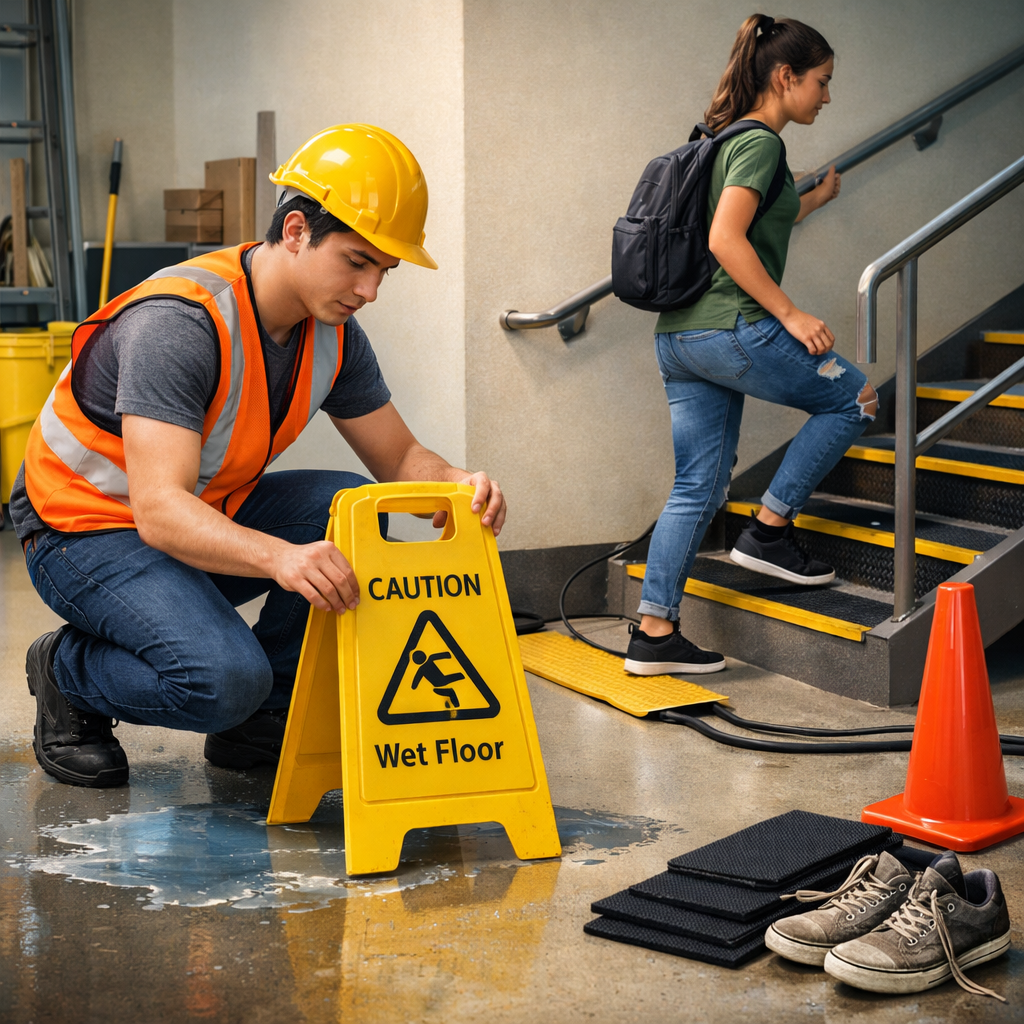
Warehouses, shops, and back-of-house spaces
These areas may have pallets, tools, uneven surfaces, loading edges, and changing lighting conditions. Use designated walkways and approved access equipment. Do not climb shelving or stand on unstable objects.
Schools, recreation spaces, and community settings
Hallways, gym entries, change rooms, outdoor paths, and winter surfaces can all be hazardous. During volunteer work, placements, or student jobs, follow site rules and local guidance for weather, maintenance, and emergency response.
A short actionable checklist for slip trip and fall prevention for young workers
Use this quick routine before and during a shift:
- Wear stable, job-appropriate footwear with good traction
- Check entrances, stairs, aisles, and work areas for hazards
- Keep floors and walkways clear of cords, bags, tools, and boxes
- Clean or report spills right away according to training
- Use handrails and keep one hand free on stairs
- Carry smaller loads so you can see ahead
- Do not run or rush through wet or crowded areas
- Use proper step stools or ladders, never chairs or shelves
- Report poor lighting, damaged flooring, and repeated hazards
- Follow workplace, school, manufacturer, and emergency guidance
It also helps to ask a few simple questions on day one: Where are the high-risk floors or entrances? What footwear is expected? Who do I tell if I spot a hazard? What cleanup tasks am I trained to do? These questions show maturity, not weakness.
Slip trip and fall prevention for young workers is most effective when it becomes part of normal routine. Notice the walking surface, choose the right footwear, keep paths clear, report hazards early, and avoid shortcuts that put balance at risk. Whether you are a student starting a first job, a parent helping a teen prepare for work, or a school supporting placements, these smart everyday habits can prevent injuries and build lifelong safety awareness.