


- Slips and Falls in Food Industry: Risks, Prevention, PPE, and Compliance
- Why Slips and Falls in Food Industry Workplaces Are So Common
- Risks and Consequences of Slips and Falls in Food Industry Operations
- Prevention of Slips and Falls in Food Industry Using Practical Controls
- PPE, Training, and Compliance for Slips and Falls in Food Industry
Slips and Falls in Food Industry: Risks, Prevention, PPE, and Compliance

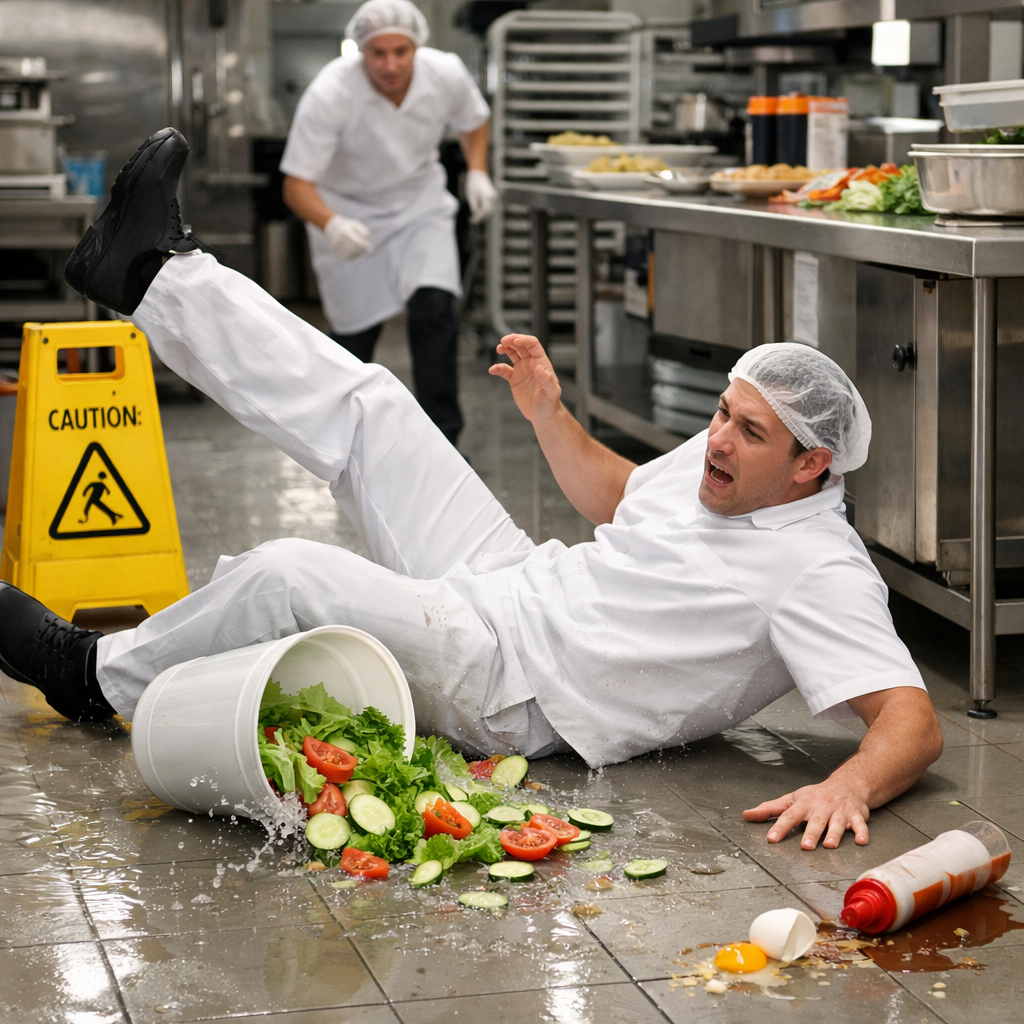
Slips and falls in food industry workplaces remain one of the most common causes of injury, lost time, and compensation claims. From food processing plants and commercial kitchens to cold storage rooms and packaging lines, wet floors, grease, spills, and rushed movement create serious hazards every day.
These incidents can lead to sprains, fractures, back injuries, head trauma, and in severe cases, long-term disability.
For employers and safety teams, preventing slips and falls is not just about housekeeping. It is an OHSE priority that affects worker wellbeing, production continuity, legal compliance, and business reputation.
The food sector presents unique challenges because the work environment often combines water, oils, cleaning chemicals, changing temperatures, and fast-paced operations. In many facilities, workers move between hot washdown areas, refrigerated rooms, loading docks, and uneven walking surfaces during the same shift.
That means effective prevention requires hazard identification, practical controls, proper footwear, and a strong reporting culture.
This article explains the main causes of slips and falls in food industry settings, outlines key risks, and reviews practical prevention measures including PPE, compliance duties, and real workplace examples.
Why Slips and Falls in Food Industry Workplaces Are So Common
The food industry is one of the highest-risk sectors for slip and fall incidents because contamination of walking surfaces is often part of normal operations. Water from washdowns, food waste, oils, sauces, powders, and packaging debris can quickly turn safe flooring into a hazard.
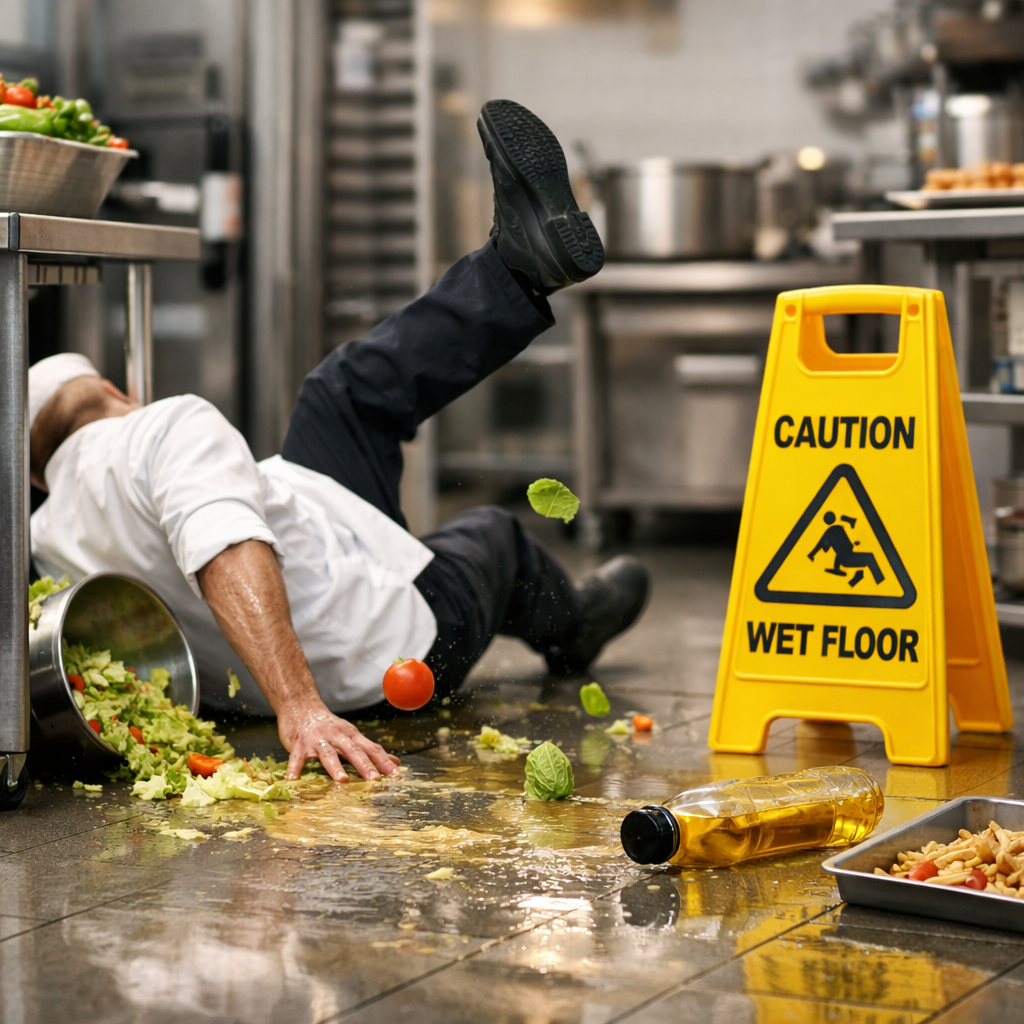
In processing environments, floors may remain damp for long periods. In kitchens and production areas, employees often carry items, turn quickly, or walk while focused on machinery, preparation, or deadlines rather than underfoot hazards.
When these factors combine with poor drainage, worn floor coatings, or unsuitable footwear, the risk increases sharply.
Common causes of slips and falls in food industry settings
- Wet or greasy floors from spills, washdowns, or condensation
- Food scraps, powders, ice, and packaging left on walkways
- Uneven flooring, broken tiles, damaged mats, or sudden floor level changes
- Poor drainage in wet process areas
- Inadequate lighting in storage rooms, docks, or stairways
- Improperly selected footwear with poor slip resistance
- Rushing, distraction, fatigue, or carrying loads that block vision
- Cables, hoses, and tools crossing pedestrian routes
According to guidance from OSHA, walking-working surfaces must be kept clean, orderly, and in a sanitary condition. Similar principles are also emphasized by CCOHS, which highlights footwear, housekeeping, and floor maintenance as key controls for preventing falls.
Risks and Consequences of Slips and Falls in Food Industry Operations
The direct injury from a slip or fall can be serious, but the wider impact on a food business is often underestimated. A single incident may trigger medical treatment, incident investigations, staff shortages, overtime costs, production disruption, and insurance consequences.
For workers, injuries range from minor bruises to severe musculoskeletal harm. Falls near machinery, hot surfaces, sharp tools, conveyors, or forklift routes can also escalate into far more dangerous events than a simple trip.
Typical injury outcomes
- Sprains and strains, especially to ankles, knees, wrists, and back
- Fractures from sudden impact
- Cuts and lacerations from nearby equipment or broken containers
- Head injuries, including concussion
- Secondary injuries caused by falling into machinery, racks, or hot surfaces
Business and OHSE impacts
Slips and falls in food industry environments can affect more than injury statistics. They can reduce morale, increase absenteeism, and expose weaknesses in supervision, maintenance, and training systems.
In facilities subject to audit programs or customer inspections, frequent incidents may also raise concerns about general safety management and housekeeping standards.
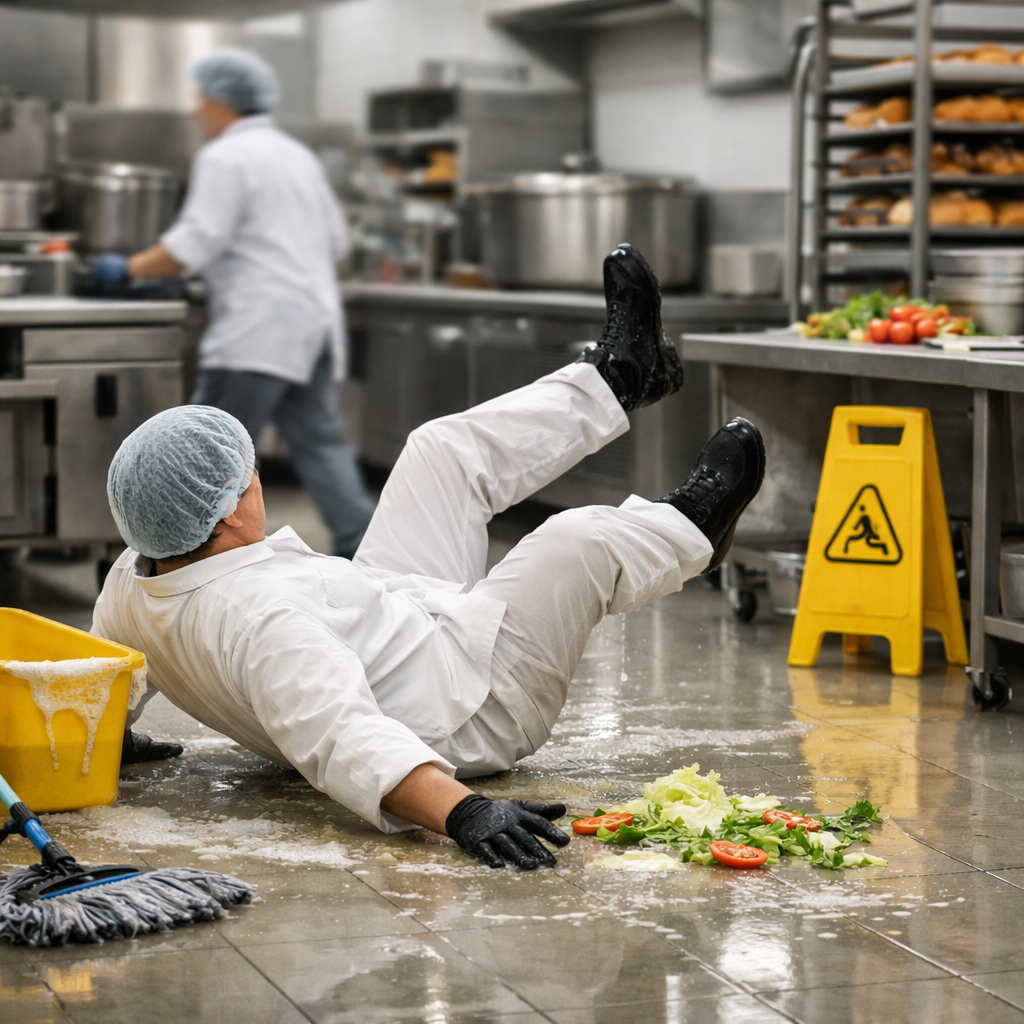
For example, a worker in a poultry processing room may slip on a mixture of water and fat near a trimming line. Even if the injury is limited to a sprained knee, the event can still shut down the area for investigation, create staffing gaps, and reveal that drainage grates were blocked and anti-slip footwear was not enforced.
| Hazard | Example in Food Workplace | Possible Consequence |
|---|---|---|
| Wet floor | Washdown water near production line | Slip, back injury, fracture |
| Grease or oil | Fryer area in commercial kitchen | Fall with burn or impact injury |
| Debris on walkway | Food scraps or cardboard in aisle | Trip, sprain, dropped load |
| Cold room ice | Freezer entry or defrost area | Slip, head injury |
Prevention of Slips and Falls in Food Industry Using Practical Controls
The best way to reduce slips and falls in food industry workplaces is to apply the Hierarchy of Controls. This means focusing first on eliminating hazards where possible, then using engineering and administrative controls before relying only on PPE.
Applying the Hierarchy of Controls
- Elimination: redesign tasks to reduce unnecessary water, grease, or waste on floors
- Substitution: use cleaning products or processes that leave less residue where suitable
- Engineering controls: install effective drainage, slip-resistant flooring, floor coatings, barriers, and hose management systems
- Administrative controls: cleaning schedules, spill response procedures, signage, inspections, traffic rules, and worker training
- PPE: issue slip-resistant footwear and other task-specific protective equipment
Good housekeeping remains the most visible and immediate control measure. Spills should be cleaned promptly, and walkways should be inspected throughout the shift, not only at the start or end of the day.
Facilities with wet processing should also separate pedestrian traffic from high-contamination zones wherever possible.
Practical prevention measures that work
- Use floor materials designed for wet and greasy food environments
- Maintain drains and remove standing water quickly
- Install anti-slip mats only where they do not create trip hazards
- Mark pedestrian routes clearly and keep them free of hoses and pallets
- Improve lighting in corridors, freezers, docks, and stairwells
- Set fast spill reporting and cleanup procedures
- Inspect high-risk areas such as entrances, sinks, fryers, and washdown zones
- Review incident data to identify repeat locations and root causes
A useful approach is to include slip-risk checks in routine workplace inspections. Internal safety resources such as safety inspection checklists and hazard reporting procedures can support a more structured response.
Consider a bakery where flour dust regularly settles near mixing stations. While flour may not look as dangerous as liquid spills, it can create a low-friction surface. The solution may involve local extraction, immediate cleanup tools at point of use, revised storage methods, and footwear review rather than relying on warning signs alone.
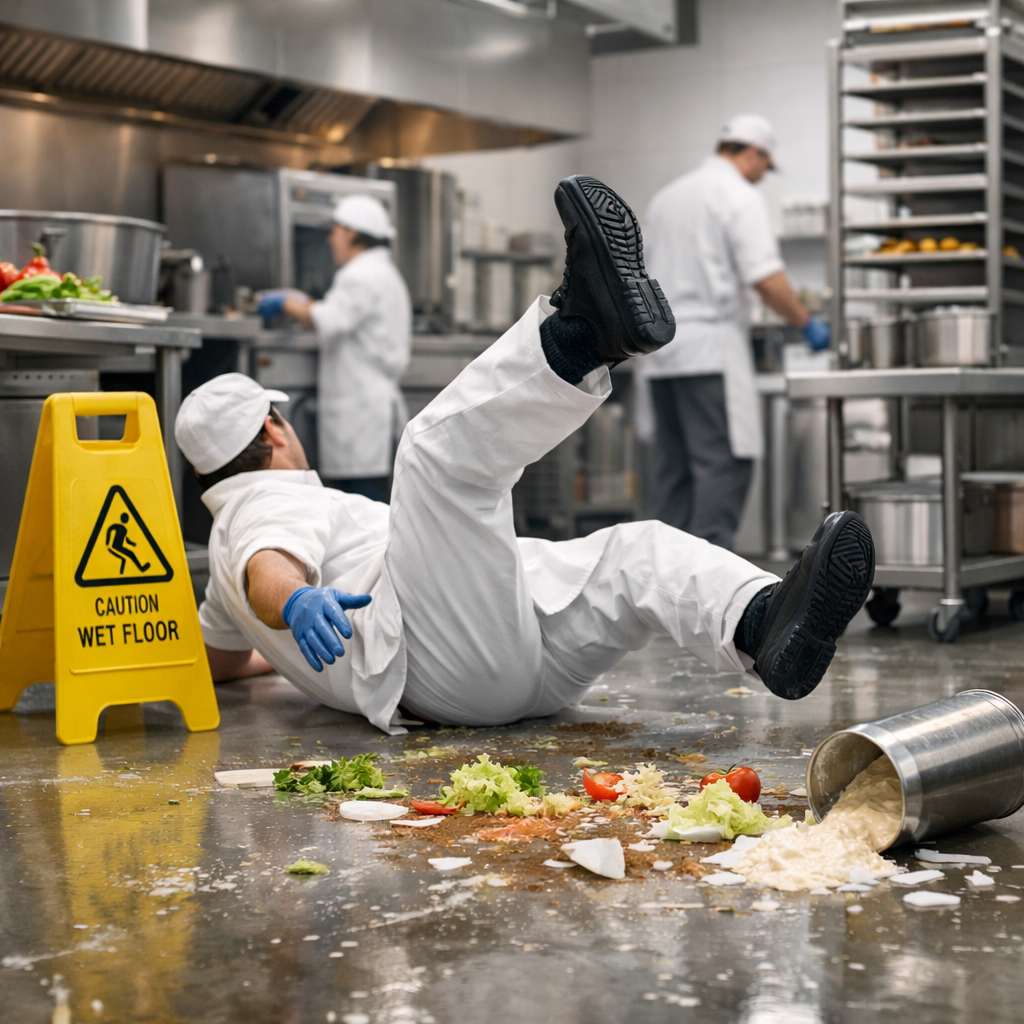
PPE, Training, and Compliance for Slips and Falls in Food Industry
PPE is an important part of controlling slips and falls in food industry risks, but it should never be the only measure. In food workplaces, the most critical PPE item is usually slip-resistant footwear suited to the actual floor conditions.
PPE considerations
- Slip-resistant soles tested for wet, oily, or greasy surfaces
- Footwear compatible with hygiene and food safety requirements
- Proper sizing and replacement when tread is worn
- Additional PPE where needed, such as gloves for safe cleaning and cold-room gear that does not restrict movement
Footwear selection should be based on task and environment. A shoe that performs well in a dry packing area may not provide enough grip in a washdown room or near a fryer.
Workers also need instruction on why footwear matters, how to inspect tread wear, and when to request replacement.
Training and supervision
Training should cover hazard awareness, reporting, safe walking practices, spill response, and the importance of using designated walkways. Supervisors should reinforce expectations during shift starts, especially in high-risk weather, cleaning, or production conditions.
Practical examples make training stronger. Instead of simply telling workers to “be careful,” explain what happened in actual incidents: a worker carrying a crate through a wet chiller entry, a cleaner leaving a hose across a walkway, or a dock employee slipping on rainwater tracked indoors.
These examples help people recognize the small failures that lead to injury.
Compliance and legal duties
Employers have a duty to provide safe walking-working surfaces, training, maintenance, and suitable control measures. Regulatory expectations vary by jurisdiction, but the core principles are consistent: identify hazards, assess risks, implement controls, train workers, and review effectiveness.
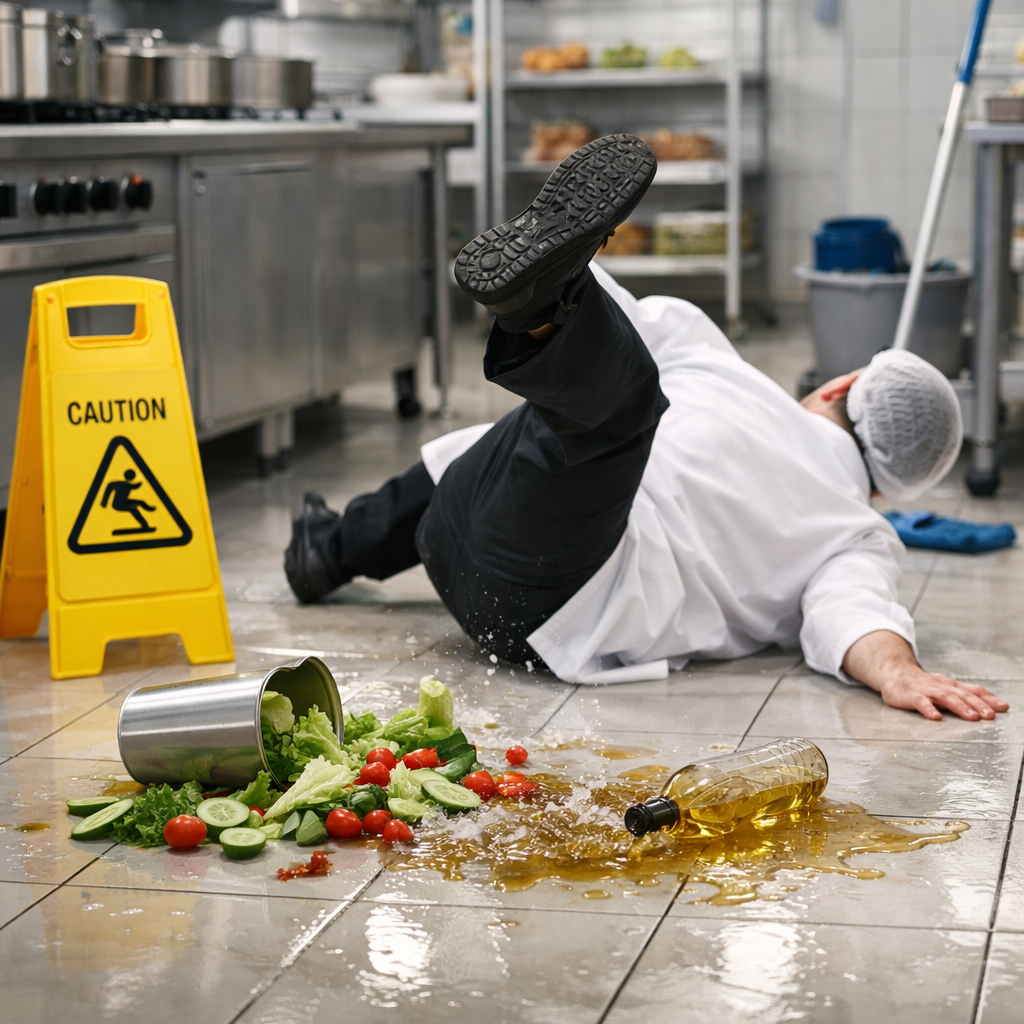
OSHA standards and CCOHS guidance both support these fundamentals, and food businesses should also align safety controls with broader management systems, inspections, and incident investigations.
Documented floor inspections, maintenance records, near-miss reports, and corrective actions all help demonstrate due diligence.
In practice, compliance means more than placing a wet floor sign after a spill. It means designing work so hazards are minimized, verifying controls actually work, and correcting repeat problems before someone gets hurt.
That is the difference between reactive safety and effective prevention.
Slips and falls in food industry workplaces are preventable when risks are understood and controls are applied consistently. Wet surfaces, grease, debris, poor drainage, and unsuitable footwear may be common in food operations, but they should never be accepted as normal. By combining housekeeping, engineering improvements, slip-resistant PPE, worker training, and clear compliance processes, employers can reduce injuries and create safer, more efficient facilities. A strong OHSE program treats slips and falls in food industry as a serious operational risk and addresses them before they result in harm.