 Skip to content

Slips, Trips, and Falls in Snow-Covered Parking Lots are one of the most common winter hazards for workers, visitors, and delivery teams. A thin layer of ice, hidden curb edges, slushy puddles, and poor lighting can turn a routine walk from the car to the door into a painful incident within seconds.
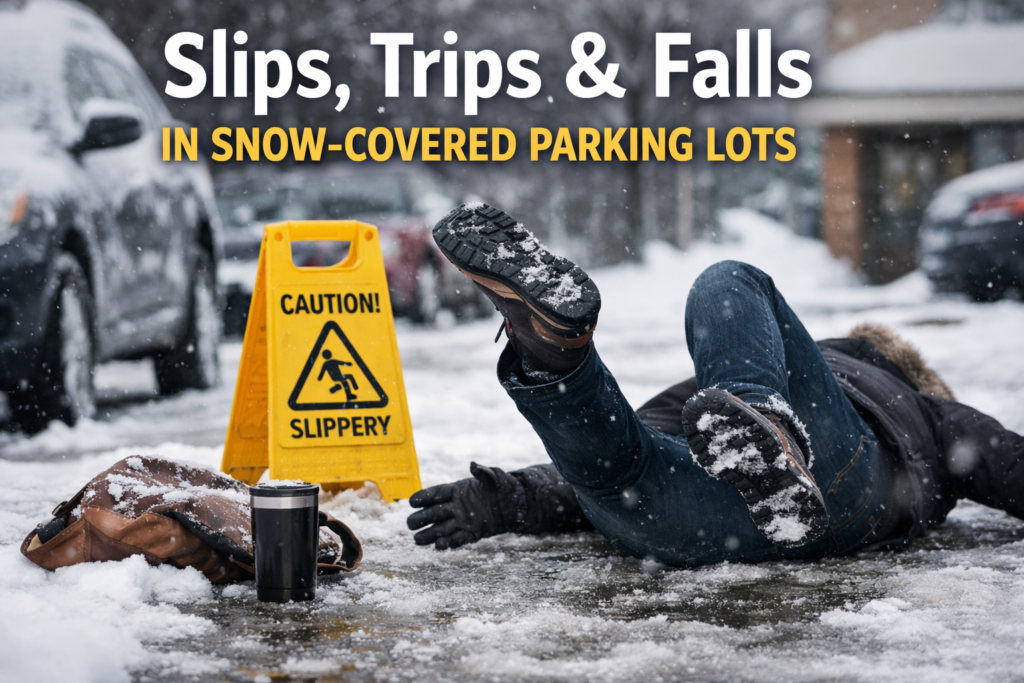
The good news is that most winter parking lot incidents are preventable with consistent maintenance, smart planning, and simple safe-walking habits.
- Why Slips, Trips, and Falls in Snow-Covered Parking Lots happen so often
- The biggest hazards hiding in winter parking areas
- High-risk locations where incidents cluster
- Control measures that actually reduce Slips, Trips, and Falls in Snow-Covered Parking Lots
- Inspections: the simplest way to prevent repeat incidents
- Footwear, walking techniques, and worker behavior
- Contractor management: snow removal expectations must be crystal clear
- A mini “toolbox talk” for winter parking lot safety
- What to do after an incident (without making it worse)
- The takeaway: prevention is cheaper than recovery
Why Slips, Trips, and Falls in Snow-Covered Parking Lots happen so often
Parking lots are exposed to every winter condition: snow accumulation, freezing rain, wind-driven drifting, and rapid freeze-thaw cycles. Unlike indoor floors, the surface is constantly changing throughout the day, meaning a “safe at 9 AM” lot can become hazardous by 11 AM after a temperature drop or more precipitation.
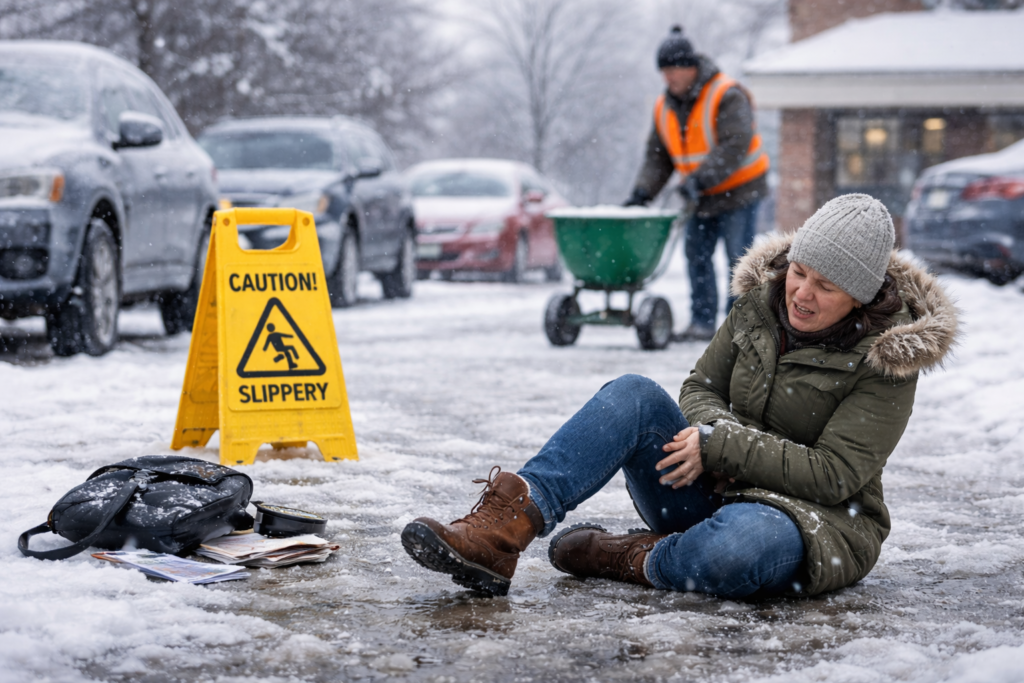
Another reason these incidents are so frequent is that people tend to rush. Employees arriving late, patients heading into appointments, or drivers carrying items may not notice hazards like compacted snow, black ice, or uneven pavement.
If your organization wants to reduce winter injuries, Slips, Trips, and Falls in Snow-Covered Parking Lots must be treated as a daily operational risk—not a seasonal afterthought.
The biggest hazards hiding in winter parking areas
Slips, Trips, and Falls in Snow-Covered Parking Lots usually come from a mix of surface conditions and human factors. Slippery ice is the obvious one, but many incidents come from smaller, less visible hazards that keep repeating.
Common winter hazards include compacted snow at entrances, icy curb ramps, and slush that refreezes overnight. Potholes and uneven surfaces become “invisible” under snow, increasing trip risks. Vehicles also create hazards by tracking snow into pedestrian routes and compressing ice into slick patches.
Poor lighting, blocked sightlines, and inadequate signage make things worse, especially during early morning or evening hours. If you’re doing hazard assessments, focus on high-traffic walking lanes, accessible routes, crosswalks, and the first 20–30 feet near entrances.
High-risk locations where incidents cluster
If you map winter incidents, you’ll notice the same hotspots every season. These areas need extra attention because the combination of foot traffic and weather exposure is constant.
The highest-risk areas are usually near main doors, staff entrances, and loading zones. Bus stops, patient drop-off lanes, and ramps for accessibility are also common trouble spots because they must stay clear and safe at all times. Another hotspot is around drains—when they clog with ice or debris, water pools, freezes, and turns into a skating rink.
A strong program to prevent Slips, Trips, and Falls in Snow-Covered Parking Lots starts by prioritizing these “always busy” locations and treating them as critical routes.
Control measures that actually reduce Slips, Trips, and Falls in Snow-Covered Parking Lots
The best results come from combining multiple controls. Relying only on salt is rarely enough, especially when temperatures swing or snowfall is heavy. Think in layers: remove snow early, add traction, improve visibility, and keep monitoring conditions.
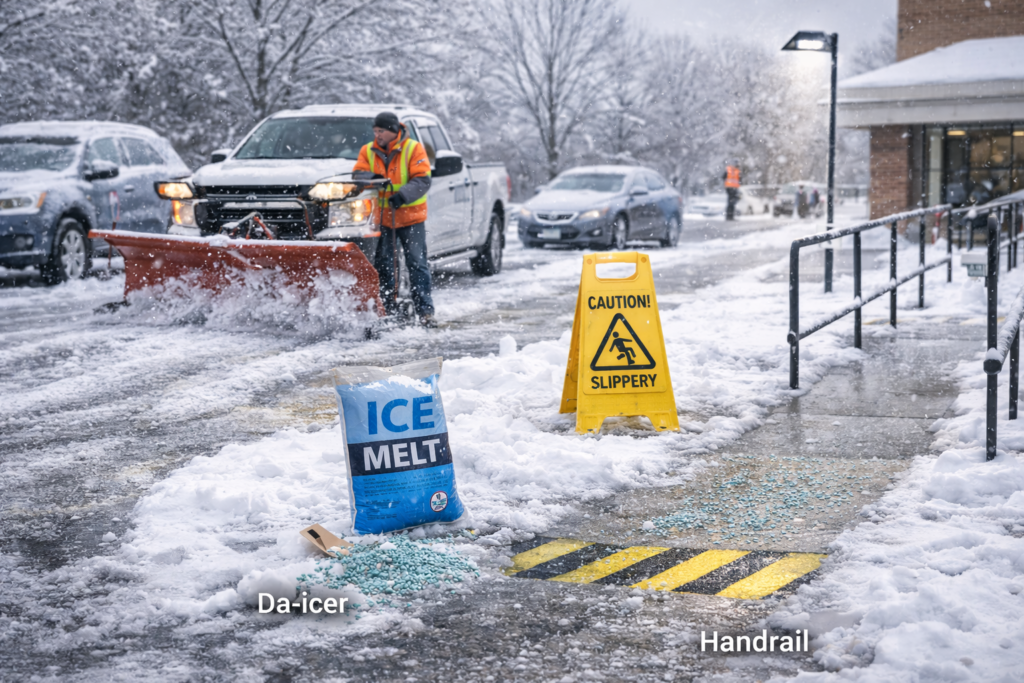
Snow removal that starts early, not late
Waiting until the snow “stops” is a common mistake. When snow is allowed to compact under foot and tire traffic, it becomes harder to remove and much more slippery. Start plowing and clearing early, then keep routes maintained throughout the day.
Schedule priority clearing for walkways, crosswalks, ramps, and entrances before focusing on low-traffic areas. This approach protects the largest number of people first and lowers the chance of Slips, Trips, and Falls in Snow-Covered Parking Lots during peak arrival times.
Traction control: salt, sand, and smart timing
Ice melt products work best when they’re applied correctly. For example, applying salt too early can be wasteful, and applying it too late may not prevent bonding ice. Where temperatures are very low, standard sodium chloride may be less effective, so site teams should choose products suited to local conditions.
Using a blend of de-icer and sand can improve grip when ice melt alone won’t do the job. For guidance on slip prevention practices, the Canadian Centre for Occupational Health and Safety has helpful resources on winter walking safety and surface hazards (CCOHS) here: https://www.ccohs.ca/ (external dofollow link).
Drainage and snow pile placement
Drainage is an underrated factor. If meltwater runs across walking paths and refreezes, you’ll be fighting the same icy patch every day. Make sure drains are clear, downspouts don’t discharge onto sidewalks, and snow piles are placed where runoff won’t create hazards.
Snow storage should never block sightlines at intersections or crosswalks. Reduced visibility increases vehicle-pedestrian risk, which often overlaps with Slips, Trips, and Falls in Snow-Covered Parking Lots.
Lighting and visibility upgrades
Winter means darker mornings and evenings, and poor lighting hides ice shine, curb edges, and uneven pavement. Improve lighting in pedestrian routes, especially near entrances, crossing areas, and accessible paths.
Use reflective markings for curbs, stair edges, and speed bumps. Clear signage helps too—especially when you need to redirect foot traffic away from a temporarily unsafe area.
Inspections: the simplest way to prevent repeat incidents
A winter inspection program should be structured and frequent. The goal is to catch changes quickly, because conditions can shift in minutes. Assign responsibility clearly—who checks what, when, and how issues are reported.
A strong winter checklist includes walking paths, ramps, handrails, curb cuts, parking stalls, and drop-off zones. Record hazards found, actions taken, and time completed. If you need an easy starting point, you can build a winter inspection template into your internal safety system and link it from your site (example internal link): Winter safety inspection resources.
When inspections are consistent, Slips, Trips, and Falls in Snow-Covered Parking Lots drop significantly because hazards are removed before they injure someone.
Footwear, walking techniques, and worker behavior
Even with a well-maintained lot, footwear and behavior still matter. Workers who frequently move outdoors—security, porters, maintenance, deliveries—face higher exposure, so they should be supported with proper equipment and training.
Encourage slip-resistant winter footwear and consider ice cleats for staff who walk long distances outside. Teach safe walking habits like shorter steps, keeping hands free, and using handrails where available. If employees carry items, provide carts where possible to reduce distractions and keep balance stable.
OSHA also provides guidance on slip and fall prevention concepts that apply broadly, including housekeeping and walking surface awareness: https://www.osha.gov/slips-trips-falls (external dofollow link).
Contractor management: snow removal expectations must be crystal clear
Many sites use third-party snow removal contractors, but unclear expectations lead to gaps. Contracts should define response times, priority areas, triggers for action (snow depth, freezing rain alerts), and documentation requirements.
Make sure contractors understand that preventing Slips, Trips, and Falls in Snow-Covered Parking Lots includes pedestrian routes—not just clearing driving lanes. Require time-stamped logs of plowing, shoveling, and de-icer application. It’s also smart to confirm who monitors conditions during off-hours and weekends.
If you want to strengthen your process, create a simple internal guidance page like: Hazard reporting and response process.
A mini “toolbox talk” for winter parking lot safety
Slips, Trips, and Falls in Snow-Covered Parking Lots can be reduced quickly when teams hear the message regularly. A short weekly reminder keeps winter hazards front of mind without overwhelming staff.
Key points to share:
- Walk slowly and take short steps on icy surfaces.
- Use cleared walkways and avoid cutting across snowbanks.
- Report icy areas immediately—even if they seem small.
- Keep hands free; use a bag or cart when possible.
- Wear proper winter footwear and consider traction aids.
After the talk, ask workers where they’ve noticed problem areas recently. That feedback helps maintenance focus on real hotspots rather than guessing.
What to do after an incident (without making it worse)
When a slip or fall happens, the response must be fast and organized. Ensure first aid support is available, and if emergency care is needed, contact the proper services immediately. After the person is supported, secure the area to prevent a second incident.
Document surface conditions, time, weather, lighting, and what controls were in place. Photos can help if they are taken safely. Then fix the hazard right away—don’t wait for an investigation to finish before applying traction or blocking access.
For weather awareness and winter advisories, Environment and Climate Change Canada is a strong reference point: https://weather.gc.ca/ (external dofollow link). In Ontario, general workplace safety expectations and guidance can also be referenced through the Ministry of Labour site: https://www.ontario.ca/page/ministry-labour-immigration-training-and-skills-development (external dofollow link).
The takeaway: prevention is cheaper than recovery
Reducing Slips, Trips, and Falls in Snow-Covered Parking Lots is not about one magic fix—it’s about doing the basics consistently. Early snow removal, correct traction control, good lighting, strong inspections, and clear contractor expectations work together to keep people safe.
If you build a routine around high-risk areas and keep improving through feedback and incident trends, winter parking lots become far less dangerous.
For more practical winter safety content you can add into your program, consider linking visitors and staff to your internal resources hub on OHSE.ca (internal link), so seasonal safety stays visible all year.
No comments yet